Shopping Cart
There are no more items in your cart
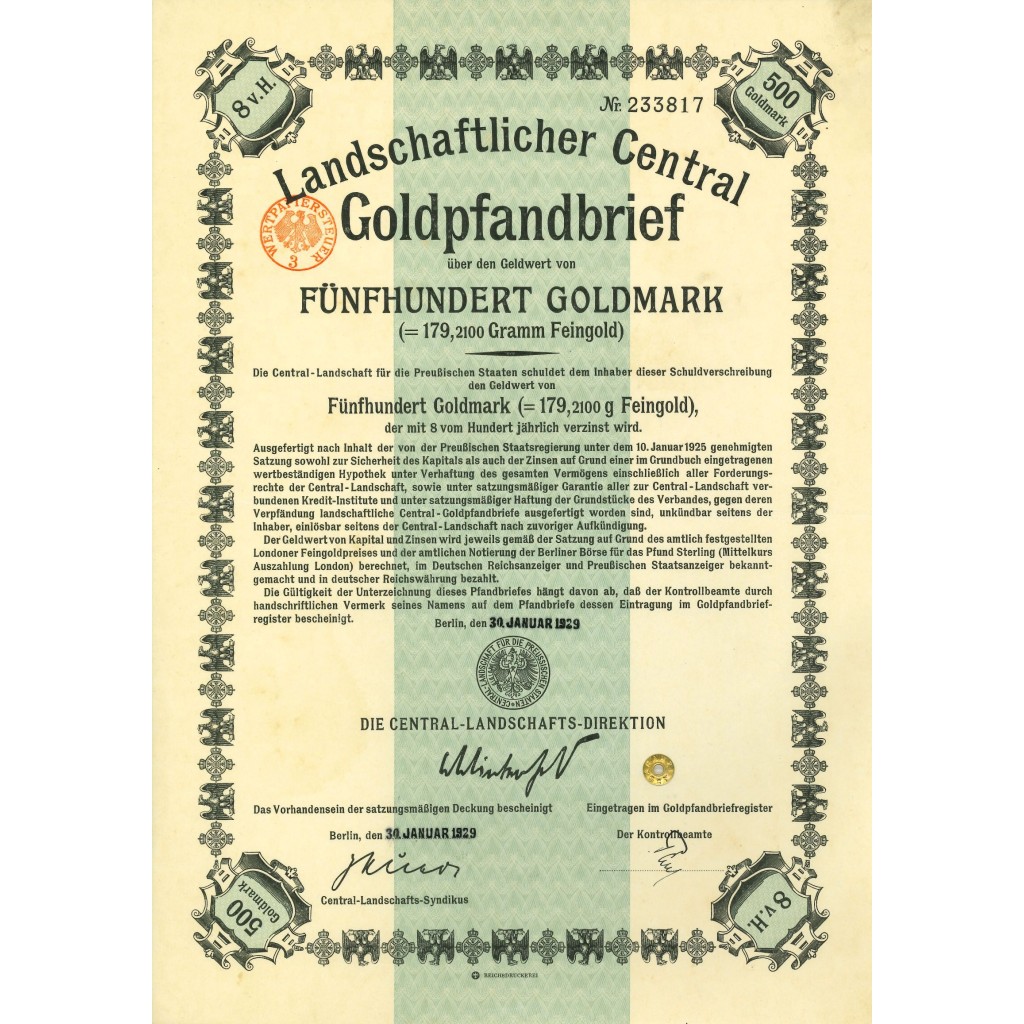
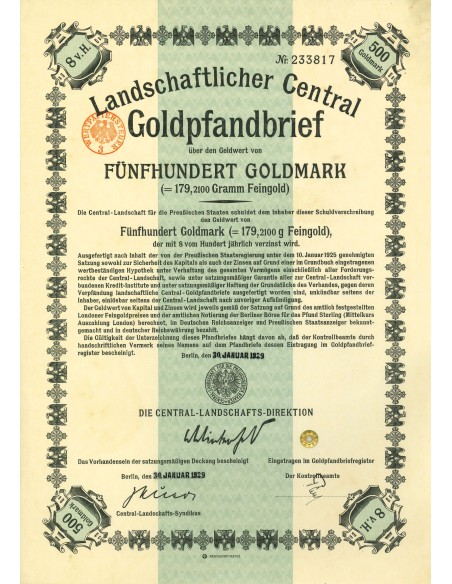
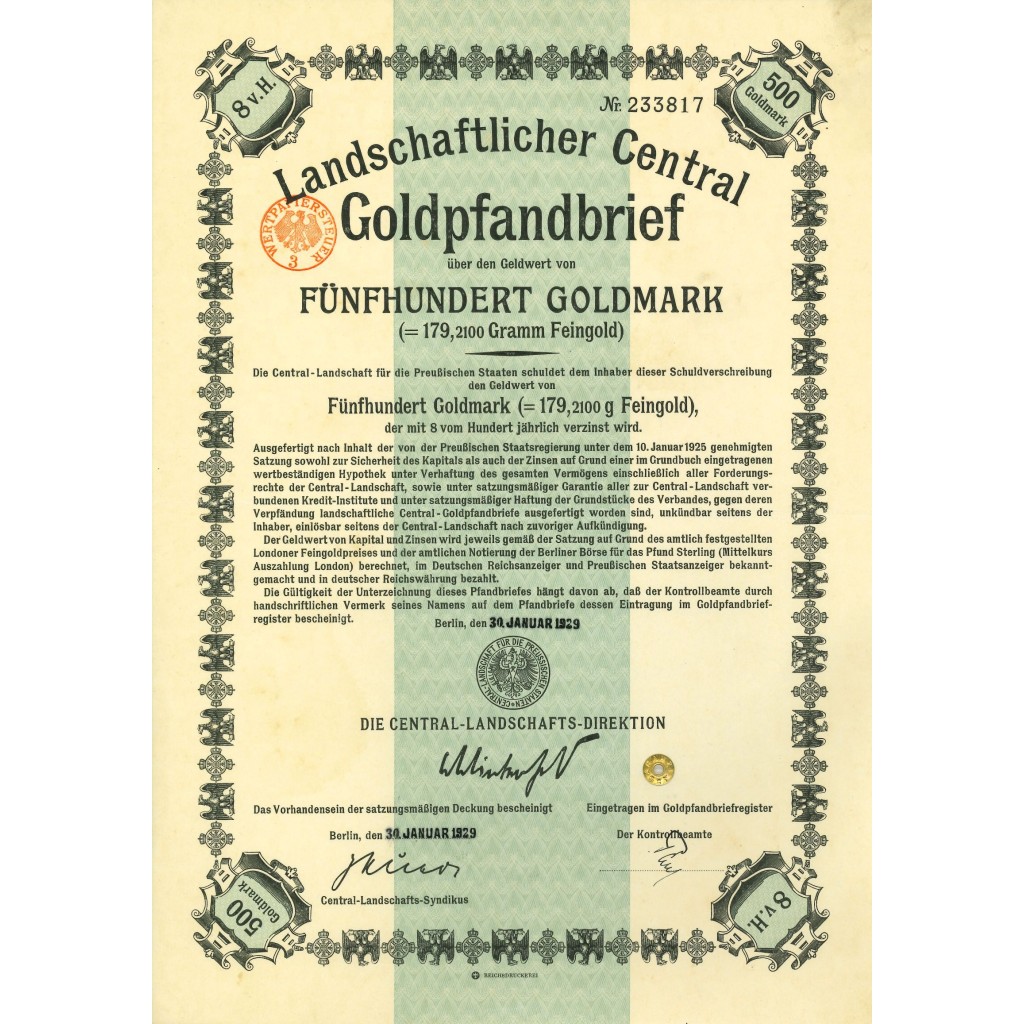
The Central-Landschaft, officially known as "Die Central-Landschaft für die Preußischen Staaten," was founded in 1925 to support the agricultural sector through the issuance of gold-backed bonds, known as Goldpfandbriefe. These documents represent a significant part of German economic history, providing insight into the financial practices of the time.
Historical Data of the Company
| Year | Revenue (Goldmark) | Share Capital (Goldmark) |
|---|---|---|
| 1925 | 50,000 | 179,210 |
| 1926 | 75,000 | 179,210 |
| 1927 | 100,000 | 179,210 |
| 1928 | 125,000 | 179,210 |
| Year of Establishment | Headquarters | Name at Delisting | Year of Stock Exchange Listing | Year of Delisting | Year of Dissolution |
|---|---|---|---|---|---|
| 1925 | Berlin | Central-Landschaft | 1925 | 1945 | 1950 |
Document Characteristics
| Feature | Detail |
|---|---|
| Nominal Value | 500 Goldmark |
| Gold Weight | 179.210 grams of fine gold |
| Date of Issue | January 30, 1929 |
| Annual Interest Rate | 8% |
| Register | Certified by control officer |
| Approval Stamp | Reichsfinanzministerium |
This document represents a rare opportunity for scripophily collectors to own a piece of German financial history. Issued in 1929, this Goldpfandbrief provides insight into the agricultural financing practices of the time and represents an exceptional example of gold-backed bonds. The historical and collectible value of such documents lies in their authenticity and the economic importance they had for the pre-war German agricultural economy.
Collecting historical titles like this offers a tangible connection to the economic past and a rare opportunity to own a piece of history. Each document tells a story of trust, financial stability, and commitment to agricultural development. Collectors will appreciate the quality of the printing, the authenticity of the stamps and signatures, and the intrinsic beauty of the details.
All historical documents for sale are considered collectible. The documents have no economic or financial value (no economic or financial value), the second image is only representative of the company's object.