Shopping Cart
There are no more items in your cart


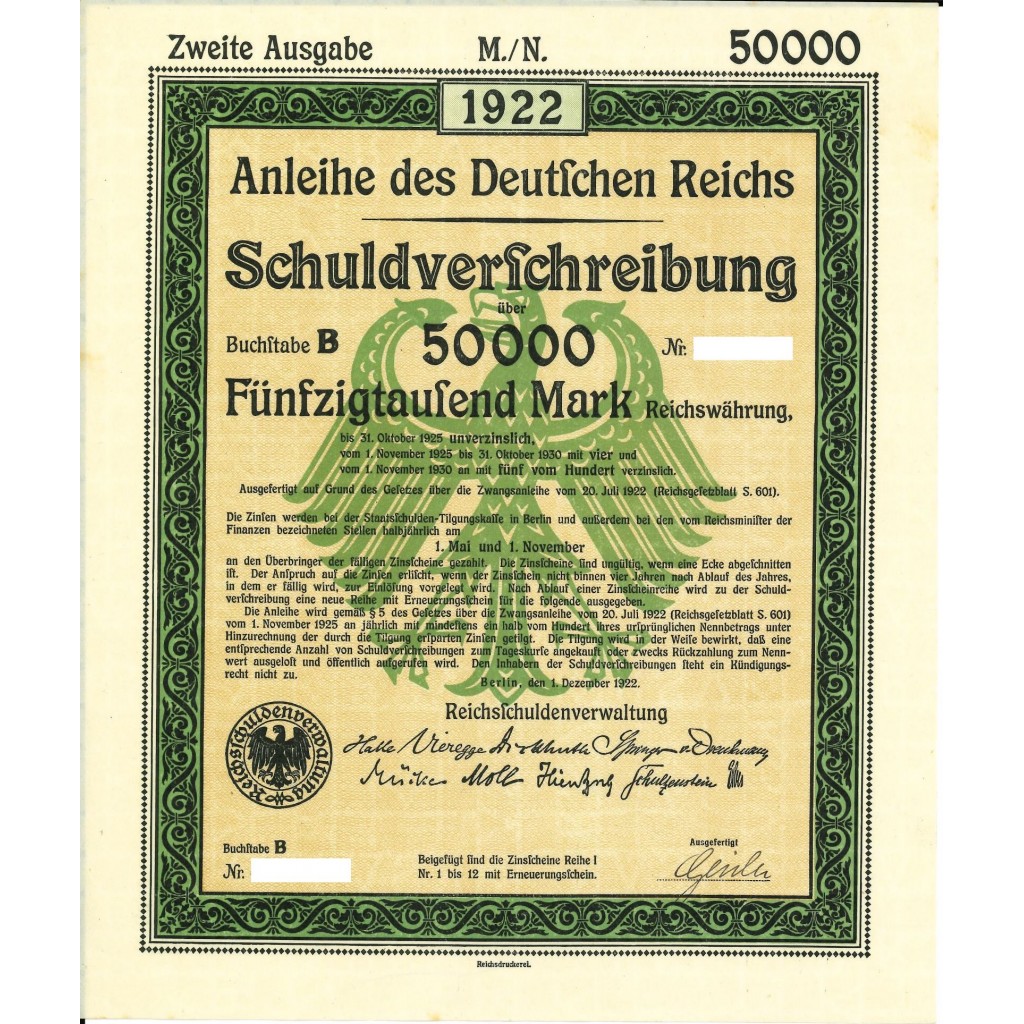
The Reichsschuldenverwaltung, or the administration of the Reich's debt, was one of the central financial institutions of Germany during the Weimar Republic. Founded in the period immediately following World War I, the Reichsschuldenverwaltung was tasked with managing Germany's public debt, a crucial task in an era of great economic and financial instability.
Historical Profile of the Company
| Historical Data | Values |
|---|---|
| Year of Establishment | 1919 |
| Headquarters | Berlin, Germany |
| Name at Delisting | N/A |
| Year of Stock Exchange Listing | N/A |
| Year of Delisting from Stock Exchange | N/A |
| Year of Dissolution | 1945 |
| Capital at Establishment | N/A |
| Capital at Dissolution | N/A |
Additional Data
| Year | Revenue |
|---|---|
| 1922 | N/A |
| 1930 | N/A |
| 1940 | N/A |
Document Characteristics
| Document Characteristics | Description |
|---|---|
| Issue Date | December 1, 1922 |
| Nominal Amount | 50,000 Mark |
| Interest Rate | 4.5% |
| Maturity Date | November 1, 1930 |
| Serial Number | Not identified |
| Issuer Signature | Present |
| Seal | Official Reich seal |
| Description | Document issued for financing Reich bonds, guaranteed by the German State. |
Importance of Scripophilia
Collecting historical documents such as stocks and bonds, known as scripophilia, is a fascinating hobby that allows you to own a tangible piece of economic history. Documents issued by the Reichsschuldenverwaltung are particularly significant, representing a period of great economic and political turmoil in Germany. These certificates are not only beautiful to look at due to their intricate designs and official seals, but they also tell stories of financial resilience and perseverance.
Owning a Reich debt certificate means having a fragment of German history, an era where the economy was trying to recover from the devastation of war. Collecting these documents is not just an investment in art and history, but also a tribute to the economic memory of a nation.
Important Note
All historical documents for sale are considered collectible items. The documents have no economic or financial value (no economic or financial value), the second image is only representative of the subject of the reference company.