
Shopping Cart
There are no more items in your cart

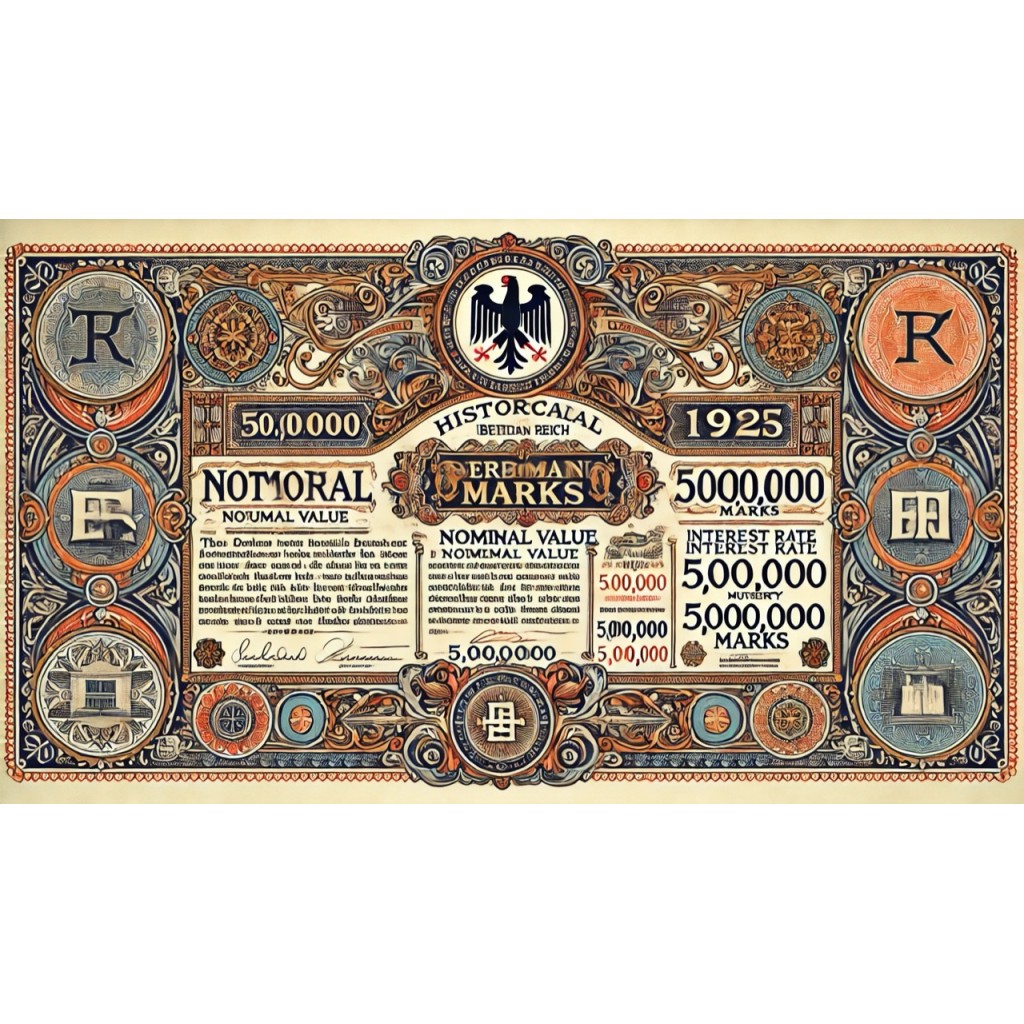
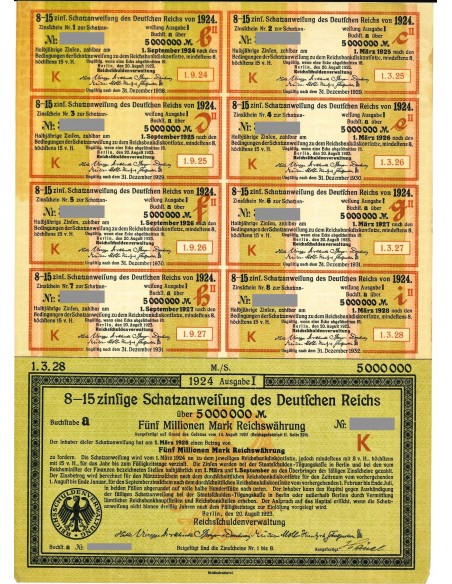
The Reich Debt Administration (Reichsschuldenverwaltung) was the body responsible for managing the German public debt during the Weimar Republic. This 1924 certificate represents one of the many bond issues and financial instruments intended to fund state needs during a period of economic turmoil and hyperinflation.
Historical Context
During the 1920s, Germany faced an unprecedented economic crisis, exacerbated by the war reparations imposed by the Treaty of Versailles and the subsequent hyperinflation. The German government, in an effort to stabilize the economy and raise funds, issued numerous bonds, including the 5,000,000 Reichsmark Schatzanweisung (treasury note), which serves as an important testament to that historical period.
Historical Data of the Society
| Year | Revenue | Share Capital | Notes |
|---|---|---|---|
| 1920 | Not available | Not available | Founding of the Weimar Republic |
| 1921 | Not available | Not available | First post-war bond issuance |
| 1922 | Not available | Not available | Start of hyperinflation |
| 1923 | Not available | Not available | Massive bond issuances to stabilize the economy |
| 1924 | Not available | Not available | Issuance of the 5,000,000 RM Schatzanweisung |
| 1930 | Not available | Not available | Continued economic stabilization efforts |
Document Characteristics
- Certificate Type: Schatzanweisung (Treasury Note)
- Issue Date: 1924
- Nominal Value: 5,000,000 Reichsmark
- Coupons: 8-15% interest, payable semiannually
- Validity: Until 1932
- Signatories: Representatives of the Reich Debt Administration
Importance of Scripophily
Scripophily, the collection of historical stocks and bonds, is a fascinating way to connect with financial and historical pasts. Documents like this Schatzanweisung are tangible testimonies of periods of great change and economic challenges. They offer a unique glimpse into the financial strategies used by governments to tackle economic crises and maintain stability.
Collecting these documents is not just a hobby, but a journey through economic, political, and social history. Each certificate has a story to tell and can enrich the collector's understanding of the historical contexts in which these financial instruments were issued.
All historical documents for sale are intended for collection. The documents have no economic or financial value (no economic or financial value), the second image is only representative of the company's object of reference.

