Shopping Cart
There are no more items in your cart
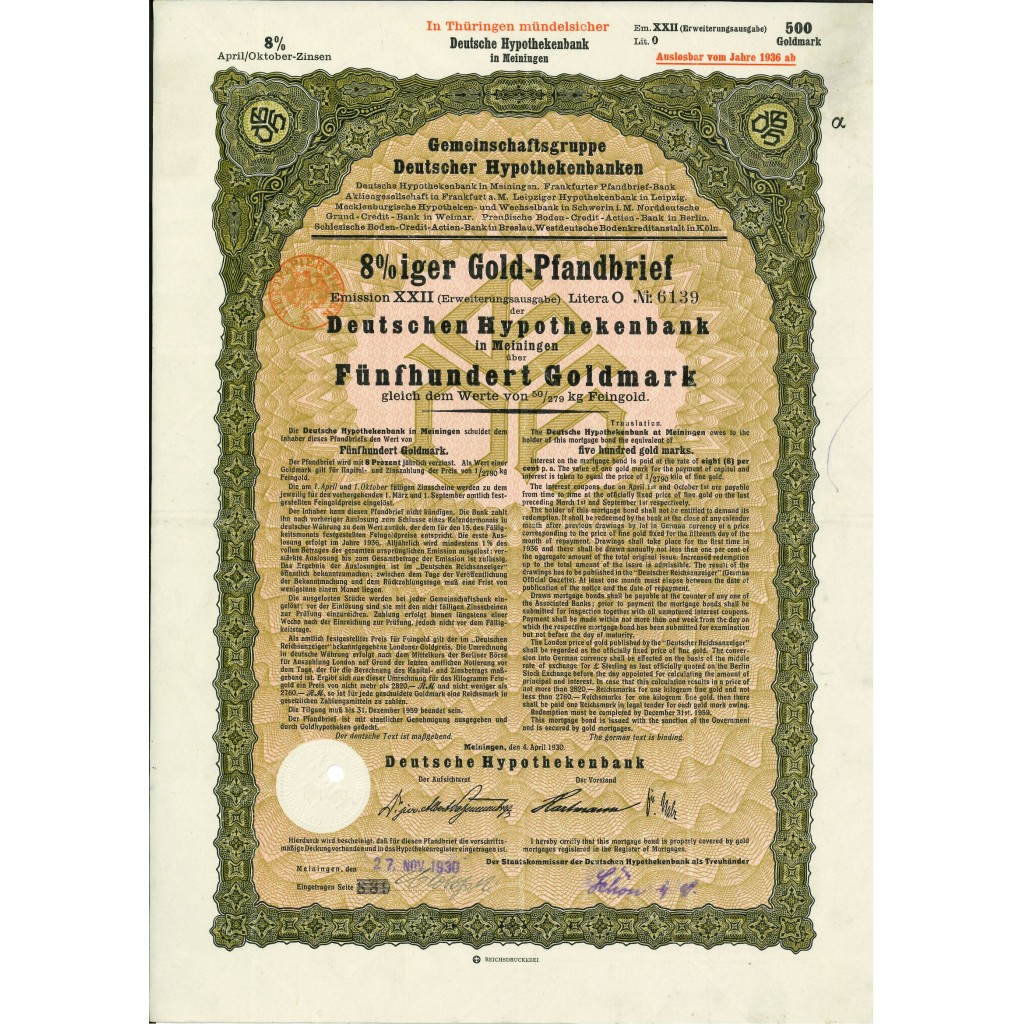
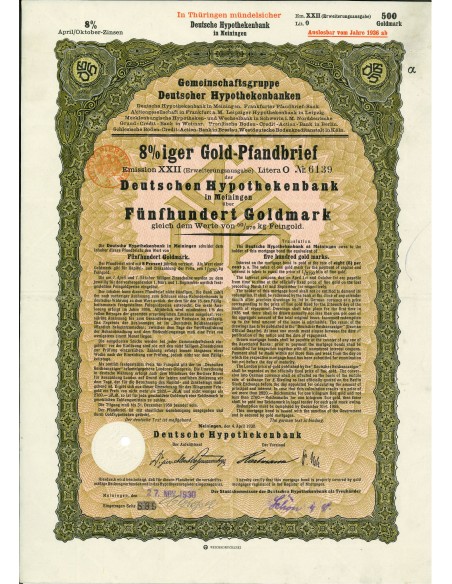
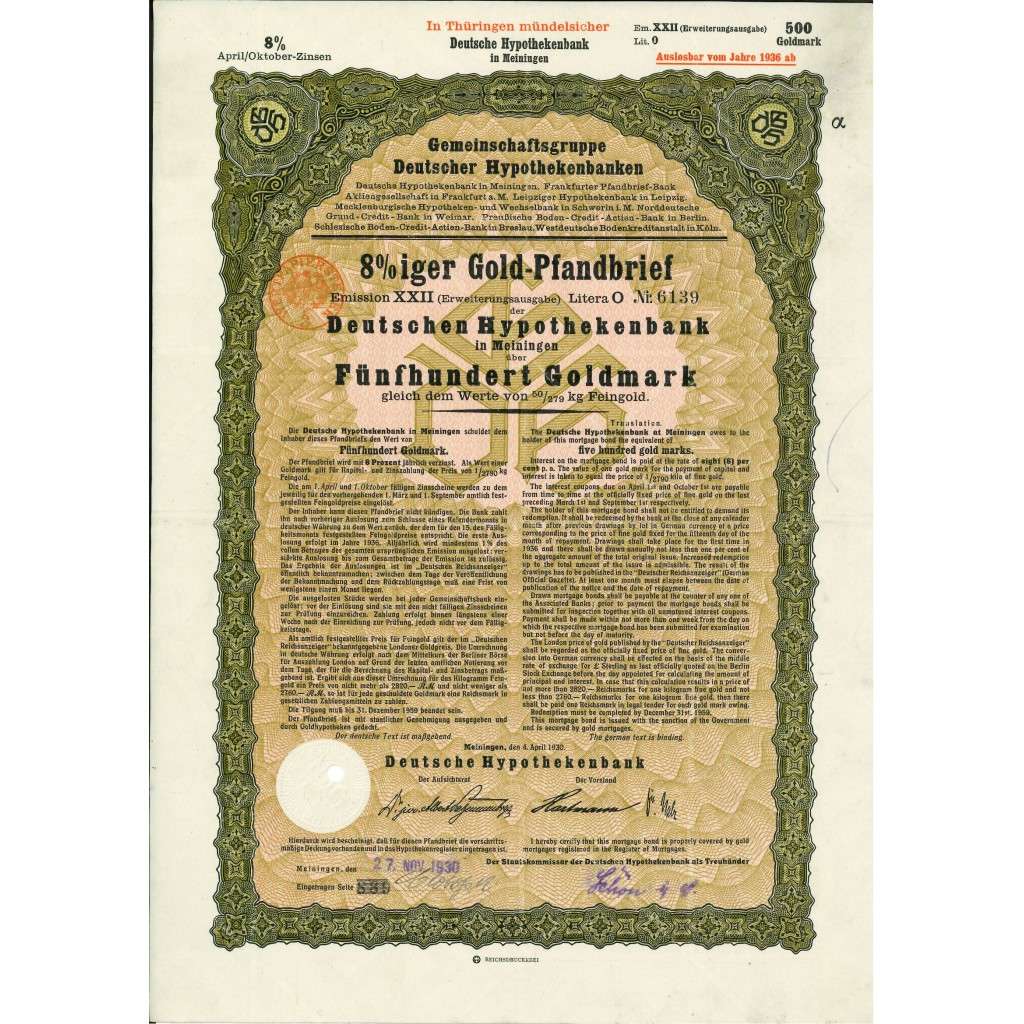
The Deutsche Hypothekenbank in Meiningen, founded in 1924, was one of the most significant financial institutions in Germany, specializing in mortgage loans and real estate financing. This bank played a crucial role in supporting urban and rural development through the issuance of mortgage-backed bonds, known as Gold-Pfandbriefe.
The presented bond is an example of a Gold-Pfandbrief issued by the Deutsche Hypothekenbank in 1930. This bond represents a form of loan secured by mortgages on real estate, offering investors an annual return of 8%. It was a safe and popular investment among investors of the time, thanks to the solid guarantee offered by the underlying real estate properties.
Historical Data of the Company
| Data | Details |
|---|---|
| Year of Establishment | 1924 |
| Headquarters | Meiningen, Germany |
| Name at Delisting | Deutsche Hypothekenbank Meiningen |
| Year of Stock Exchange Admission | 1924 |
| Year of Delisting | 1945 |
| Year of Company Dissolution | 1945 |
| Initial Capital | 5,000,000 RM |
| Final Capital | 50,000,000 RM |
| Annual Revenue | N/A |
| Other Historical Data | N/A |
Document Features
| Feature | Details |
|---|---|
| Type of Title | Gold-Pfandbrief |
| Issuance | XXII (Erweiterungsausgabe) |
| Litera | O |
| Certificate Number | 6139 |
| Issue Date | April 4, 1930 |
| Amount | 500 Goldmark |
| Interest Rate | 8% |
| Guarantee | 50/279 kg Feingold |
| Maturity Date | January 1, 1936 |
| Subscription | Deutsche Hypothekenbank Meiningen |
| Stamp and Signature | Yes |
The bond represents a significant investment of the time and offers a fascinating glimpse into the economic and financial history of pre-war Germany. Collecting such titles not only represents an opportunity to own a piece of history but also to better understand the workings of financial institutions and the economic context of the period.
Scripophily is a fascinating and growing field. Owning a historical document like this not only offers aesthetic and historical value but also a tangible connection to the economic past. Each certificate tells a unique story, from economic booms to times of crisis, and represents the ingenuity and resilience of the financial institutions of the time.
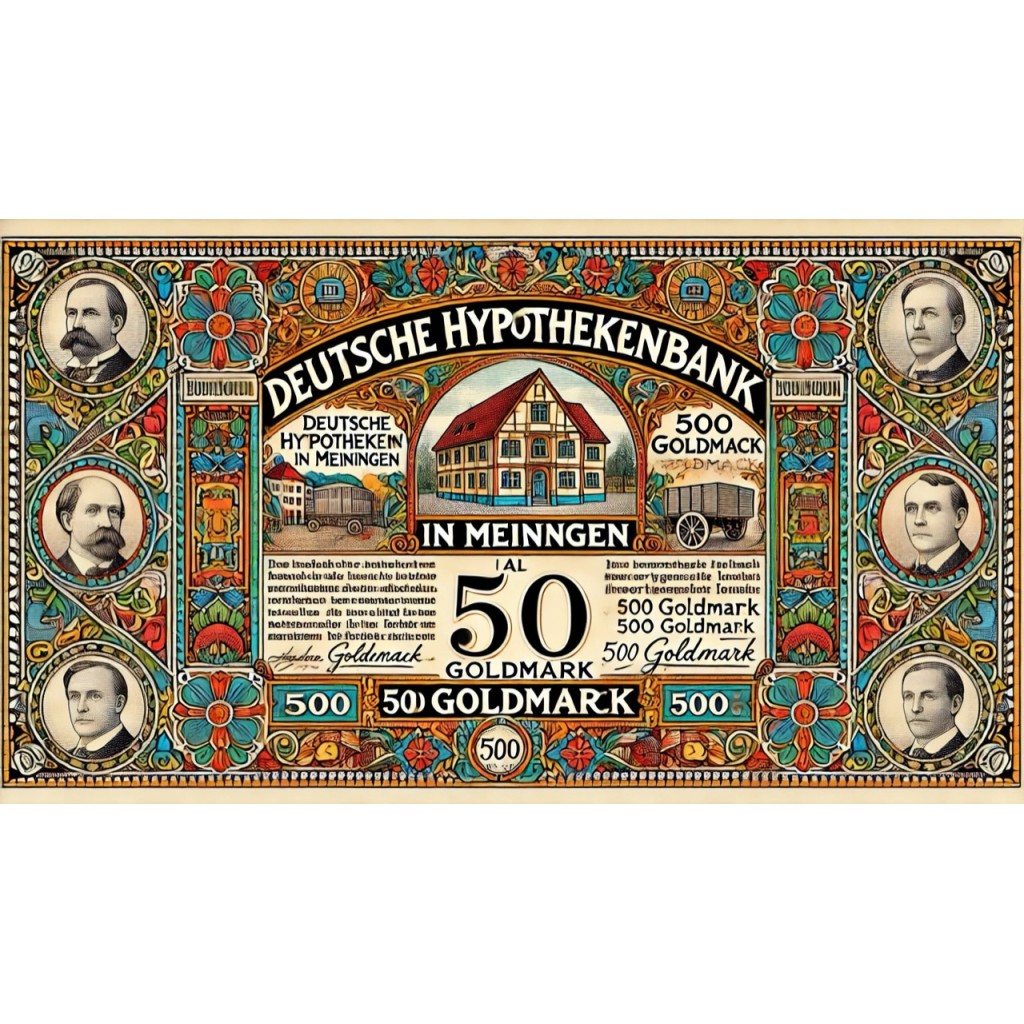
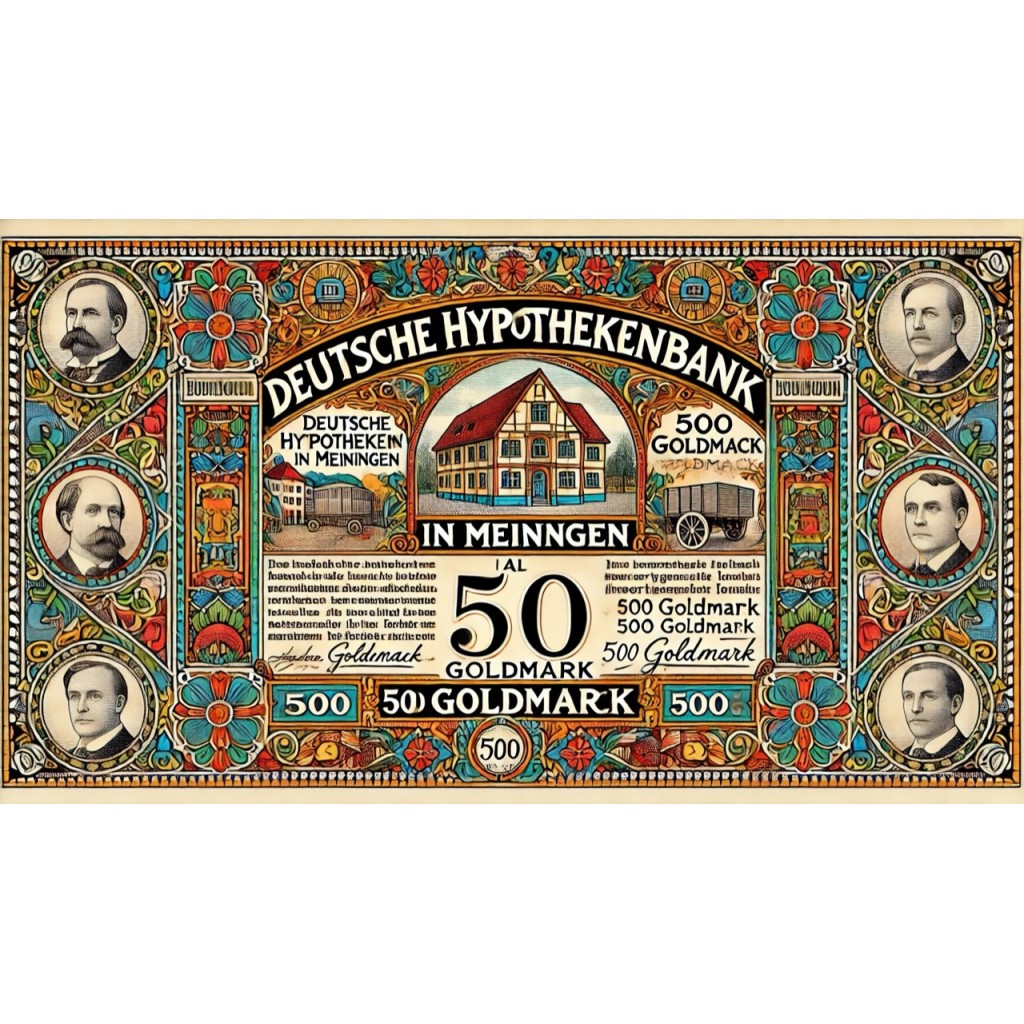
Tutti i documenti storici in vendita si intendono da collezione. I documenti non hanno nessun valore economico o finanziario (no economic or financial value), la seconda immagine è solo rappresentativa dell'oggetto della società di riferimento.