Shopping Cart
There are no more items in your cart
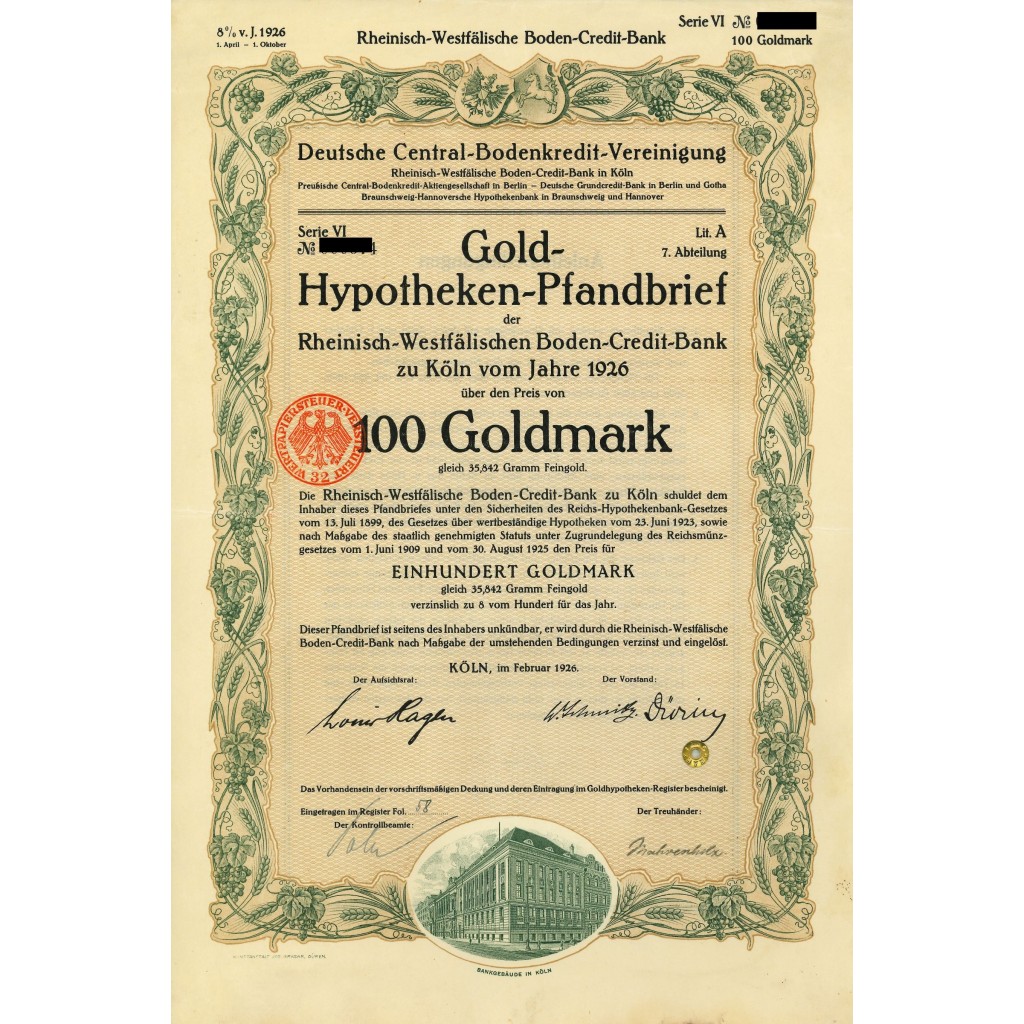
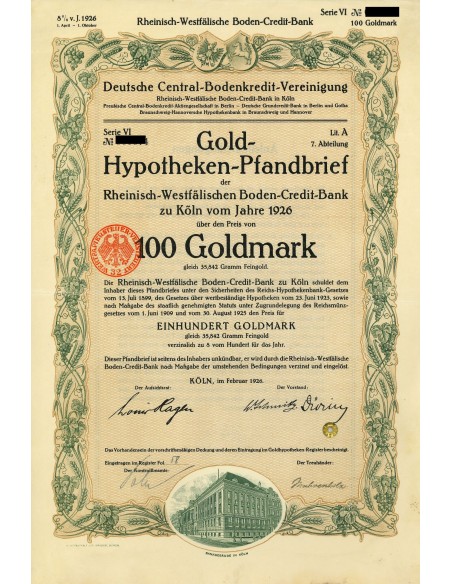
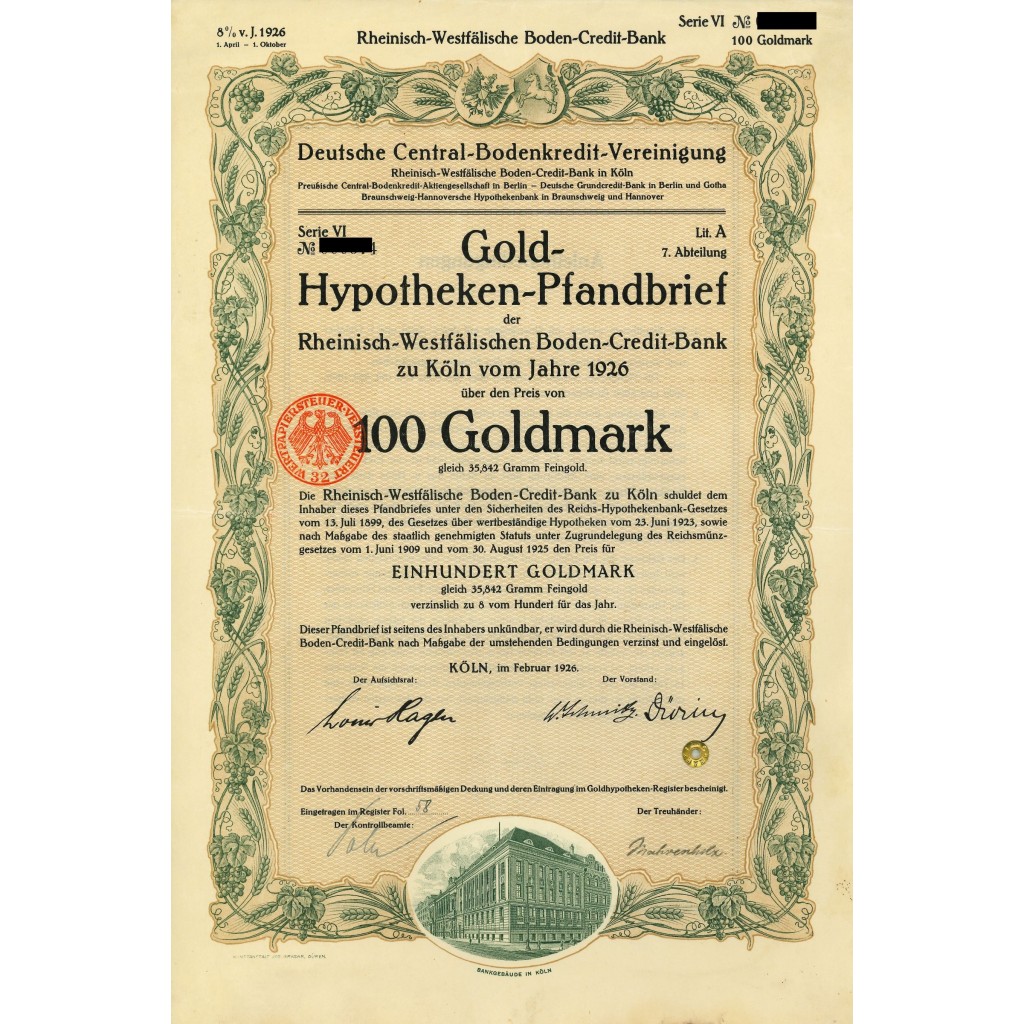
The Rheinisch-Westfälische Boden-Credit-Bank was one of the leading German financial institutions active in the mortgage lending sector. Founded in 1926, the bank was based in Cologne (Köln), a major commercial and industrial city in Germany.
The bank was a member of the Deutsche Central-Bodenkredit-Vereinigung, an organization that brought together various German mortgage banks to coordinate activities and ensure sector stability. The Rheinisch-Westfälische Boden-Credit-Bank specialized in issuing mortgage bonds, financial instruments that guaranteed a safe return to investors thanks to the coverage provided by the underlying mortgage loans.
Historical Data of the Company
| Entry | Detail |
|---|---|
| Year of Establishment | 1926 |
| Registered Office | Cologne (Köln), Germany |
| Year of Stock Exchange Listing | Not available |
| Year of Delisting from Stock Exchange | Not available |
| Year of Cessation of the Company | Not available |
| Share Capital at Establishment | Not available |
| Share Capital at Cessation | Not available |
| Annual Revenue | Not available |
Document Features
| Feature | Detail |
|---|---|
| Date of Issue | February 1926 |
| Place of Issue | Cologne (Köln), Germany |
| Value | 100 Goldmark |
| Interest Rate | 8% per annum |
| Guarantee | Mortgage on real estate |
| Document Size | Standard for the time |
| Language | German |
| Notes | Stamped and authenticated signature |
Importance of Scripophilia Collecting
The collecting of historical documents, known as scripophilia, is a fascinating hobby that allows preserving and appreciating economic and financial history. Documents such as the mortgage bonds of the Rheinisch-Westfälische Boden-Credit-Bank are not just pieces of paper but genuine witnesses of the past, telling the story of financial practices and institutions that contributed to economic development.
For collectors, owning such a document means holding a tangible testimony of a bygone era, with artistic and legal details that make each piece unique. Scripophilia allows better understanding the evolution of financial institutions and appreciating the art of printing and calligraphy used to create these documents.
Moreover, the value of a historical document lies not only in its economic aspect but also in its ability to evoke stories and connections with the past. Each document has a story to tell, and through scripophilia, we can preserve and share these stories with future generations.
All historical documents for sale are intended for collection purposes. The documents have no economic or financial value (no economic or financial value), the second image is only representative of the object of the reference company.