Shopping Cart
There are no more items in your cart
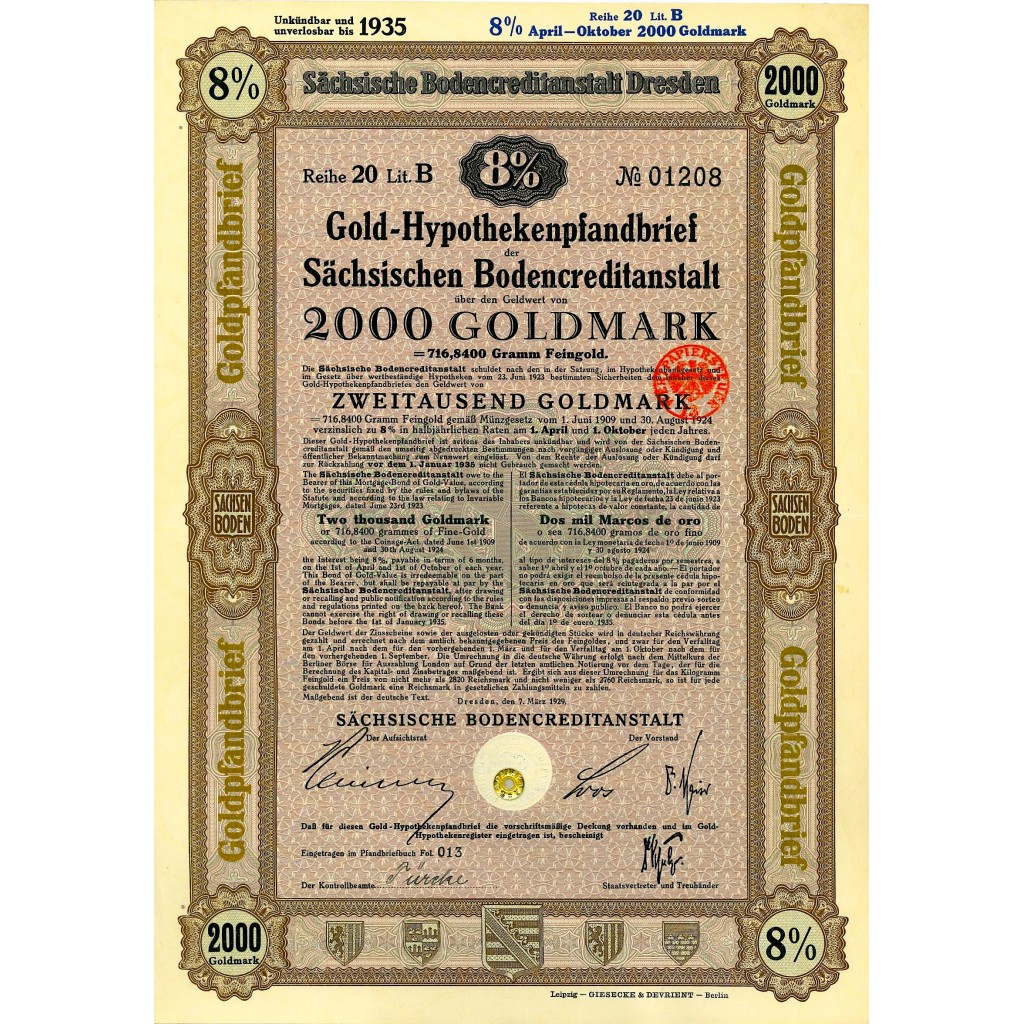
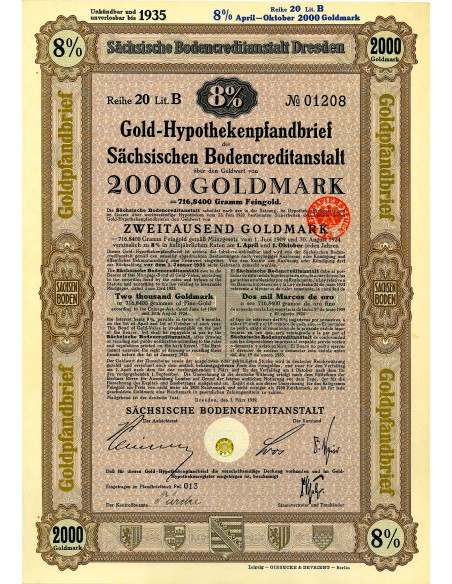
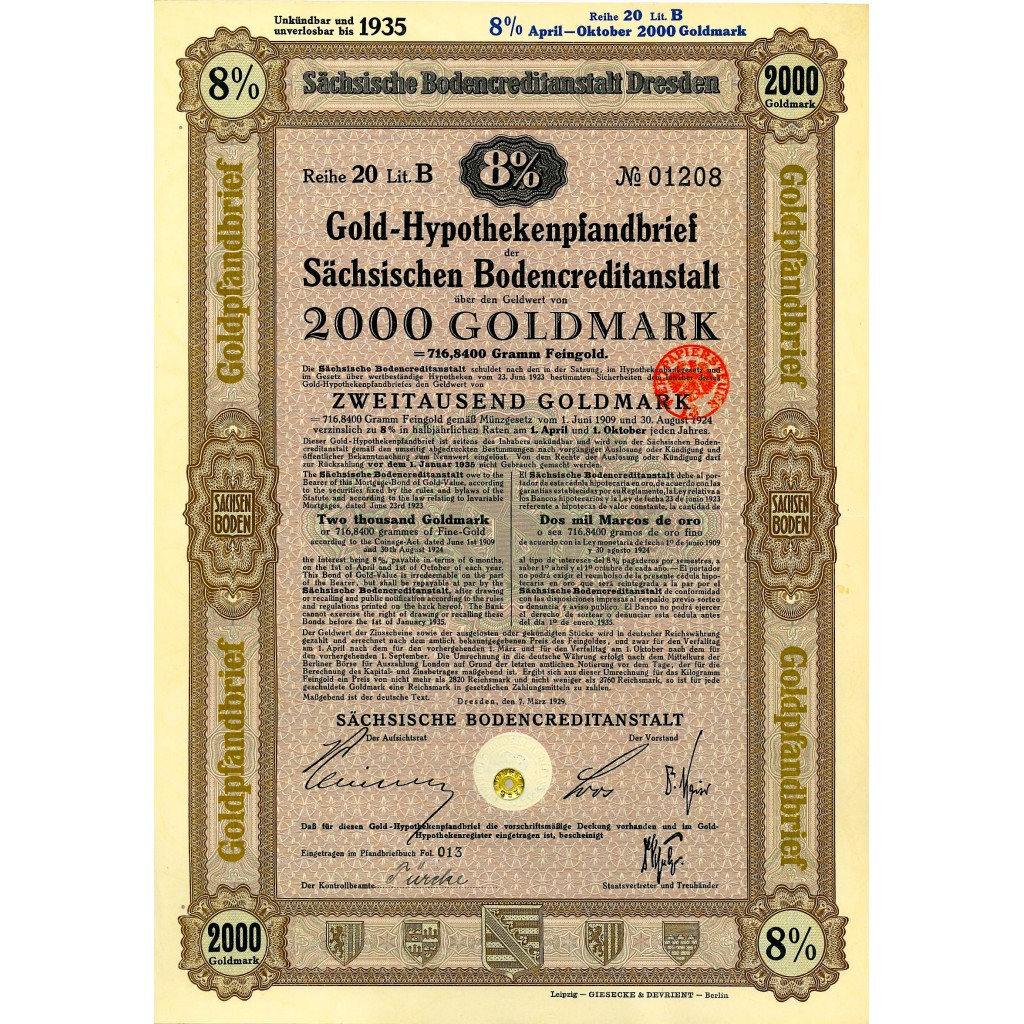
The Sächsische Bodenkreditanstalt, founded in 1923, was a German financial institution headquartered in Dresden. This institution specialized in issuing mortgage bonds secured by land and real estate properties, with the goal of supporting agricultural and real estate development in the Saxony region. The main objective of the Sächsische Bodenkreditanstalt was to provide long-term financing, significantly contributing to the economic growth of the region.
A representative example of its activity is the 2000 Goldmark mortgage bond with an 8% interest rate, issued in 1929. This document not only represents a secure investment of the time but also reflects the high quality and precision with which financial titles of the era were created. The certificate, with its autographed signatures and elaborate details, is a tangible testimony of the trust and stability of the German financial market before the economic crises of the subsequent years.
Historical Data of the Company
| Year | Revenue (in million Goldmark) | Capital Stock (in Goldmark) | Year of Establishment | Headquarters | Name upon Delisting | Year of Stock Exchange Admission | Year of Delisting | Year of Dissolution |
|---|---|---|---|---|---|---|---|---|
| 1923 | ND | 500,000 | 1923 | Dresden | ND | 1924 | 1945 | 1945 |
Document Characteristics
| Denomination | Interest Rate | Issue Date | Nominal Value | Maturity | Notes |
|---|---|---|---|---|---|
| 2000 Goldmark | 8% | March 7, 1929 | 2000 Goldmark | January 1, 1935 | Non-redeemable before 1935 |
For Scripophily Collectors
Scripophily, the art of collecting historical financial documents such as stocks and bonds, represents a fascinating window into economic and industrial history. Each document tells a unique story, reflecting the economic vicissitudes and social changes of an era. Collecting these documents not only offers aesthetic and historical value but also represents a way to preserve an important cultural heritage.
The presented bond, with its detailed design and autographs of the officials of the time, is an excellent example of the precision and craftsmanship of the period. The decorative frame and elegant calligraphy underline the importance attributed to these financial instruments. Purchasing a document like this means owning a tangible piece of German economic history, an artifact that has traversed past events to reach us.
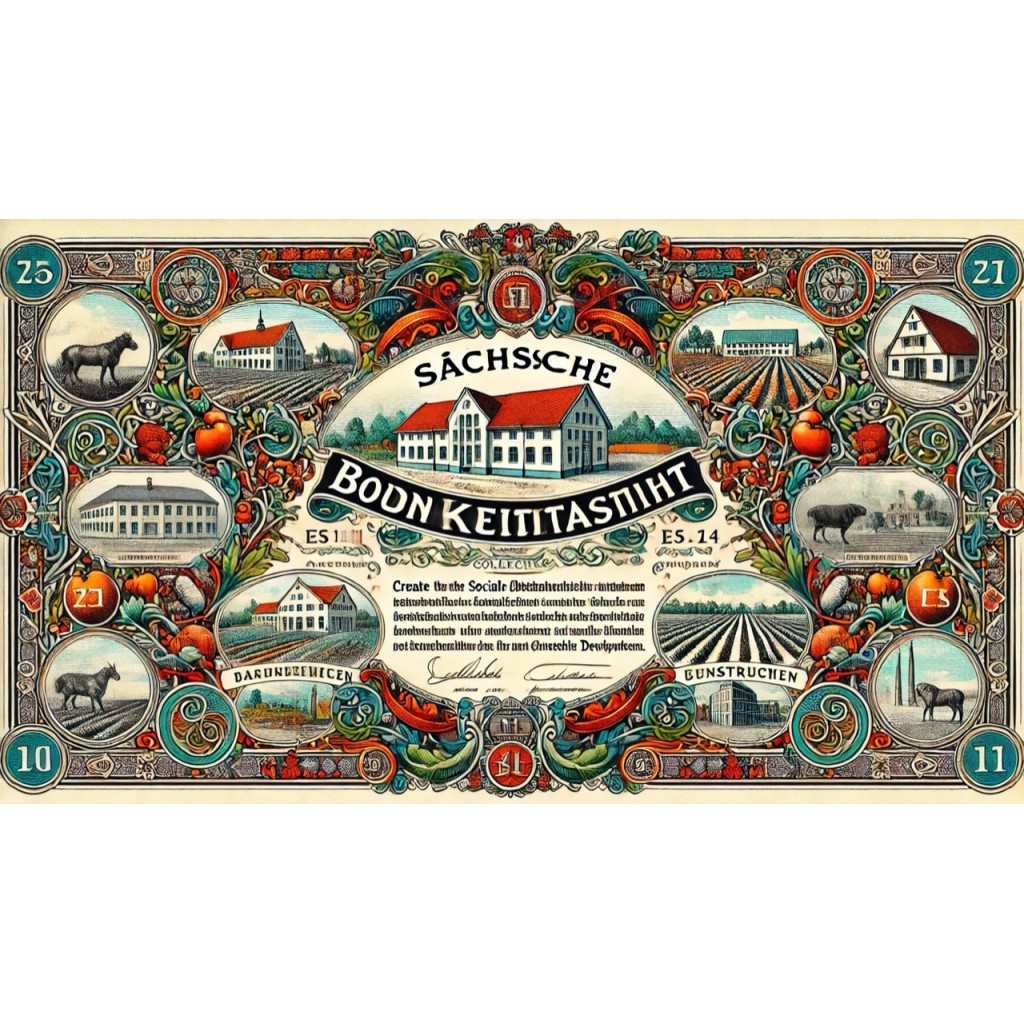
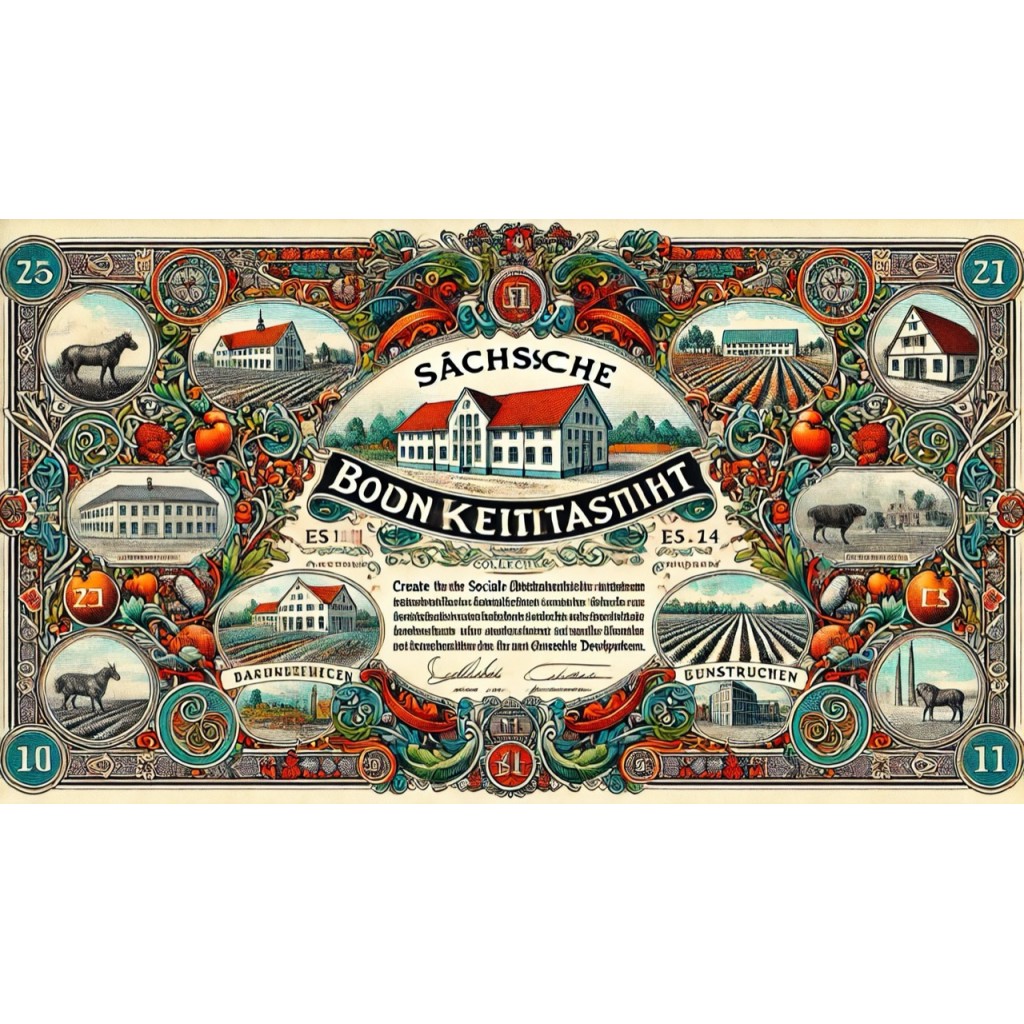
All historical documents for sale are considered collectibles. The documents have no economic or financial value (no economic or financial value), the second image is only representative of the object of the reference company.