Shopping Cart
There are no more items in your cart
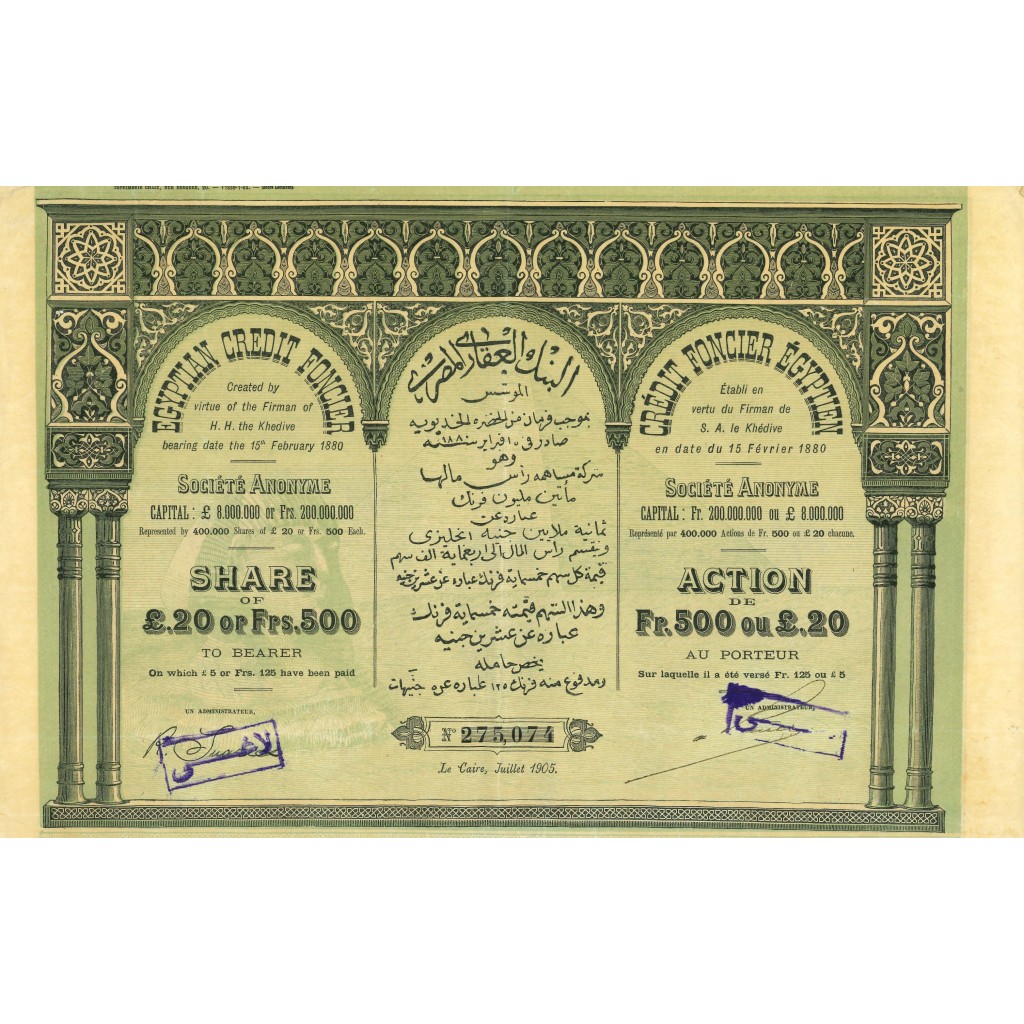
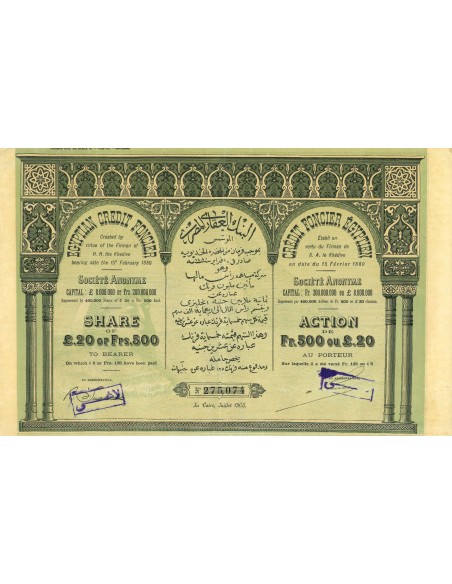

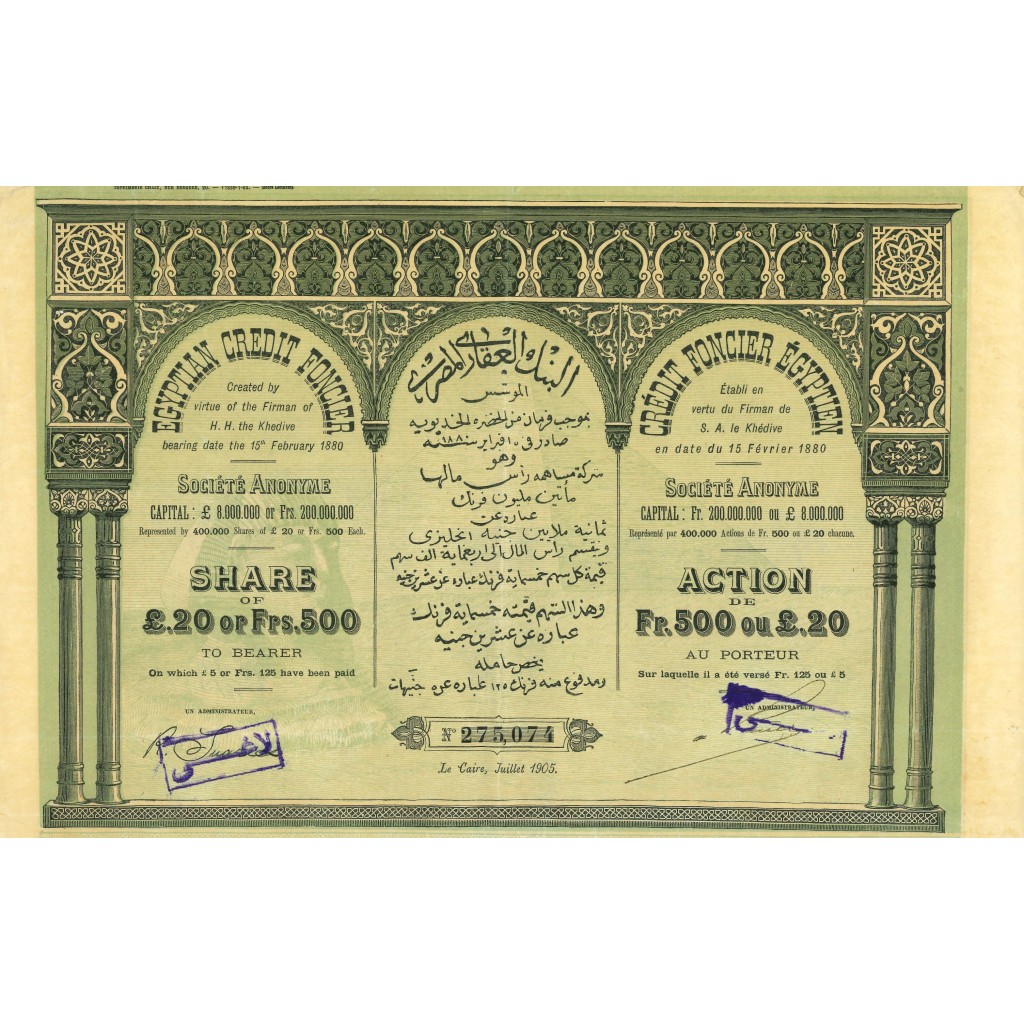
The Société Anonyme "Crédit Foncier Égyptien" was one of the most significant financial institutions in Egypt during the late 19th and early 20th centuries. Founded on February 15, 1880, by a firman issued by His Highness the Khedive, the company’s main objective was real estate financing, a sector experiencing rapid growth in Egypt at that time. The company was particularly focused on supporting agricultural and urban development, granting loans and mortgages that fostered the growth of infrastructure and land ownership.
During its operation, the Crédit Foncier Égyptien played a crucial role in Egypt's economic development, facilitating access to credit for large real estate projects, including agricultural lands along the Nile and urban buildings in major centers like Cairo and Alexandria. Issuing shares and bonds, such as the one presented here, was a way for the company to raise capital from European markets, particularly from Paris and London, where foreign investors had a strong presence.
Historical Context
The period during which the Crédit Foncier Égyptien was founded coincided with a time of great economic and political transformations in Egypt. The country was undergoing a modernization process, largely driven by khedivial leadership, aiming to integrate the Egyptian economy with Europe. This period also saw increasing British and French influence in the country’s internal affairs, culminating in European financial control over Egypt following the national bankruptcy of 1876. The need to develop a stable and reliable credit system was essential to support the country’s economic and infrastructural expansion, especially for projects like the construction of the Suez Canal.
Historical Data of Société Anonyme "Crédit Foncier Égyptien"
| Entry | Details |
|---|---|
| Year of Establishment | 1880 |
| Headquarters | Cairo, Egypt |
| Initial Capital | £ 8,000,000 or Frs. 200,000,000 |
| Year of Stock Exchange Listing | 1880 |
| Year of Delisting | 1940 (estimated) |
| Capital at Dissolution | Not available |
| Year of Company Dissolution | 1940 (estimated) |
Document Features
| Feature | Detail |
|---|---|
| Document Title | Share of £20 or Frs. 500 to Bearer |
| Issue Date | July 1905 |
| Serial Number | 275,074 |
| Languages | English, French, Arabic |
| Typography | Embossed texts, floral decorations, arches inspired by Islamic architecture |
| Provenance | Unknown history, likely acquired through a secondary market |
| Graphic Details | Detailed engravings with Arabic motifs, possibly the work of a local calligraphic artist |
| Printer | Likely a specialized French or Egyptian printing house |
Evaluation and Rarity
The title issued by the Crédit Foncier Égyptien is considered a piece of rare historical importance, representing an emblematic example of Egypt's economic transformation period. Compared to other certificates of the time, it is estimated to have medium-high rarity, partly due to the importance of the issuing institution and the limited number of surviving specimens.
The Context of Scripophily Collecting
Collecting titles such as that of the Crédit Foncier Égyptien is not only a way to own a piece of history but also to preserve an important testimony of the world’s economic and financial evolution. Scripophily, the art of collecting financial titles, offers a unique opportunity to connect with history in a tangible and visually fascinating way. Each certificate tells a story, and each collector becomes the custodian of a fragment of that past.
Collector Tips: Scripophily certificates can be displayed in frames, preserved in dedicated albums, or used as unique decorations for modern and historical environments. Beyond historical value, they represent distinguished gifts, suitable for history, finance, or decorative art enthusiasts.
Importance of the Document as a Gift
This historical document is not only a gem for collectors but also an exceptional gift for those who appreciate history, art, or period design. Ideal as a prestige gift, it can elegantly decorate a study or library, becoming a unique conversation piece.
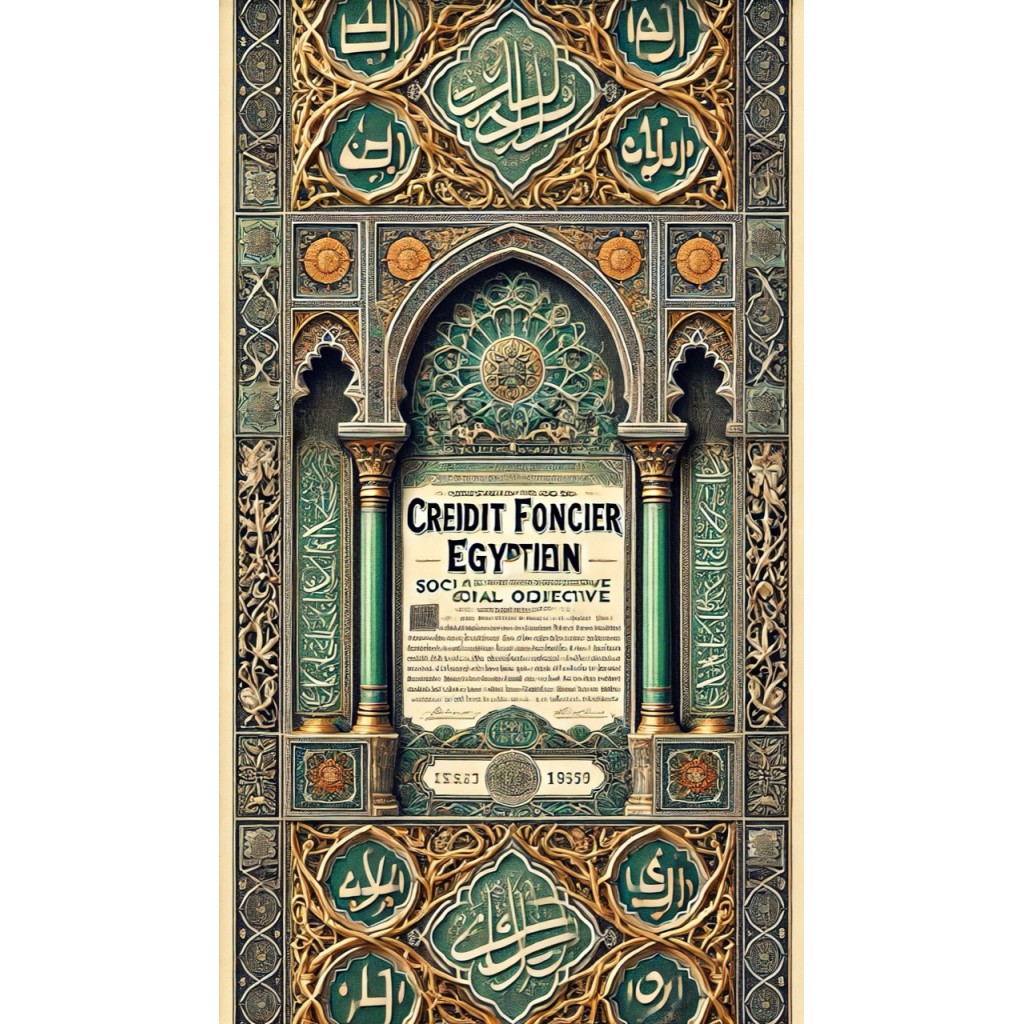
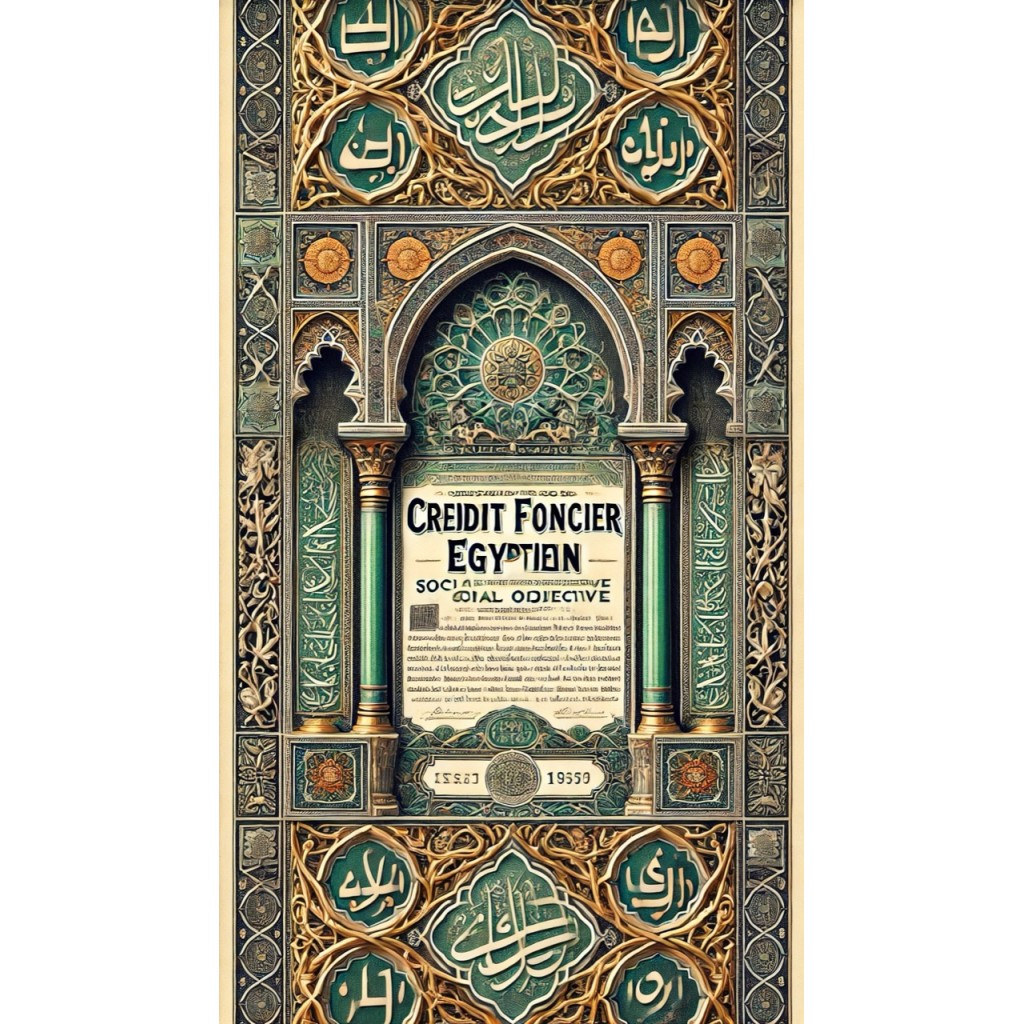
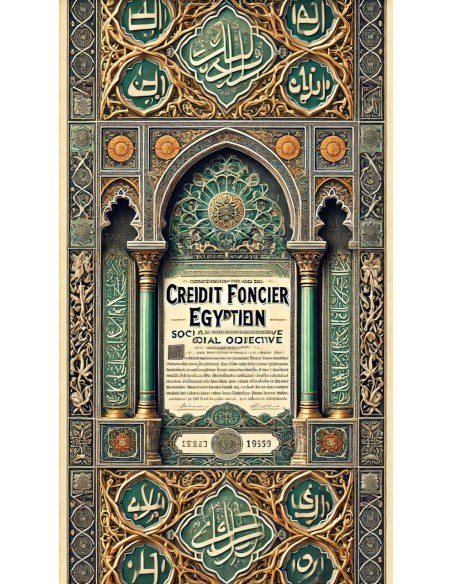
All historical documents for sale are intended for collection purposes. The documents have no economic or financial value (no economic or financial value), and images that are not the historical document are representative of the object of the company and the reference historical period; they are not provided, but can be freely downloaded from the website and printed.