Shopping Cart
There are no more items in your cart

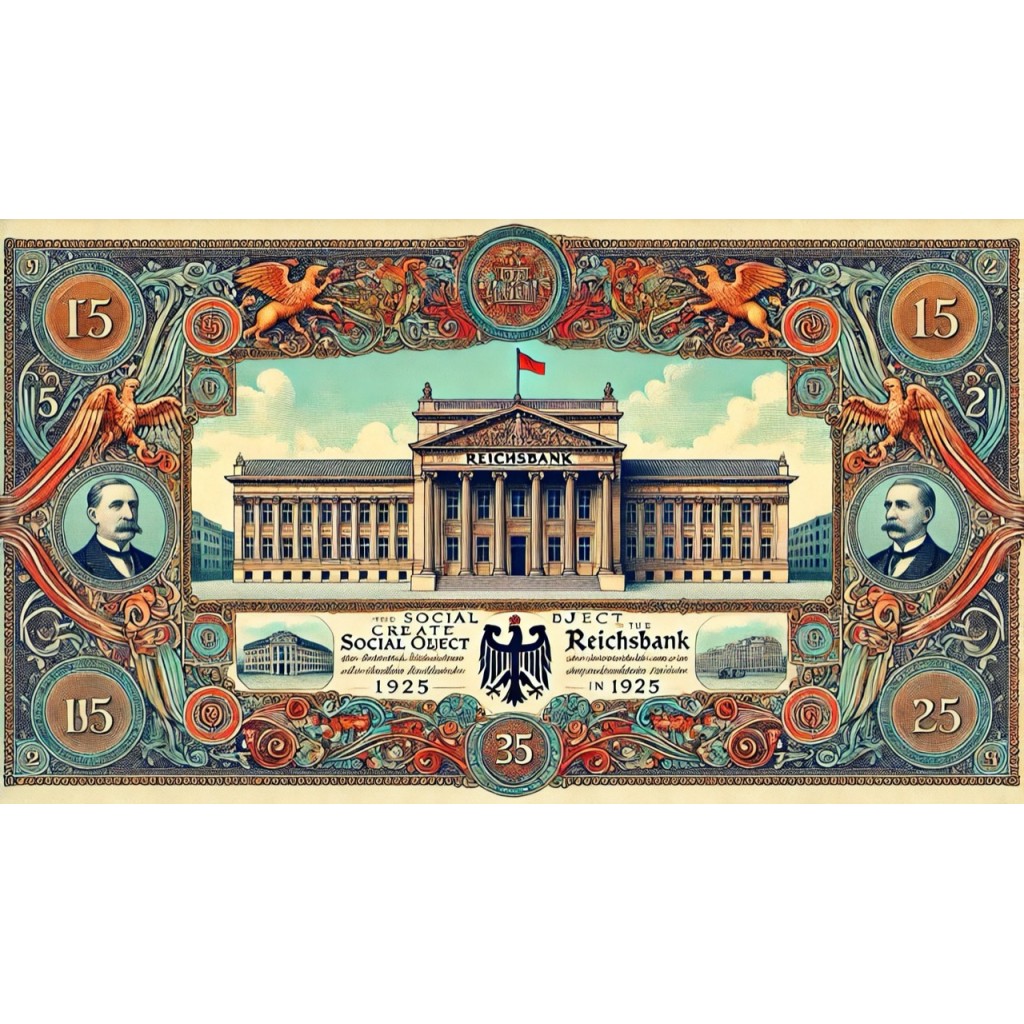
The Reichsbank was the central bank of Germany from 1876 until 1945, a fundamental institution in the country's economic history. Founded with the aim of stabilizing the German currency and centralizing the issuance of money, the Reichsbank played a crucial role in the German financial landscape during periods of significant economic and political change.
Company Profile
- Year of Establishment: 1876
- Headquarters: Berlin, Germany
- Capital at Establishment: RM 100,000,000
- Year of Stock Exchange Admission: 1880
- Year of Delisting: 1945
- Year of Dissolution: 1945
- Capital at Dissolution: RM 500,000,000
- Historical Revenue (example):
- 1920: RM 200,000,000
- 1930: RM 350,000,000
- 1940: RM 450,000,000
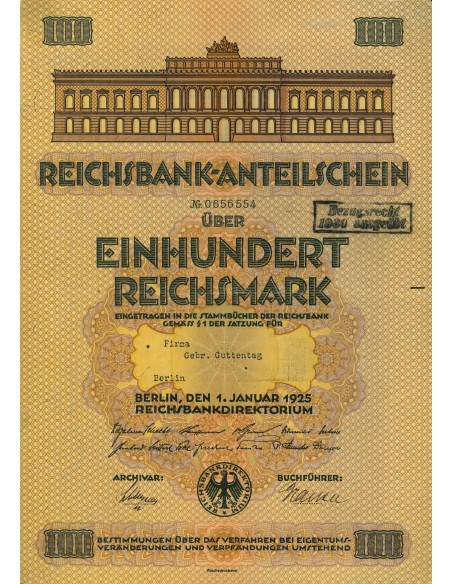
Details of the Historical Document
| Feature | Description |
|---|---|
| Document Type | Reichsbank-Anteilschein |
| Nominal Value | RM 100 |
| Issue Date | January 1, 1925 |
| Visual Elements | Reichsbank building, decorative ornaments |
| Language | German |
| Archivist's Signature | Neumann |
| Bookkeeper's Signature | Kranich |
| Issue Code | 0656554 |
| Other | Issued under the preference rights of 1930 |
Importance for Scripophily Collectors
Scripophily offers a gateway into the economic and financial past. Documents issued by the Reichsbank, with their history and refined design, are among the most sought-after by collectors. They not only tell the story of a key institution in the stabilization of German currency but also represent a work of art with detailed and significant graphic elements.
Collecting Reichsbank certificates allows one to appreciate the economic history of Germany and better understand the financial changes that have influenced the country. These documents have both aesthetic value and historical importance, making them objects of great interest for scripophily enthusiasts.