Shopping Cart
There are no more items in your cart
History of Banca Cortonese
The Banca Cortonese was established in the city of Cortona, Tuscany, as a financial institution authorized by Royal Decree in 1873. It represents a significant example of local financial institutions that emerged in post-unification Italy to support the economic and commercial activities of specific areas.
Its foundation and operations occurred during a period of great economic and social transformation in Italy, characterized by an increasing need for banks to support the economic development of local communities.
Certificate Features
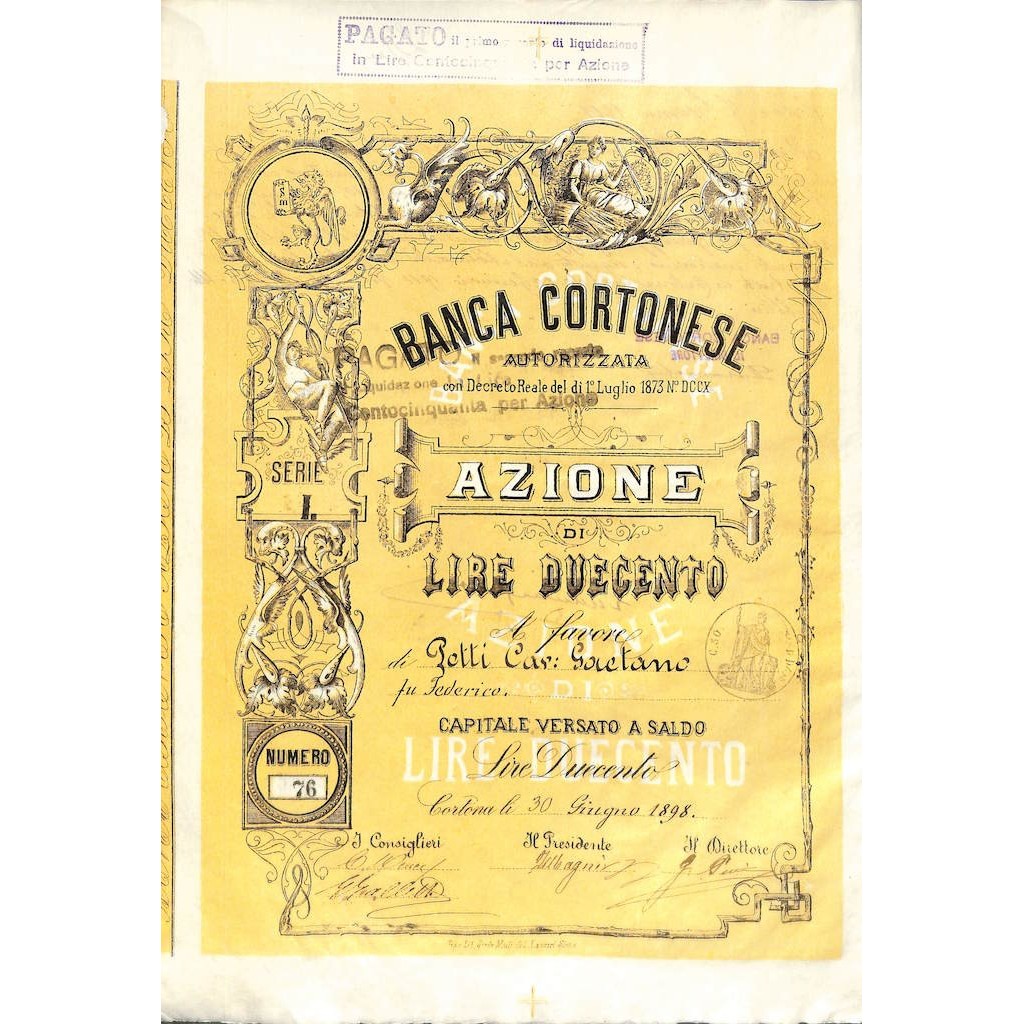
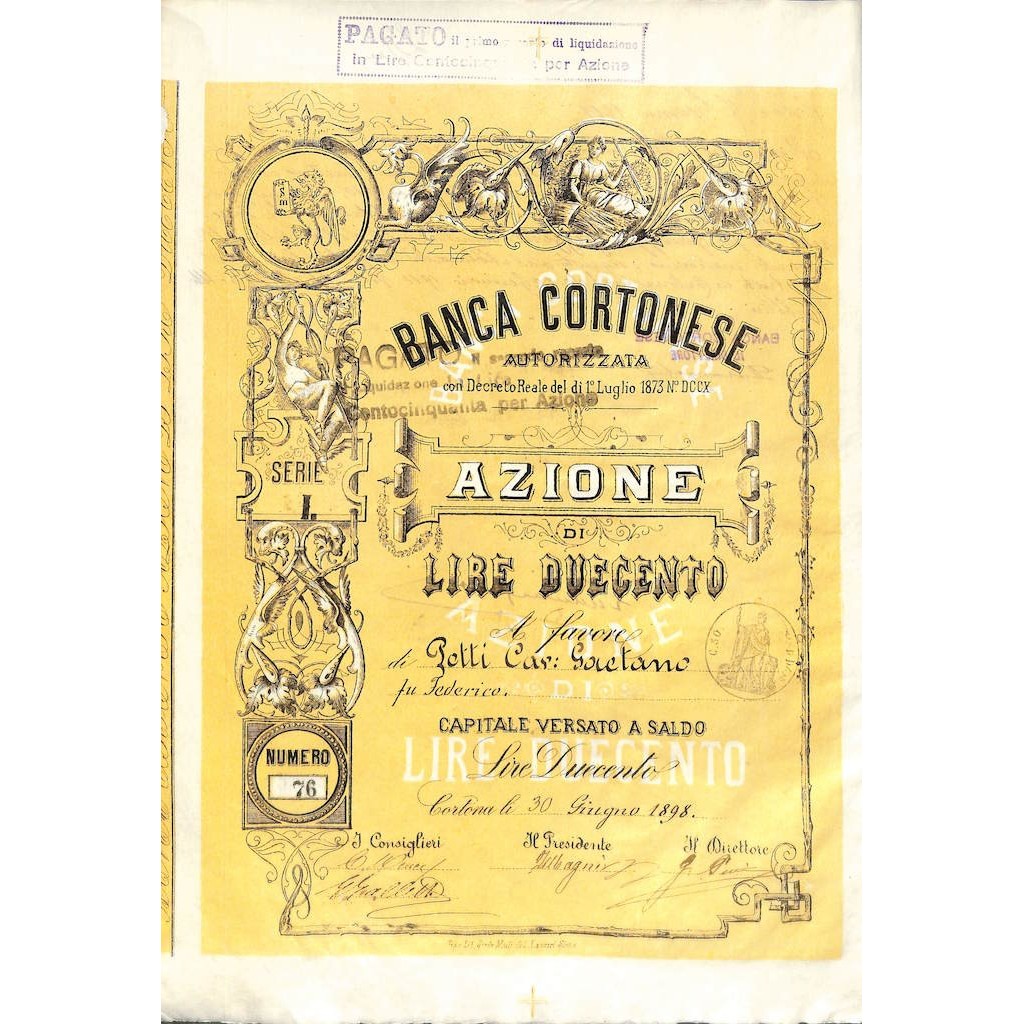
- Artistic Design: The certificate features elegant gold decorations with neoclassical-style graphics and floral motifs. Allegorical emblems reflect the institution's solidity and importance.
- Authenticity: The document is signed by the bank’s President and Director, with countersignatures from the Counselors, ensuring its validity.
- Historical Value: The certificate signifies the investment made by Cavaliere Gaetano Gotti in Banca Cortonese, thus contributing to the institution’s capital.
- Coat of Arms and Symbols: The emblem represents Cortona or the symbolism tied to the bank, emphasizing local prestige and identity.
Historical and Collectible Significance
- Historical Context: This certificate embodies the spirit of the era, representing a piece of local economic history and the role of banks in Tuscan communities during the late 19th century.
- Aesthetic Appeal: The artistic craftsmanship and decorative elements make it highly valued not only for its rarity but also for its aesthetic quality.
- Rarity: As a local certificate from a smaller bank, it is likely rare and highly sought after by collectors of scripophily and enthusiasts of Italian economic history.