Shopping Cart
There are no more items in your cart
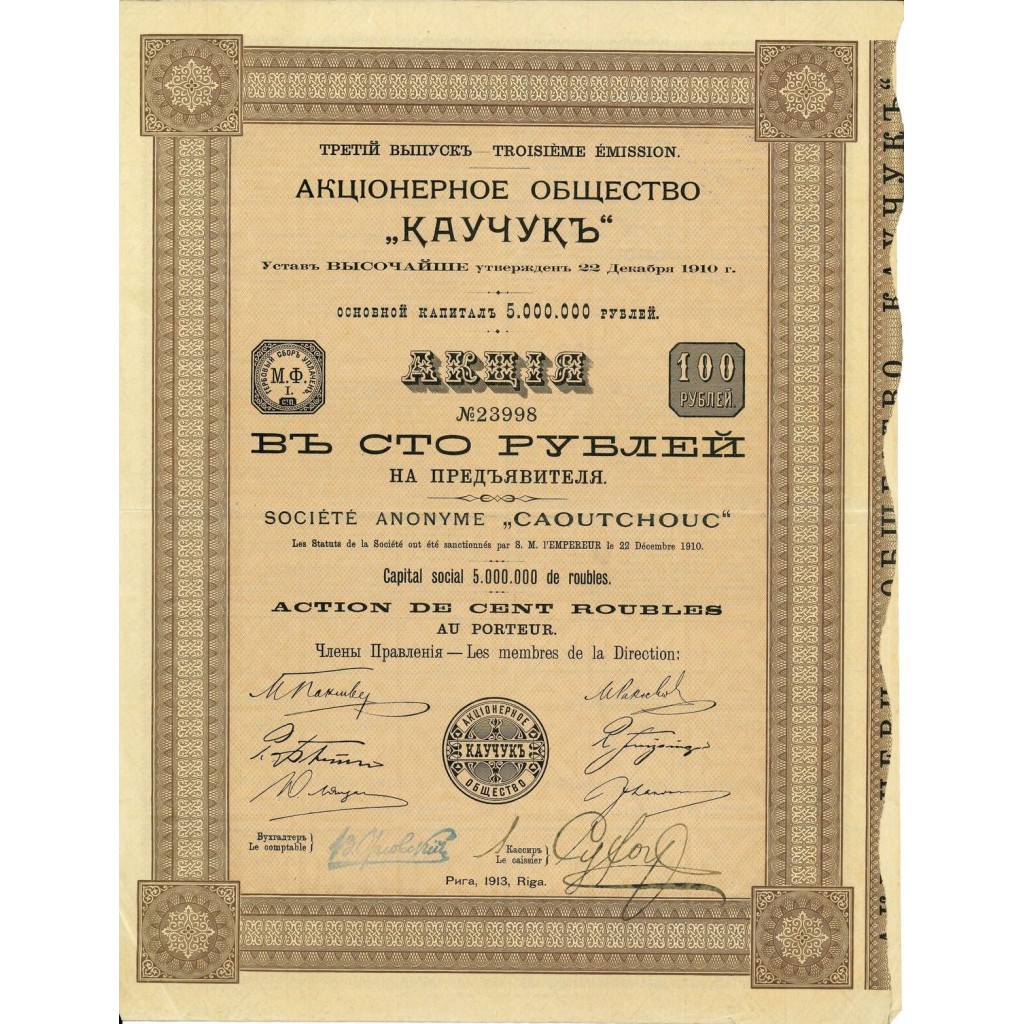
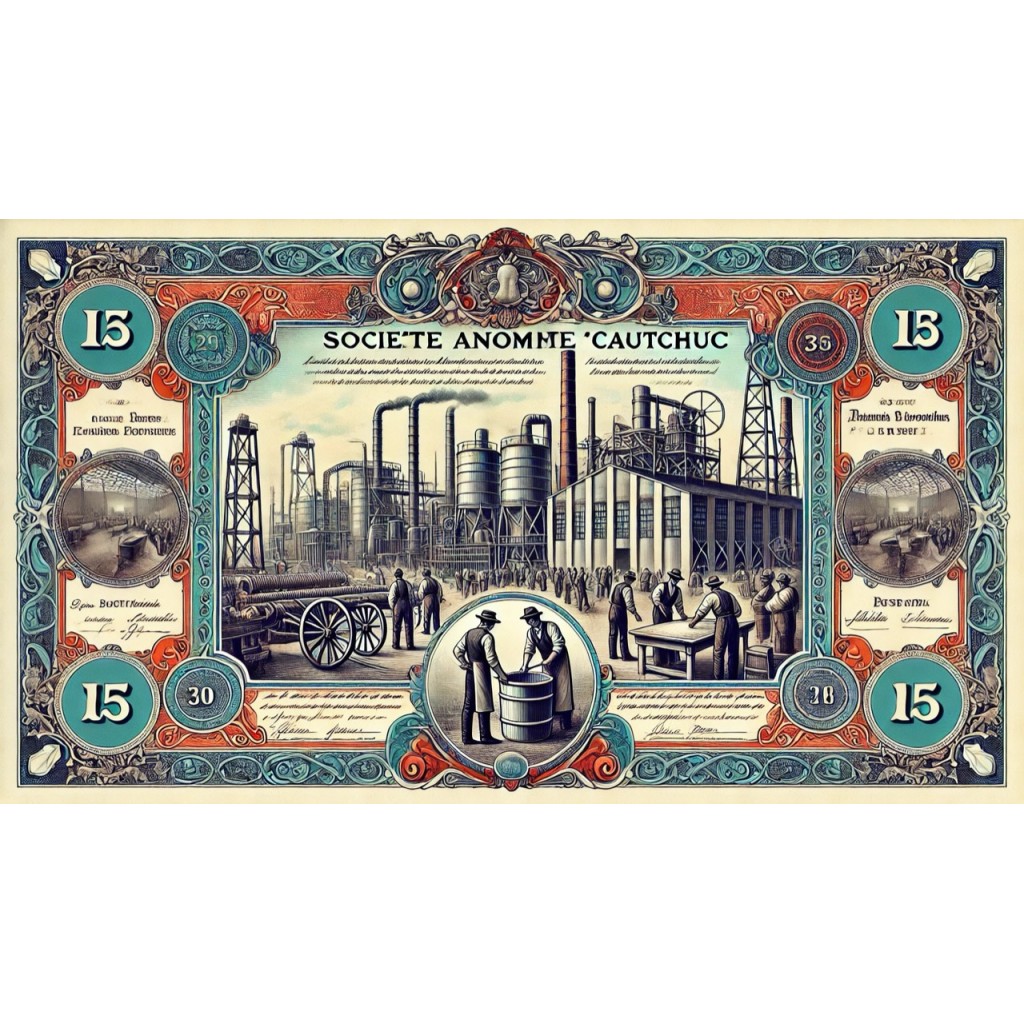
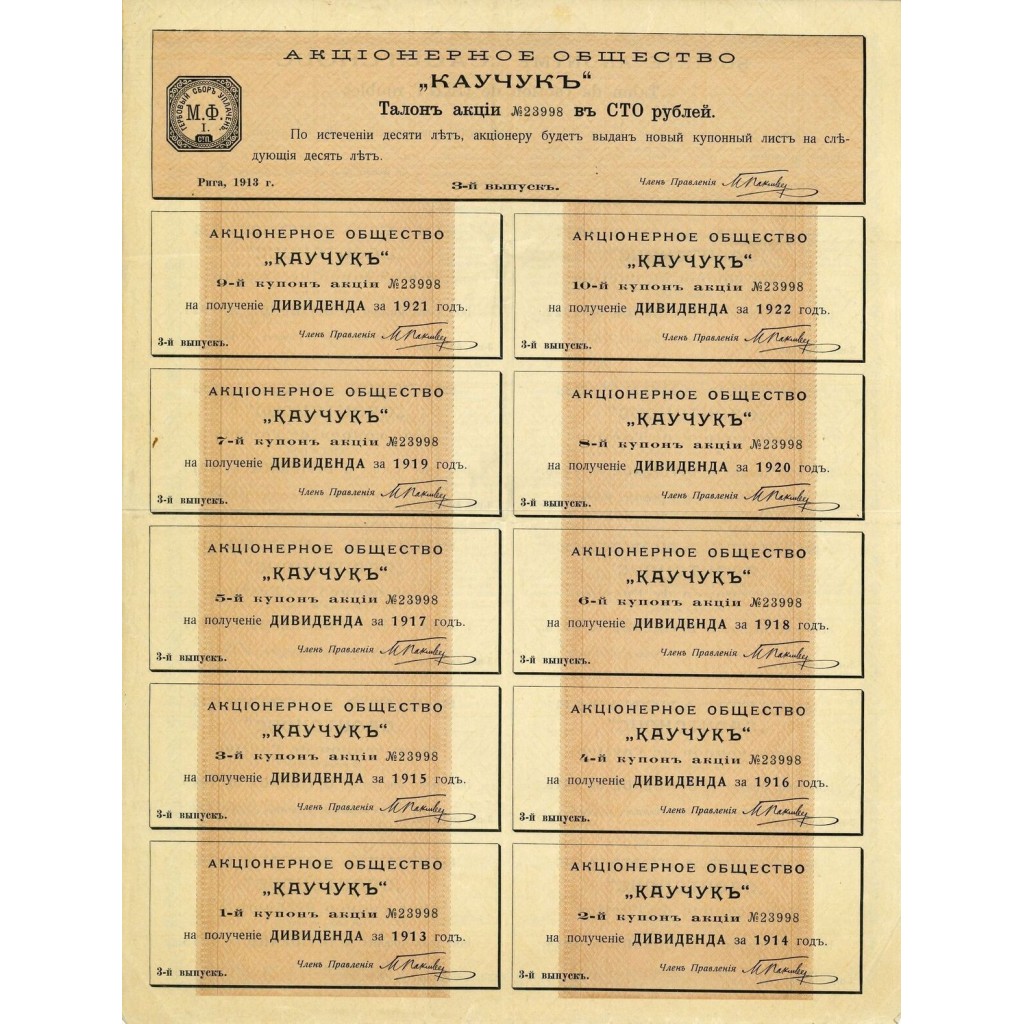
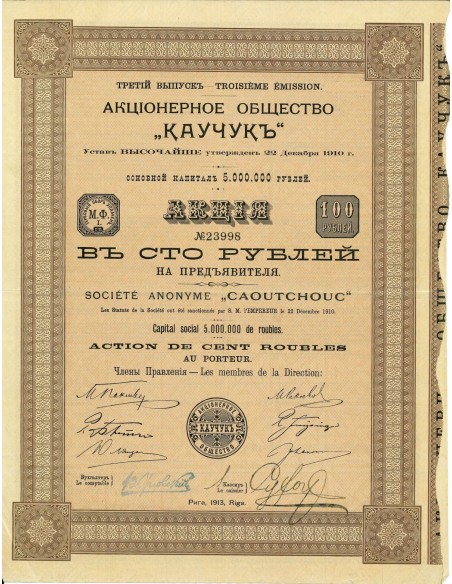
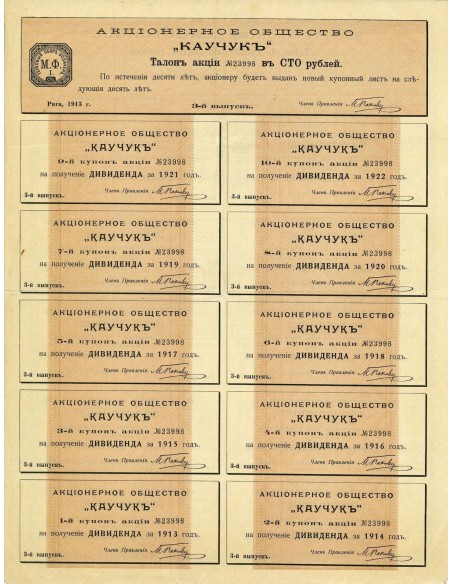
The Société Anonyme "Caoutchouc" was founded on December 22, 1910, with the aim of managing the production and processing of rubber, a crucial resource for the rapidly growing industry of the early 20th century. The company was located in Riga, a city with a strategic position within the Russian Empire, which was undergoing a period of significant industrialization at the time.
Rubber, also known as caoutchouc, was essential for the production of tires, seals, hoses, and numerous other industrial products. The creation of the Société Anonyme "Caoutchouc" reflected the growing global demand for rubber and the importance of Russia as one of the key players in the global industrial sector.
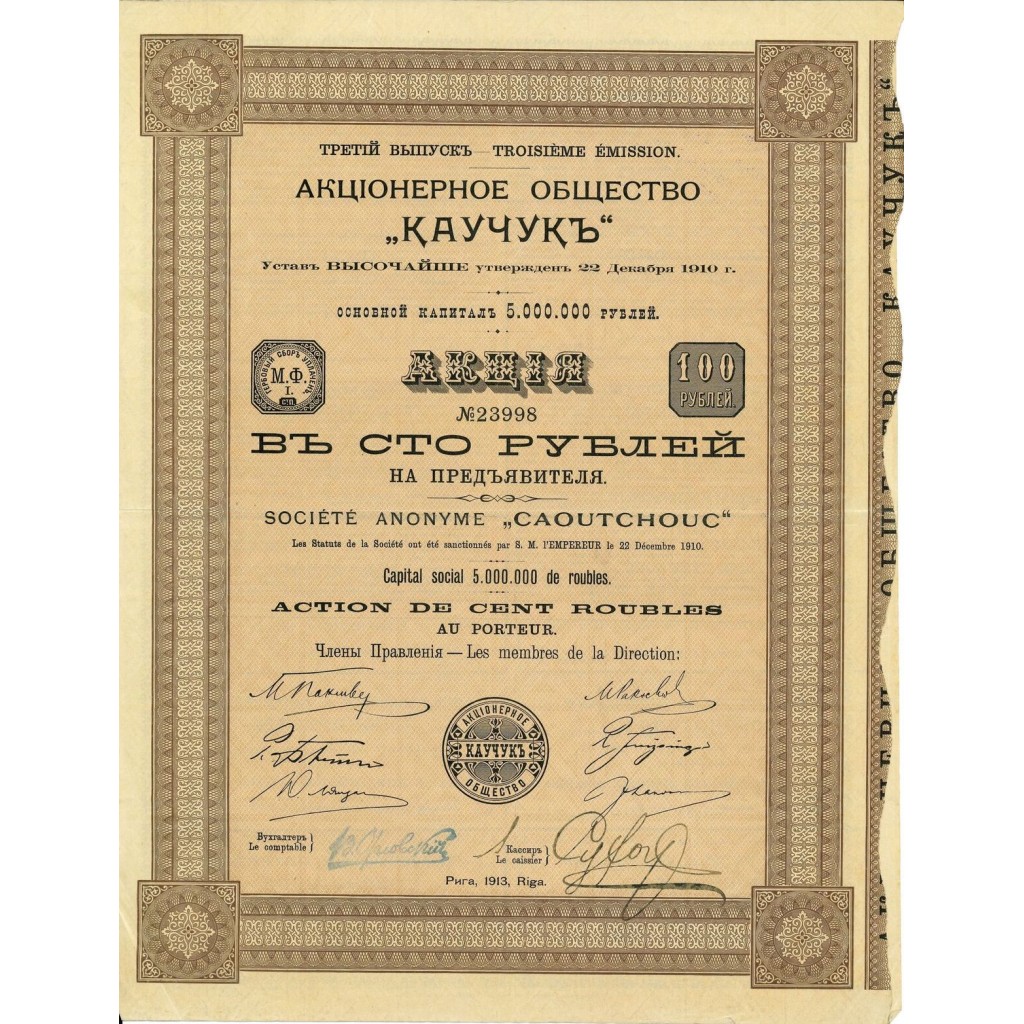
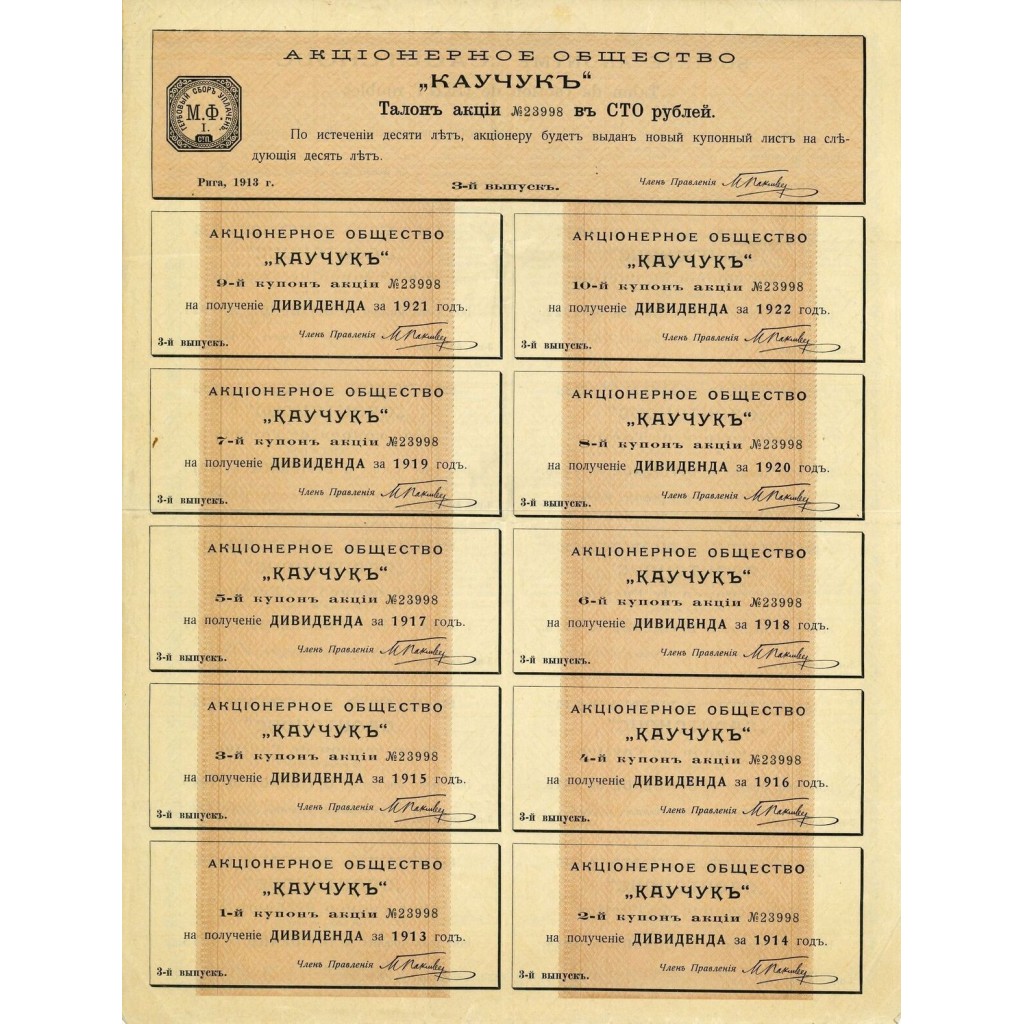
The document presented is a share with a nominal value of 100 rubles, issued in 1913, with a total share capital of 5,000,000 rubles. This issuance represents the third edition of shares by the company, highlighting the company's success and the confidence investors placed in its production and commercial capabilities.
Historical Data of the Société Anonyme "Caoutchouc"
| Historical Data | Values |
|---|---|
| Year of Establishment | 1910 |
| Headquarters | Riga, Russian Empire |
| Year of Stock Exchange Listing | Not specified |
| Year of Delisting | Not specified |
| Year of Company Dissolution | Not available |
| Share Capital at Establishment | 5,000,000 Rubles |
| Share Capital at Dissolution | Not available |
| Annual Revenue (1913) | Not available |
| Name at Delisting | Not available |
Share Characteristics
| Document Characteristics | Details |
|---|---|
| Year of Issue | 1913 |
| Face Value | 100 Rubles |
| Type of Share | Bearer Share |
| Share Capital | 5,000,000 Rubles |
| Edition | Third Edition |
| Place of Issue | Riga, Russian Empire |
Collecting historical shares like the one from the Société Anonyme "Caoutchouc" offers collectors a rare opportunity to own a piece of industrial history. These documents represent not only financial investments of the past but also testimonies to the technological and industrial evolution that characterized the early 20th century.
Owning a document like this means holding a piece of history that tells the story of the rise of rubber production in the Russian Empire and its impact on the global industry. The rarity and beauty of these shares make them particularly valuable to scripophilia collectors.
All historical documents for sale are intended for collection purposes. The documents have no economic or financial value (no economic or financial value), the second image is only representative of the company’s object of reference.