Shopping Cart
There are no more items in your cart
Historical Article: L. Mosseri & Co.
Introduction
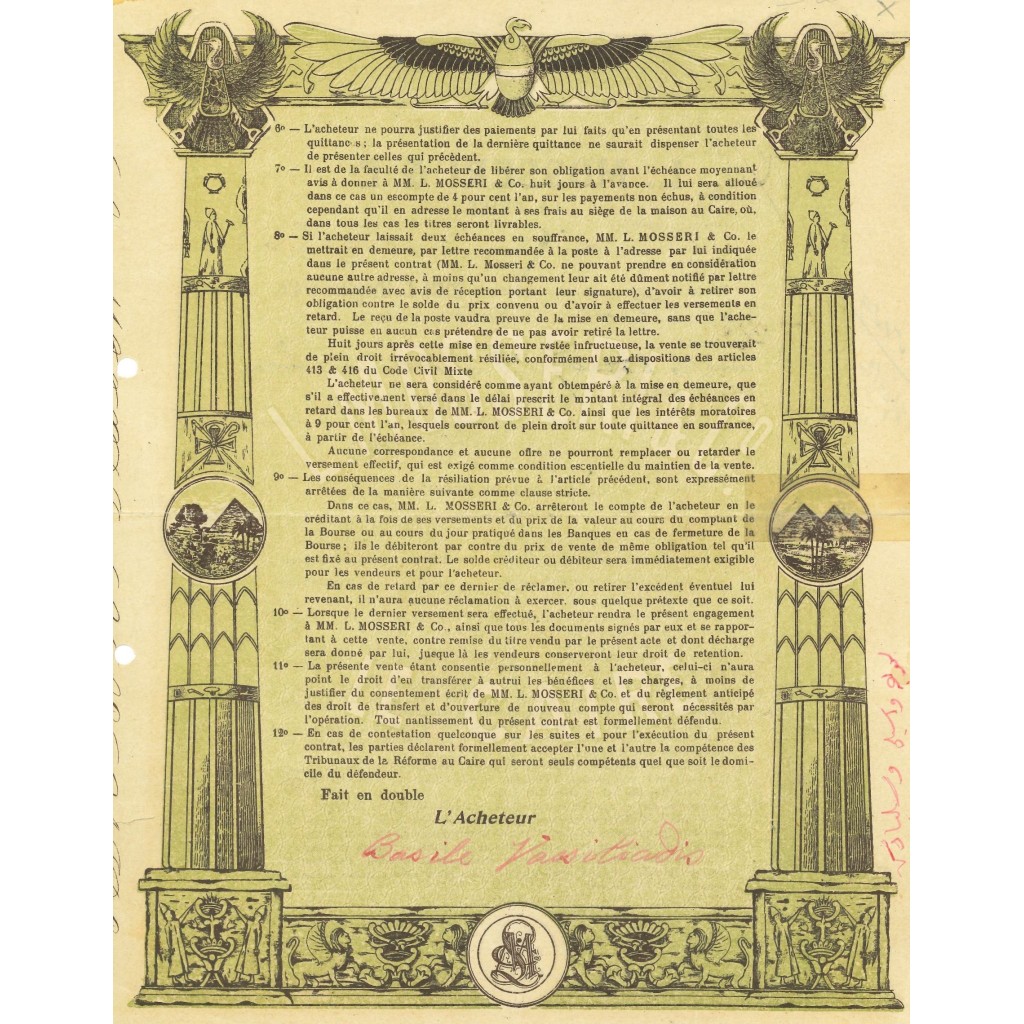
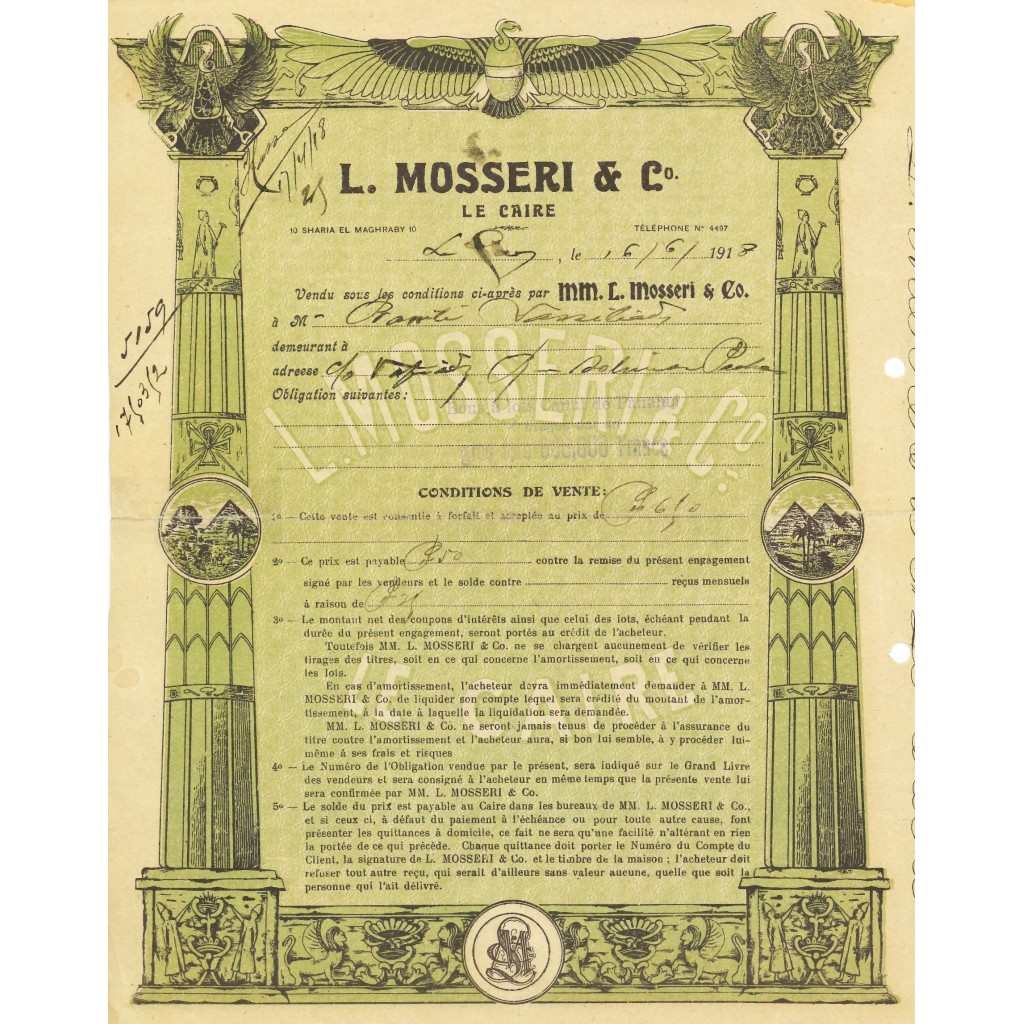
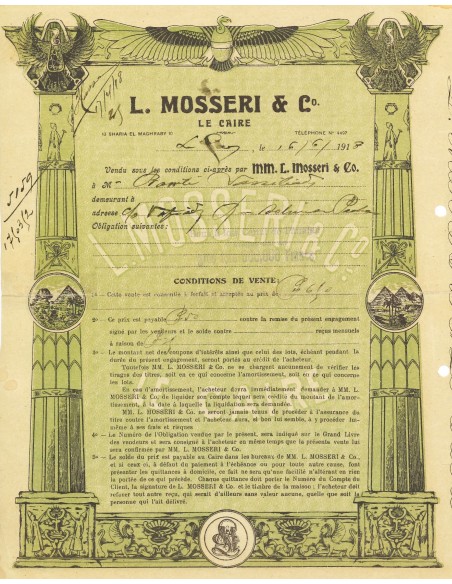
L. Mosseri & Co. was one of Cairo's most renowned commercial companies in the early decades of the 20th century. This historical document, dated 1918, is a bond contract issued by the company, a clear example of how the company operated in an economic and political context of great change in Egypt. The company's activity was centered on commerce and real estate investments, and this certificate represents a valuable item for scripophilia collectors.
Historical Context
The document was issued in 1918, a crucial period for Egypt, which was about to gain independence from the United Kingdom in 1922. The end of World War I marked a significant shift in the global economy and colonial dynamics. In this context, Cairo was a hub of commercial activity, where companies like L. Mosseri & Co. played a key role in the real estate market and commercial loans.
Egypt's economy at the time was characterized by a mix of tradition and modernization, with both local and foreign investments contributing to the country's growth. L. Mosseri & Co. was at the center of this transformation, providing financial services that met the needs of a rapidly evolving market.
Historical Company Data
| Item | Detail |
|---|---|
| Year of Foundation | Not available |
| Headquarters | 10 Sharia El Maghraby, Cairo, Egypt |
| Initial Capital | Not available |
| Capital at Dissolution | Not available |
| Year of Listing | Not available |
| Year of Delisting | Not available |
| Year of Dissolution | Not available |
| Document Type | Bond Contract |
| Date of Issue | June 6, 1918 |
| Signatures | Not available |
| Company Telephone Number | 4597 |
| Company Address | 10 Sharia El Maghraby, Cairo, Egypt |
Artistic and Typographic Description
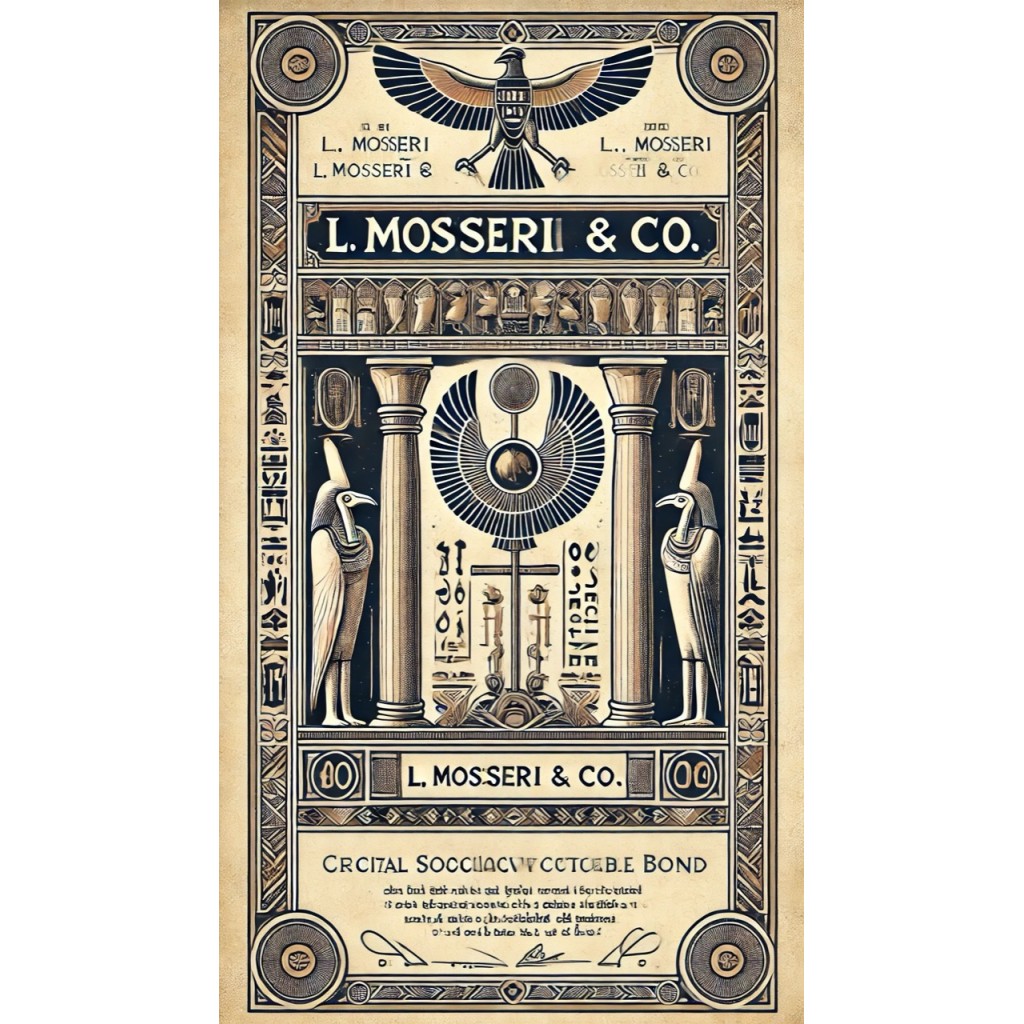
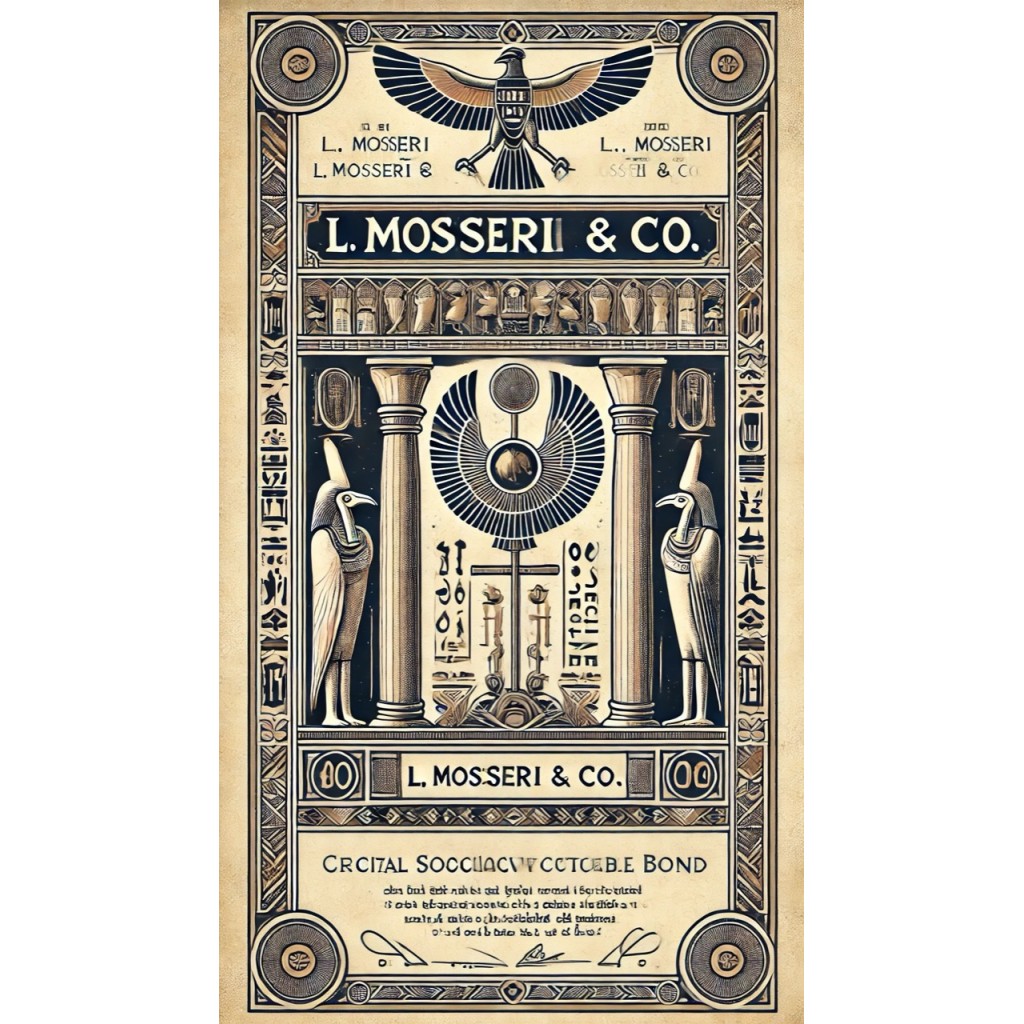
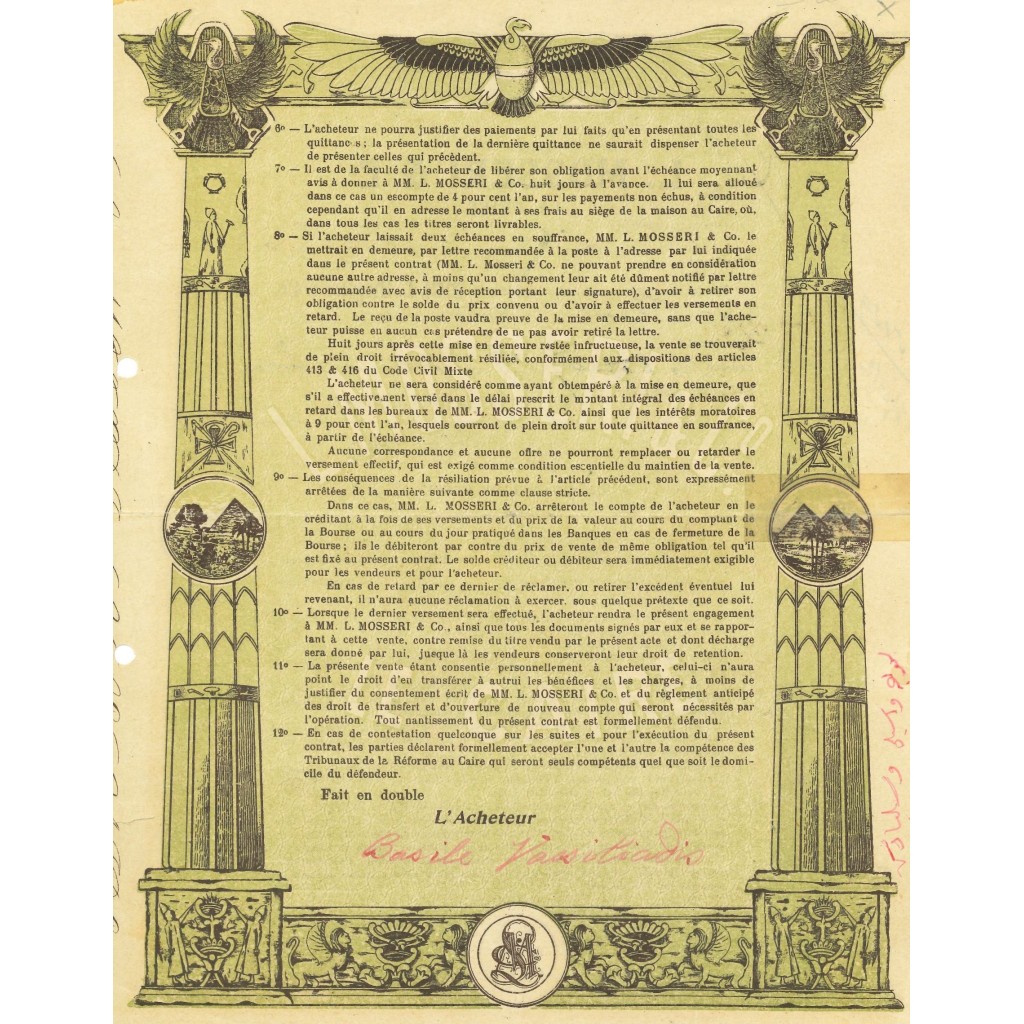
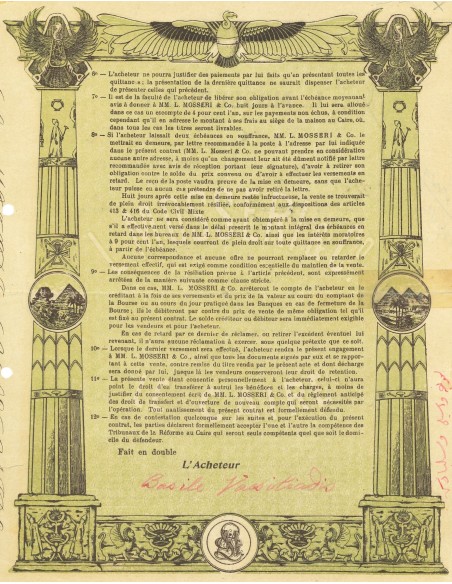
The document features an artistic design rich in Egyptian symbols, reflecting the country's cultural and historical identity. The graphics are dominated by images of an eagle and an ibis, sacred symbols of ancient Egypt, framed by columns that recall pharaonic architecture. The typography is elegant, with a predominant use of green, giving the document a distinctive and solemn appearance. The artist who created the design is unknown, but the influence of classical Egyptian art is evident.
Provenance of the Title
This document has likely been owned by various investors and collectors over the years. Given its age and state of preservation, it can be accompanied by a certificate of authenticity upon request, including a detailed historical registry of transactions related to this document.
Valuation and Rarity
The title is considered rare due to its age and the specific nature of the bond. Compared to other documents issued during the same period, this certificate stands out for its unique artistic design and the historical relevance of the issuing company. It is a piece that could significantly enrich a scripophilia collection.
Scripophilia Collecting
Scripophilia collecting is an art that allows one to preserve and appreciate historical financial documents. Each certificate tells a story, not only of the company that issued it but also of the economic and social context in which it was created. Collecting documents like this can represent both an investment and a way to connect with the past. For displaying these documents, it is recommended to use museum-quality frames that protect the paper from moisture and light, preserving its beauty and value over time.
These documents are not only for personal collections but can also be valuable gifts, ideal for those who love history, art, or wish to own a piece of the past. They can be used as decorative elements in offices or homes, adding a touch of historical elegance to the environment.
All historical documents for sale are considered collectible. The documents have no economic or financial value (no economic or financial value), and images that are not the historical document are representative of the company's object and the historical period in question, not provided but can be freely downloaded from the website and printed.