Shopping Cart
There are no more items in your cart
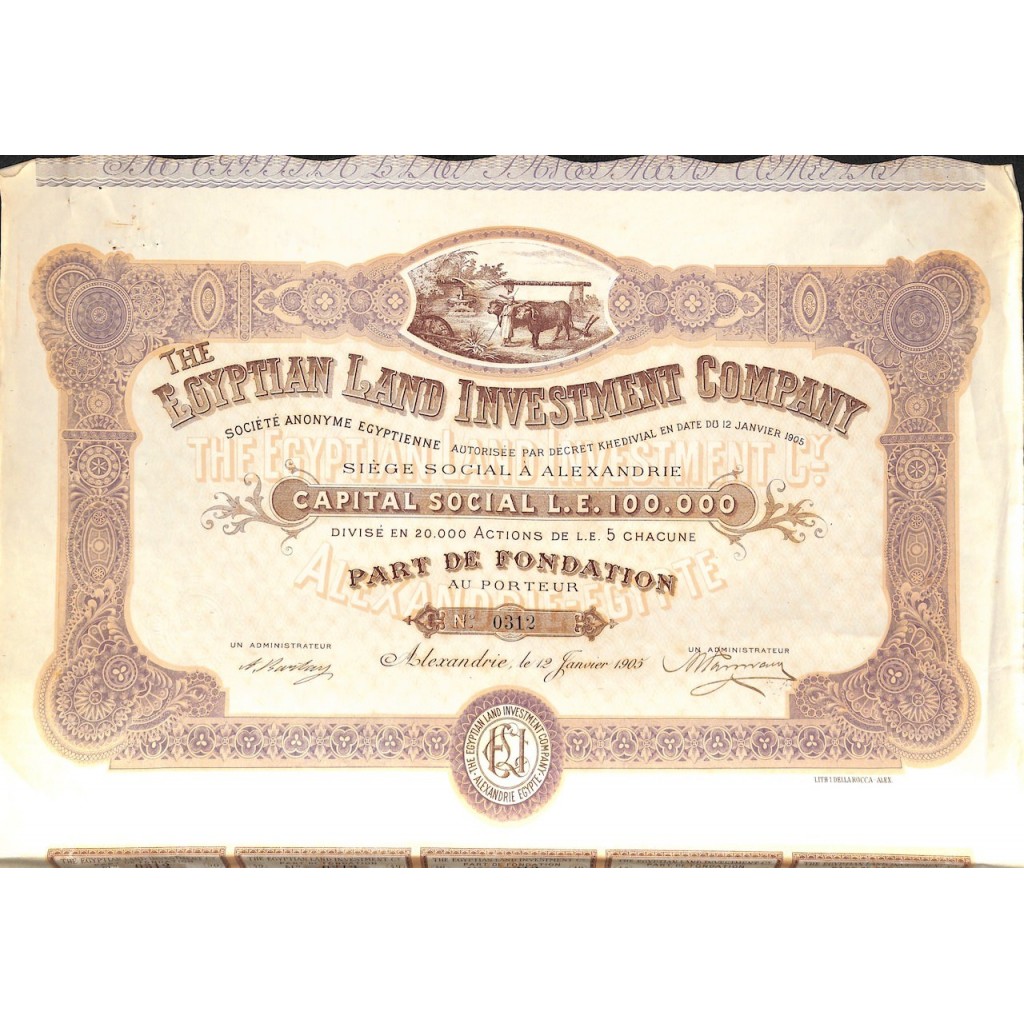
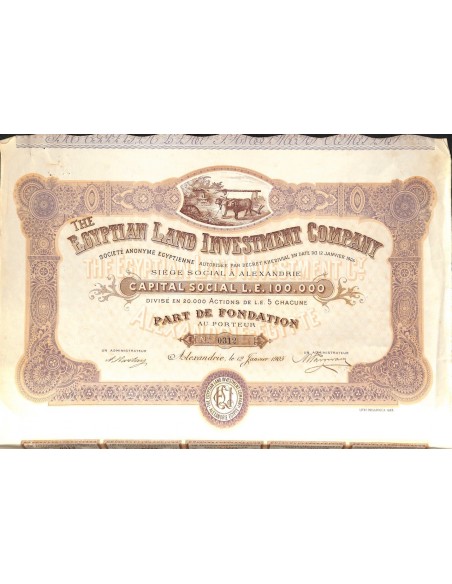
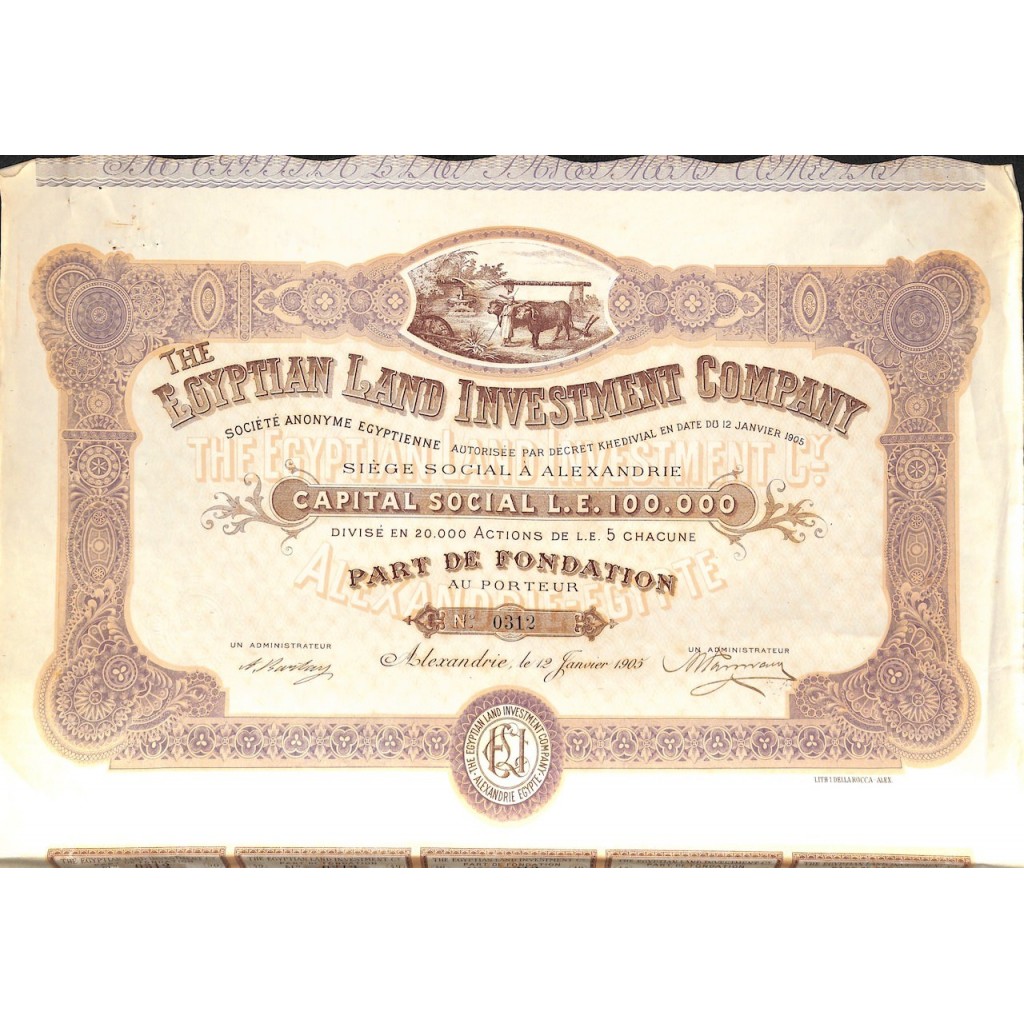
The Egyptian Land Investment Company was founded in 1905 in Alexandria, Egypt, with an initial share capital of 100,000 Egyptian pounds (L.E.), divided into 20,000 shares of 5 L.E. each. The company's goal was to invest in and develop agricultural and real estate land in Egypt, a country experiencing significant economic expansion at the time, driven by population growth and increasing international interest in the country's agricultural resources. The company was headquartered in Alexandria, a city that was already an important commercial and financial hub in the Mediterranean at the beginning of the 20th century.
Company Historical Data
| Information | Detail |
|---|---|
| Year of Incorporation | 1905 |
| Registered Office | Alexandria, Egypt |
| Share Capital at Incorporation | 100,000 L.E. |
| Share Capital at Cessation | N/A (latest available data) |
| Year of Stock Market Listing | N/A |
| Year of Delisting | N/A |
| Year of Company Cessation | N/A |
| Annual Revenue (estimate 1906) | N/A |
| Name at Stock Delisting | N/A |
Document Characteristics
| Characteristic | Detail |
|---|---|
| Serial Number | 0312 |
| Number of Shares | 1 Founder's Share |
| Value per Share | 5 L.E. |
| Date of Issue | 12 January 1905 |
| Signed by | Administrator: H. Vartan, M. Khosrovan |
| Printed by | Lit. I. Della Rocca, Alexandria |
| Typographic Elements | Decorative frame with floral motifs and agricultural scenes; central image depicting an Egyptian farmer with an ox. |
| Artist (hypothetical) | Likely a local artist commissioned by the printing house |
Historical Context
The certificate was issued in January 1905, during a period when Egypt was undergoing significant modernization and agricultural development. Under European, particularly British and French, influence, the country was seeing an increase in foreign investment, especially in the real estate and agricultural sectors. The Egyptian Land Investment Company was founded in this context, aiming to take advantage of the growing demand for arable land and the need for modern infrastructure to support agricultural expansion.
Artistic and Typographic Details
The document features an elegant and richly detailed design, with a frame decorated with floral motifs and a central scene depicting an Egyptian farmer with an ox, symbolizing the country's agricultural tradition. The printing was done by Lit. I. Della Rocca of Alexandria, one of the leading printing houses of the time, known for the quality of its productions. The artists who contributed to the design of the certificate sought to represent the rural essence of Egypt, combining traditional aesthetics with a modern visual language.
Provenance of the Title
This certificate was issued to an investor, likely an Egyptian citizen or a foreign entrepreneur interested in participating in the country's economic growth. Over time, the title has passed through the hands of several generations of collectors, remaining in good condition due to the care with which it has been preserved. Today, it is available to collectors who wish to own a piece of Egyptian history.
Valuation and Rarity
The certificate is considered rare, particularly for its excellent state of preservation and the historical context in which it was issued. The rarity of this document is heightened by the fact that few similar copies have survived to this day. For scripophily collectors, this title represents a unique opportunity to acquire a significant piece of Egypt's economic history.
Importance of Scripophily Collection
Scripophily collecting offers a window into the economic and cultural history of the past, allowing collectors to directly connect with documents that tell stories of growth, investment, and social change. These certificates are not only records of economic transactions but also works of art that reflect the cultural and artistic context of the era in which they were created. Displaying these documents in quality frames not only preserves their integrity but also adds a touch of history to any environment.
These documents, besides being for personal collection, are perfect to be used as a gift, as a piece of interior decor, or as a piece of historical and modern art. Their uniqueness makes them particularly valuable and suitable for those who wish to own or give something truly special.
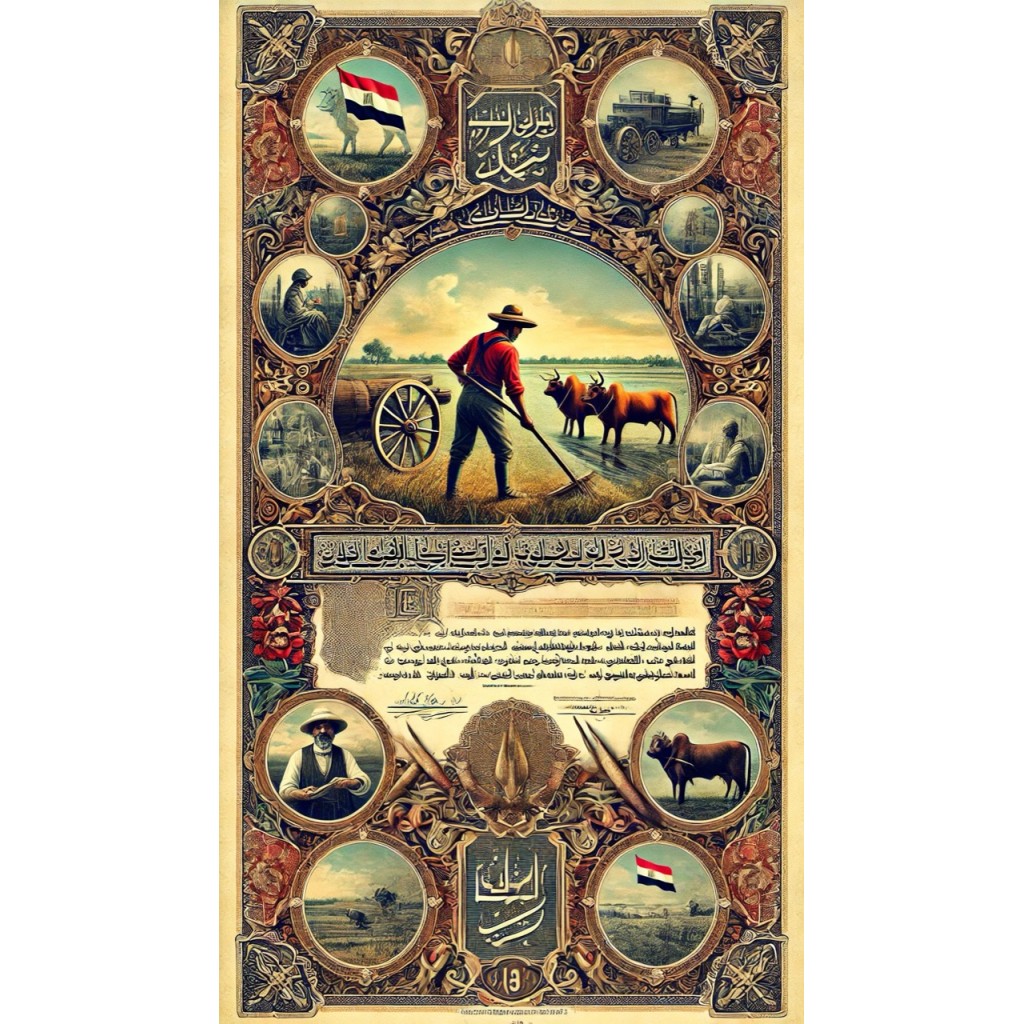
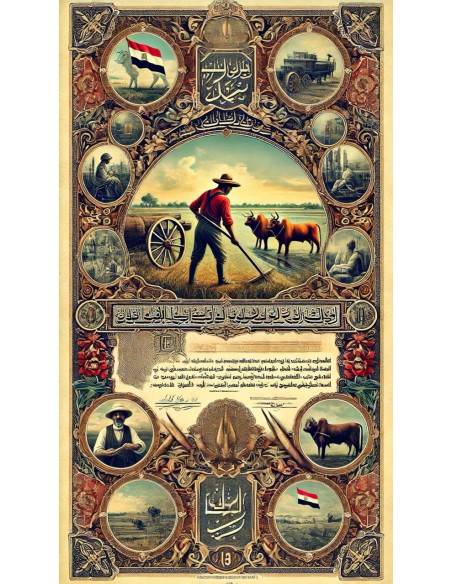
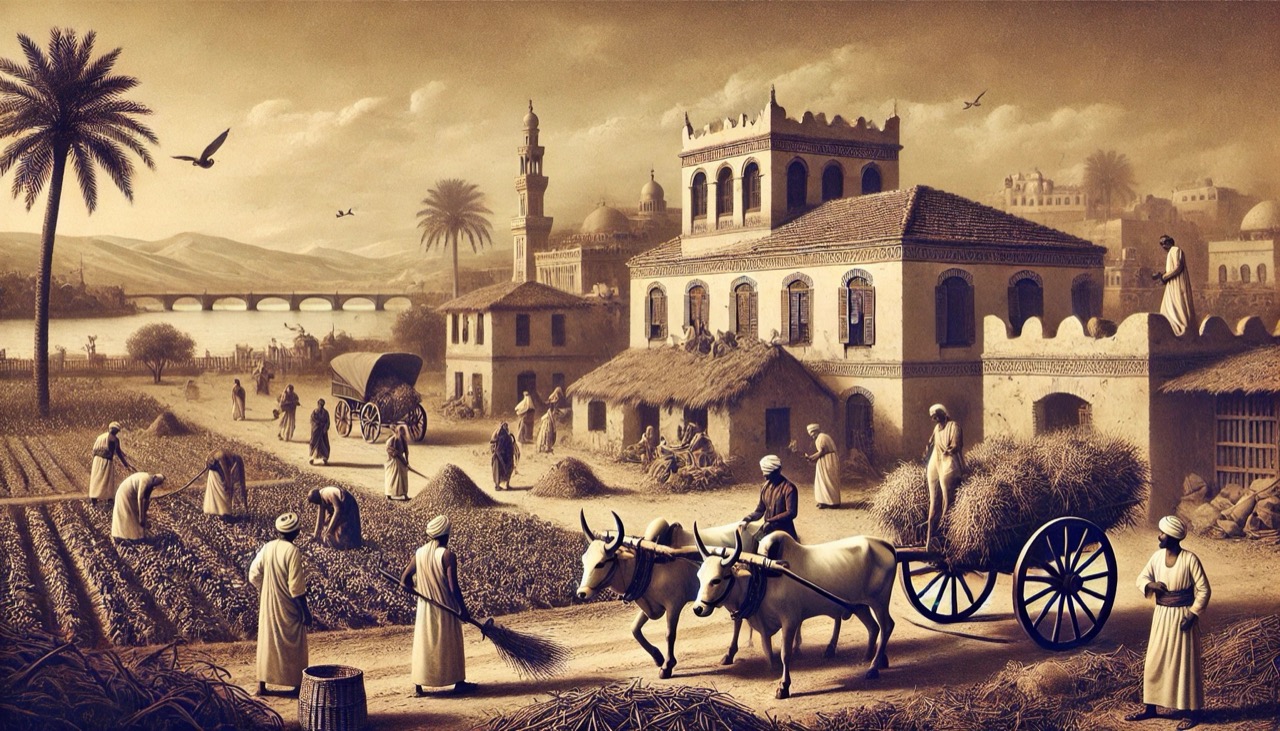
All historical documents for sale are intended for collection purposes only. The documents have no economic or financial value (no economic or financial value), images that are not the historical document are representative of the company's object and the historical period referenced, they are not provided but can be freely downloaded from the website and printed;