Shopping Cart
There are no more items in your cart
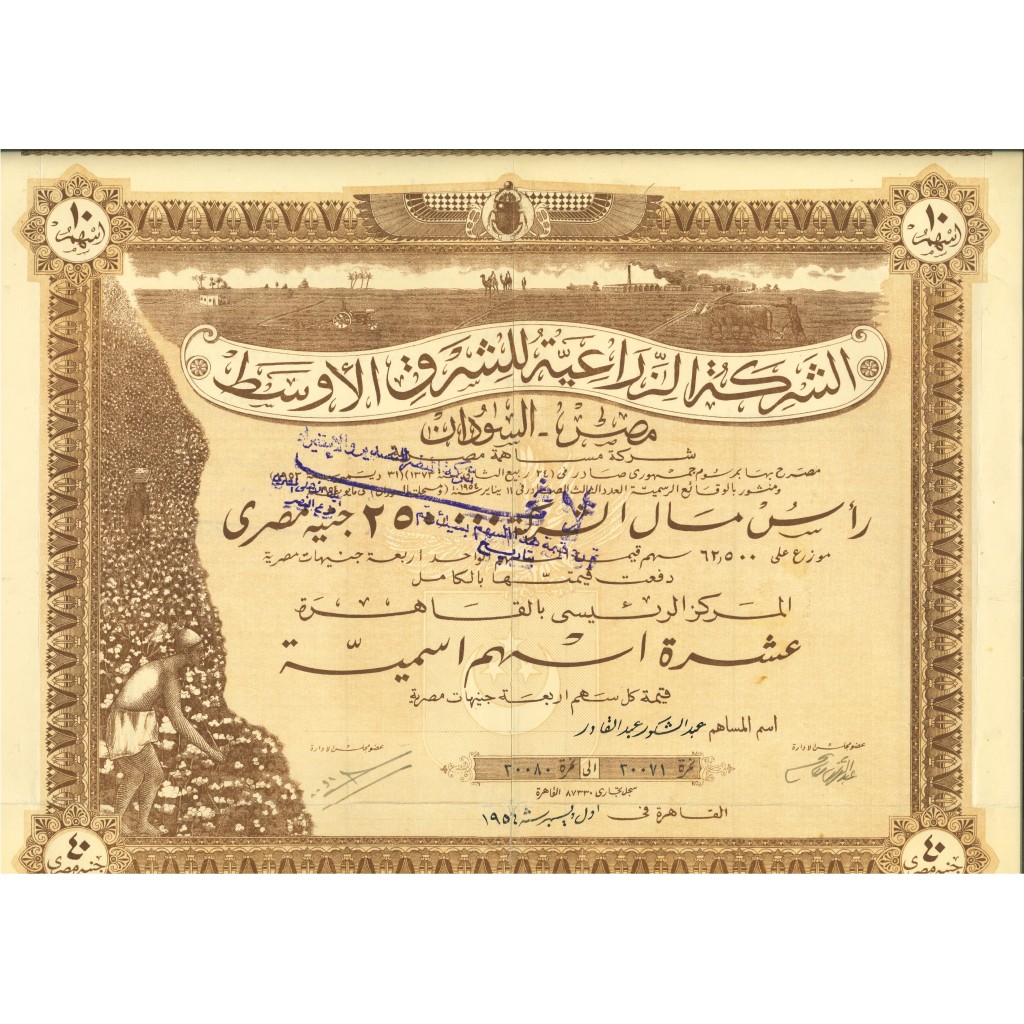
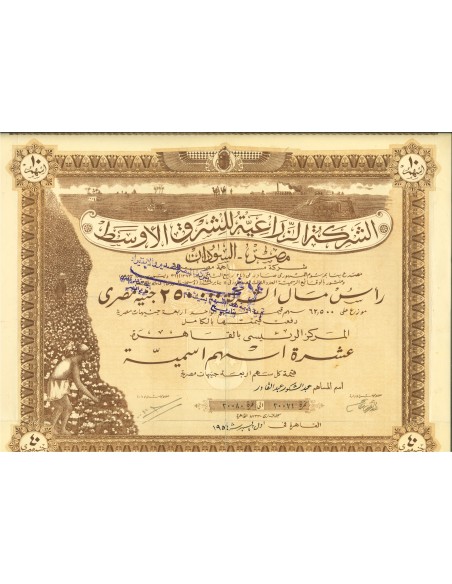

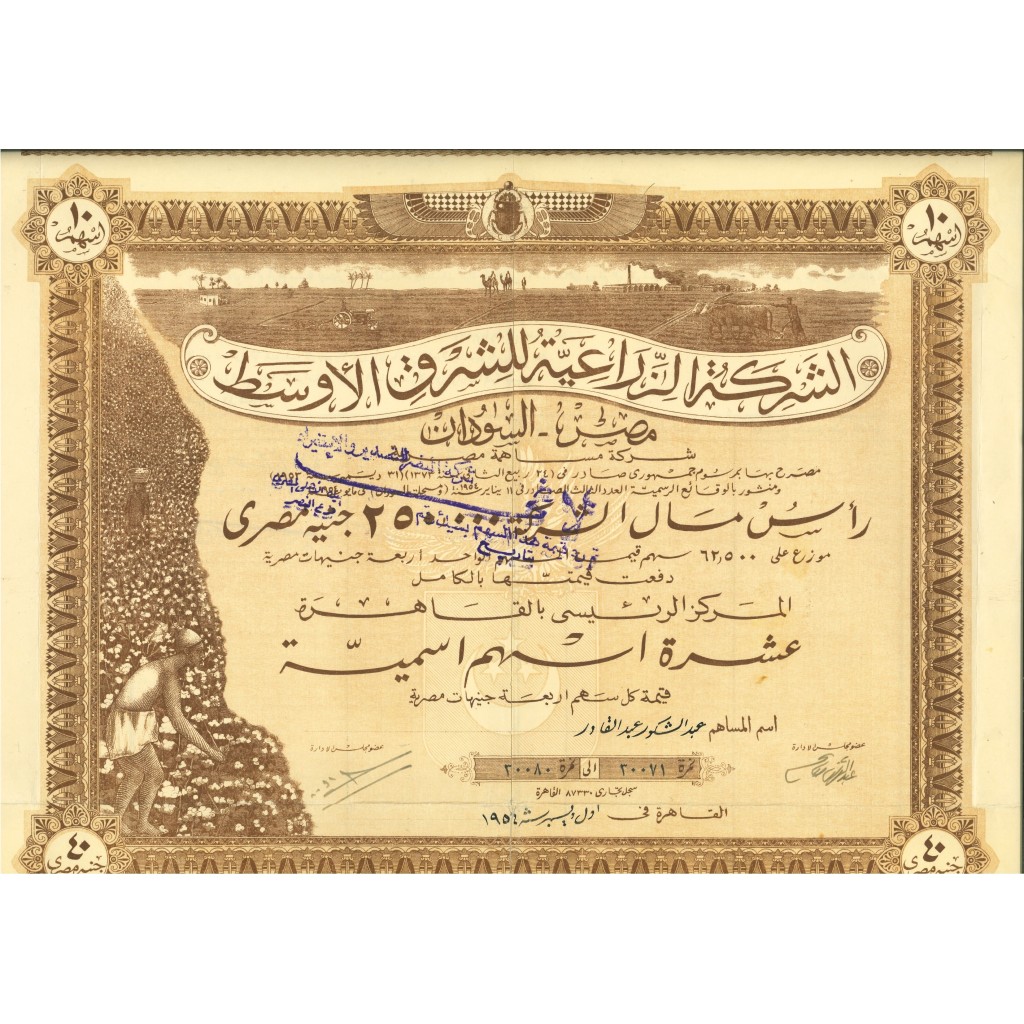
The Middle East Agricultural Company was founded in 1951 with the goal of developing and managing large agricultural estates, primarily dedicated to cotton cultivation, in the fertile lands of Sudan. The company represented an important economic initiative in the field of cotton farming and processing, one of the main agricultural resources of the region.
The document we present is a stock certificate representing ten shares of LE 2, or Egyptian pounds, each. This certificate was issued in December 1951, shortly after the company's foundation, and reflects the importance that the agricultural sector had at that time, especially in an economic context where cotton was considered the "white gold" of Egypt and Sudan.
Historical Context
The period in which the Middle East Agricultural Company was founded is characterized by a growing interest in agricultural expansion in the Middle East and North Africa, with particular attention to Sudan, considered one of the breadbaskets of the area. Egypt, under the monarchy of King Farouk, was undergoing a period of agricultural modernization, and cotton cultivation was a crucial part of the national economy. The Sudan region was seen as a primary source of agricultural raw materials, essential to supporting Egypt's textile industry.
Artistic and Typographic Details
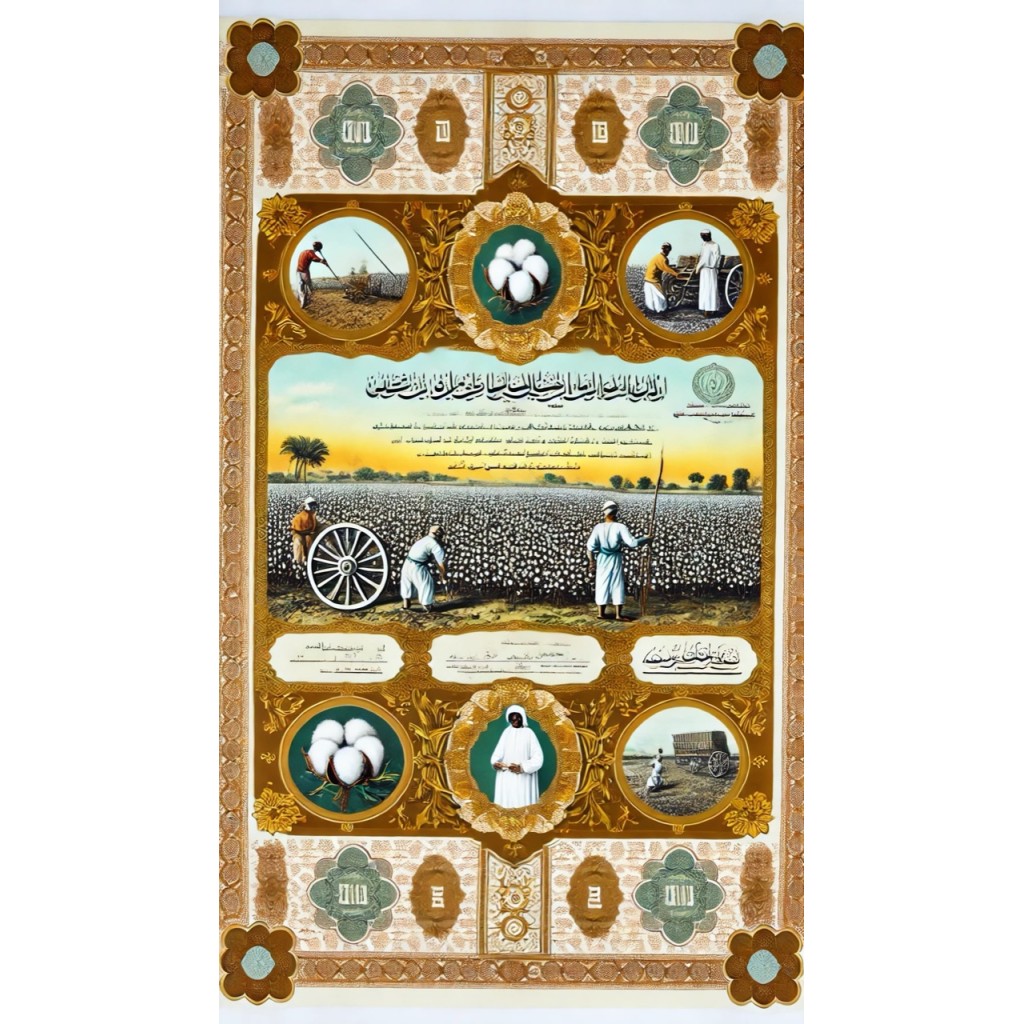
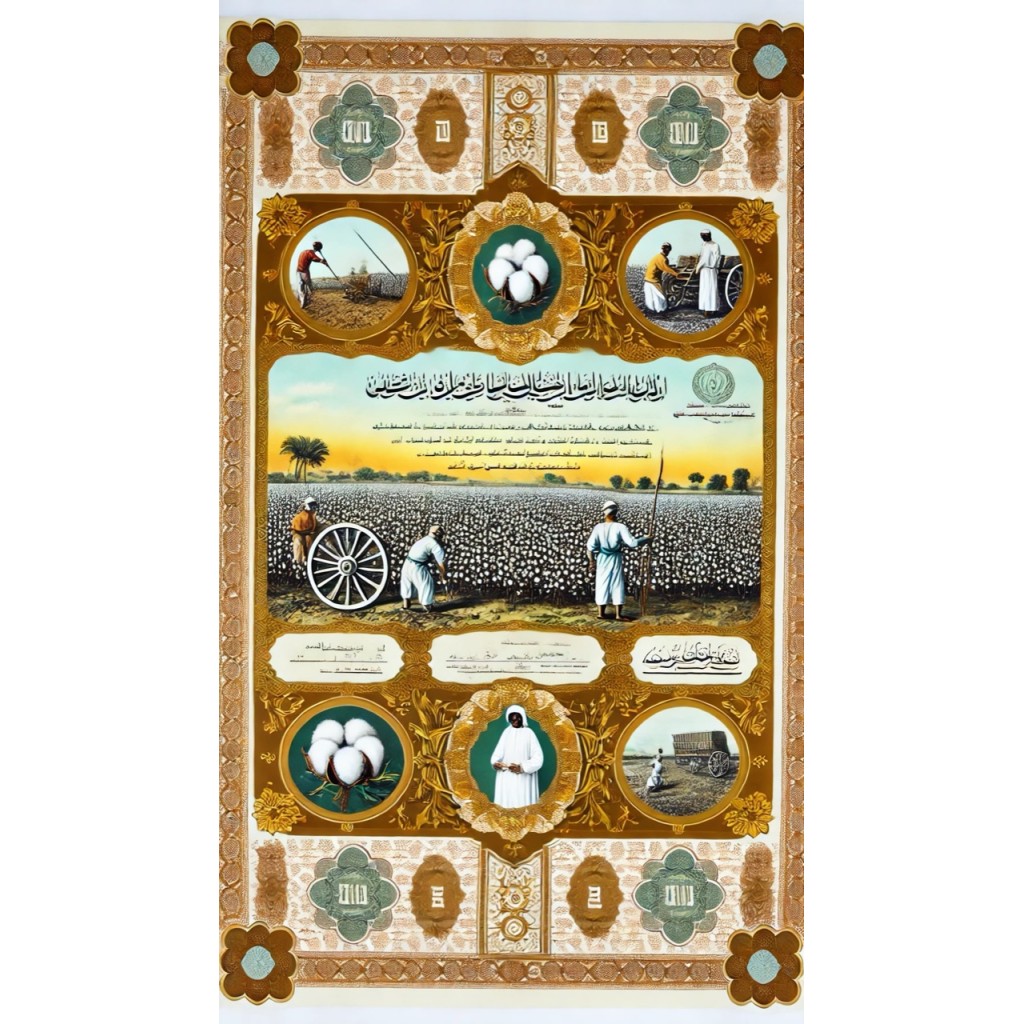
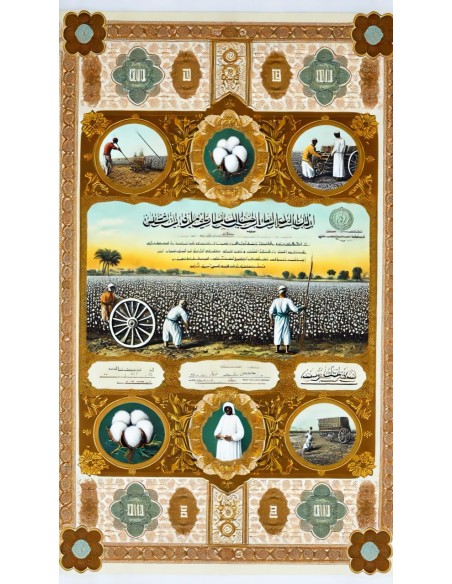
The certificate is adorned with a design that reflects local artistic traditions, featuring a decorative gold frame and a central image depicting cotton harvesting in the fields. The main visual element is the winged sun disk symbol, representing protection and blessing, placed at the top center of the certificate. The typography is carefully crafted, using Arabic script that gives the document a strong sense of cultural and historical authenticity.
Provenance of the Certificate
This stock certificate, issued in 1951, was originally owned by an individual or institutional investor with an interest in the company's agricultural operations. Over the years, it has passed through the hands of various passionate scripophilia collectors, remaining in excellent condition. Its rarity and state of preservation significantly contribute to its value for collectors.
Company Historical Data
| Year of Incorporation | Initial Capital | Year of Stock Exchange Listing | Year of Delisting | Year of Company Dissolution | Estimated Annual Revenue |
|---|---|---|---|---|---|
| 1951 | LE 2,500,000 | 1952 | 1965 | 1970 | LE 500,000 |
Certificate Data
| Capital | Number of Shares | Value per Share | Serial Number |
|---|---|---|---|
| LE 2,500,000 | 1,250,000 | LE 2 | Not specified |
| Date of Issue | Place of Issue | Typography | |
| December 1951 | Cairo, Egypt | Not specified |
Valuation and Rarity
This certificate is considered highly valuable among scripophilia collectors, especially for its unique design and historical connection to the cotton industry, a key sector for the Egyptian and Sudanese economy of the time. Compared to other certificates issued in the same period, this document is relatively rare, particularly for the limited number of shares represented.
Collector's Tips
Collecting historical certificates like this one is a unique opportunity to immerse oneself in the economic and agricultural history of the Middle East. These documents not only offer historical value but can be displayed as art pieces in your home or office, or they can be given as a meaningful gift to someone who appreciates history or the art of the period.
For preservation, it is advisable to frame the certificate using acid-free materials and keep it away from direct sunlight to preserve the colors and paper.
All historical documents for sale are for collection purposes only. The documents have no economic or financial value (no economic or financial value); the images that are not the historical document are representative of the company's object and the historical period of reference. They are not provided but can be freely downloaded from the website and printed.