Shopping Cart
There are no more items in your cart
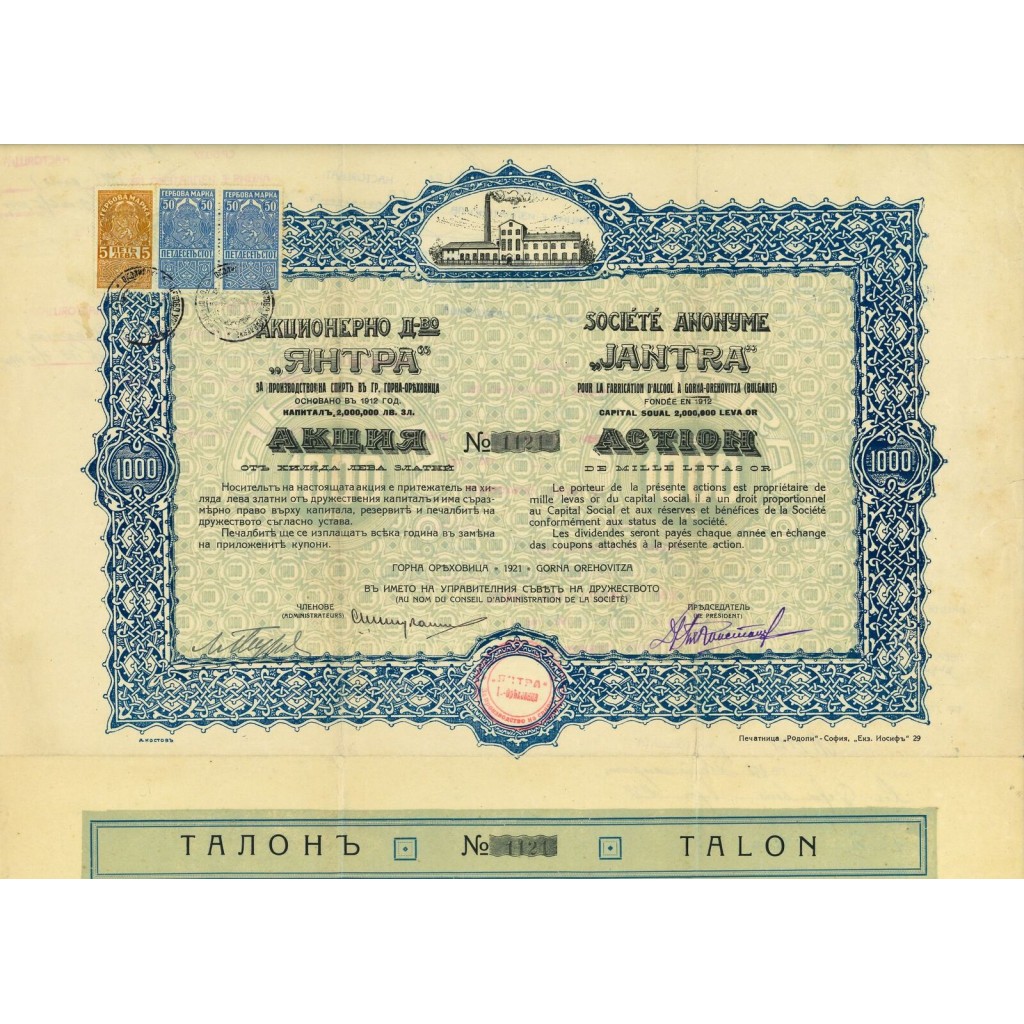
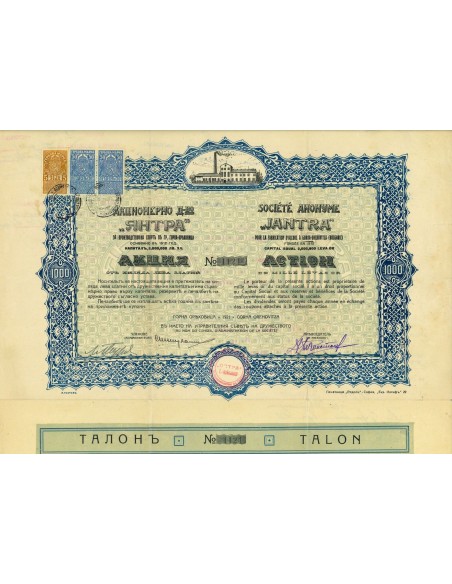
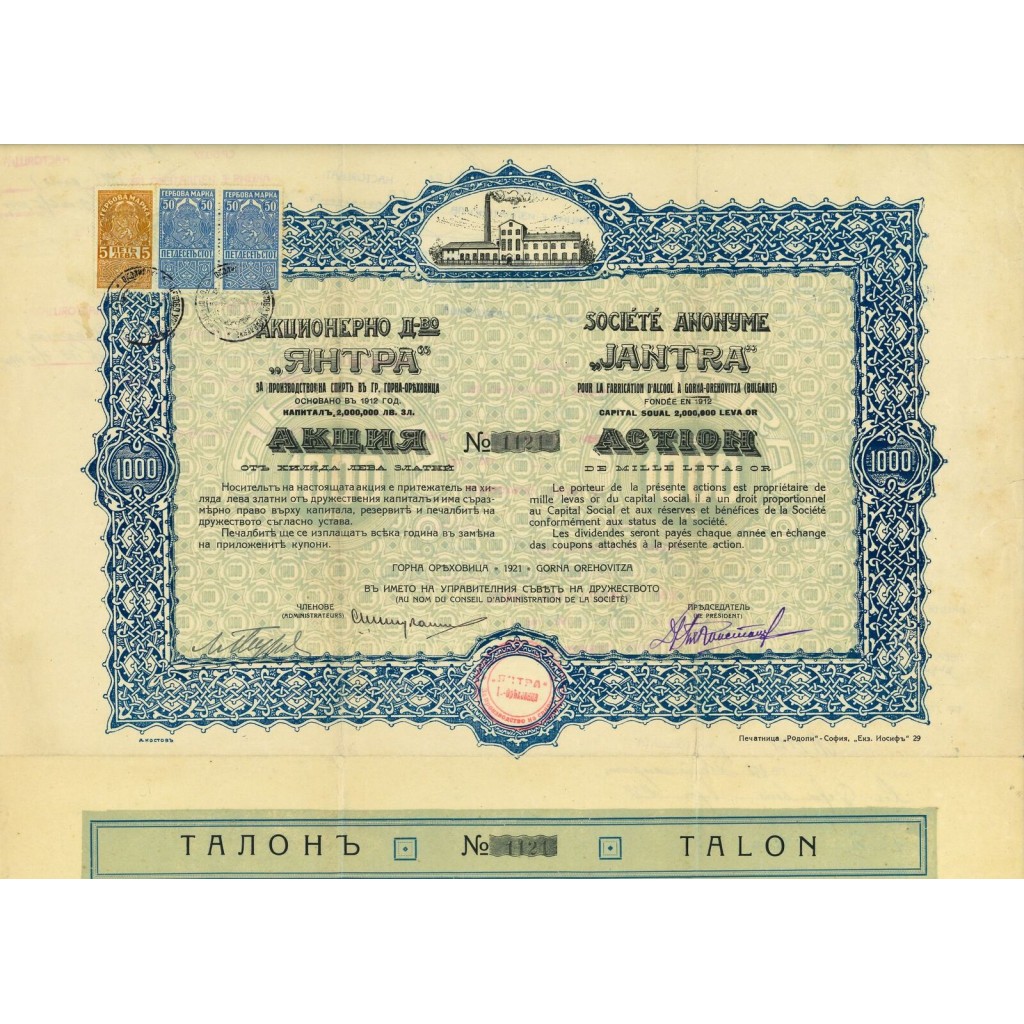
The Jantra Anonymous Society for the Production of Alcohol in Gorna Orehovitza was founded in 1912 with the goal of producing alcohol in the Gorna Orehovitza region, Bulgaria. This company is a typical example of the heavy industry that flourished in the early 20th century in the Balkans, with a particular focus on the production and commercialization of processed agricultural products.
The Jantra Society benefited from a period of economic growth in the interwar period when the demand for industrial and processed agricultural products was rising both nationally and internationally. With a share capital of 2,000,000 gold leva, the company issued shares that were purchased by local and foreign investors. These shares now represent a piece of Bulgaria's economic history and a treasure for scripophily collectors.
Historical Data of the "Jantra" Company
| Data | Information |
|---|---|
| Year of Establishment | 1912 |
| Registered Office | Gorna Orehovitza, Bulgaria |
| Initial Share Capital | 2,000,000 gold leva |
| Name at Delisting | Jantra Anonymous Society |
| Year of Stock Market Listing | Not available |
| Year of Delisting from Stock Exchange | Not available |
| Year of Company Cessation | Not available |
| Annual Revenue | Not available |
| Document Characteristics | Issue of 1000 leva ordinary share |
| Document Language | Bulgarian and French |
Text for Scripophily Collectors
Collecting historical documents such as shares and bonds is a window into a country’s economic and social past. Each document tells a story of investments, risks, and hopes that shaped the economic landscape of entire regions. Owning a share like that of the Jantra Company is not just an opportunity to explore the history of Bulgaria and its industrial development, but also represents a unique opportunity to add an authentic and meaningful piece of history to your collection.
This share issued by the Jantra Anonymous Society is a fascinating example of how the alcohol industry played a crucial role in Bulgaria's economy in the early 20th century. The elegant design and quality of printing reflect the importance these issuances held for companies of the time, used not only as financial instruments but also as means to project an image of solidity and prosperity.
For scripophily collectors, documents like this offer historical and artistic value that goes beyond merely owning a piece of paper. Every detail, from the bilingual text to the refinement of the illustrations, contributes to telling a story of entrepreneurship, investment, and economic growth.
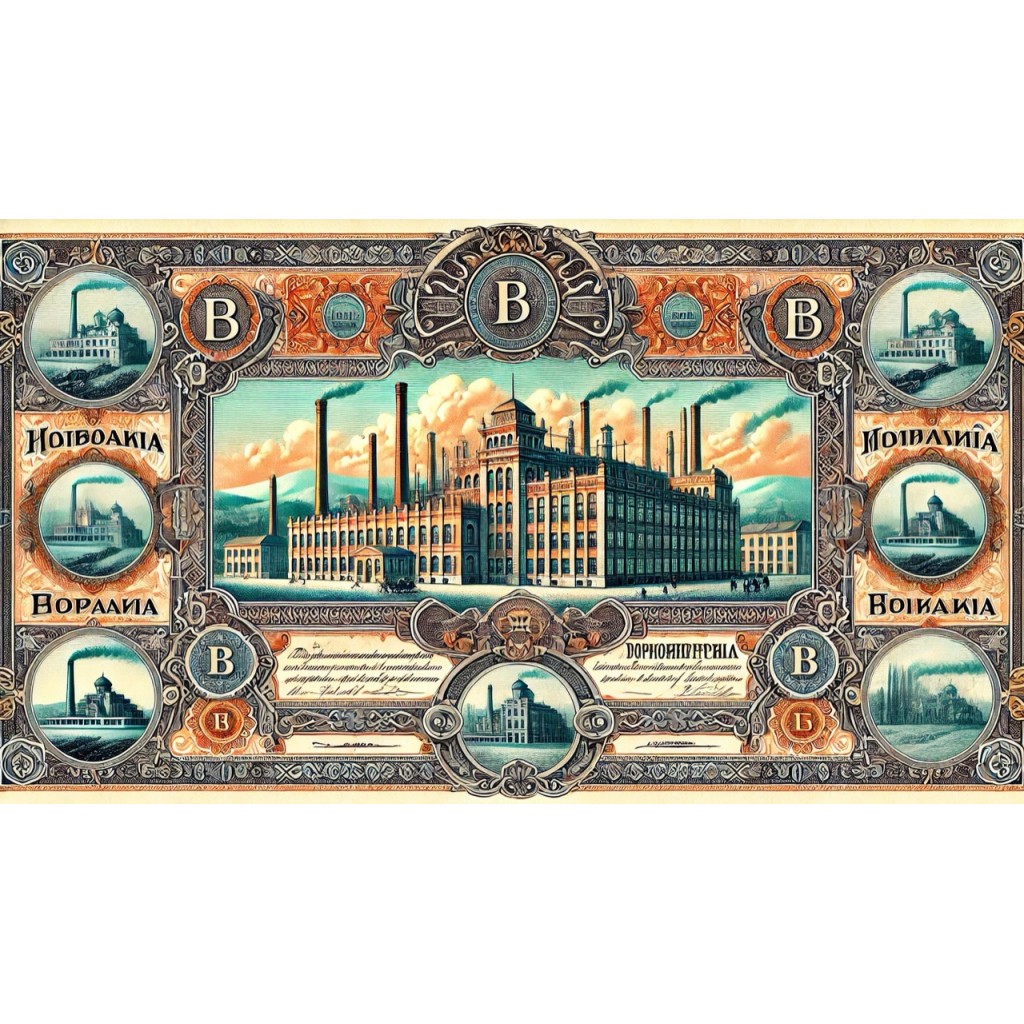
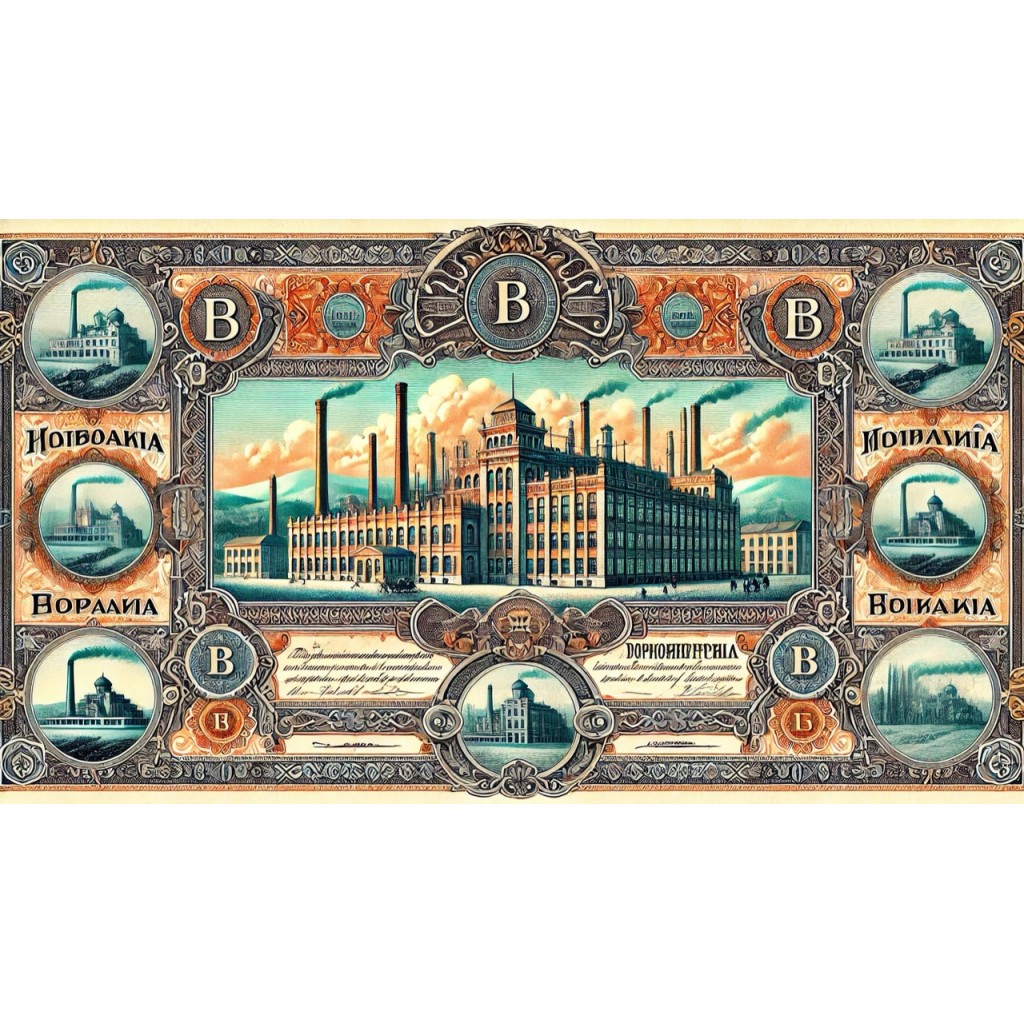
All historical documents for sale are intended for collection purposes. The documents have no economic or financial value (no economic or financial value), the second image is only representative of the object of the company referenced.