Shopping Cart
There are no more items in your cart
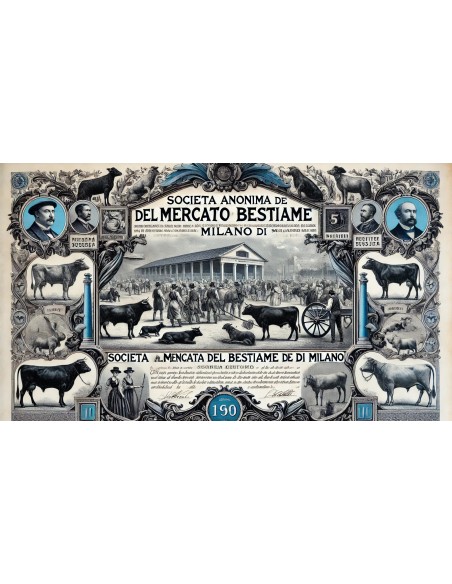
Foundation and Early Years
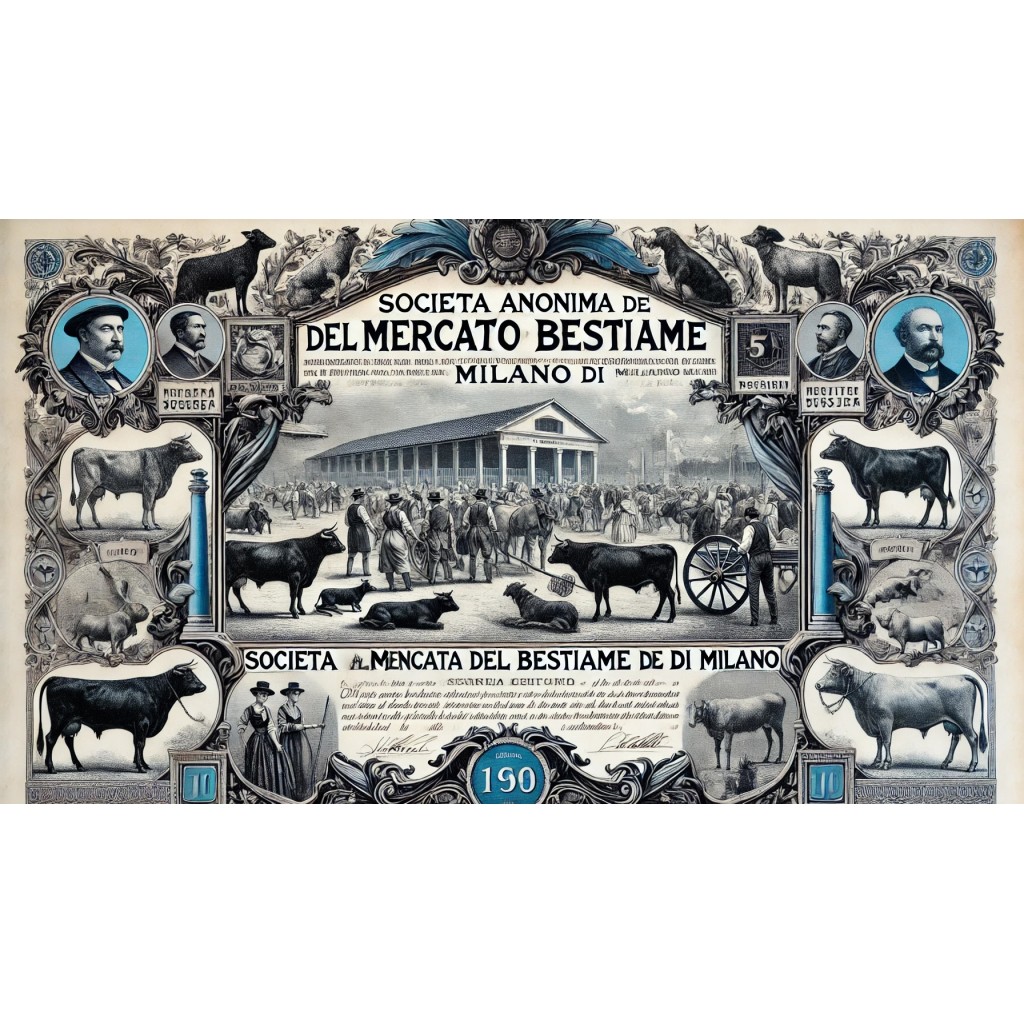
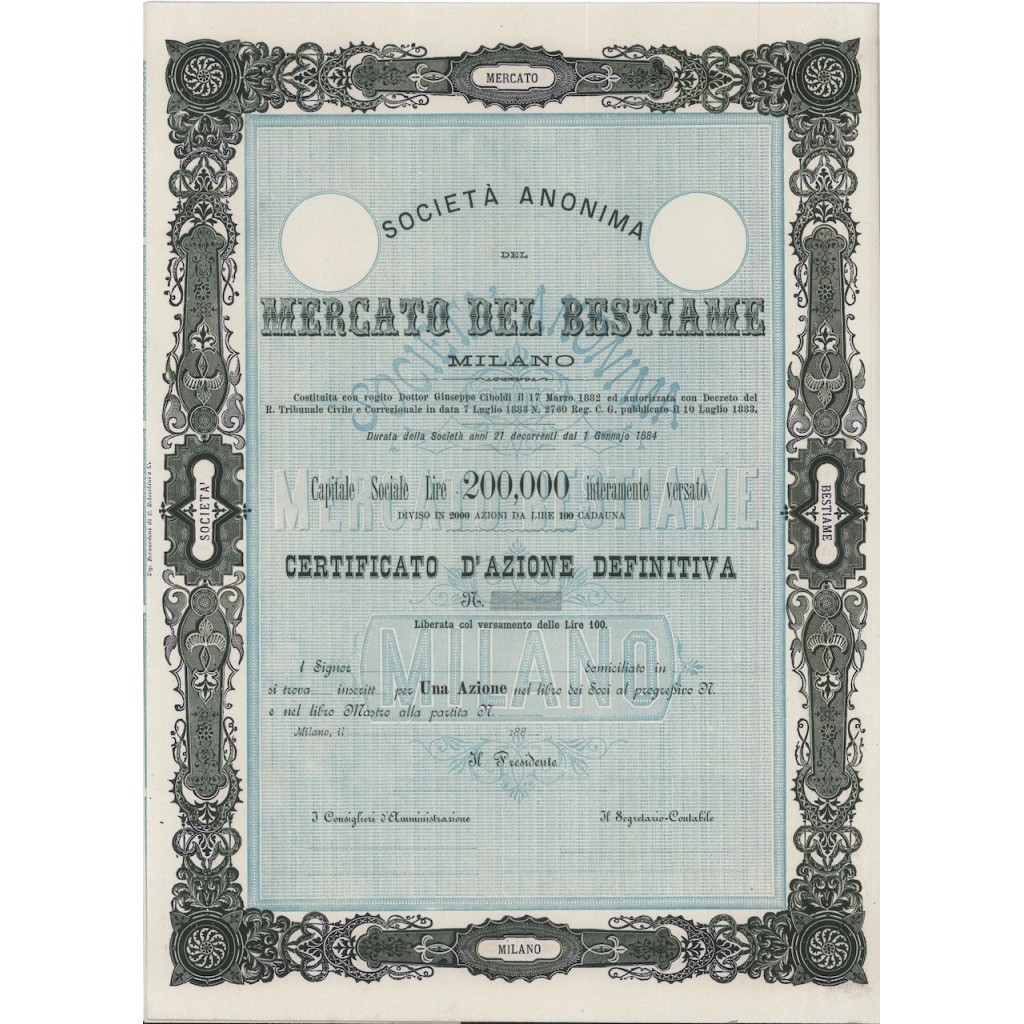
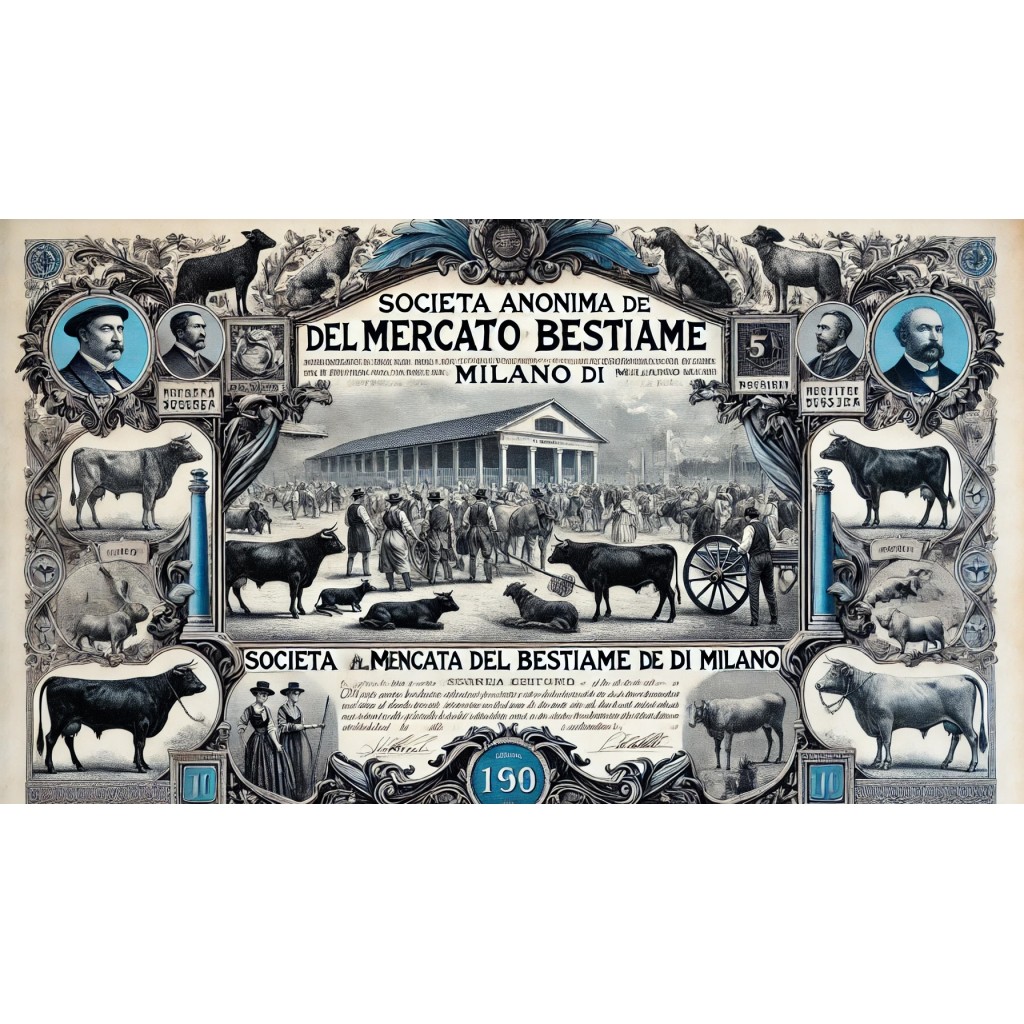
The Società Anonima del Mercato del Bestiame di Milano was officially established on March 17, 1882, by Dr. Giuseppe Ciboldi. The company received authorization from the Civil and Correctional Court of Milan on July 7, 1883, with the decree being published on July 10, 1883. The company's initial share capital was 200,000 lire, divided into 2,000 shares of 100 lire each.
The foundation of the company marked a significant step towards centralizing and organizing the livestock trade in Milan. Prior to its establishment, the livestock trade was largely unregulated, leading to inconsistent practices and varying quality standards.
Structure and Operations
The Società Anonima del Mercato del Bestiame di Milano was designed to provide a centralized marketplace for livestock trading. The market was equipped with facilities to accommodate various types of livestock, including cattle, sheep, and pigs. The company implemented standardized procedures for the inspection, weighing, and sale of animals, ensuring transparency and fairness in the trade process.
The market operated under strict sanitary regulations to prevent the spread of diseases among livestock. Veterinary inspections were mandatory, and animals were required to meet specific health standards before being allowed into the market.
Economic and Social Impact
The centralization of the livestock market in Milan had a profound impact on the local economy. The market facilitated efficient trade, reducing costs and improving the supply chain for meat and other livestock products. It also provided a reliable platform for farmers and traders to conduct business, fostering economic growth in the region.
Socially, the market contributed to improved living standards by ensuring a consistent supply of healthy and high-quality meat to the population. The regulations and standards implemented by the company helped to safeguard public health, reducing the risk of foodborne illnesses.
Innovations and Development
Throughout its history, the Società Anonima del Mercato del Bestiame di Milano continued to innovate and improve its operations. The company introduced new technologies and practices to enhance the efficiency and effectiveness of livestock trading. For example, the market adopted advanced weighing systems and improved transport logistics to streamline the movement of animals.
The company also invested in infrastructure improvements, expanding its facilities to accommodate growing trade volumes. These developments helped to maintain the market's competitiveness and relevance in the evolving agricultural landscape.
Decline and Transformation
With the advent of the 20th century and the modernization of the agricultural sector, the role of the Società Anonima del Mercato del Bestiame di Milano began to change. Advances in transportation and refrigeration technologies reduced the need for centralized markets, as livestock and meat could be transported more easily and stored for longer periods.
Despite these changes, the company's legacy endured. The standards and practices established by the Società Anonima del Mercato del Bestiame di Milano laid the groundwork for modern livestock markets and trading practices in Italy.
Conclusion
The Società Anonima del Mercato del Bestiame di Milano represents a significant chapter in the history of the Italian livestock trade industry. Its establishment and operations brought much-needed organization and regulation to the market, ensuring fair trade practices and high-quality standards. The company's contributions to the economy and public health have left a lasting impact, shaping the future of livestock trading in Italy.
This article provides an overview of the history and importance of the Società Anonima del Mercato del Bestiame di Milano, celebrating the company's role in advancing the livestock trade and improving the quality of life for the Milanese population.