Shopping Cart
There are no more items in your cart
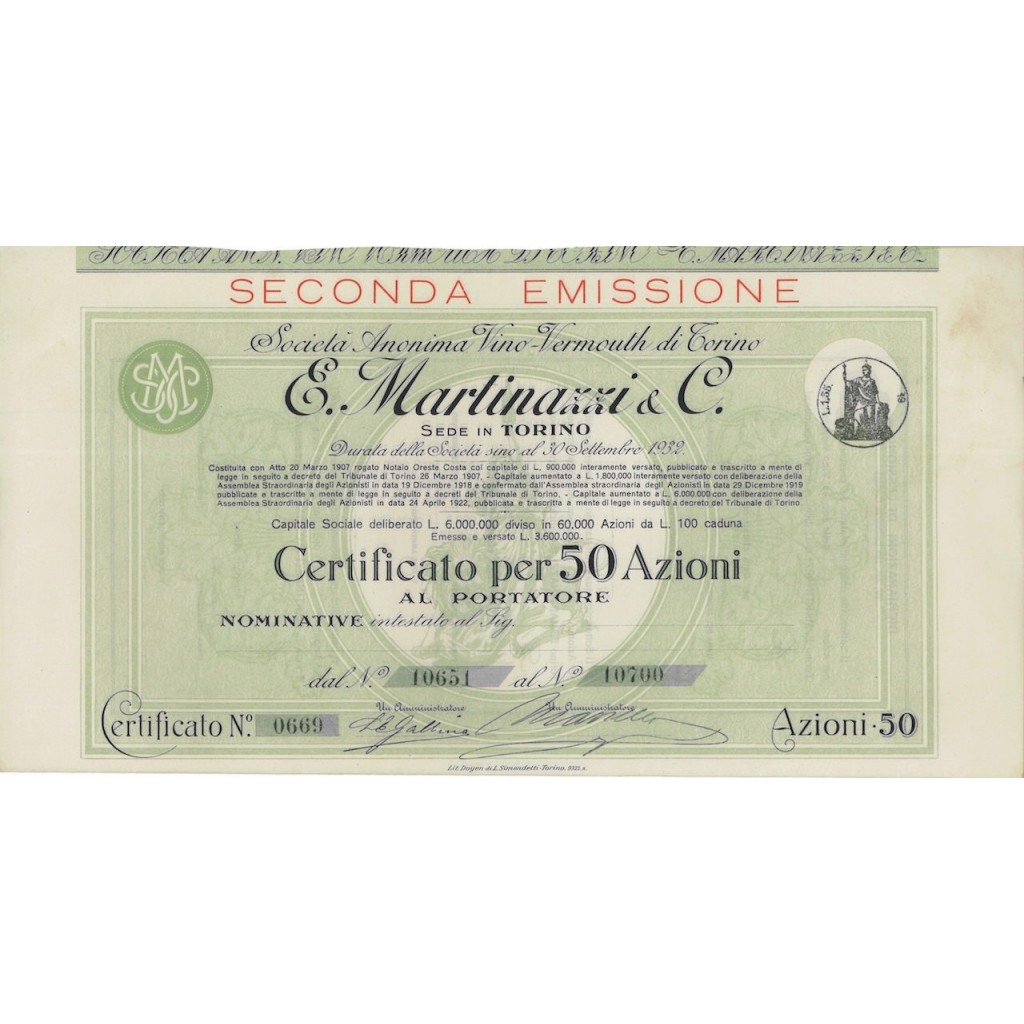
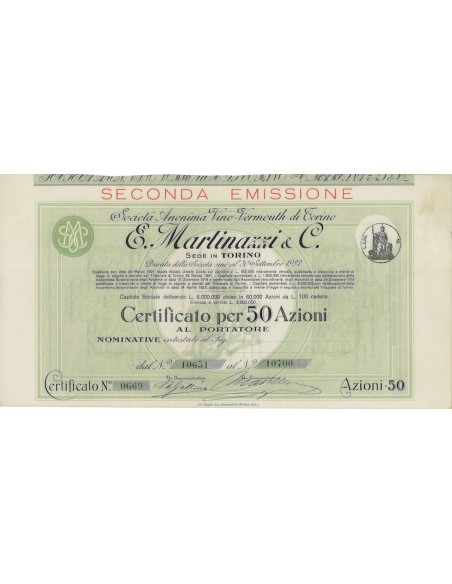
Certificate for 50 Shares – E. Martinazzi & C. Wine-Vermouth of Turin
Certificate Details
- Company: E. Martinazzi & C. – Wine-Vermouth Joint-Stock Company of Turin.
- Certificate Type: Certificate for 50 Bearer Shares.
- Share Capital:
- Authorized: L. 6,000,000.
- Divided into: 60,000 shares of L. 100 each.
- Issued and Paid: L. 3,600,000.
- Issuance Date: Not specified (based on the 1922 statute).
- Company Headquarters: Turin, Italy.
- Company Duration: Until September 30, 1932.
- Signatures of Administrators: Affixed.
Document Features
-
Graphic Style and Design:
- Light colors with a sober decorative motif, reflecting elegance appropriate for a financial certificate of the era.
- Stylized company logo ("EM") in green at the top.
-
Legal Information:
- Details of the company’s establishment (March 20, 1907).
- Timeline of capital increases and shareholder resolutions (1918, 1919, 1922).
-
Authentication:
- Official seal and signatures of the administrators.
Company History
E. Martinazzi & C., based in Turin, was a pioneering company in the production of wines and vermouth, crucial sectors of Piedmont’s wine industry. Founded in 1907, the company became part of the region's tradition of excellence, benefiting from the growing international demand for vermouth, a signature product of Piedmont.
-
Origins:
- The company was established by notary Oreste Costa in March 1907 with an initial capital of L. 900,000.
-
Economic Expansion:
- Subsequent capital increases (1918, 1919, and 1922) highlight the company’s success and the need to fund production and commercial expansion.
-
Contribution to Local Economy:
- Martinazzi significantly contributed to Turin’s reputation as an industrial and enological hub.
Historical and Collectible Value
- Historical Significance:
- The certificate represents a golden era for Piedmont’s enology and the economic boom in the agro-industrial sector.
- Aesthetic Appeal:
- Elegant and minimalist design, a symbol of the company's graphic identity.
- Rarity:
- Valuable to scripophily collectors, especially for Turin’s role in Italian industrial history.