Shopping Cart
There are no more items in your cart
In the beginning it was the Mayans and the Aztecs
The cocoa plant has very ancient origins: it is assumed that it was present more than 6000 years ago in the Amazon River and in the Orinoco, and that the first farmers who began to cultivate it were the Maya around 1000 BC.
After the Maya, the Aztecs also began to cultivate cocoa and then to produce chocolate, associating this food with Xochiquetzal, the goddess of fertility. Among these populations, cocoa was consumed by the elites during important ceremonies, with mystical and religious value.
The European discovery of cocoa
In 1502 the contact of cocoa with European civilization took place: Cristoforo Colombo during his fourth and last trip to America landed in Honduras where he had the opportunity to taste a cocoa-based drink. But only with Hernàn Cortéz, in 1519, was the introduction of cocoa in Europe, where it began to be consumed with the addition of vanilla and sugar to correct its natural bitterness.
A luxury for nobles
Cocoa was imported into Italy at the turn of the 1500s and 1600s. The first cities that began producing it were Florence, Venice and Turin. In the seventeenth century it became a widespread luxury among the nobles of Europe and the Dutch, skilled navigators, snatched world control and commercial dominance from the Spanish.
The myth of chocolate
Various conjectures are made about the birth of chocolates. The most suggestive one maintains that the chocolate is the consequence of an accident that occurred in the kitchen of a Duke: a casserole full of caramelized sugar accidentally spilled on top of almonds, lighting up the chef's imagination, which in this way conceived a bite-sized cake and covered with chocolate.
Turin and the gianduiotto
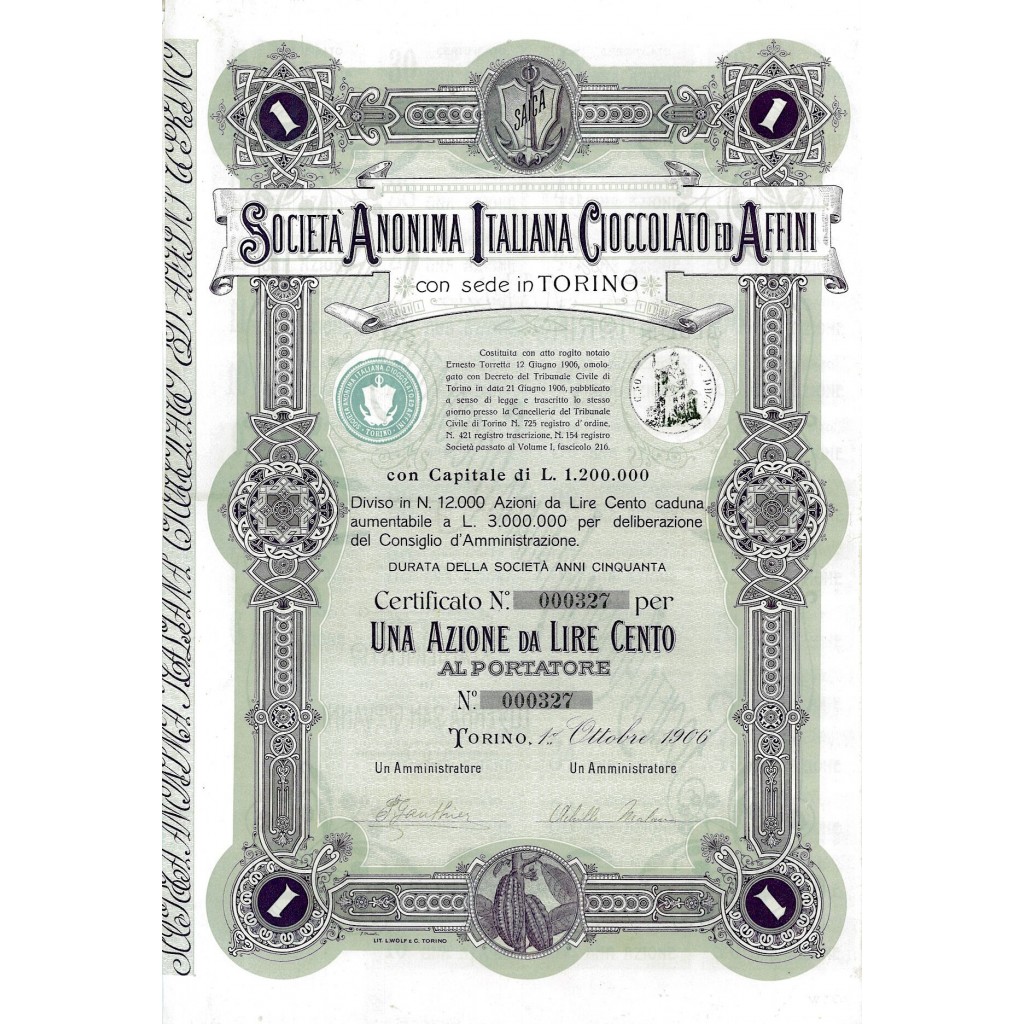
However, the homeland of the first chocolates seems to be Turin (late 1700s), as Piedmontese is also the invention of the gianduiotti. This delicious powdered chocolate and hazelnut paste was the result of the commercial bloc wanted by Napoleon to weaken the English: the cocoa, whose cost had become very high, was then diluted with hazelnuts.
The great nineteenth-century inventions
The nineteenth century was the century of the affirmation of solid chocolate and inventions that revolutionized cocoa processing. In 1802 the Genoese Bozelli studied a hydraulic machine to refine the cocoa paste and mix it with sugar and vanilla. In 1820 the first commercial-grade chocolate bar was born, produced in England, and in 1828 the Dutchman van Houten developed a special press that separated butter from cocoa powder.
In 1875 milk chocolate was launched on the market, while in 1879 the conching was invented, which consists in keeping the melted chocolate for a long time in order to ensure a homogeneous mixing.
From master chocolatiers to today
At the beginning of the 20th century the real industrialization of production processes began, while the geography of cocoa plantations expanded: the Ivory Coast, Cameroon, East Africa and Malaysia. At the same time, the ingenuity of the master chocolatiers continued to formulate new creations, such as the chocolate bar, created in 1923.
The twentieth century is also the century of the great Italian chocolate industry, which thanks to the creativity and resourcefulness of enlightened entrepreneurs succeeded in conquering the world with always new and delicious ideas.