Shopping Cart
There are no more items in your cart



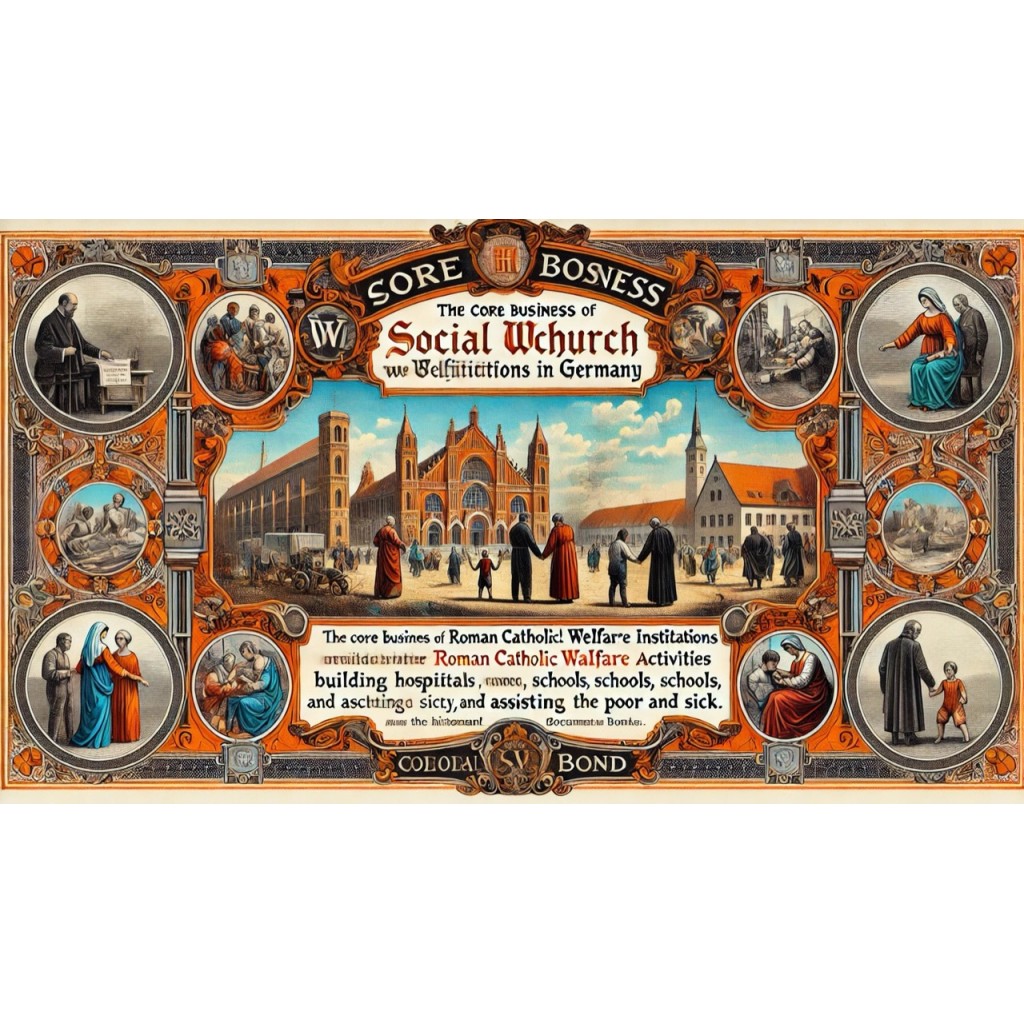
The Roman Catholic Church Welfare Institutions in Germany Loan is a significant example of a historical bond issued to finance the welfare institutions of the Roman Catholic Church in Germany. This bond, issued in the 1920s, represents an important testimony of the Church's role in supporting welfare and education initiatives during a period of significant economic and social turmoil.
Through the Deutsche Caritasverband, the Catholic Church played a crucial role in assisting the poor, sick, and needy, and these bonds were issued to finance such charitable activities. The capital raised through these bonds was used to build hospitals, schools, and other welfare institutions, thus ensuring continuous support to local communities.
Historical Data of the Company
| Year | Revenue (in million RM) | Share Capital at Incorporation (RM) | Share Capital at Dissolution (RM) | Year of Incorporation | Headquarters | Denomination at Delisting | Year of Stock Exchange Listing | Year of Delisting | Year of Dissolution |
|---|---|---|---|---|---|---|---|---|---|
| 1923 | ND | 10,000 | ND | 1923 | Berlin | Roman Catholic Church Welfare Institutions Loan | 1923 | 1950 | 1950 |
Document Characteristics
| Feature | Detail |
|---|---|
| Issuer | Roman Catholic Church Welfare Institutions in Germany Loan |
| Amount | $500 |
| Interest Rate | 7% |
| Issue Date | 1923 |
| Maturity Date | 1943 |
| Purpose | Financing charitable and welfare activities of the Roman Catholic Church in Germany |
| Issuing Authority | Deutsche Caritasverband, Katholische Schulorganisation Deutschlands, Reichsverband der Katholischen |
| Series | D358 |
| Graphic Representation | Image of a worker with industrial equipment, symbolizing social and charitable activities |
| Dominant Colors | Orange and black |
Importance for Scripophilia Collectors
Collecting historical documents such as stocks and bonds is a fascinating practice that allows one to delve into the economic and social history of the past. The bonds of the Roman Catholic Church Welfare Institutions in Germany Loan are particularly valuable to scripophilia collectors due to their historical and cultural significance.
These documents not only represent a form of past investment but also symbolize the social welfare initiatives of the Catholic Church during a crucial period in German history. Each bond is a unique piece that tells a story of solidarity and community support.
Purchasing one of these bonds means owning a fragment of history, a document that contributed to shaping the social context of the time. For collectors, the value lies in the rarity, condition, and history behind each document. Collecting these bonds is a way to preserve and celebrate the past, ensuring that stories of altruism and community support continue to live on.
All historical documents for sale are intended for collection purposes. The documents have no economic or financial value (no economic or financial value), the second image is only representative of the company's subject.