Shopping Cart
There are no more items in your cart
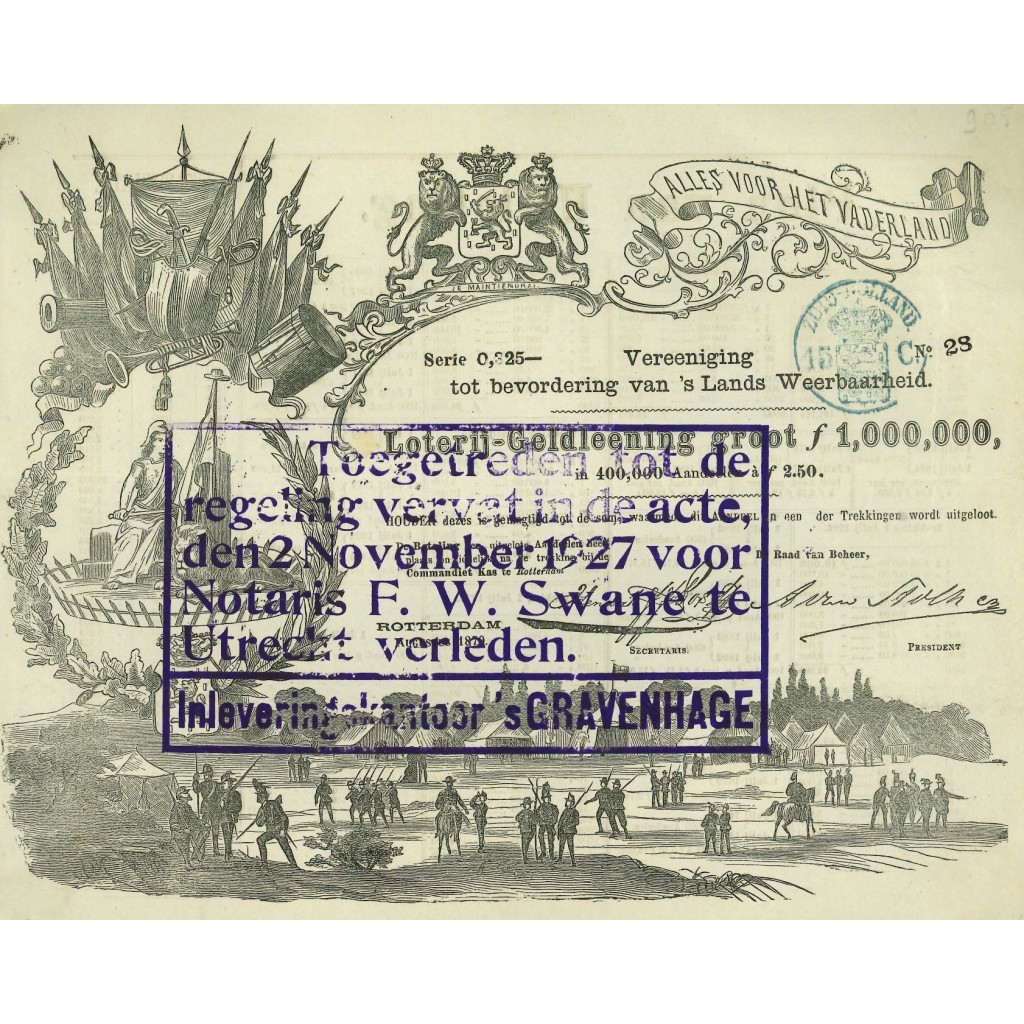


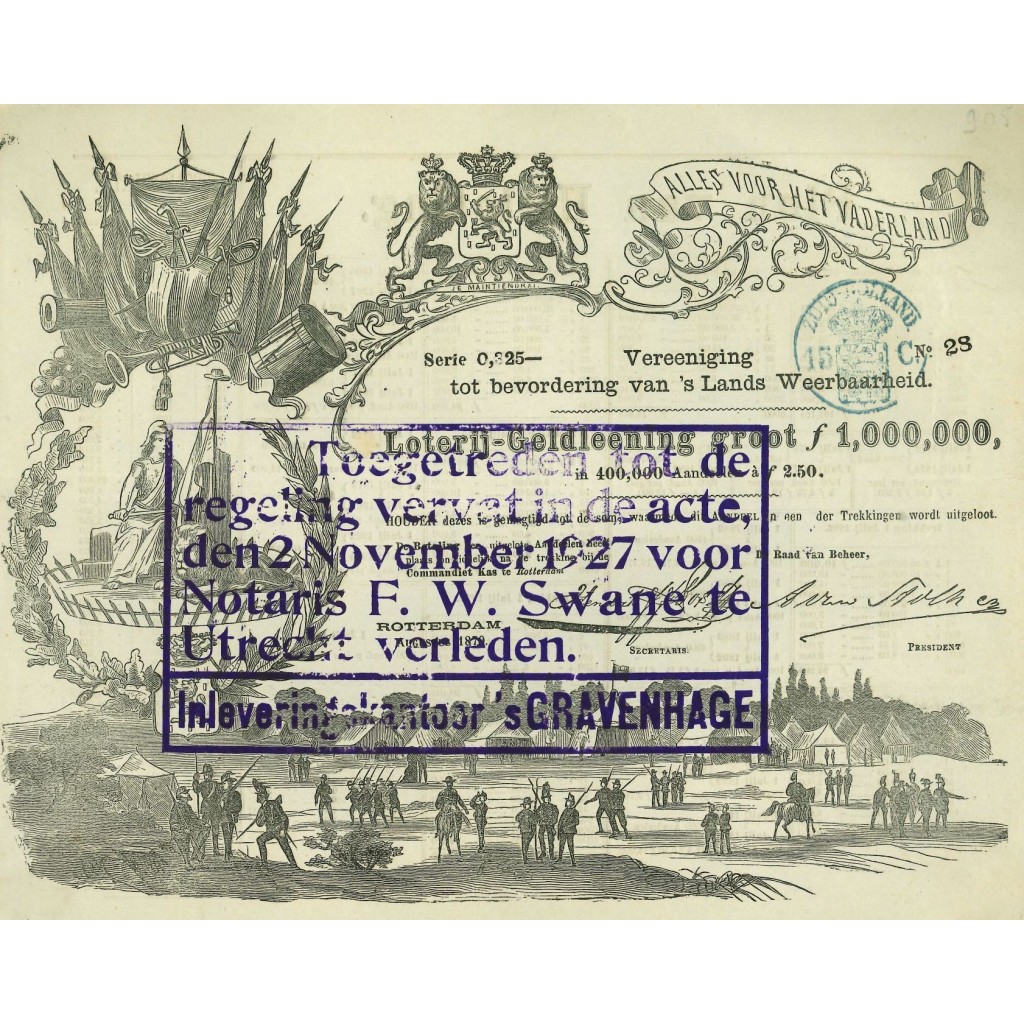
The "Vereeniging tot bevordering van 's Lands Weerbaarheid" was a Dutch society founded with the aim of promoting national defense. Founded in the 19th century, the association aimed to financially support the Dutch armed forces through various initiatives, including the issuance of bonds and lotteries.
History of the Society
The society was established to raise funds for improving the equipment and preparedness of the Dutch armed forces. Fundraising through bond issuance and lotteries was a common practice in 19th-century Europe when governments and private organizations sought to finance public interest projects without further burdening citizens with taxes.
Historical Data of the Society
| Year | Revenue | Year of Foundation | Headquarters | Name upon Delisting | Year of Stock Market Admission | Year of Delisting | Year of Dissolution | Initial Capital | Capital at Dissolution/Last Available Data |
|---|---|---|---|---|---|---|---|---|---|
| Not available | Not available | 1853 | Rotterdam | Not available | Not available | Not available | Not available | Not available | Not available |
Document Features
| Feature | Description |
|---|---|
| Document Type | Bond / Lottery |
| Nominal Value | f 1,000,000 |
| Series | 0;25 |
| Number | 23 |
| Issue Date | Not available |
| Maturity Date | Not available |
| Signatory | Secretary: H.J. Versteeg, President: W.M. Nobel |
| Stamp | "Alles voor het Vaderland" |
| Notes | Historical document with original stamp |
Importance of Scripophily
Collecting historical documents such as stocks and bonds provides a fascinating glimpse into economic and social history. These documents represent not only financial investments but also pieces of history, reflecting the economic trends, historical events, and business practices of the time. Scripophily, therefore, is not just a hobby but also a window into the past.
The presented document is an excellent example of how organizations used financial instruments to raise funds for national causes. The artistic design and historical details make these documents unique and valuable pieces for collectors.
All historical documents for sale are considered collectibles. The documents have no economic or financial value (no economic or financial value), the second image is only representative of the company's object.