Shopping Cart
There are no more items in your cart

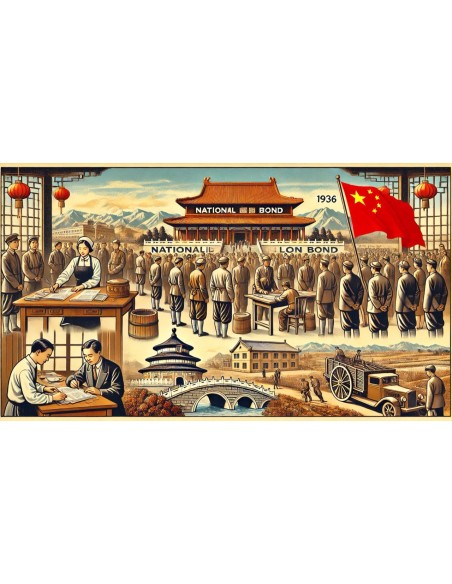
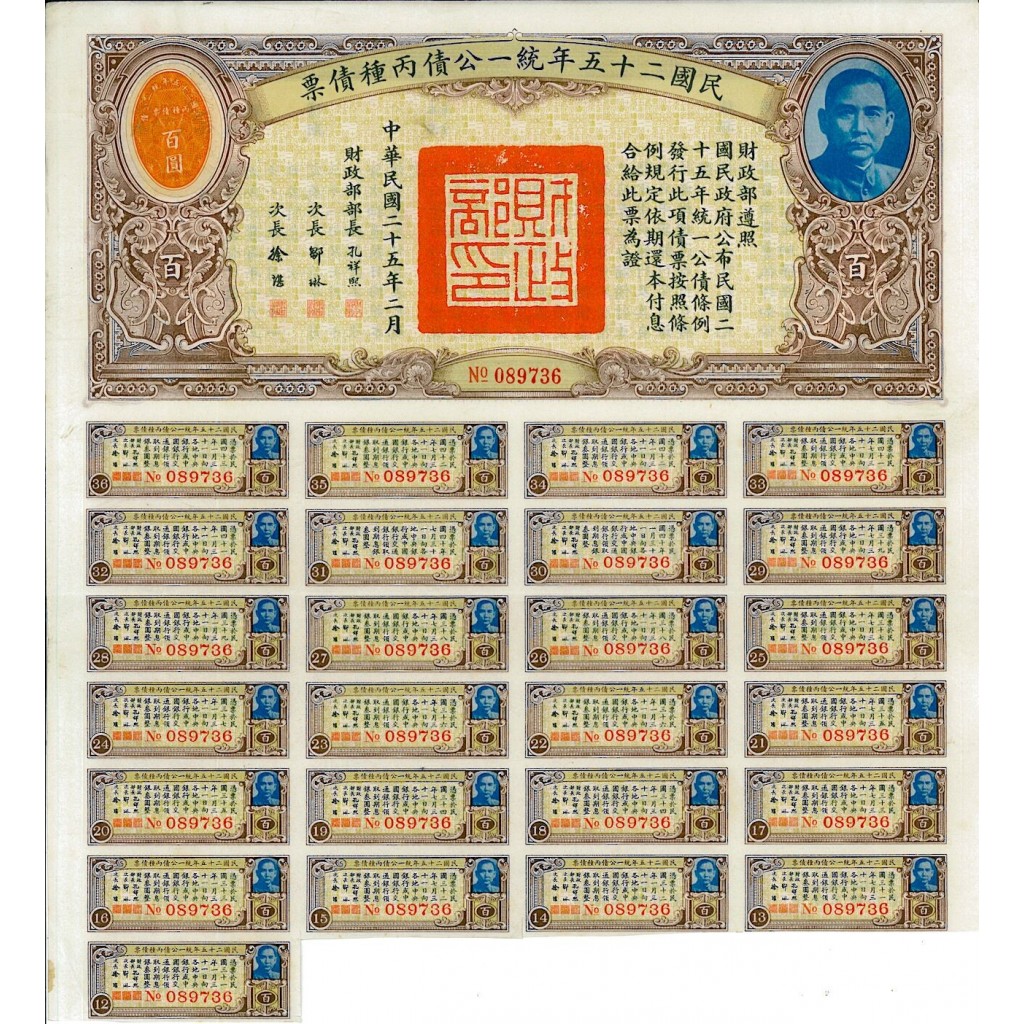
The document is a bond issued by the National Government of the Republic of China in 1936. This bond is part of the national loan with a value of 100 yuan and an interest rate of 6%.
Specific Details:
- Issuer: National Government of the Republic of China
- Year of Issue: 1936
- Nominal Value: 100 yuan
- Interest Rate: 6% per annum
- Purpose: Financing government expenses and national development projects
- Coupon Details: The bond contains numerous coupons for periodic interest payments
- Design Elements: The bond features detailed engravings and the portrait of a Chinese national leader
- Signatures and Seals: Various official stamps and signatures are present
- Redemption Date: Not specified in the visible document
Historical Article
A Call for National Support
The national loan bond, with a nominal value of 100 yuan and an annual interest rate of 6%, was aimed at both patriotic citizens and international investors. The funds raised through these bonds were essential for supporting government operations and financing infrastructure development projects. The elaborate design of the bond, featuring detailed engravings and the portrait of a national leader, reflected the importance of this financial effort.
Challenges and Determination
The issuance of these bonds occurred during a period of great uncertainty. Internal political tensions, coupled with external threats, posed significant challenges to the Chinese government. Despite these obstacles, the bonds were successfully issued, demonstrating the determination and resilience of the Chinese people and their commitment to national stability and development.
A Document of Historical Significance
Today, the national loan bond of 1936 is more than just a financial instrument; it is a piece of history that embodies the spirit of a nation determined to achieve stability and prosperity. Collectors and historians value these bonds for their detailed engravings and the powerful story they tell. The rich decorations of the document and the official seals provide a tangible connection to a crucial moment in Chinese history.
The Legacy of the National Loan
The funds generated by these bonds played a crucial role in supporting the Chinese economy and financing important development projects. The infrastructure built and the programs implemented thanks to these funds helped lay the foundation for China’s future growth. The bonds stand as a testament to the collective strength and enduring spirit of the Chinese people.
The Republic of China or
The flag of the Republic of China until 1928, used by the Beiyang government of warlords
Following a series of events in the period between 1912 and
The People's Republic of China was founded by Mao Zedong on 1 October 1949 and the first activity of the new political system, established with the revolutionary victory, was to bring peripheral territories such as Tibet and Xinjiang (1951) under the sovereignty of China.
Tutti i documenti storici in vendita si intendono da collezione. I documenti non hanno nessun valore economico o finanziario (no economic or financial value).