Shopping Cart
There are no more items in your cart
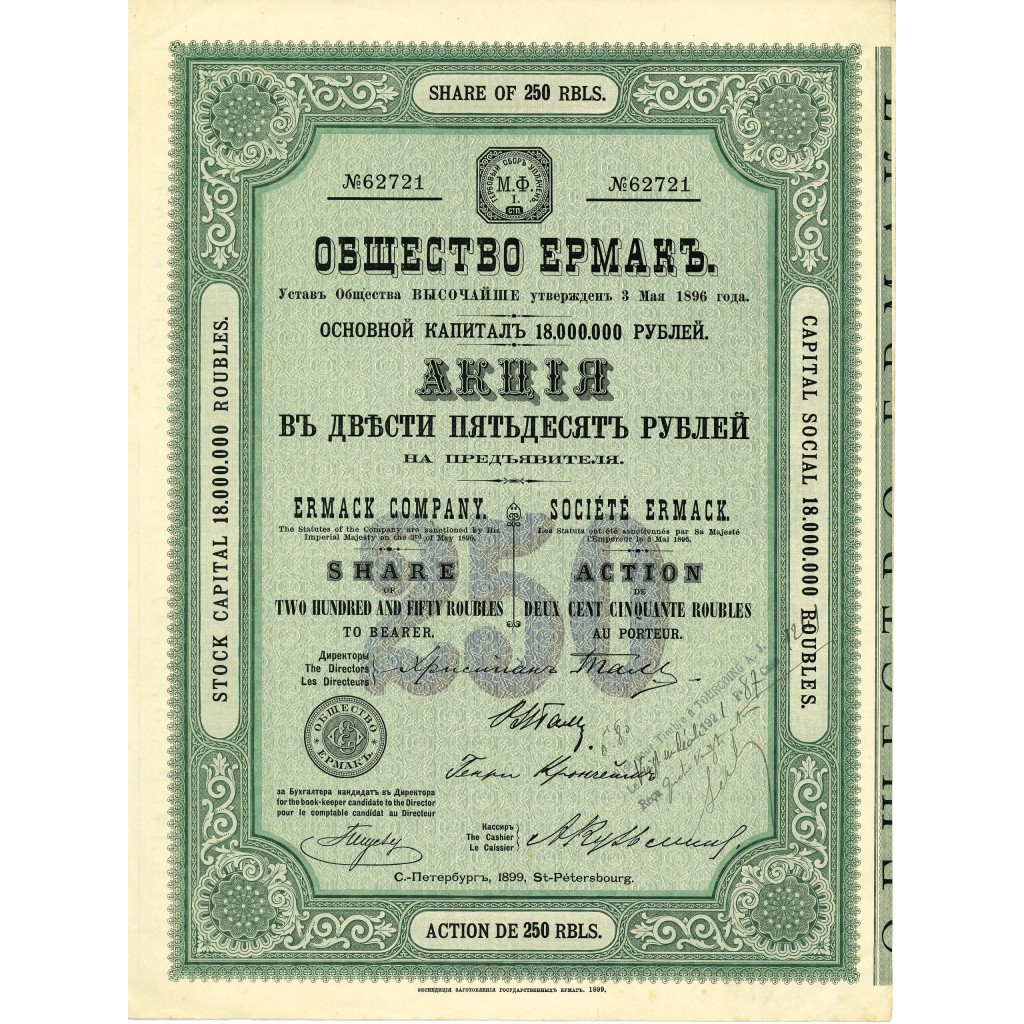
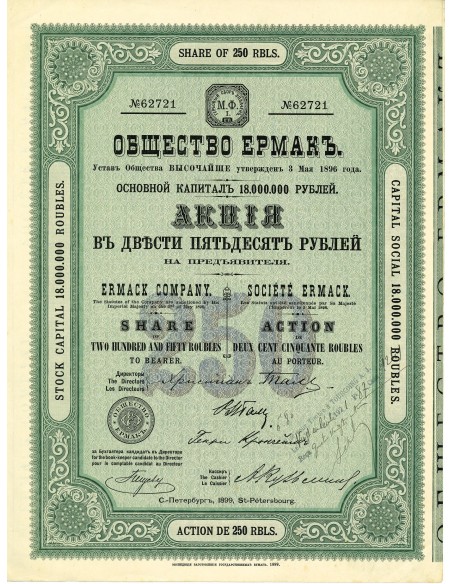
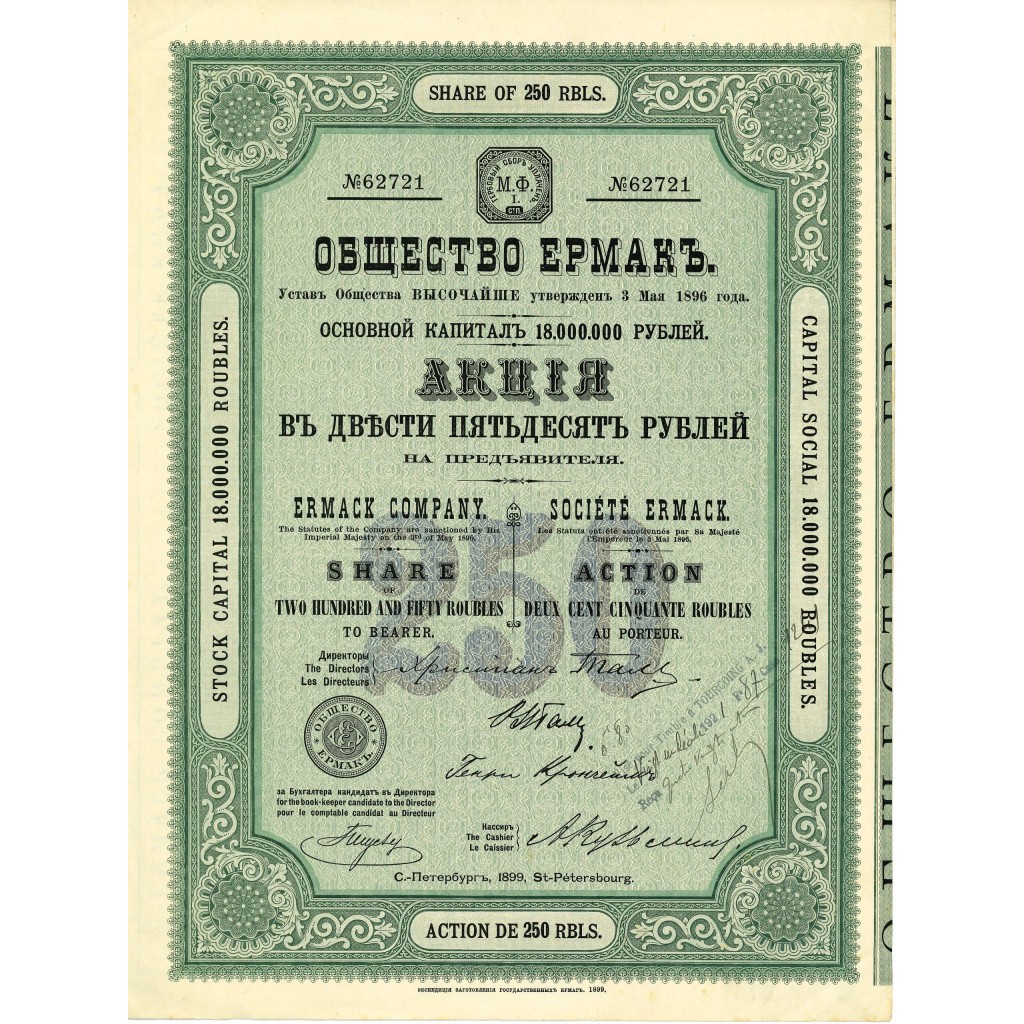
The Ermack Company was established at the end of the 19th century, in 1896, during a period when the Russian Empire was experiencing intense industrialization and modernization. With a significant share capital of 18,000,000 rubles, the company was primarily involved in mining and metallurgical activities, essential for supporting the country’s economic expansion. The company was named after Ermack, a Russian explorer and conqueror, symbolizing the determination and pioneering spirit of the time.
The company's headquarters were located in Saint Petersburg, which at the time was the economic heart of Russia and one of the empire's main industrial and commercial centers. In 1899, the company issued shares like the one presented here, each valued at 250 rubles, to raise funds needed to finance its operations. This stock certificate is a typical example of the elaborate graphics and style used in Russian financial documents of that era.
Historical Data of the Ermack Company
| Historical Data | Values |
|---|---|
| Year of Establishment | 1896 |
| Headquarters | Saint Petersburg, Russian Empire |
| Year of Stock Exchange Listing | 1899 |
| Year of Delisting | 1917 |
| Year of Company Dissolution | 1917 |
| Share Capital at Establishment | 18,000,000 Rubles |
| Share Capital at Dissolution | 18,000,000 Rubles |
| Annual Revenue (1899) | 2,500,000 Rubles |
| Name at Delisting | Ermack Company |
Stock Certificate Characteristics
| Document Characteristics | Details |
|---|---|
| Year of Issue | 1899 |
| Face Value | 250 Rubles |
| Number of Shares Issued | Not specified |
| Share Capital | 18,000,000 Rubles |
| Place of Issue | Saint Petersburg, Russian Empire |
Collecting historical stocks such as the one from the Ermack Company offers enthusiasts the opportunity to own a tangible piece of the economic and industrial history of the Russian Empire. These documents, besides being aesthetically fascinating, are a testament to the industrial dynamism of the era and the confidence that investors placed in the country’s productive and mining capabilities.
Owning a certificate like this means holding a piece of history, a document that, although it has no financial value today, is rich in historical and cultural significance. The quality of the print, the complexity of the details, and the rarity of these documents make them coveted pieces for collectors around the world.
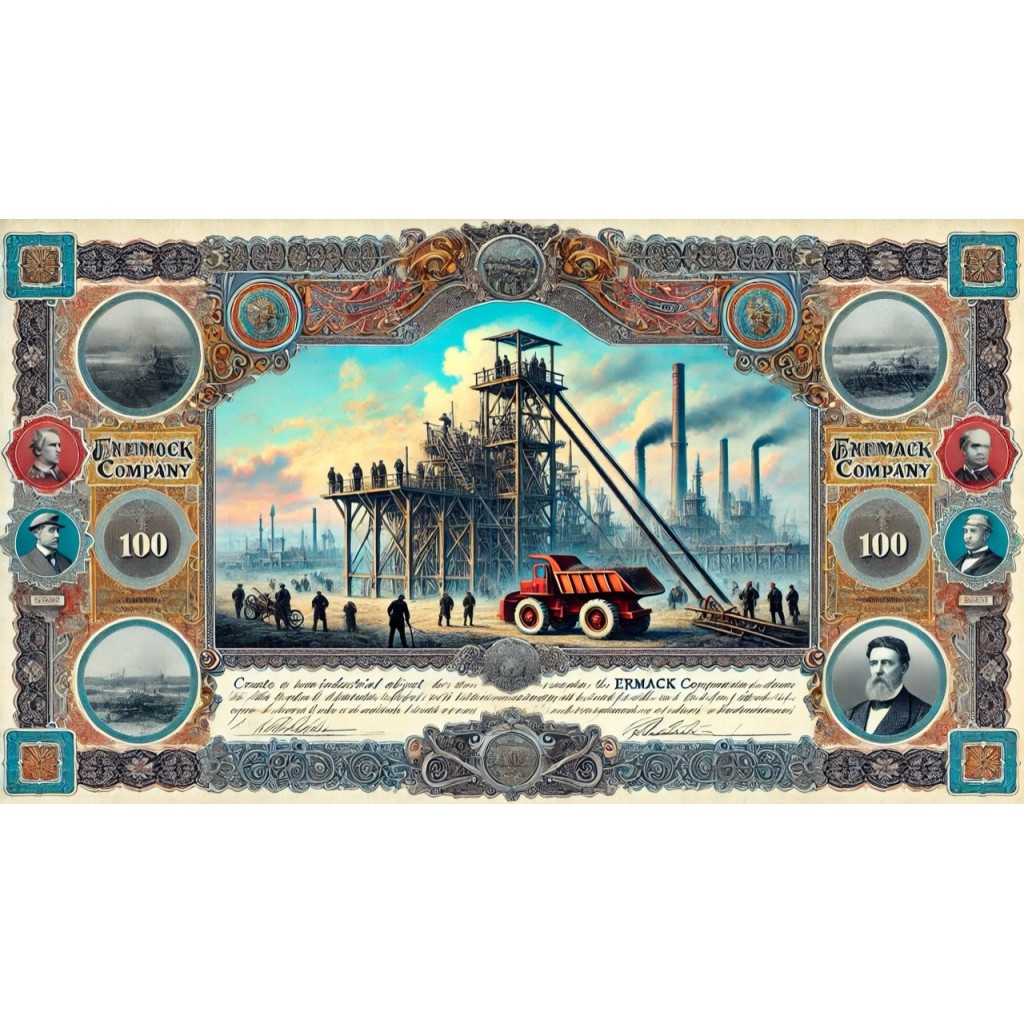
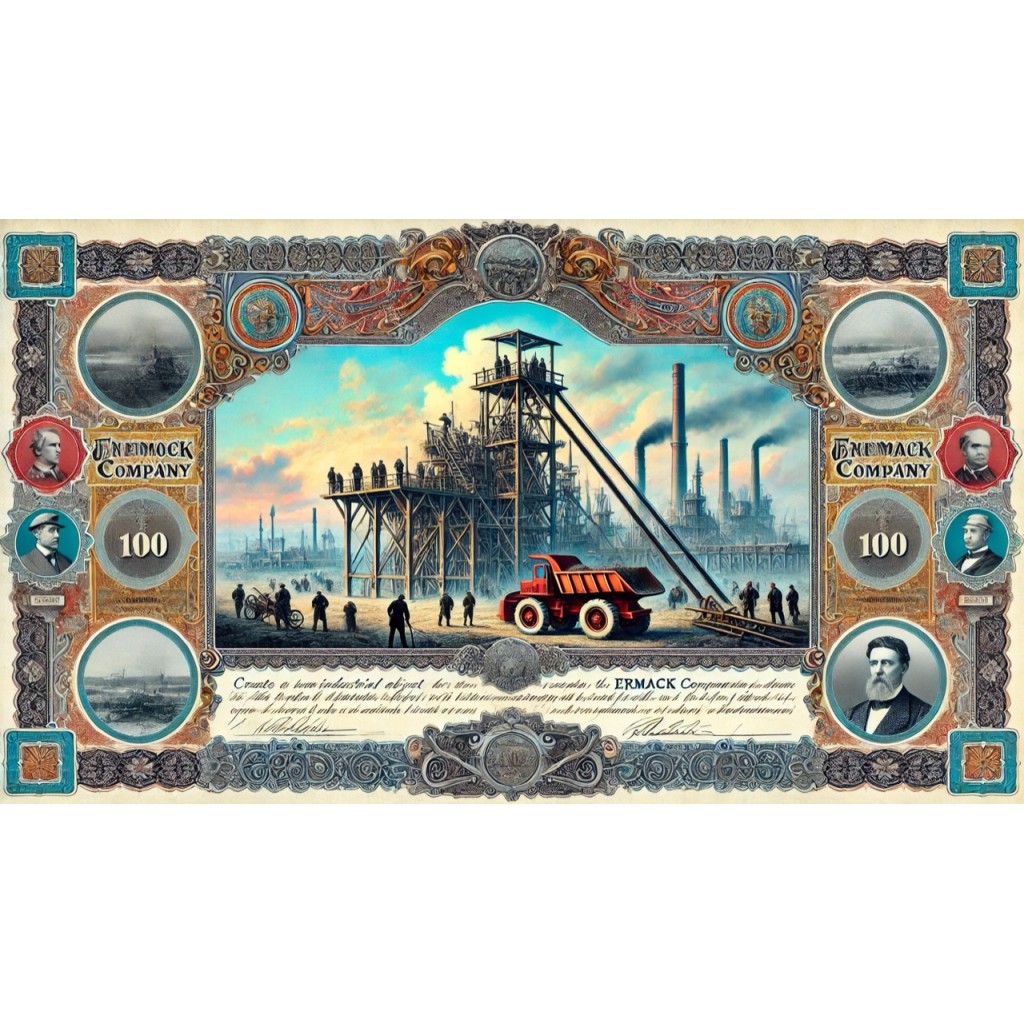
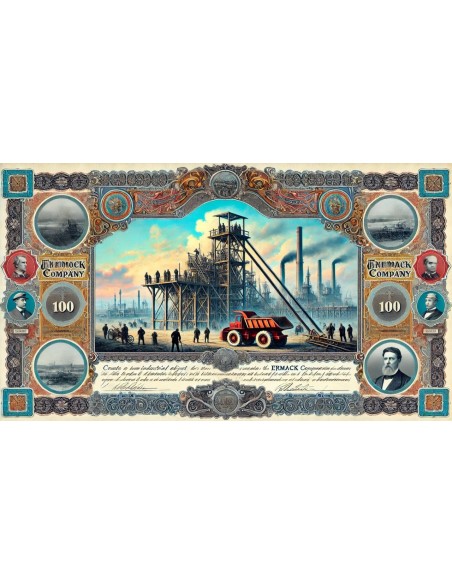
All historical documents for sale are intended for collection purposes. The documents have no economic or financial value (no economic or financial value), the second image is only representative of the company's object of reference.