Shopping Cart
There are no more items in your cart
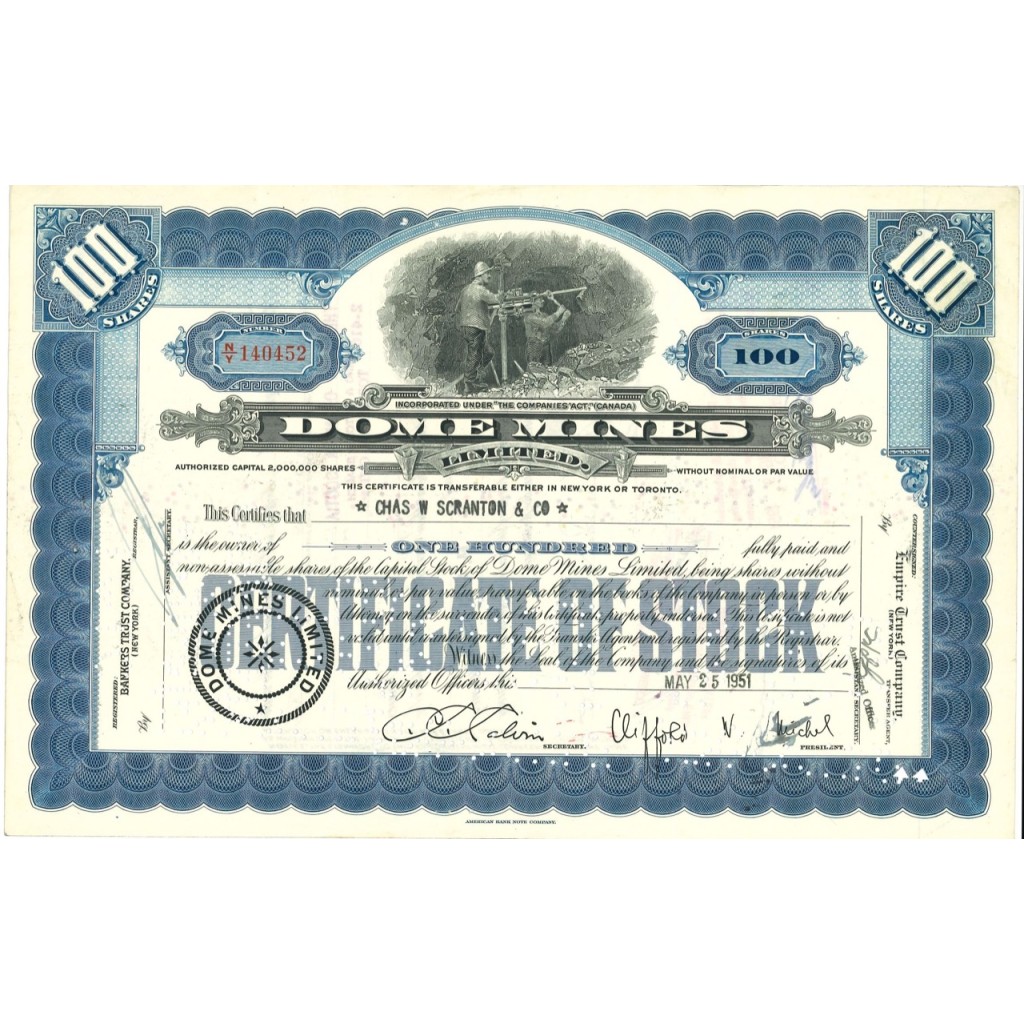
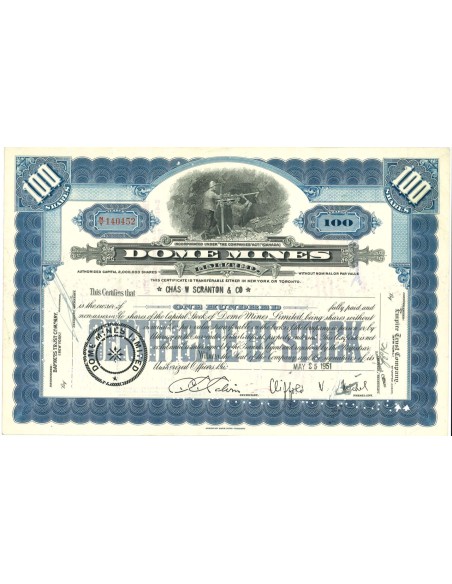
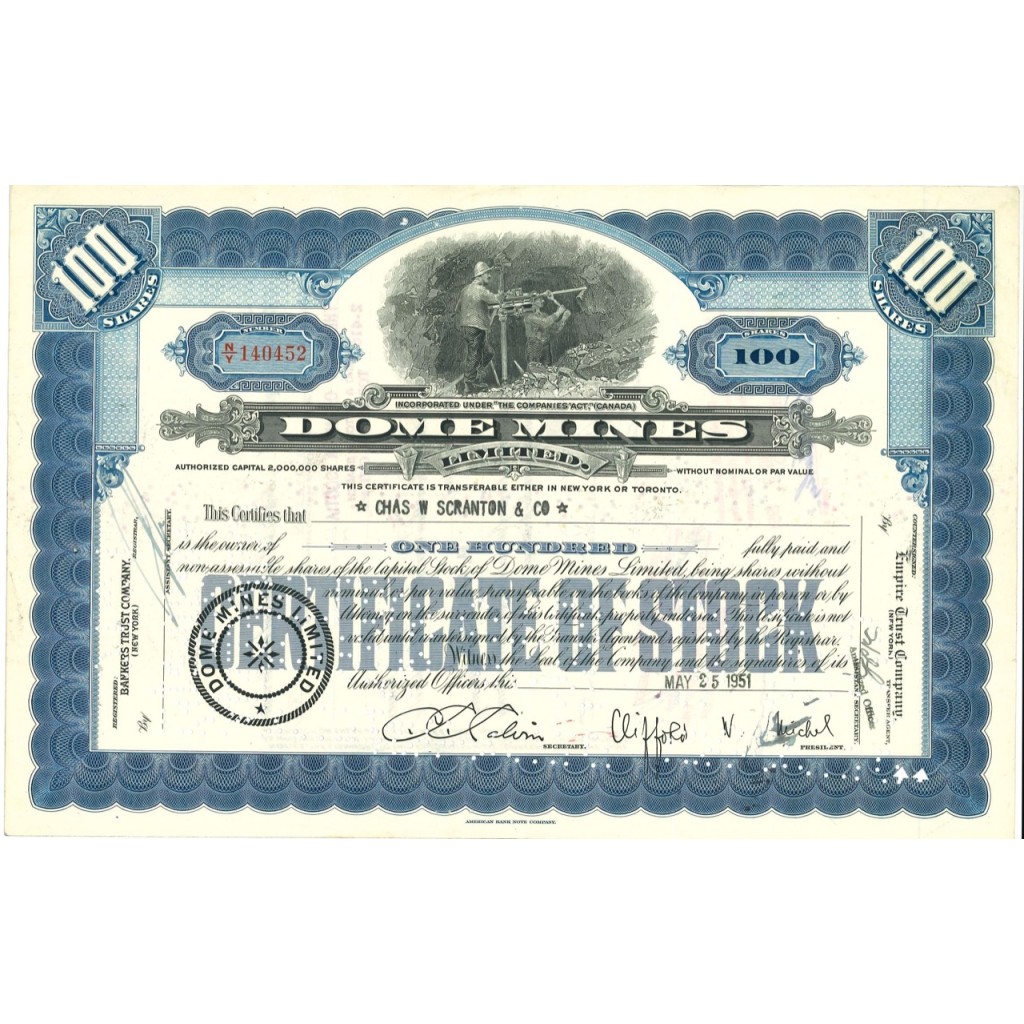
Dome Mines Limited is a historical company of great relevance in the mining sector, founded with the aim of exploring and developing gold deposits in Canada. Its history is rich in successes and challenges, representing an important part of the country's industrial and financial heritage.
Founded in 1910, Dome Mines Limited quickly established itself as one of North America's leading mining companies. Its headquarters were located in Toronto, Ontario, and the company played a crucial role in the economic development of the region. Dome Mines Limited is known for the discovery and exploitation of the Porcupine gold deposit, one of the largest in the world, which has produced enormous quantities of gold over the years.
Historical Data of the Company
| Year | Revenue (CAD) | Share Capital (CAD) | Year of Incorporation | Registered Office | Name at Delisting | Year of Stock Exchange Admission | Year of Stock Exchange Delisting | Year of Company Dissolution |
|---|---|---|---|---|---|---|---|---|
| 1910 | N/D | 2,000,000 | 1910 | Toronto, Ontario | Dome Mines Limited | 1912 | 2006 | 2006 |
Document Characteristics
| Issue Date | Number of Shares | Par Value per Share | Shareholder Name | Certificate Number | Signatories | Notes |
|---|---|---|---|---|---|---|
| May 25, 1951 | 100 | N/A | Chas W Scranton & Co | NY 140452 | Clifford W. Mitchell (President), F. Kalmin (Secretary) | - |
Importance of Scripophily Collecting
The collecting of historical stocks and bonds, known as Scripophily, represents a fascinating journey through the economic and industrial history of the world. Each document is a unique piece that tells stories of companies, successes, and challenges of the past. Collecting these documents means preserving a tangible part of our economic history, appreciating their beauty and historical significance.
Historical stocks and bonds such as those issued by Dome Mines Limited are particularly valued by collectors for their historical importance and aesthetic value. These documents not only represent an economic investment but also a piece of history that can be passed down from generation to generation.
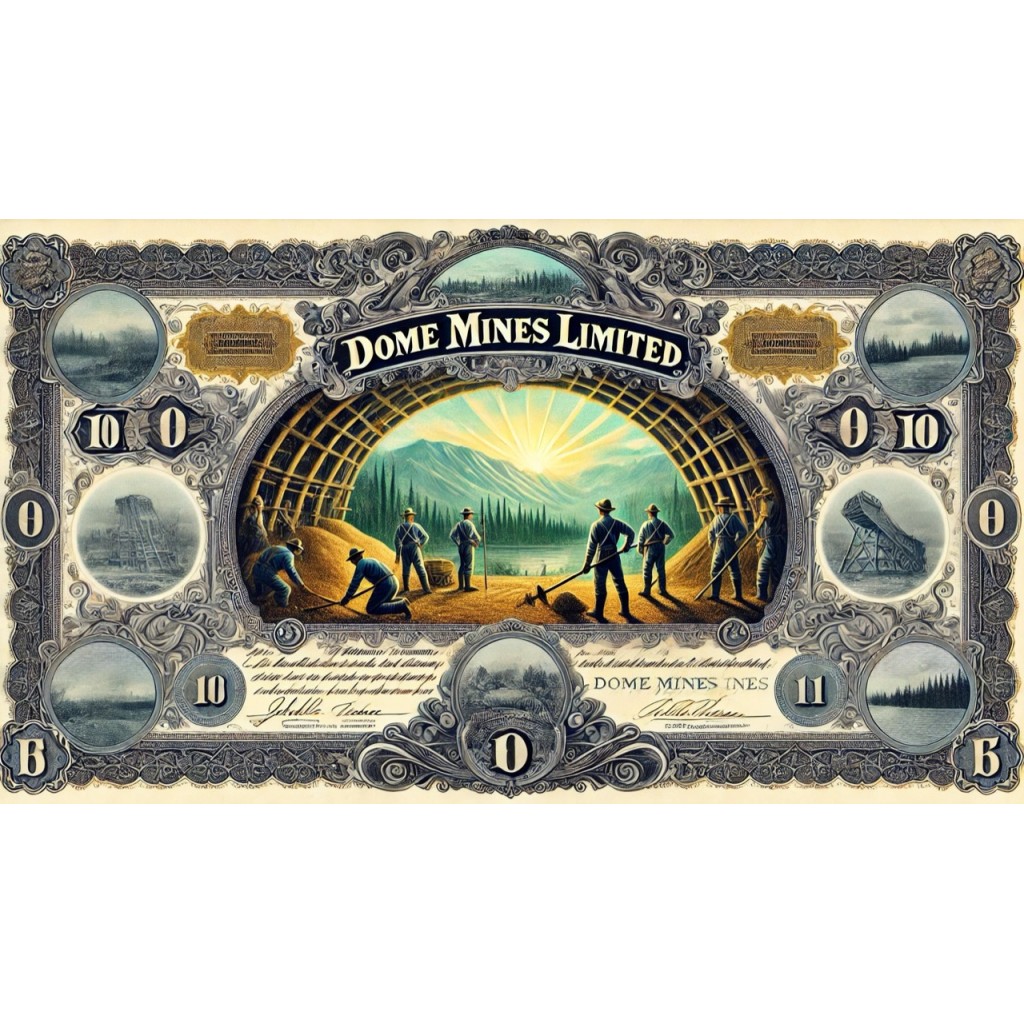
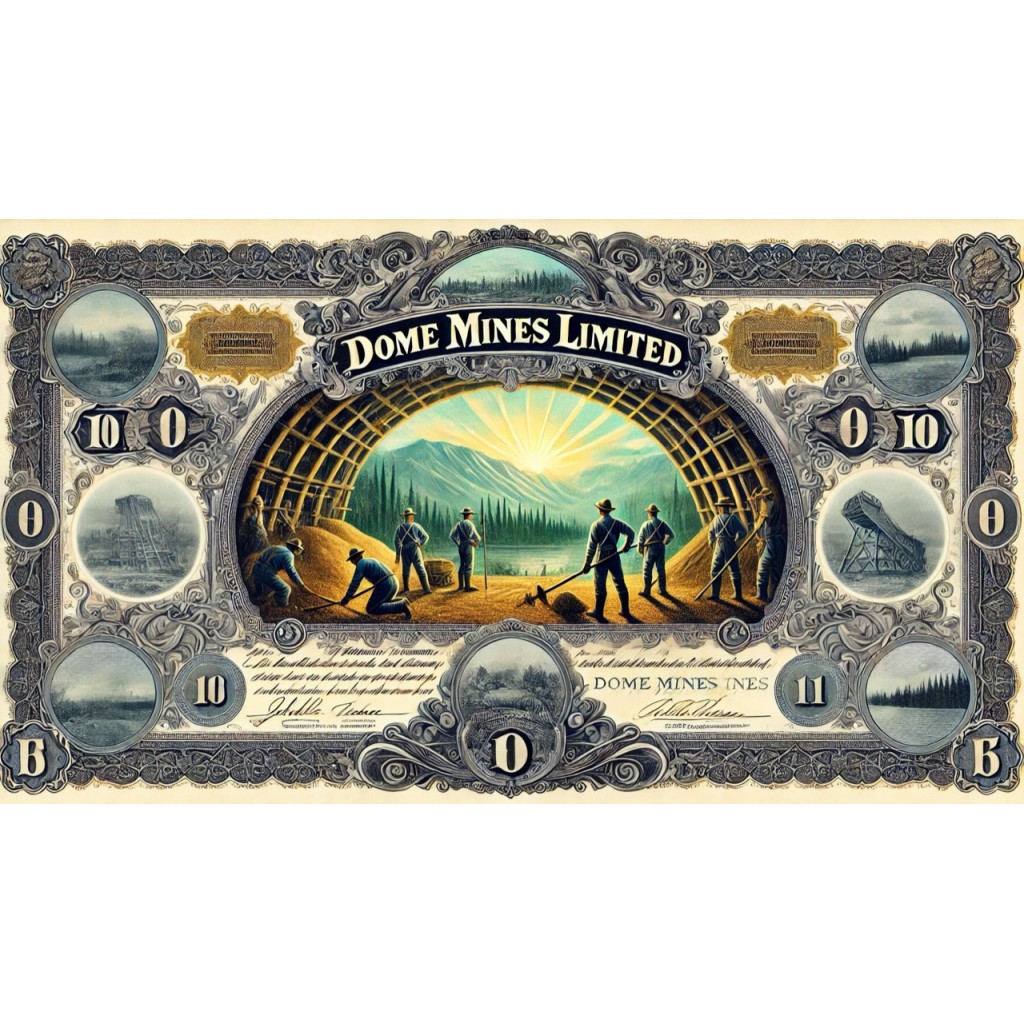
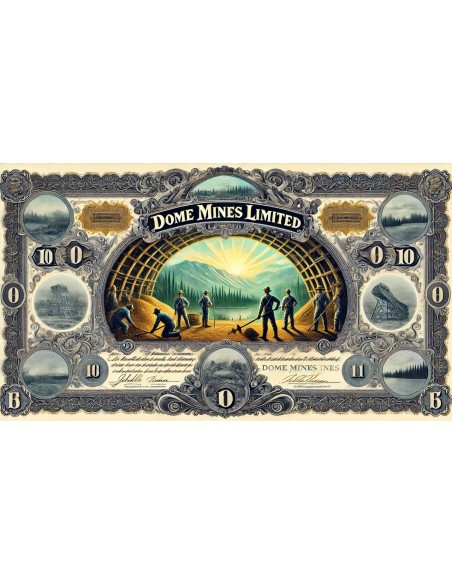
All historical documents for sale are considered collectibles. The documents have no economic or financial value (no economic or financial value), the second image is only representative of the company's object of reference.