Shopping Cart
There are no more items in your cart
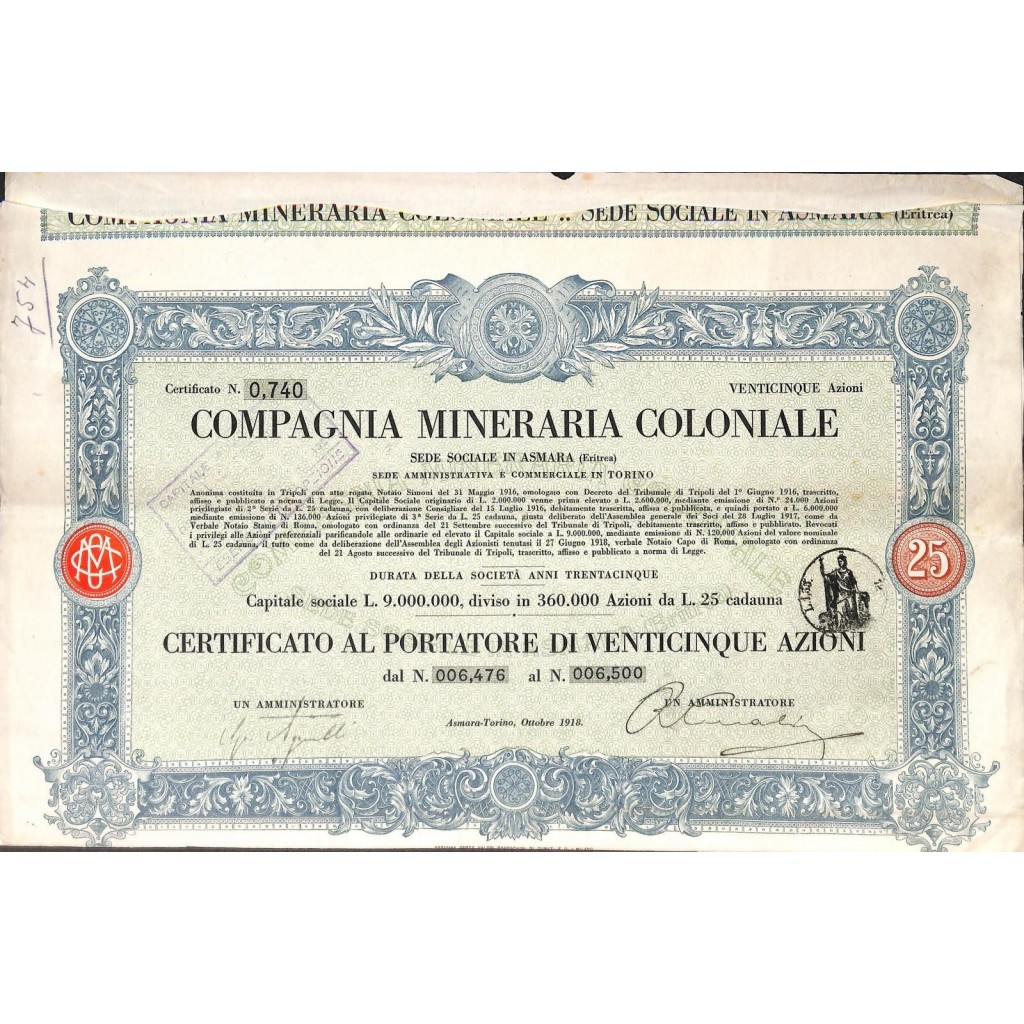
The Dancalia region was characterised by an extreme and inhospitable environment, but was famous for its vast deposits of potassium, in particular potassium carbonate known as sylvite. This mineral was of crucial importance in the production of fertilisers and explosives, and demand for potassium had increased during the First World War due to import difficulties.
The Italian brothers Adriano and Tullio Pastori were among the first explorers in the region and obtained a mining concession from Ethiopia in 1912. However, the size of the deal proved too big for them, and in 1917 they ceded the concession to the Compagnia Mineraria Coloniale.
The company started mining potash in the region and, over the next few years, some 51,000 tonnes of ore were extracted. However, difficulties arose related to security in the area and relations with the Ethiopian government, making the exploitation of the deposits less convenient.
The construction of the Dancalia Railway was a crucial aspect in transporting the ore from the mine to the coast. A 65-kilometre railway line was built between the port of Mersa Fatma on the Red Sea and the Colulli Cantonment, located about 18 kilometres from Dallol. The railway used a narrow gauge of the Decauville type (600 mm) to reduce construction costs. The railway line was completed in April 1918 and remained in operation until 1929, when it was abandoned.
After the Second World War, several geological prospecting campaigns were conducted in the area, with the intention of resuming large-scale potash mining using more advanced methods and technologies. Some projects include the construction of a new railway line connecting the region to the future Ethiopian railway network or the rehabilitation of the old line to the coast.
The history of the Colonial Mining Company and the Dancalia Railway is characterised by challenges and difficulties in extracting potassium in an extremely hostile region, but also by important developments in the mining industry and the transport of ore.
-----
Giovanni Agnelli came from a family of wealthy industrialists. His father, Edoardo Agnelli, was an important industrialist in the coal production sector and had investments in several companies. After completing his law studies, Giovanni Agnelli joined the family business, the 'Fabbrica Italiana di Automobili Torino' (FIAT), founded in 1899.
Under Giovanni Agnelli's leadership, Fiat grew rapidly to become one of the leading automobile manufacturers in Europe. Agnelli distinguished himself through his entrepreneurial vision, leadership skills and determination to make Fiat a successful company. During his tenure, Fiat expanded both domestically and internationally, opening new factories, developing new car models and acquiring other car companies.
In addition to his involvement in the automobile industry, Giovanni Agnelli was also involved in other industries. He was a major shareholder in the Banca Italiana di Sconto and had interests in several industries, including steel, energy and insurance.
Giovanni Agnelli remained at the helm of Fiat until his death on 16 December 1945. His role as a charismatic leader and innovator left an indelible mark on the Italian automotive industry and helped turn Fiat into a world-renowned company.
Giovanni Agnelli's signature on the shares of the Compagnia Mineraria Coloniale represents his participation or involvement as a shareholder or financial supporter of the company. His signature on official documents such as shares testifies to his entrepreneurial commitment and influence in various sectors of industry.