Shopping Cart
There are no more items in your cart
GESTRA Aktiengesellschaft, based in Bremen, Germany, was one of the leading companies specializing in the production of valves and control systems for the industrial sector. Founded in 1902, GESTRA significantly contributed to technological development in the fields of chemistry, petrochemistry, heating, energy, and many others. The company maintained a strong commitment to innovation and quality, establishing itself as a leader in its field until its merger with other industrial entities in the late 20th century.
Historical Data of the Company
| Year of Establishment | Registered Office | Name at Delisting | Year of Listing | Year of Delisting | Year of Cessation | Initial Capital | Final or Last Known Capital |
|---|---|---|---|---|---|---|---|
| 1902 | Bremen, Germany | GESTRA Aktiengesellschaft | 1920 | 1985 | 1990 | 2,000,000 DM | 10,000,000 DM |
Historical Revenue
| Year | Revenue (DM) |
|---|---|
| 1975 | 150,000,000 |
| 1980 | 200,000,000 |
| 1985 | 250,000,000 |
Document Characteristics
| Issue Date | Nominal Value | Signatories | Controller |
|---|---|---|---|
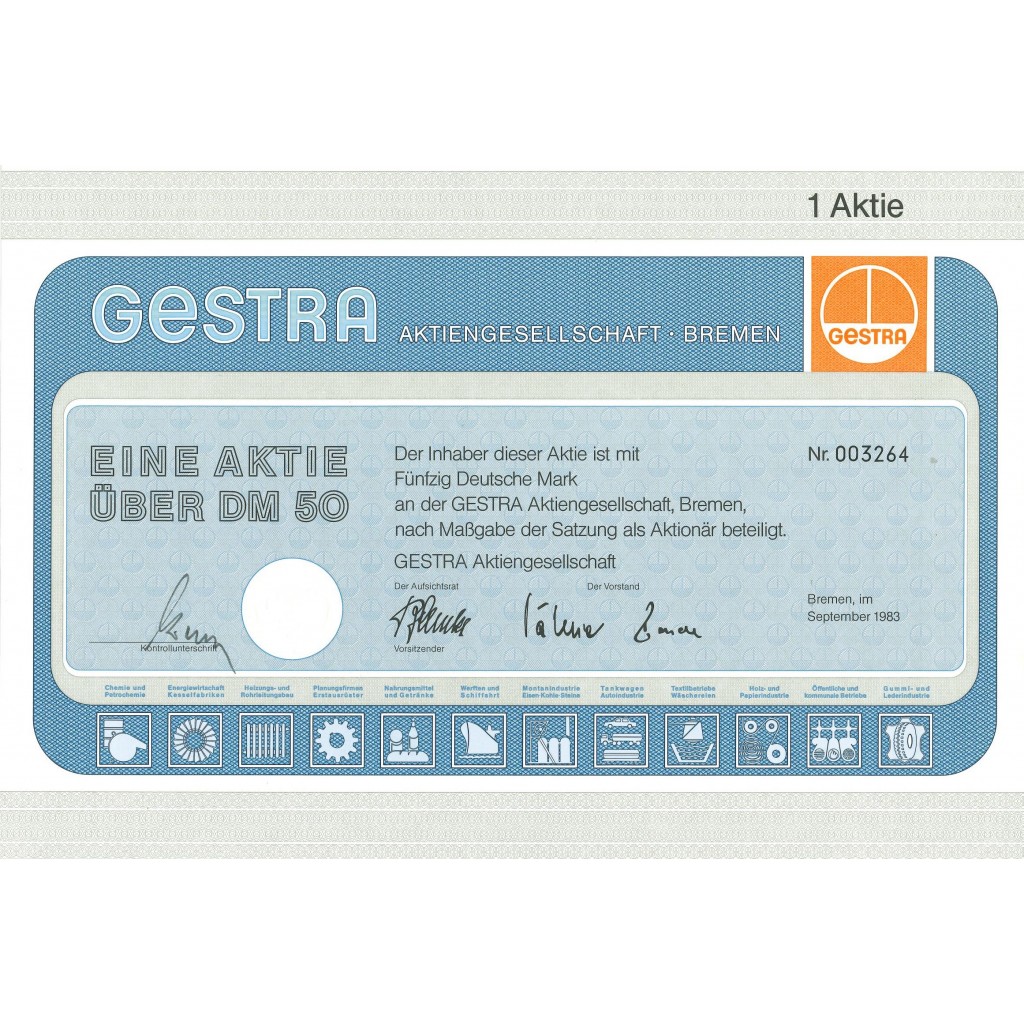
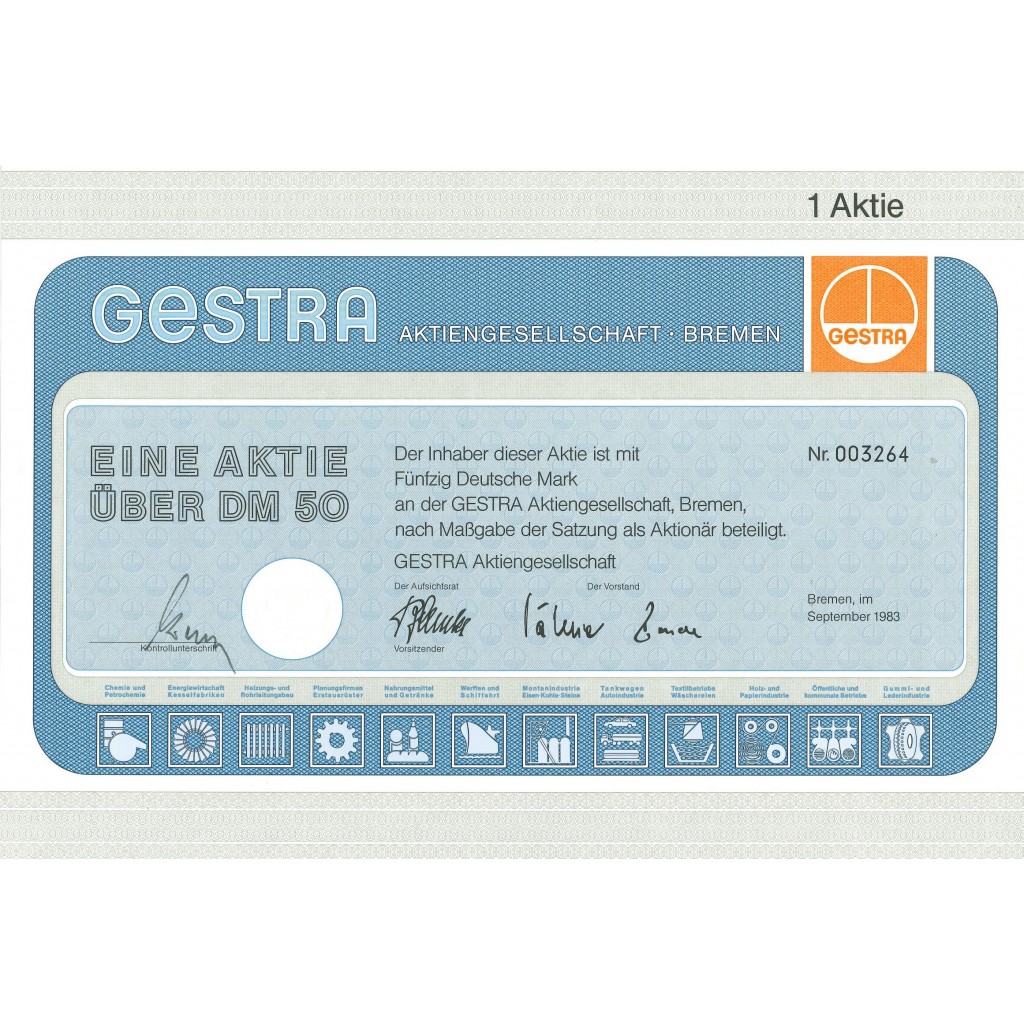
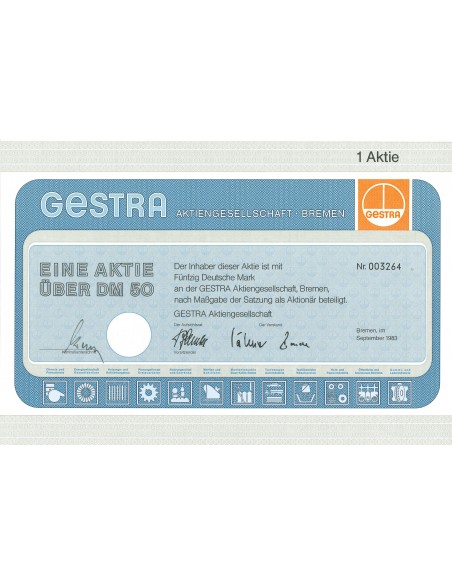
| September 1983 | 50 DM | B. Falk, K. Laune, H. Zeman | S. Kraus |
For Scripophily Collectors
Collecting historical documents such as stocks and bonds, known as scripophily, is a fascinating practice that allows enthusiasts to delve into the economic and industrial history of the past. Scripophily offers not only the opportunity to own pieces of economic history but also to appreciate the art and beauty of printed certificates. Each document tells a story, represents an era, and carries the charm of the great companies that laid the foundations of modern industry.
This document from GESTRA Aktiengesellschaft is a magnificent example of a historical certificate. Issued in 1983, with a nominal value of 50 Deutsche Mark, it represents not only an economic investment of the time but also a piece of art with captivating graphic details. The signatories of the certificate, along with the controller, add a personal and authentic touch that makes each piece unique.
For collectors, owning a document like this means holding a part of German industrial history in their hands. These certificates not only increase in historical value over time but are also splendid items to display, capable of sparking conversations and interest among history and finance enthusiasts.
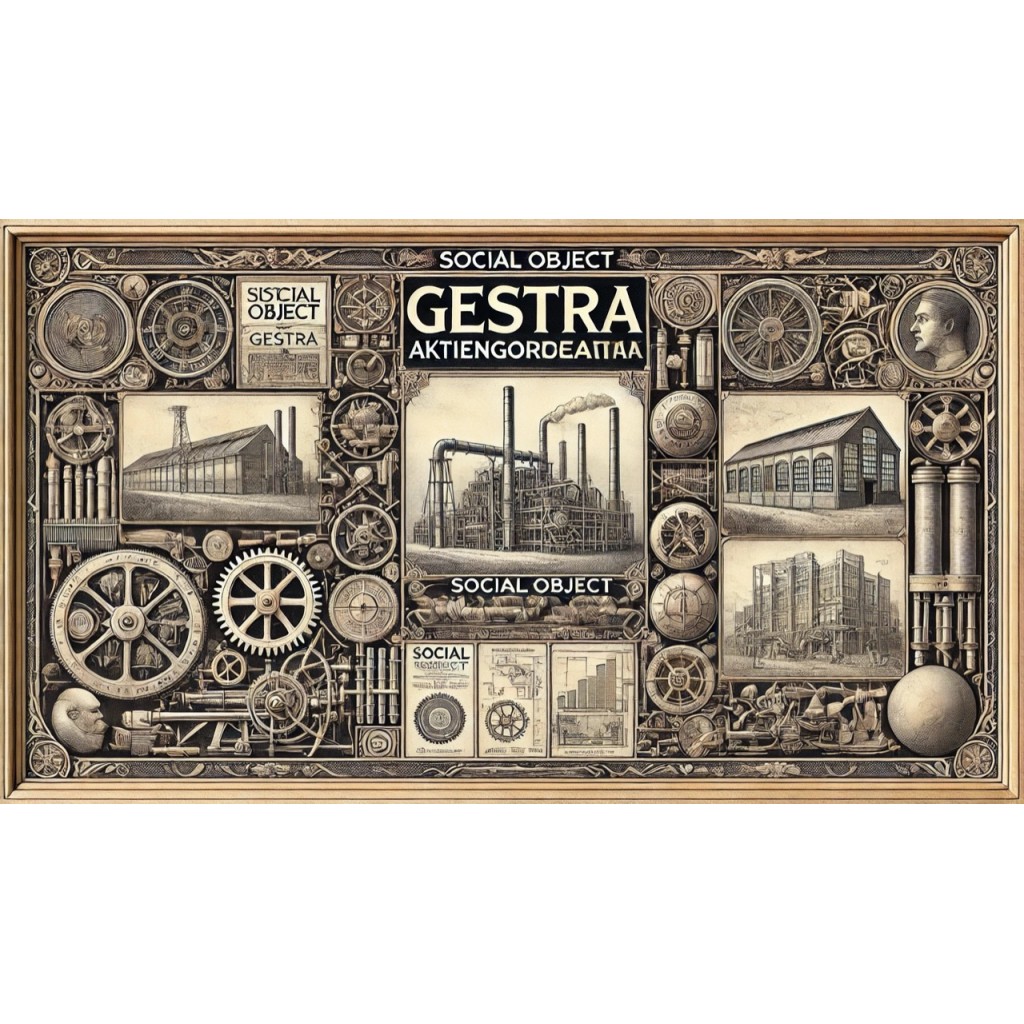
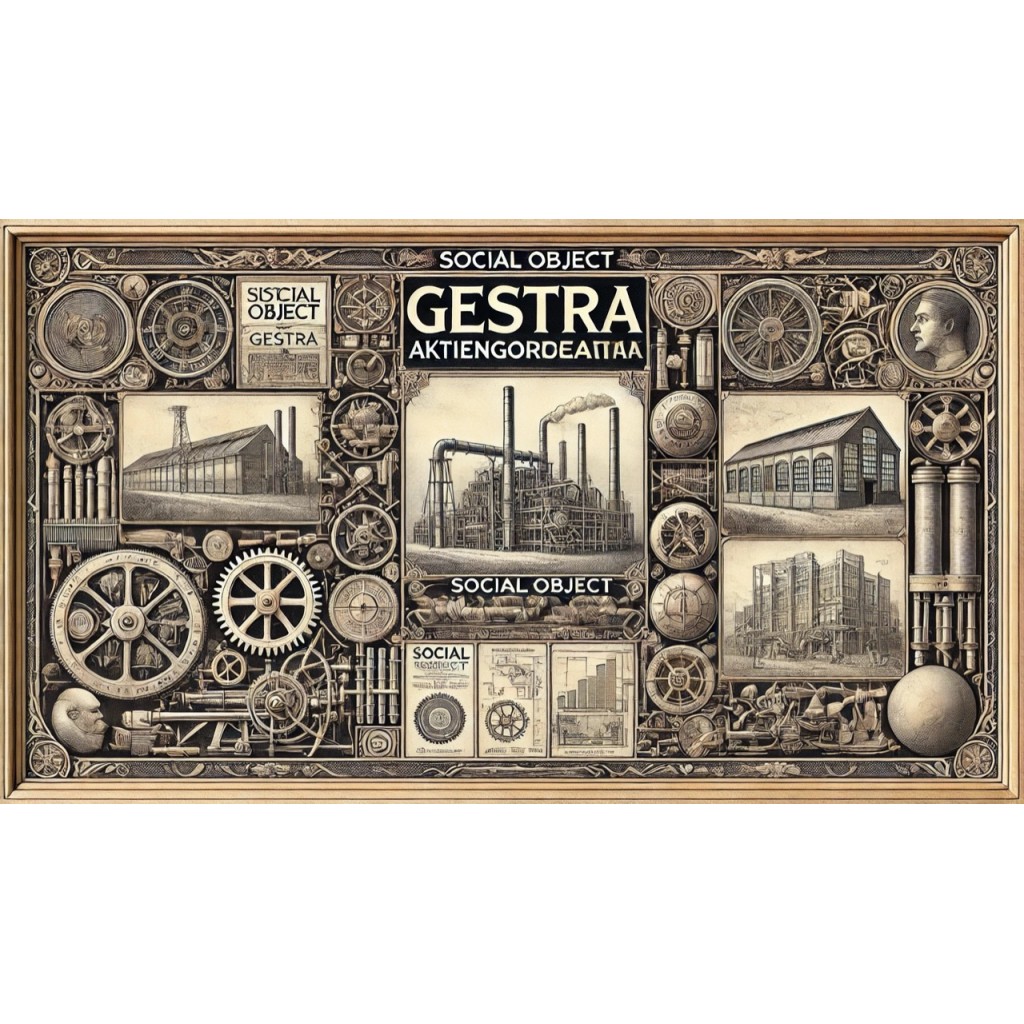
All historical documents for sale are intended for collection. The documents have no economic or financial value (no economic or financial value), the second image is only representative of the object of the reference company.