Shopping Cart
There are no more items in your cart
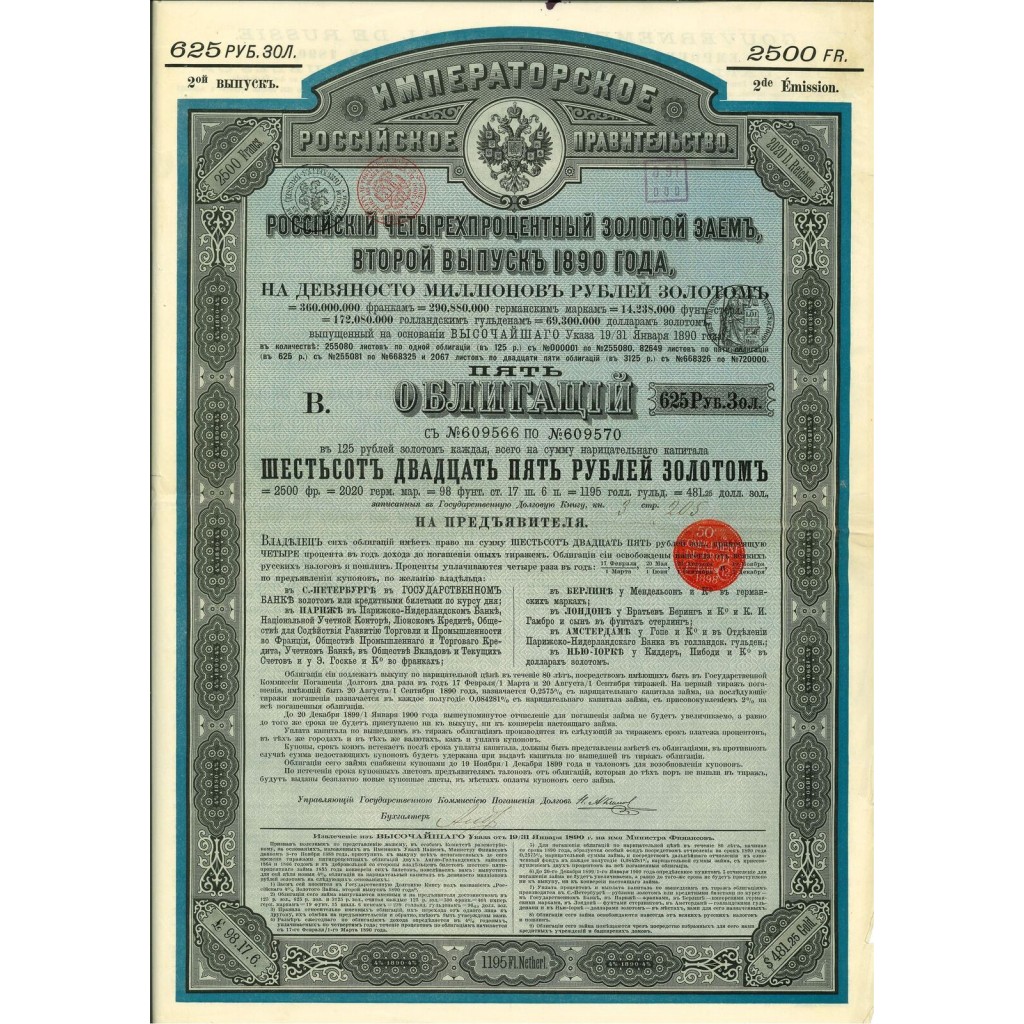

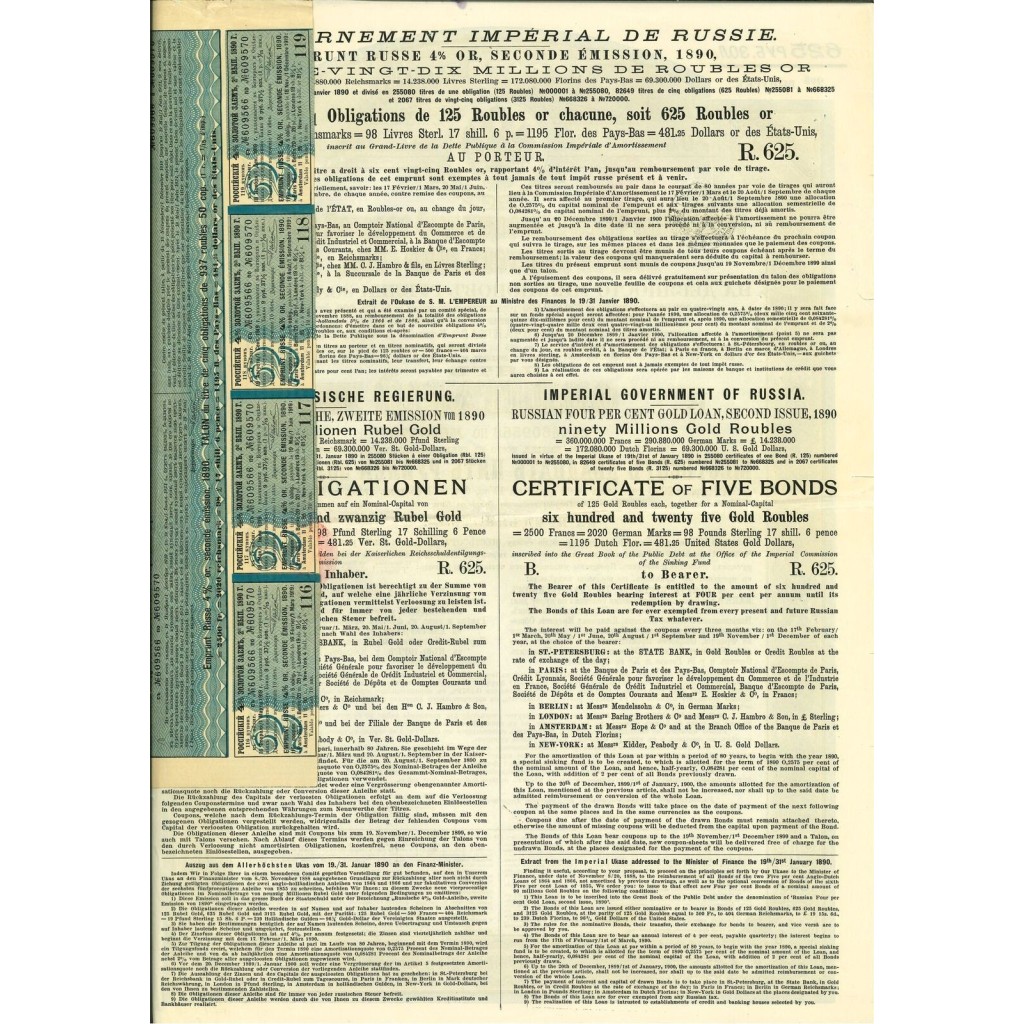

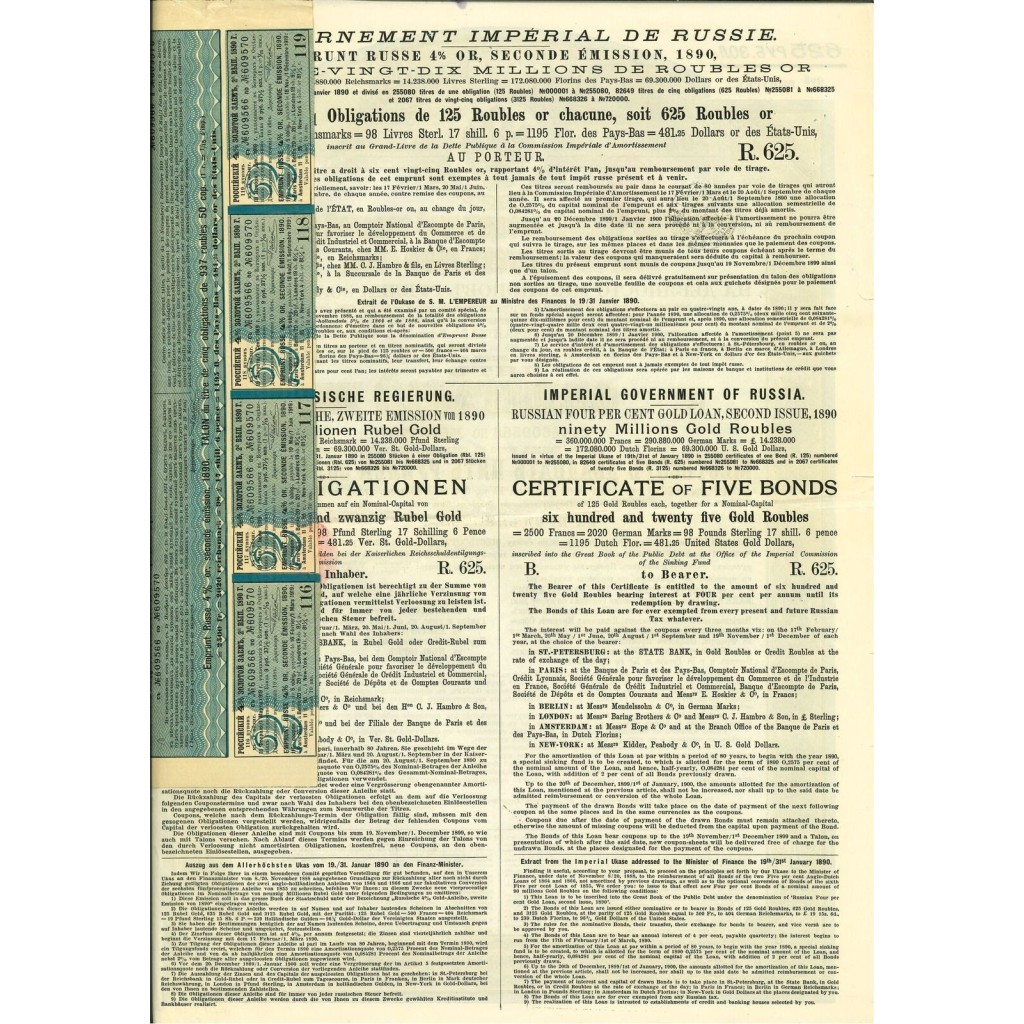
Historical Article: Russian 4% Gold Loan 1890 of the Imperial Russian Government (Российский 4% Золотой Заем 1890 года)
Historical Profile of the Company
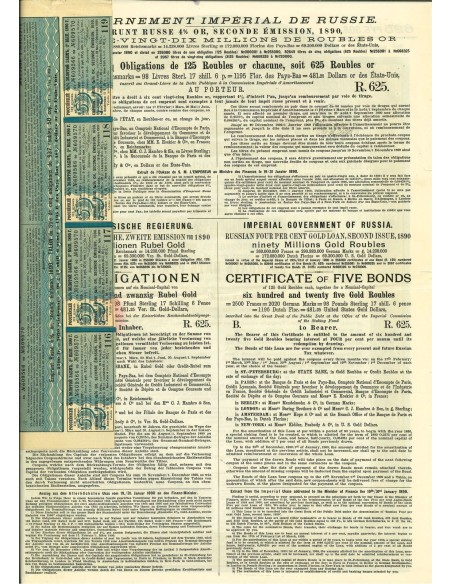
The Russian 4% Gold Loan 1890 represents one of the most significant bond issuances of the Imperial Russian Government at the end of the 19th century. This bond was issued as part of the second issuance of a broader program of gold-backed loans, intended to finance the Empire’s financial needs, including infrastructure, military expenses, and other strategic projects. The loan was guaranteed in gold, making it particularly attractive to both domestic and international investors by providing protection against ruble devaluation.
The historical context of this loan issuance was characterized by a transforming Russia under the leadership of Tsar Alexander III. The Russian economy was undergoing a period of modernization, with industrialization beginning to take hold, and the government sought to strengthen its infrastructure and defensive capabilities in a complex geopolitical landscape.
Historical Data of the Company
| Data | Value |
|---|---|
| Year of establishment | 1890 (issuance date) |
| Headquarters | St. Petersburg, Russian Empire |
| Initial Capital | Not applicable (state issuance) |
| Year of bond issuance | 1890 |
| Interest rate | 4% per annum |
| Bond value | 625 gold rubles (equivalent to 2500 francs, 2020 German marks, 1195 Dutch guilders) |
| Bond duration | Perpetual |
| Year of company dissolution | 1917 (Russian Revolution) |
| Last available data | Not available |
Historical Context
The issuance of the Russian 4% Gold Loan 1890 took place during a period of economic growth and change for the Russian Empire. Tsar Alexander III, known for his conservative policies and strengthening of central power, sought to modernize the country without compromising autocracy. In this context, financing through gold-backed loans was crucial to support modernization policies, especially in railway and industrial infrastructure. However, Russia continued to face deep structural problems, including a backward agriculture sector and growing social disparity.
Artistic and Typographic Details
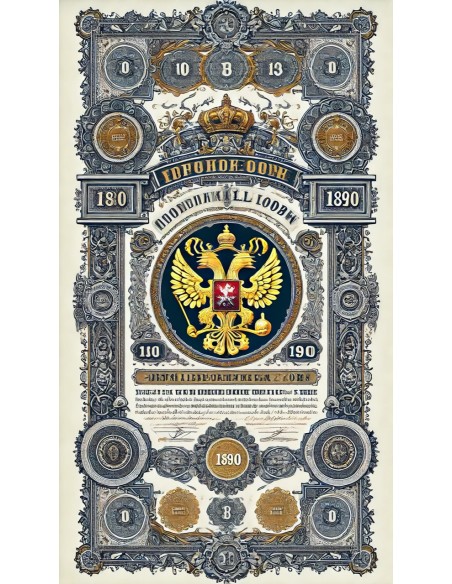
The 1890 document features a complex and richly detailed design, with a decorative blue and gray frame that emphasizes the importance and seriousness of the bond. The Russian imperial emblem, with the double-headed eagle, is positioned at the top, symbolizing the authority and security of the loan. The Cyrillic text is clearly distributed, with typographic details including official seals and signatures that confirm the authenticity of the document. The presence of serial numbers and other markings further contributes to the legitimacy of the bond.
Provenance of the Bond
This bond has a long history of preservation and collecting, maintaining excellent condition up to the present day. It has been acquired by various scripophily enthusiasts who have appreciated its historical and cultural value. For those interested, an official certificate of authenticity, including a detailed historical registry, can be requested, adding further value to the document.
Valuation and Rarity
The 1890 Russian 4% Gold Loan bonds are considered documents of significant collectible interest, especially in excellent condition. Their market value has increased in recent years, driven by growing interest in the financial history of the Russian Empire and gold-backed securities. Recent auction sales have shown that these bonds are highly sought after by scripophily collectors.
The Importance of Scripophily Collecting
Scripophily collecting offers a unique opportunity to own pieces of world economic and financial history. These documents, in addition to being historical testimonies, can be used as decorative items, prestigious gifts, or part of private collections. Investing in scripophily means appreciating and preserving financial and historical culture, connecting with a past that has had a significant impact on the present.
All historical documents for sale are for collection purposes. The documents have no economic or financial value (no economic or financial value), images that are not the historical document are representative of the company and the historical period of reference, they are not provided but can be freely downloaded from the website and printed.