Shopping Cart
There are no more items in your cart
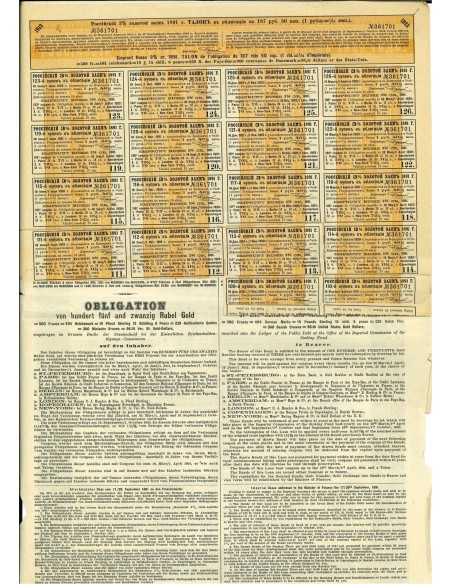

Historical Article: Russian 3% Gold Loan 1891 of the Imperial Russian Government (Российский 3% Золотой Заем 1891 года)
Historical Profile of the Company
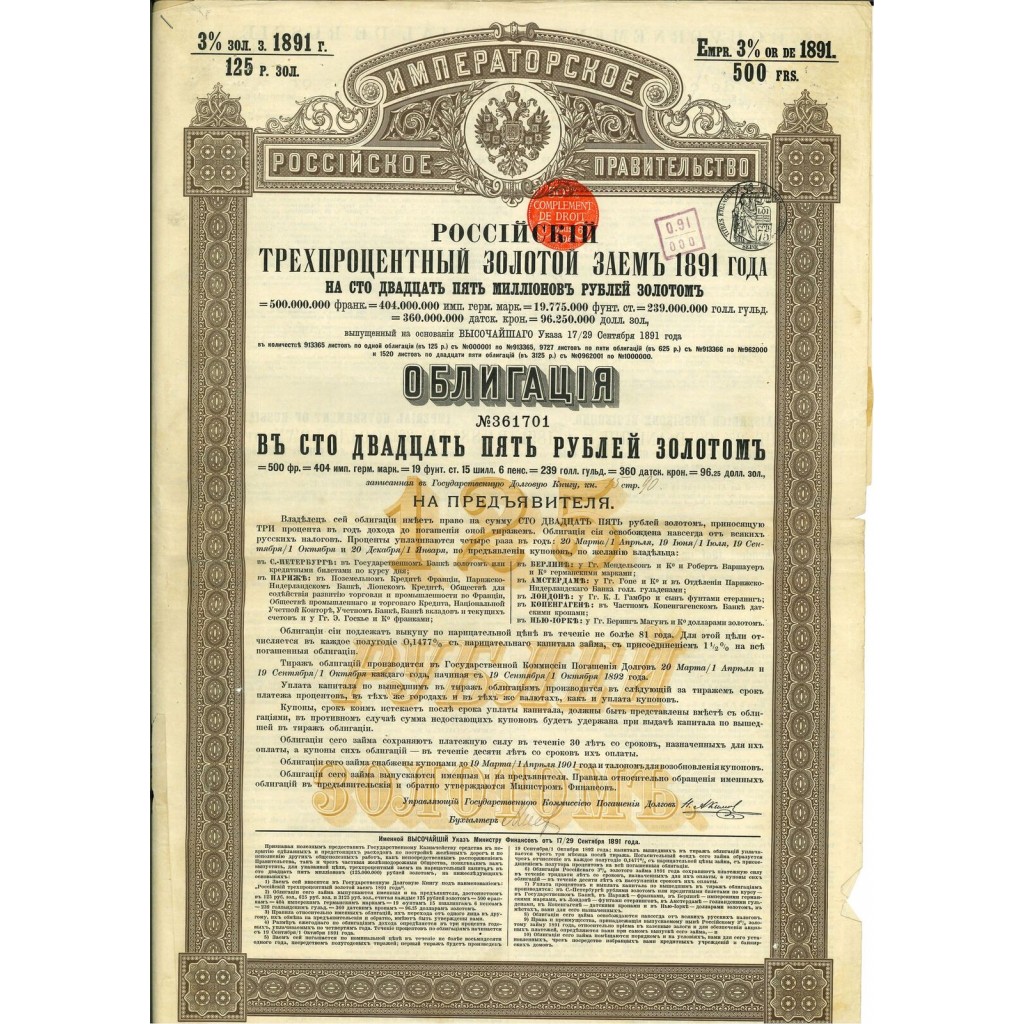
The Russian 3% Gold Loan 1891 is one of the main bond issuances by the Imperial Russian Government during a critical period in the Empire's economic and political history. This bond was part of a series of loans issued to finance the development of infrastructure, particularly railways, and to support military expenses in a context of growing international competition. Issuing loans guaranteed in gold was a way to reassure investors, ensuring them that repayments would be made in a stable and strong currency, regardless of fluctuations in the ruble.
The historical context in which this loan was issued was marked by an era of strong economic expansion and an internal policy aimed at strengthening Tsarist autocracy under the reign of Alexander III. The government focused on industrialization and modernization while managing growing social and political tensions.
Historical Data of the Company
| Data | Value |
|---|---|
| Year of establishment | 1891 (issuance date) |
| Headquarters | St. Petersburg, Russian Empire |
| Initial Capital | Not applicable (state issuance) |
| Year of bond issuance | 1891 |
| Interest rate | 3% per annum |
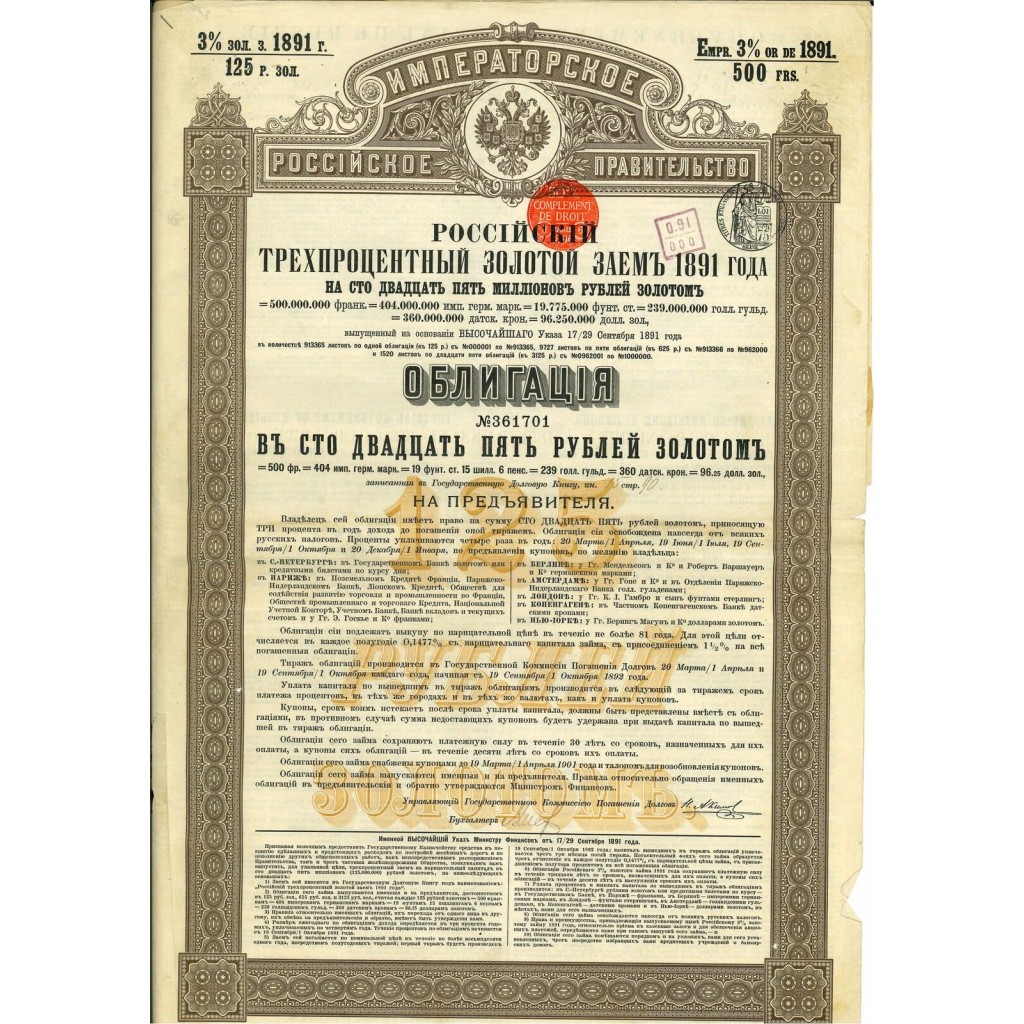
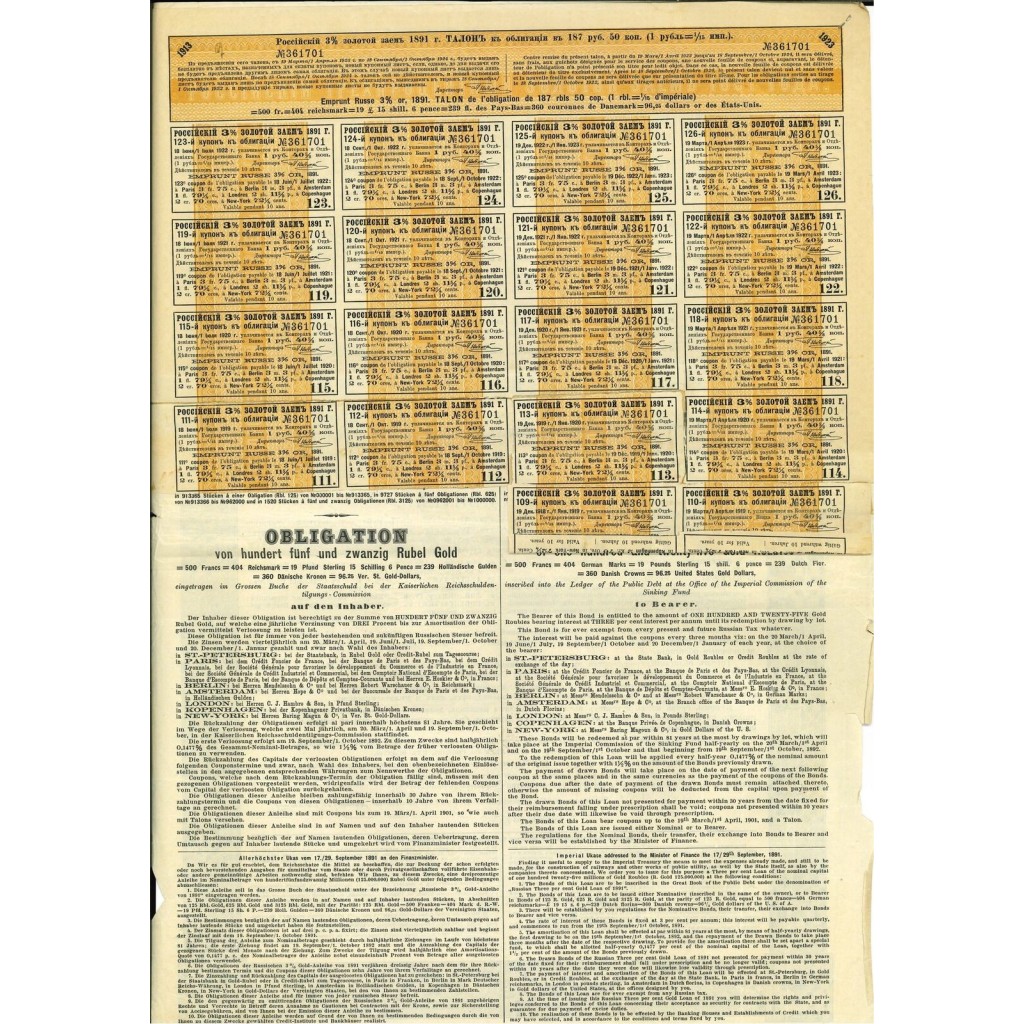
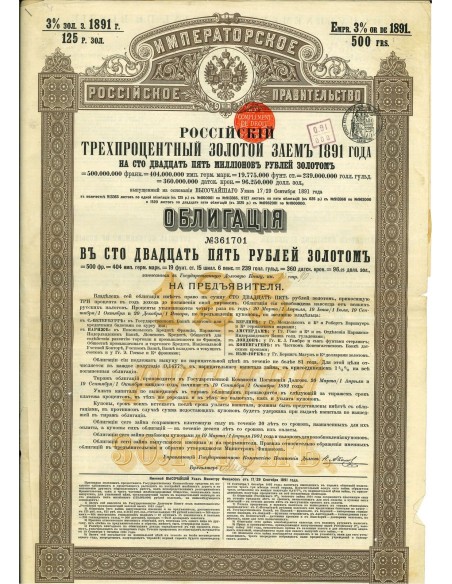
| Bond value | 125 gold rubles (equivalent to 500 francs, 404 German marks, 239 Dutch guilders) |
| Bond duration | Perpetual |
| Year of company dissolution | 1917 (Russian Revolution) |
| Last available data | Not available |
Historical Context
The Russian 3% Gold Loan 1891 was issued during a period of increasing capital needs by the Russian Government to support its ambitious plans for infrastructure development and military modernization. At the end of the 19th century, Russia was seeking to consolidate its role as a global power, and these loans were a crucial element of the Tsar's economic strategy. However, these bonds were issued in a context of growing social inequalities and increasingly strict state control over civil liberties, elements that would later contribute to the revolutionary unrest of the early 20th century.
Artistic and Typographic Details
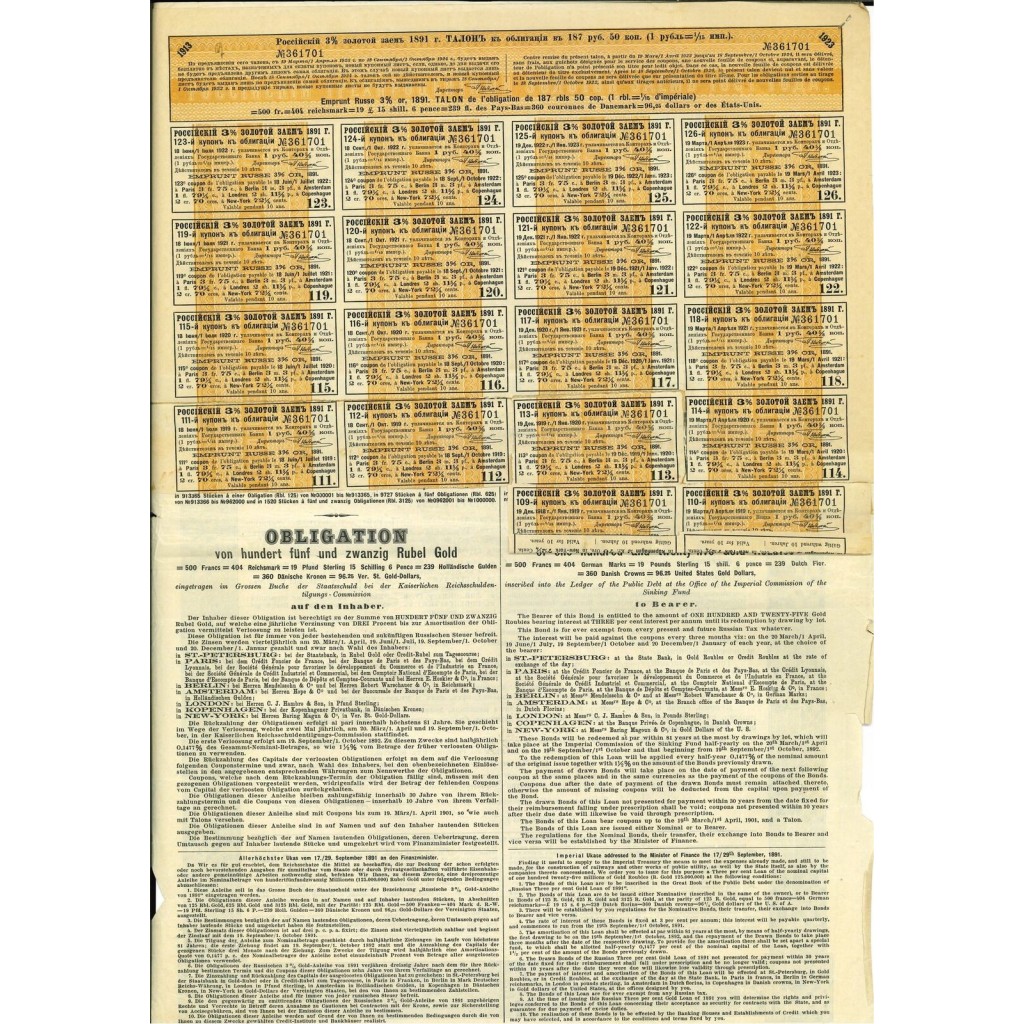
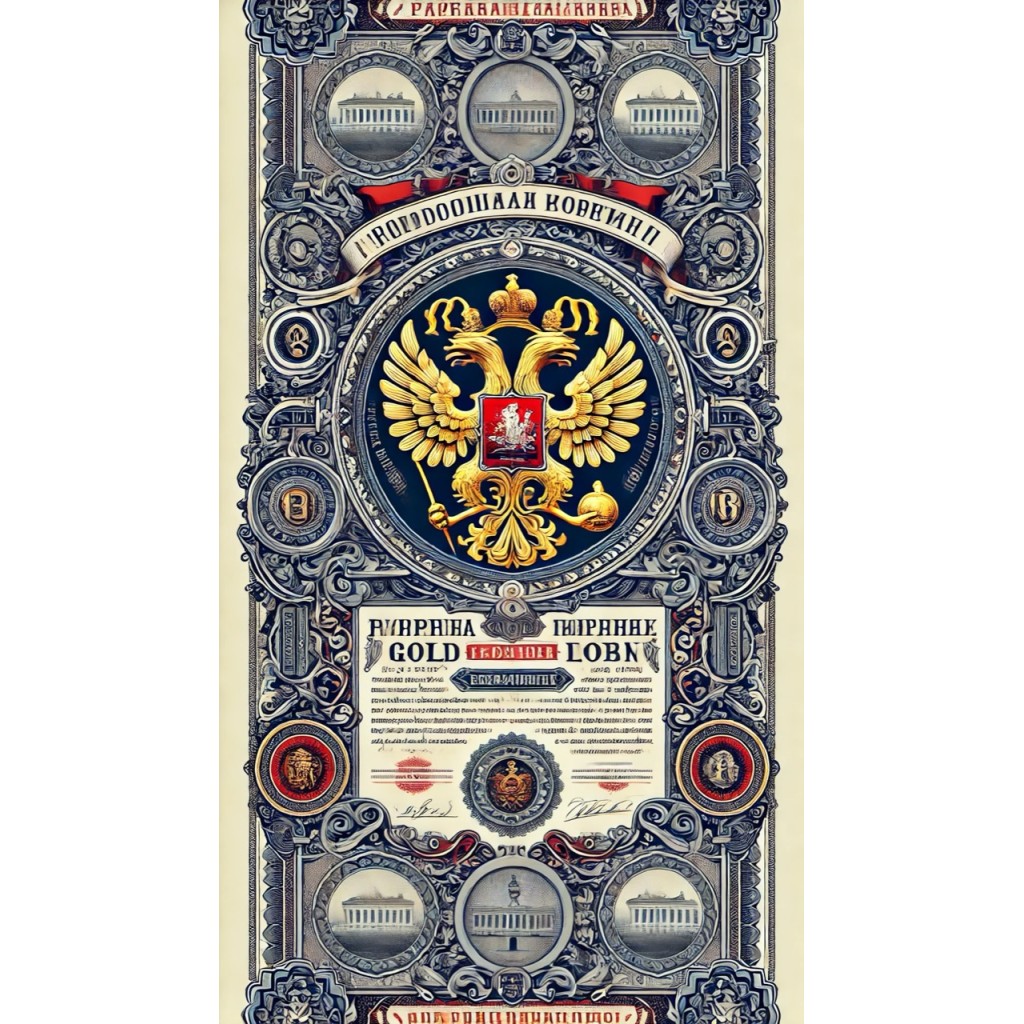
The 1891 certificate features an elaborate decorative frame, with gold elements and typographic details that give the document an authoritative and solemn appearance. The emblem of the Russian Empire, with the double-headed eagle, dominates the top of the document, symbolizing the legitimacy and power of the State. The text is written in Cyrillic, with well-defined characters and details such as seals and signatures that authenticate the document. Serial numbers and markings give the bond a unique and unrepeatable character.
Provenance of the Bond
This bond has passed through many hands and has been preserved in excellent condition to this day. It has been part of private collections of enthusiasts of Russian financial history and scripophily. An official certificate of authenticity, including a detailed historical registry of the document, is available for those who wish to increase the value of their investment and ensure its authenticity.
Valuation and Rarity
The 1891 Russian 3% Gold Loan bonds are considered of significant historical and collectible interest. Although not particularly rare, their value has grown over time due to interest in the history of the Russian Empire and gold-backed securities. Recent auctions have shown growing interest in these documents, making them an attractive investment option for scripophily collectors.
The Importance of Scripophily Collecting
Scripophily collecting offers a unique opportunity to own pieces of world economic and financial history. These documents not only testify to significant historical events but can also be used as decorative items, prestigious gifts, or part of private collections. Investing in scripophily means appreciating and preserving financial and historical culture, connecting with a past that has had a lasting impact on the present.
All historical documents for sale are for collection purposes. The documents have no economic or financial value (no economic or financial value), images that are not the historical document are representative of the company and the historical period of reference, they are not provided but can be freely downloaded from the website and printed.