Shopping Cart
There are no more items in your cart
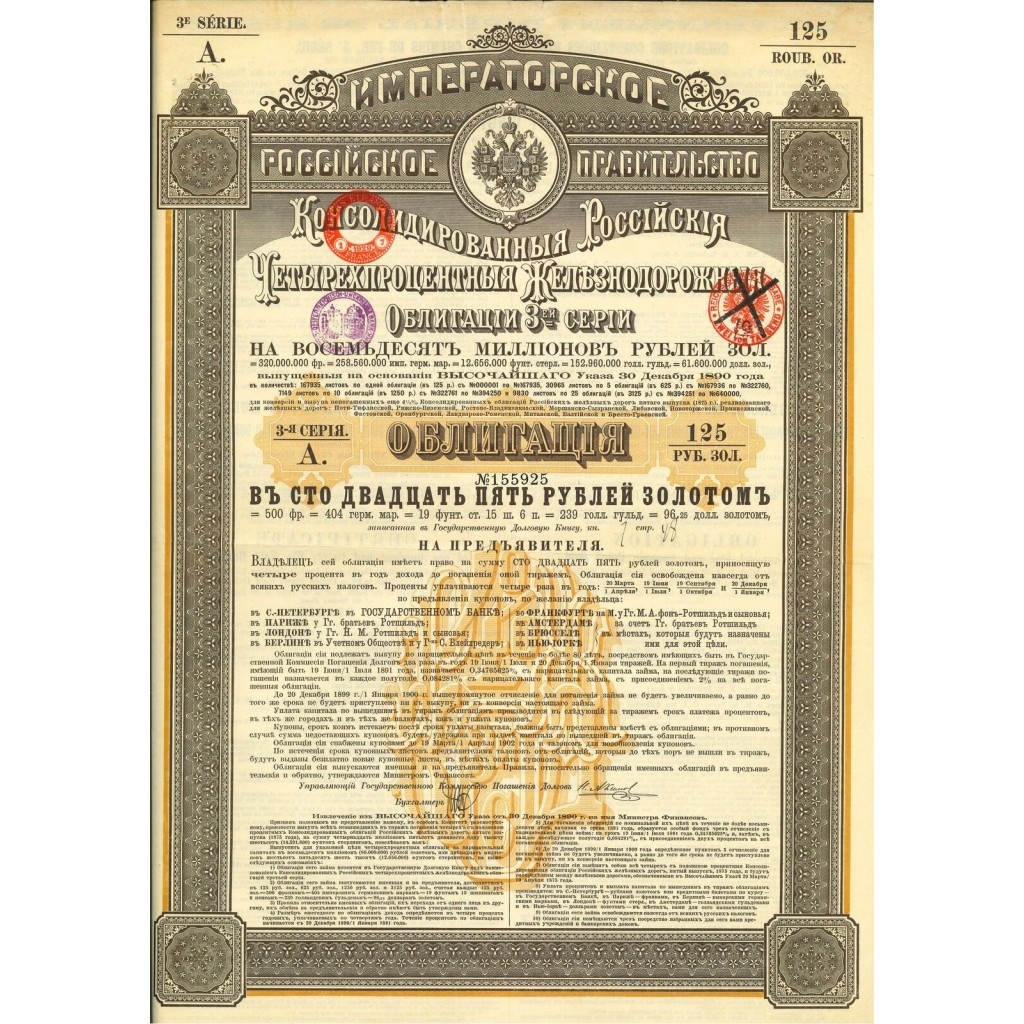

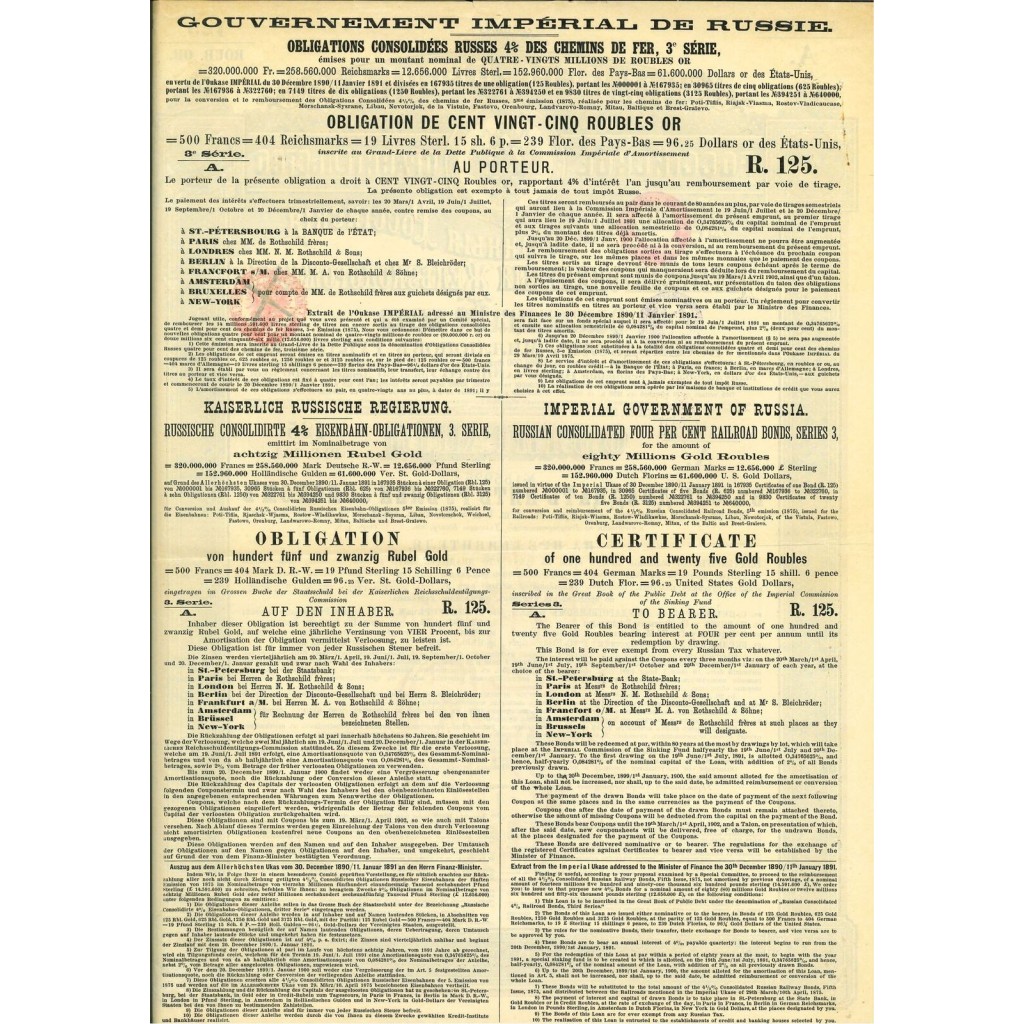
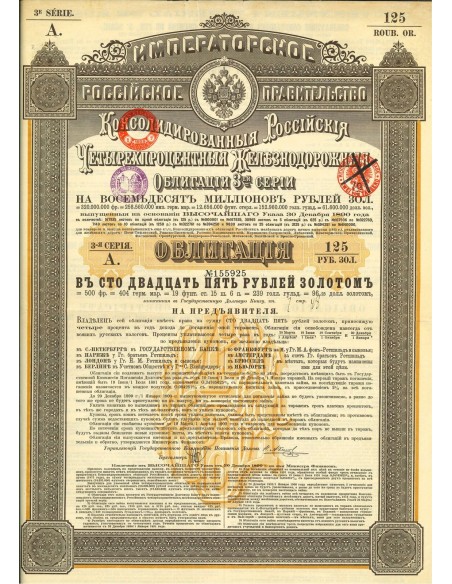

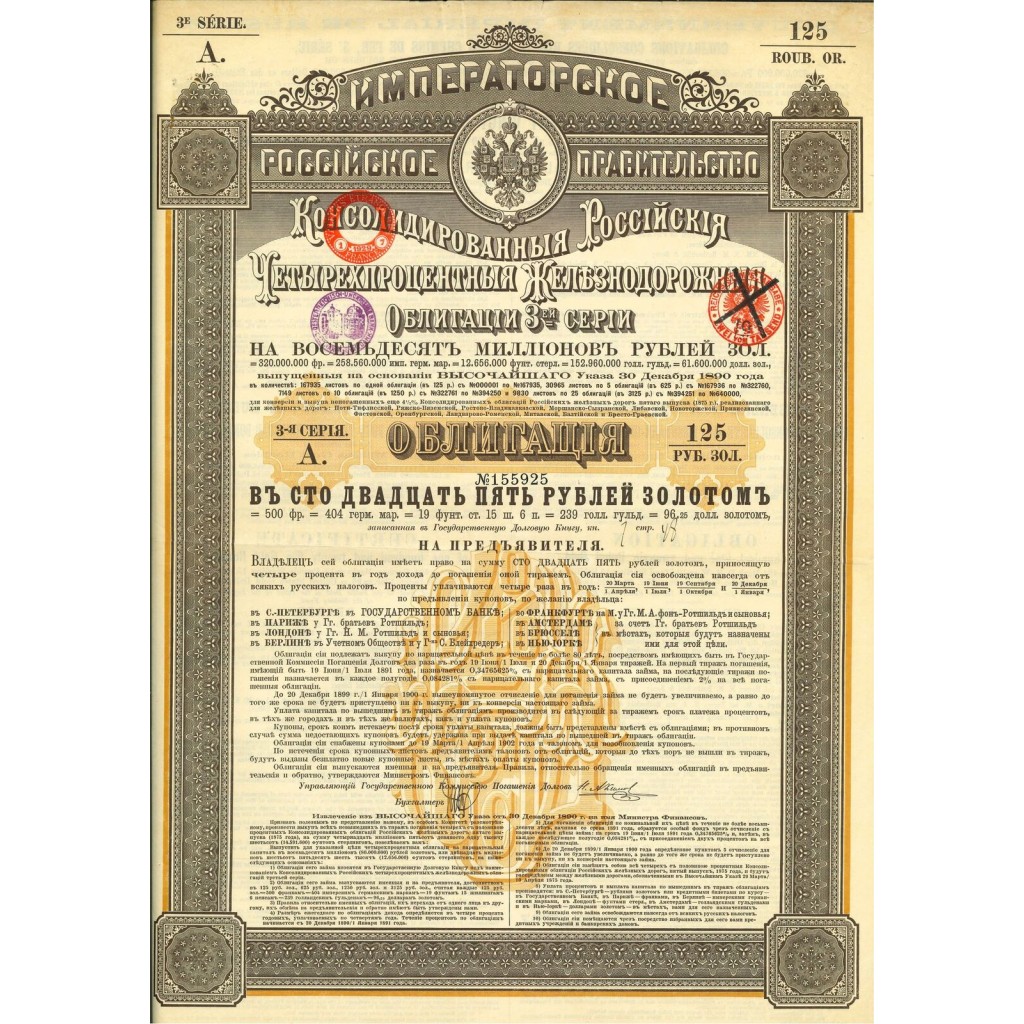
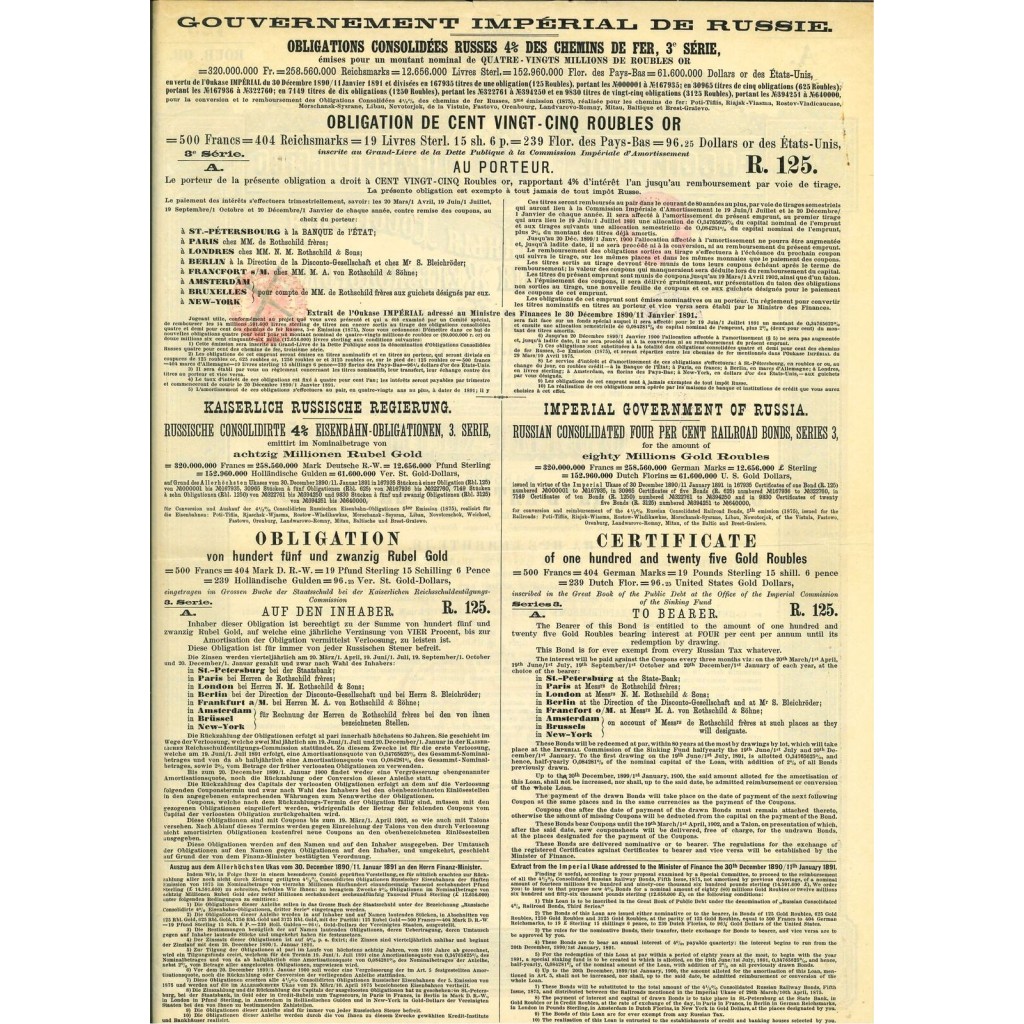
Historical Article: Russian 4% Consolidated Bonds of 1891 of the Imperial Russian Government (Российская Консолидированная Железнодорожная Облигация 1891 года)
Historical Profile of the Company
The Russian 4% Consolidated Bonds of 1891, issued by the Imperial Russian Government, represent an important financial instrument used to support the development of the Empire's railway infrastructure. These bonds were issued in a context of economic expansion and infrastructure modernization, with a particular focus on improving the railway network, which was crucial for trade and internal mobility. The primary objective was to raise significant capital to finance railway construction and modernization projects, which were vital to the Russian Empire's economy.
In 1891, the Russian Empire was under the rule of Alexander III, a sovereign known for his policy of strengthening autocracy and his efforts to promote industrialization. The modernization of the railways was part of a broader project to enhance the country's logistical and military capabilities, at a time when Russia was seeking to establish itself as a leading world power.
Historical Data of the Company
| Data | Value |
|---|---|
| Year of establishment | 1891 (issuance date) |
| Headquarters | St. Petersburg, Russian Empire |
| Initial Capital | Not applicable (state issuance) |
| Year of bond issuance | 1891 |
| Interest rate | 4% per annum |
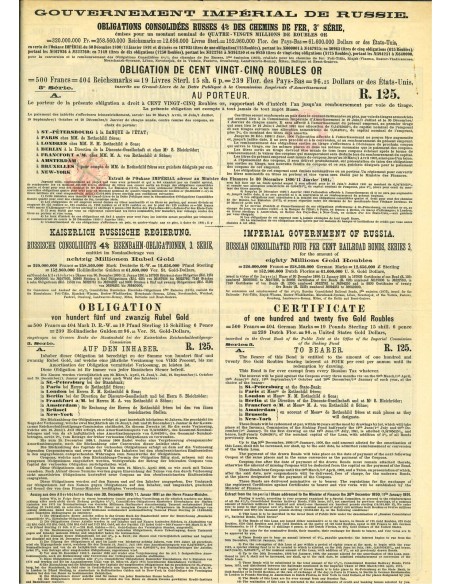
| Bond value | 125 gold rubles (equivalent to 500 francs, 404 German marks, 239 Dutch guilders) |
| Bond duration | Perpetual |
| Year of company dissolution | 1917 (Russian Revolution) |
| Last available data | Not available |
Historical Context
The issuance of the Russian 4% Consolidated Bonds of 1891 occurred during a period of significant industrial expansion and infrastructure development in Russia. The construction of an efficient railway network was considered essential not only to stimulate internal trade but also to improve the mobility of the armed forces, at a time when geopolitical tensions were rising. The expansion of the railway network was seen as a means to strengthen the cohesion of the Empire, facilitating the movement of goods and people across vast territories.
Artistic and Typographic Details
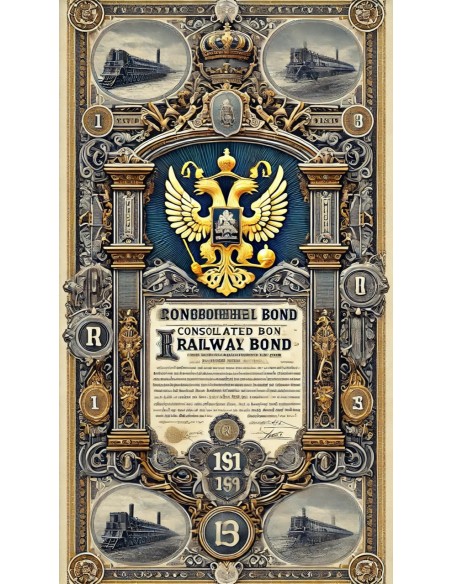
The 1891 certificate is an example of excellence in the typographic art of the time. It features an intricate frame, with gold decorative details and Cyrillic text that communicates the authority and legitimacy of the issuance. At the center, the emblem of the Russian Empire with the double-headed eagle symbolizes the strength and stability of the government. Each certificate is unique, with distinctive serial numbers and seals that guarantee its authenticity. The design is intended to inspire confidence in investors while representing the grandeur and ambition of the Russian Empire.
Provenance of the Bond
This bond has a rich history and has been part of several private collections of enthusiasts of scripophily and financial history. It has been preserved in excellent condition, which increases its value for collectors. For those who wish to add an extra level of authenticity to their investment, an official certificate of authenticity, accompanied by a detailed historical registry of the document, is available.
Valuation and Rarity
The 1891 Russian consolidated bonds are highly appreciated by collectors, not only for their historical value but also for the artistic quality of the certificates. Although not particularly rare, their value has increased over time due to interest in the history of the Russian Empire and gold-backed securities. These documents are often considered a safe investment for scripophily enthusiasts.
The Importance of Scripophily Collecting
Scripophily collecting offers a unique opportunity to own pieces of world economic and financial history. These documents not only testify to significant historical events but can also be used as decorative items, prestigious gifts, or part of private collections. Investing in scripophily means appreciating and preserving financial and historical culture, connecting with a past that has had a lasting impact on the present.
All historical documents for sale are for collection purposes. The documents have no economic or financial value (no economic or financial value), images that are not the historical document are representative of the company and the historical period of reference, they are not provided but can be freely downloaded from the website and printed.