Shopping Cart
There are no more items in your cart

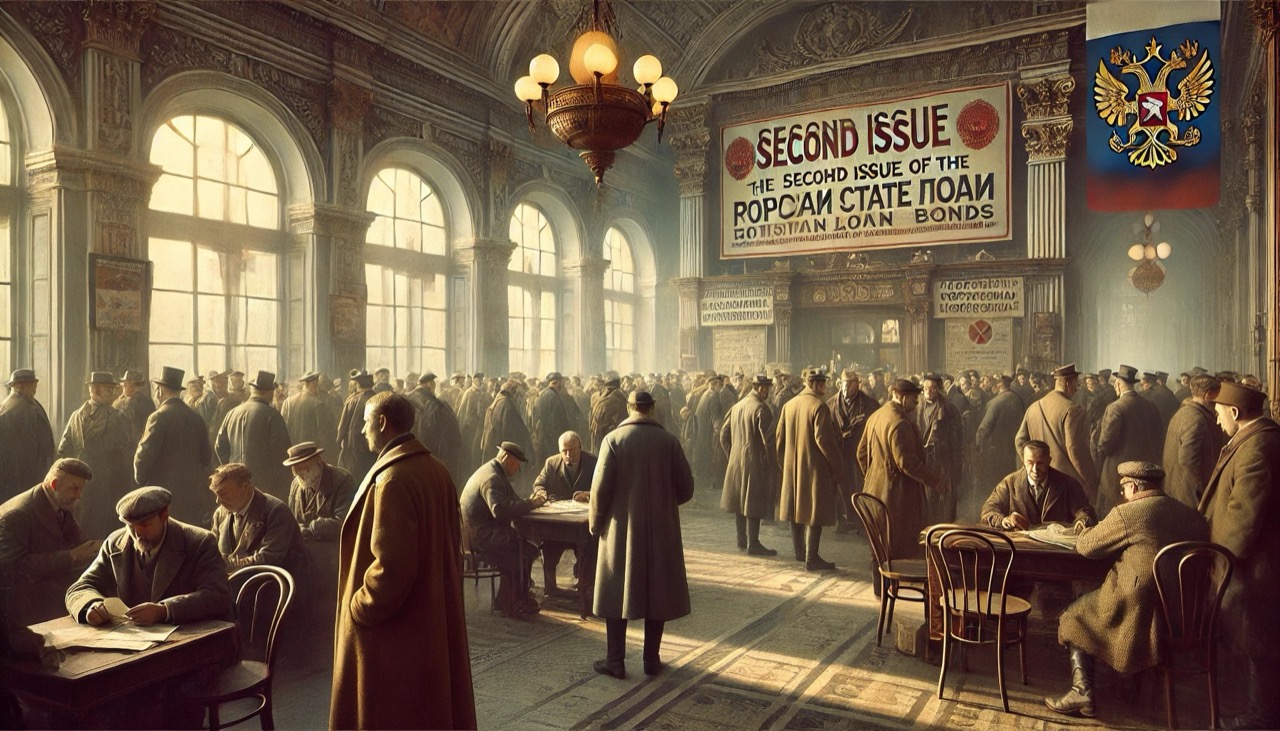
History of the Russian State Loan of 1917
The Russian State Loan of 1917, in its second issue, represents a significant financial document issued during one of the most dramatic periods in Russian history. This loan was issued by the Russian Provisional Government just before the October Revolution, a period marked by severe political, economic, and social tensions. The Provisional Government, which had taken power after the abdication of Tsar Nicholas II, found itself facing a disastrous economic situation, with the urgent need to raise funds to support the war effort and maintain public order.
In this context, various internal loans were issued, including the 4½% Prize Loan, intended to raise capital from the population through the issuance of state bonds. The second issue, like the previous one, had a unique feature: it was a prize loan, where the issued bonds participated in periodic drawings that allowed holders to win cash prizes. The total amount issued was 400 million rubles, divided into 200-ruble bonds.
Despite the economic crisis and growing political instability, the loan managed to attract a decent participation, mainly due to the promise of prizes that appealed to many small savers. However, with the rise of the Bolshevik regime and the subsequent civil war, many of these bonds lost their economic value, becoming instead valuable collectibles.
Historical Context of 1917
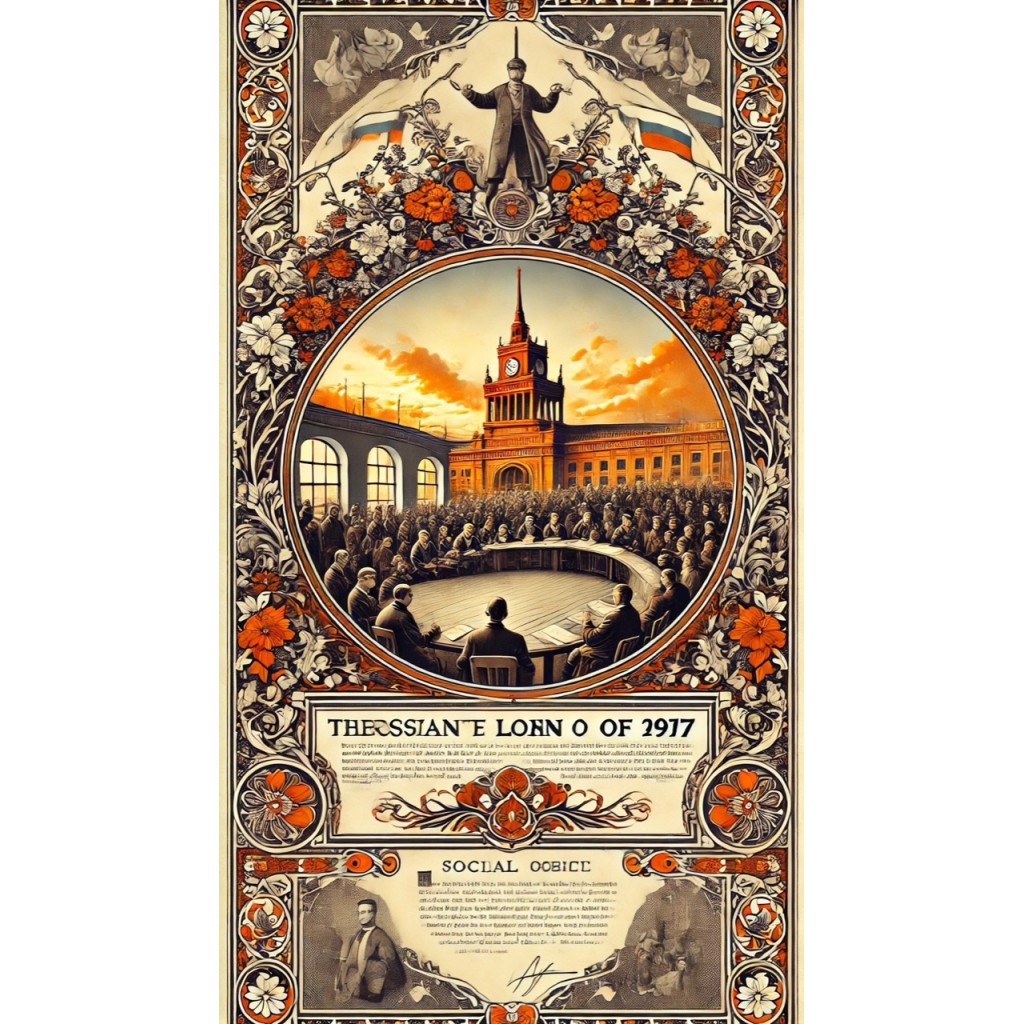
The year 1917 marks a turning point in Russian history. With the fall of the tsarist regime and the establishment of the Provisional Government, Russia entered a period of great uncertainty. World War I was depleting the country's resources, while internally, social discontent was growing, fueled by years of inequality and deprivation. The Provisional Government tried to maintain economic stability through loans such as the 1917 issue, but the situation was already out of control. The October Revolution and the subsequent civil war marked the end of the Provisional Government and the beginning of a new political course that would have profound consequences for Russia and the world.
Historical Data of the Loan
| Loan Data | Value |
|---|---|
| Year of Issuance | 1917 |
| Issuing Government | Russian Provisional Government |
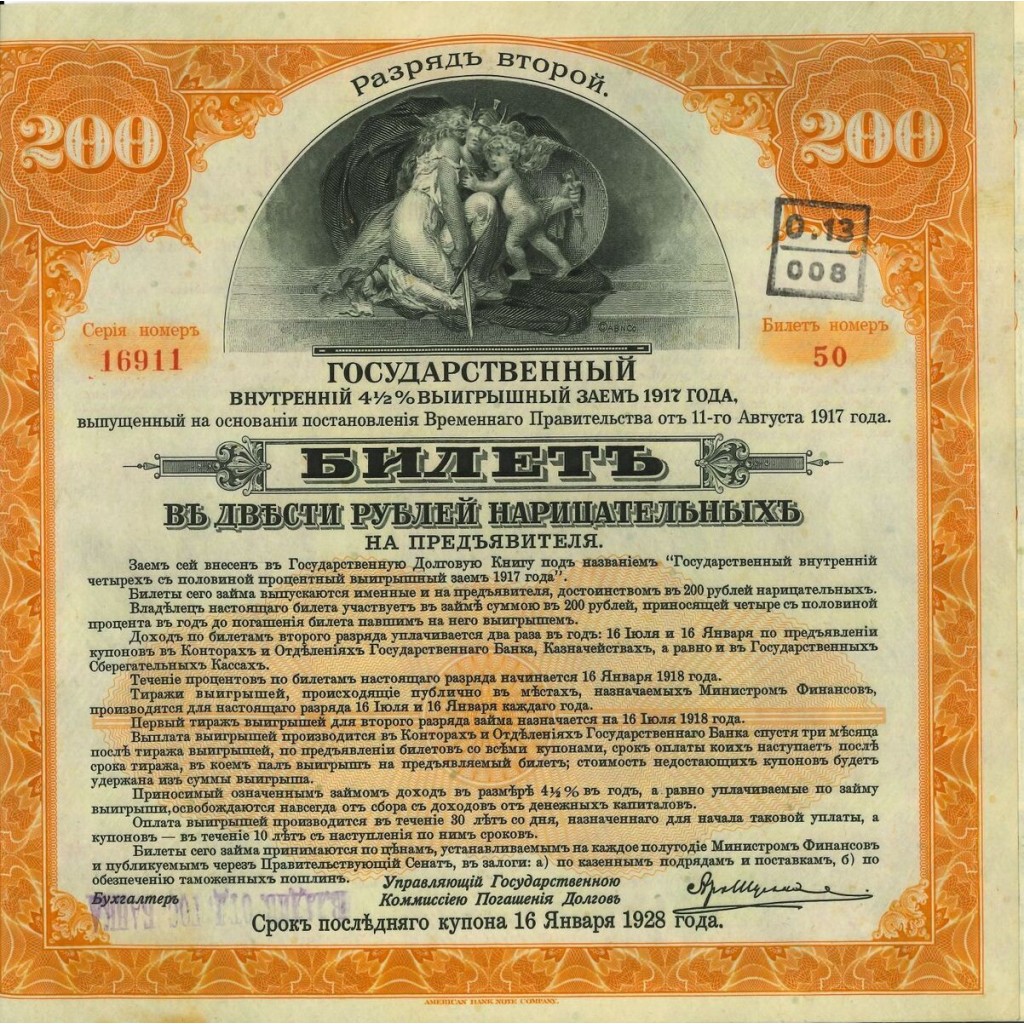
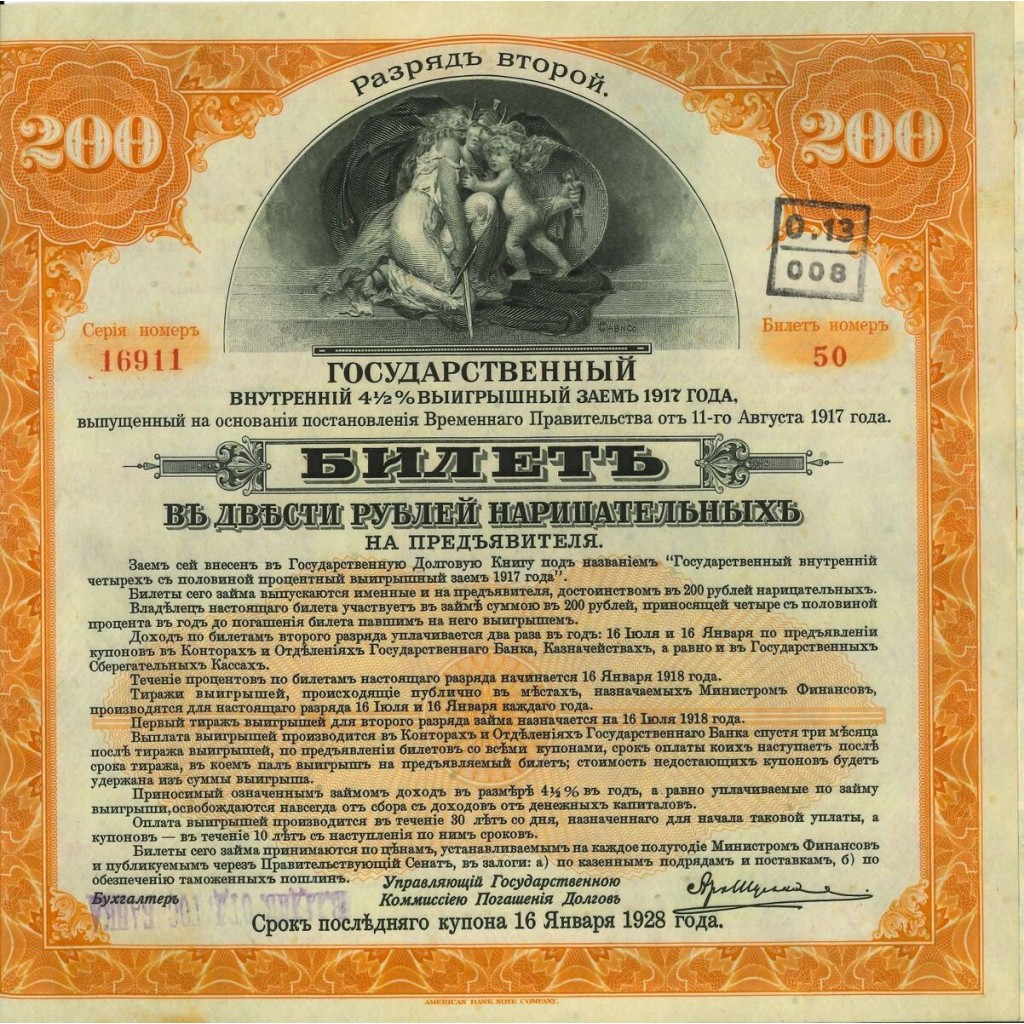
| Nominal Value | 200 Rubles |
| Total Amount Issued | 400,000,000 Rubles |
| Interest Rate | 4½% |
| Loan Type | Prize Loan with Lottery |
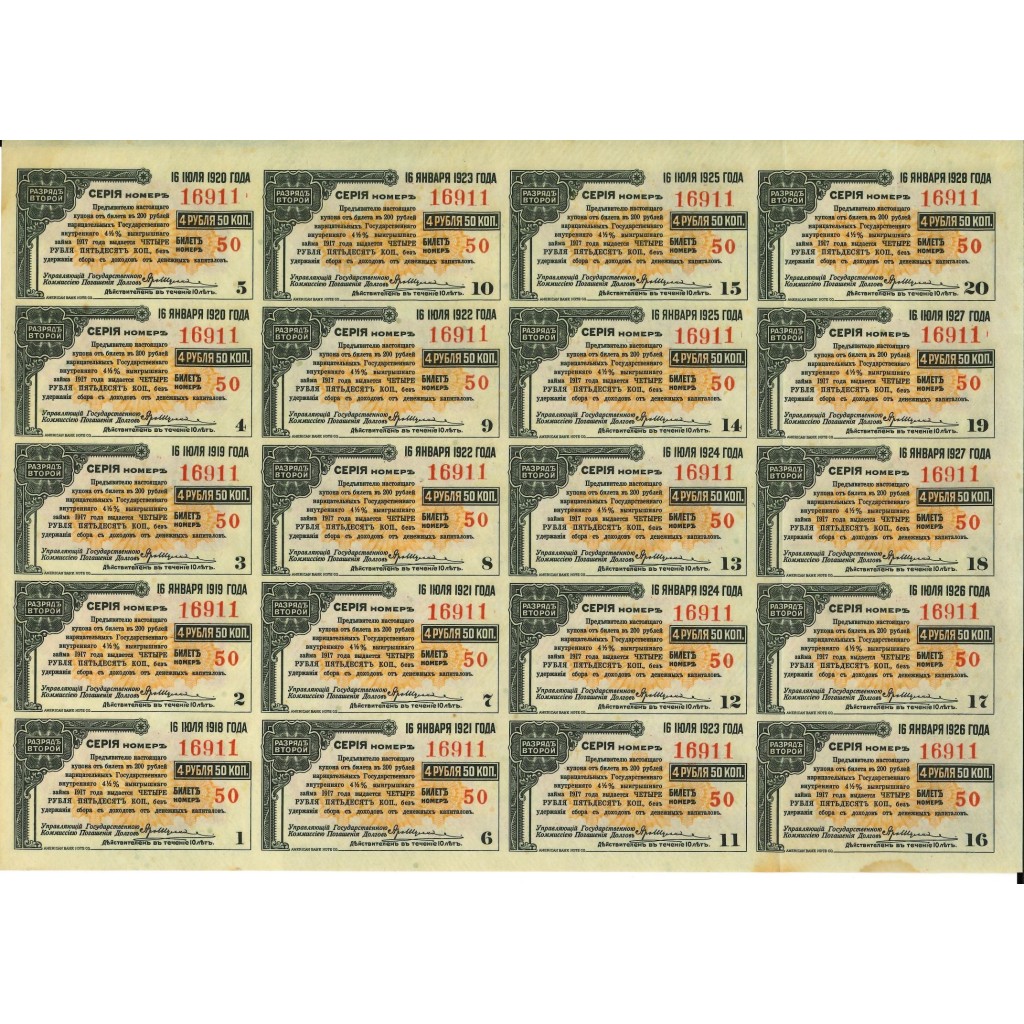
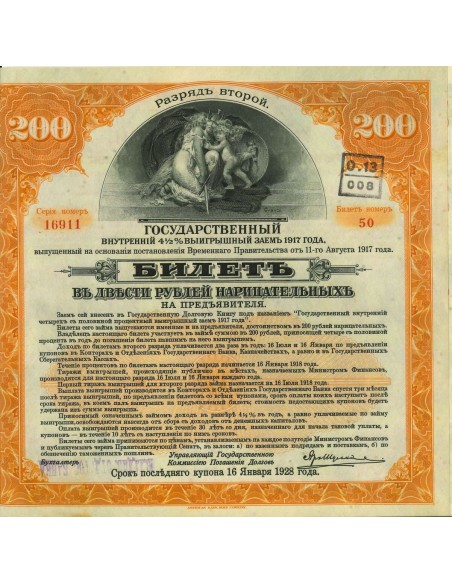
| Last Coupon Date | January 16, 1928 |
Document Characteristics
| Document Characteristics | Description |
|---|---|
| Title Type | Loan Bond |
| Issuance | 4½% Prize Loan of 1917 |
| Currency | 200 Rubles |
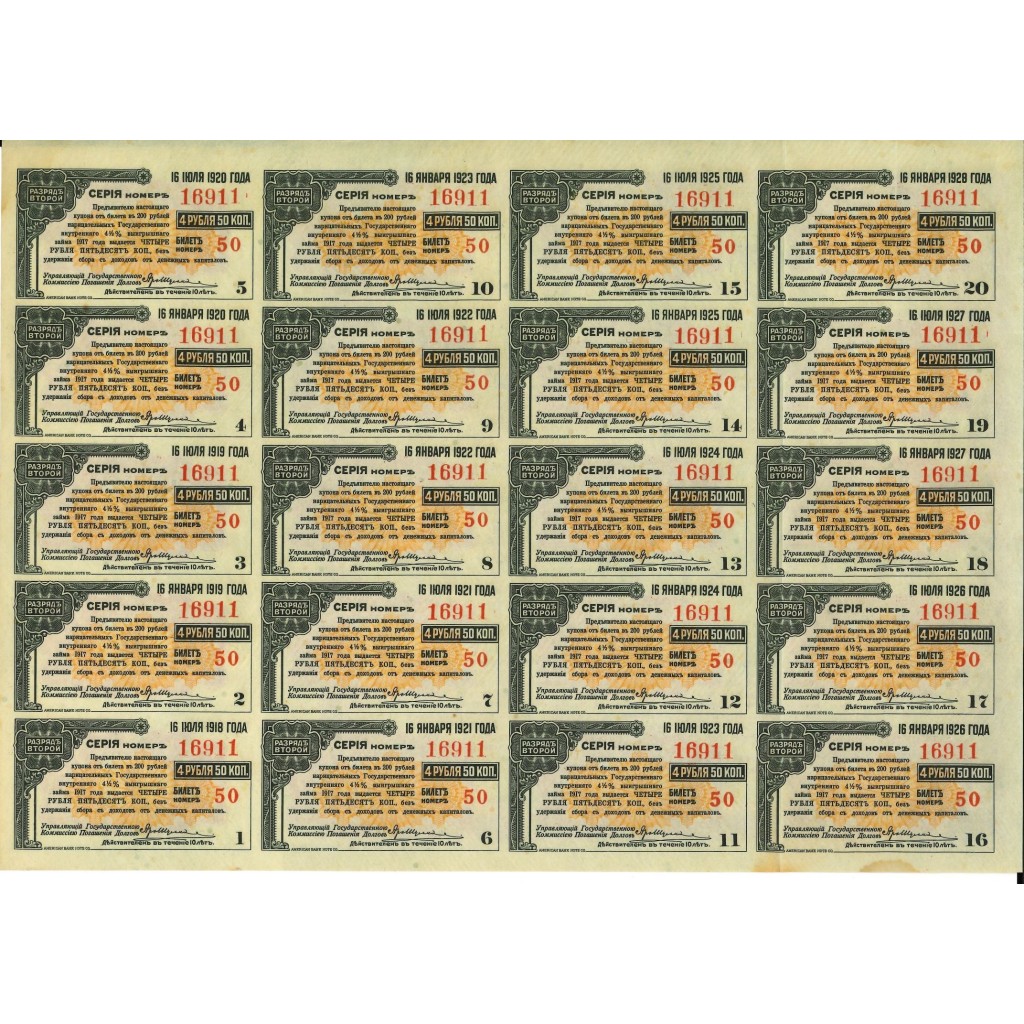
| Serial Number | 16911 |
| Date of Issue | 1917 |
| Language | Russian |
| Nominal Value | 200 Rubles |
| Guarantee | Russian Provisional Government |
| Maturity | January 16, 1928 |
Artistic and Typographic Details
This document is characterized by an orange decorative border with floral details that reflect the classic style of the time. In the center, an engraving depicting a mythological scene gives the bond a solemn and authoritative appearance. The typography is clear and precise, with the serial numbers and nominal value highlighted in red, giving the bond an elegant look. The combination of colors and the elaborate design make this bond not just a financial document but also a work of art.
Provenance of the Title
This bond was issued by the Russian Provisional Government and survived one of the most turbulent periods in modern history. Its preservation to this day makes it an object of great value for scripophily collectors. This particular example has been well-preserved and is a silent witness to Russia's troubled history.
Valuation and Rarity
The Russian State Loan of 1917, second issue, is considered rare, especially if preserved in excellent condition. The market for pre-revolutionary Russian state bonds has seen considerable interest in recent years, with an increase in the value of these documents. Currently, the estimated value for a bond like this ranges between 300 and 700 euros, depending on specific conditions and market demand.
The Importance of Scripophily
Collecting historical documents such as stocks and bonds is not just an economic investment but also an opportunity to own a fragment of history. Scripophily allows exploration of the economic, political, and social events that shaped the modern world. This document, with its unique history and artistic design, is not only a work of art but also a testament to an era of great change.
For those wishing to preserve this certificate, it is advisable to frame it with UV-protective glass to prevent deterioration and preserve the artistic details. These documents, in addition to being valuable for collectors, can be used as prestigious gifts, decorative pieces, or works of historical art.
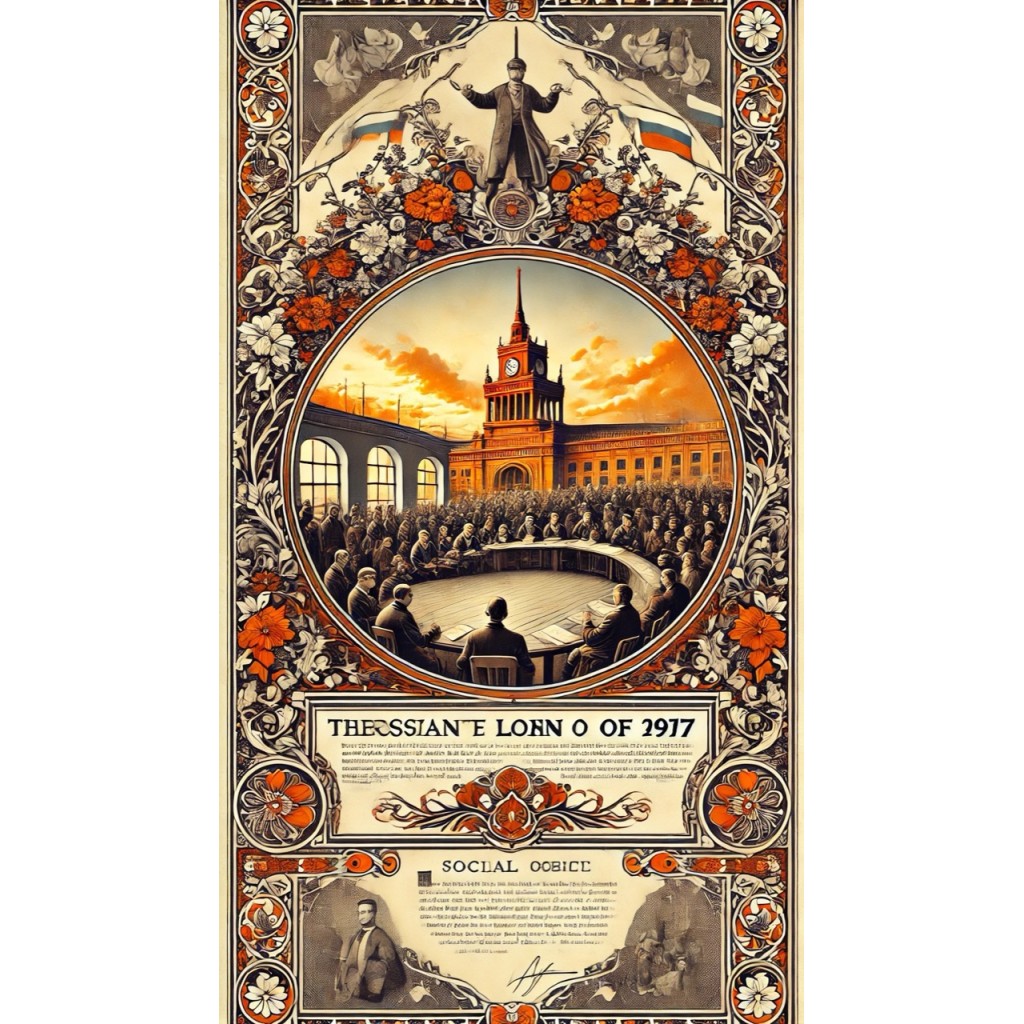
All historical documents for sale are considered collectibles. The documents have no economic or financial value (no economic or financial value), images that are not the historical document are representative of the company's object and the historical period of reference, they are not provided but can be freely downloaded from the website and printed.