Shopping Cart
There are no more items in your cart
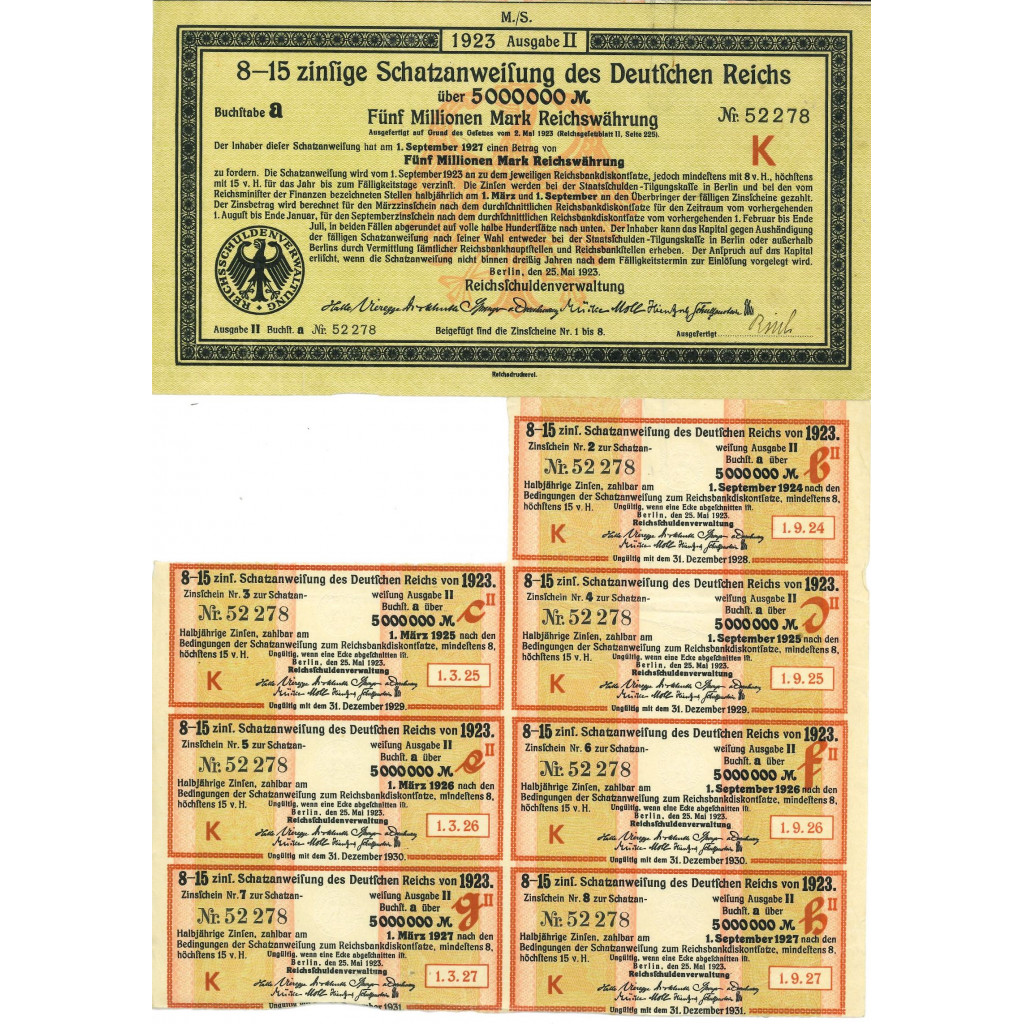
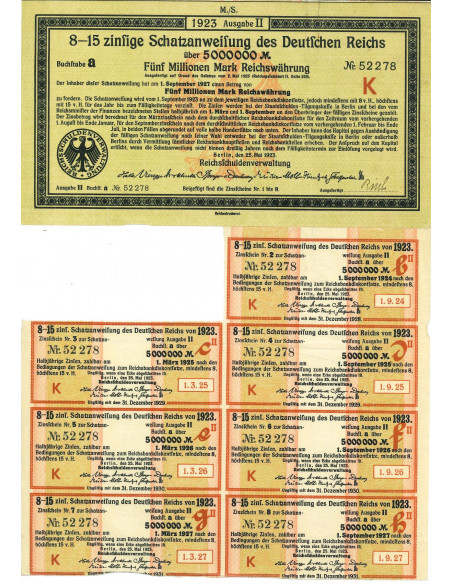
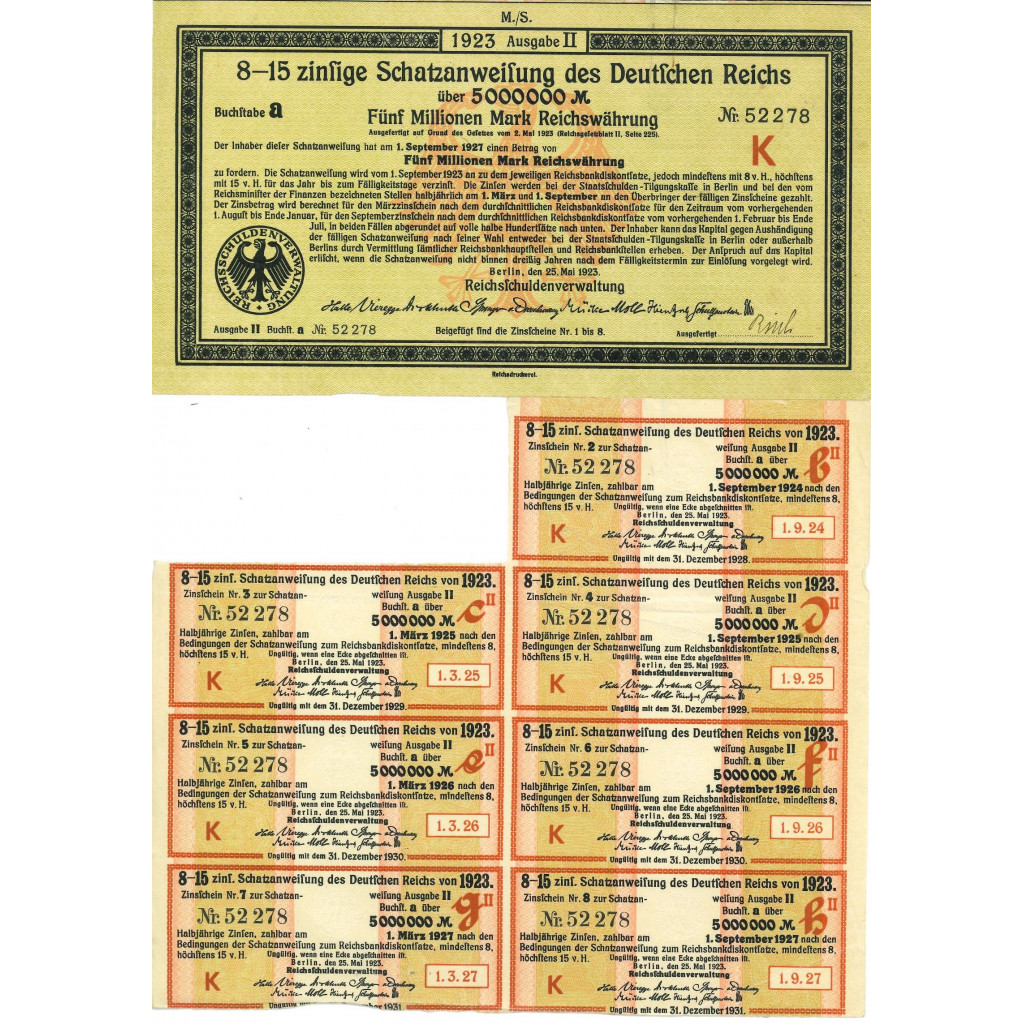
The document shown is a Schatzanweisung (Treasury Bond) issued by the Reichsfinanzministerium of the Deutsches Reich (Ministry of Finance of the German Reich). These public debt securities were issued during the Weimar Republic as a tool to finance government expenditures and support the economy during a period of extreme inflation and economic hardship. The Schatzanweisungen were state-guaranteed and paid a fixed interest, making them a relatively safe investment in a time of great economic uncertainty.
Historical Data of the Company
| Year of Establishment | Registered Office | Name at Delisting | Year of Listing | Year of Delisting | Year of Cessation | Initial Capital | Final or Last Known Capital |
|---|---|---|---|---|---|---|---|
| 1919 | Berlin, Germany | N/A | N/A | N/A | 1945 | 10,000,000,000 RM | 100,000,000,000 RM |
Historical Revenue
| Year | Revenue (RM) |
|---|---|
| 1921 | 50,000,000 RM |
| 1923 | 500,000,000,000 RM |
| 1924 | 1,000,000,000,000 RM |
Document Characteristics
| Issue Date | Nominal Value | Interest Rate | Signatories | Controller |
|---|---|---|---|---|
| 1923 | 5,000,000 RM | 8-15% | Directors of the Ministry of Finance | Keine Angabe |
For Scripophily Collectors
Collecting historical documents such as stocks and bonds, known as scripophily, is a fascinating practice that allows enthusiasts to delve into the economic and industrial history of the past. Scripophily offers not only the opportunity to own pieces of economic history but also to appreciate the art and beauty of printed certificates. Each document tells a story, represents an era, and carries the charm of the great companies and states that laid the foundations of the modern economy.
This document from Schatzanweisung des Deutschen Reichs is a magnificent example of a historical certificate. Issued in 1923, with a nominal value of 5,000,000 Reichsmark and an interest rate ranging from 8% to 15%, it represents not only an economic investment of the time but also a piece of art with captivating graphic details. The signatories of the certificate add a personal and authentic touch that makes each piece unique.
For collectors, owning a document like this means holding a part of Germany's economic history during the Weimar Republic. These certificates not only increase in historical value over time but are also splendid items to display, capable of sparking conversations and interest among history and finance enthusiasts.
All historical documents for sale are intended for collection. The documents have no economic or financial value (no economic or financial value), the second image is only representative of the object of the reference company.