Shopping Cart
There are no more items in your cart
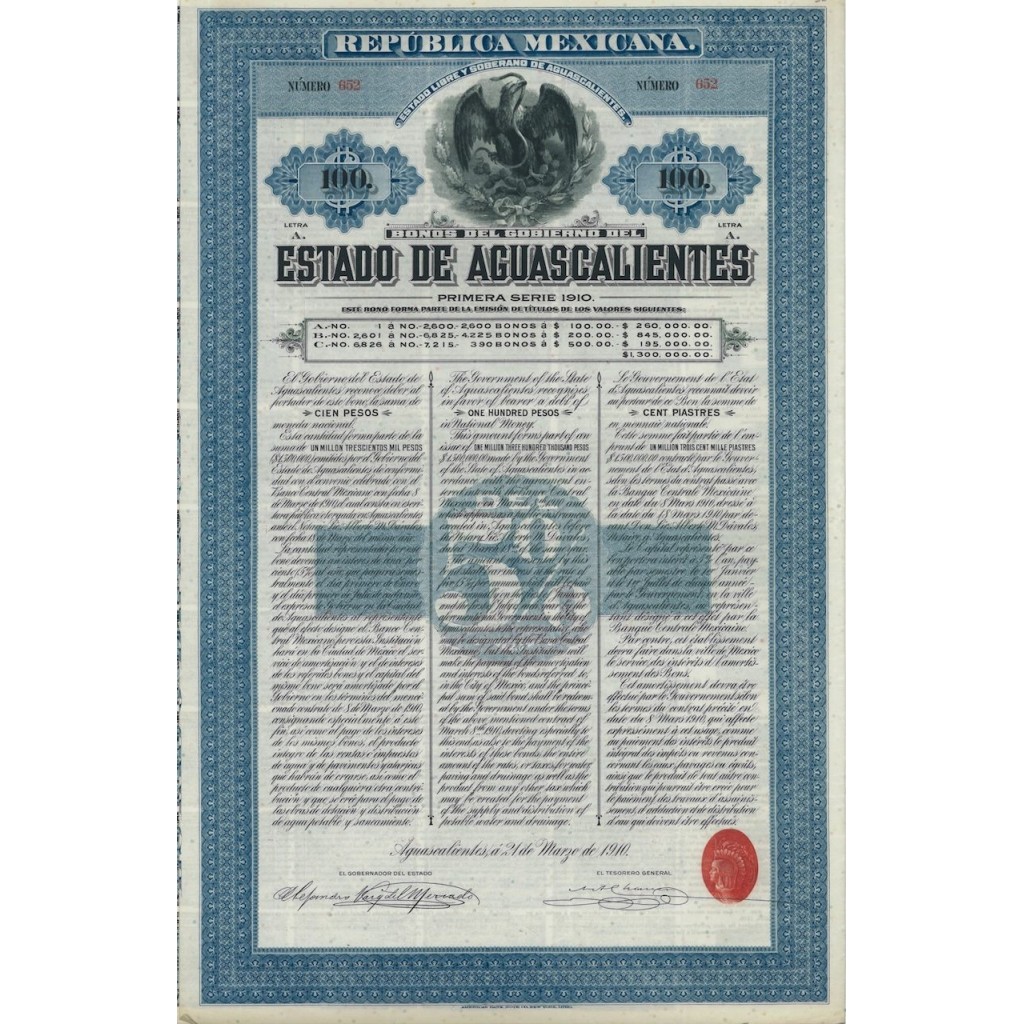
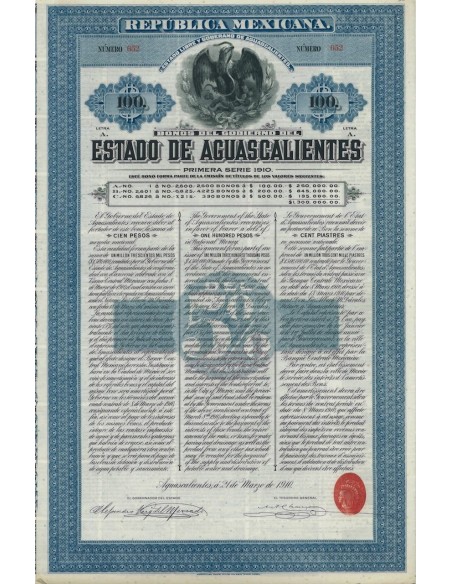

The bond presented here was issued by the Government of the State of Aguascalientes, one of the federative entities of the United Mexican States, in 1910. This period was a crucial moment for Mexico, as the country was on the verge of the Mexican Revolution, which began the same year. Aguascalientes, located in the heart of Mexico, held strategic importance for communications and commerce, thanks to its central location and its agricultural and industrial development.
The Government of the State of Aguascalientes issued these bonds as part of a fundraising program aimed at financing infrastructure projects and other public improvements necessary for the region's development. These bonds, guaranteed by the state government, were aimed at both national and international investors, with the goal of attracting capital to fund necessary works.
Historical Context
1910 was a year marked by significant political and economic events in Mexico. The long presidency of Porfirio Díaz, characterized by widespread economic modernization but also growing social inequalities, was coming to an end. The issuance of these bonds occurred during a time of great uncertainty, as social and political tensions were rising and would soon lead to the outbreak of the Mexican Revolution.
These bonds represent a testament to the local government's confidence in its development capabilities, despite the instability spreading throughout the country. The bond in question, with a face value of 100 pesos, is an example of the various financial instruments used to support the local economy during times of change.
Artistic and Typographic Details
The certificate is characterized by a decorative blue border, with a Mexican eagle at the center, symbolizing the nation. The typography is precise and reflects the seriousness and official nature of the issuance. The certificate is trilingual, with text in Spanish, English, and French, indicating the intent to attract investors from different parts of the world. Additionally, the document includes seals and handwritten signatures of government officials, attesting to its authenticity.
Provenance of the Certificate
This certificate represents one of the bonds issued by the Government of the State of Aguascalientes in 1910. It may have been owned by an investor eager to support the state's development during a period of economic and infrastructural expansion. The preservation of this document until today demonstrates the care with which it was kept, making it a valuable piece for collectors.
Company Historical Data
| Year of Incorporation | Initial Capital | Year of Stock Exchange Listing | Year of Delisting | Year of Company Dissolution | Estimated Annual Revenue |
|---|---|---|---|---|---|
| 1910 | $1,300,000 | Not available | Not available | Not available | Not available |
Certificate Data
| Nominal Value | Date of Issue | Type of Bond | Serial Number |
|---|---|---|---|
| 100 pesos | March 26, 1910 | First Series, Guaranteed | 652 |
| Language | Guarantee | Printed by | |
| Spanish, English, French | Government of the State of Aguascalientes | Not available |
Valuation and Rarity
This bond is particularly interesting to scripophilia collectors due to the historical context in which it was issued and the artistic quality of the document. Bonds issued by Mexican state governments during this period are relatively rare, especially in good condition like this one. The rarity and historical importance of the bond increase its value in the collectible market.
Collector's Tips
Collecting historical documents like this offers a unique window into Mexico's economic and political history. These certificates not only represent ancient investments but can also be displayed as art pieces in your home or office, or given as meaningful gifts. It is advisable to frame the certificate using acid-free materials and avoid exposure to direct sunlight to preserve its integrity.
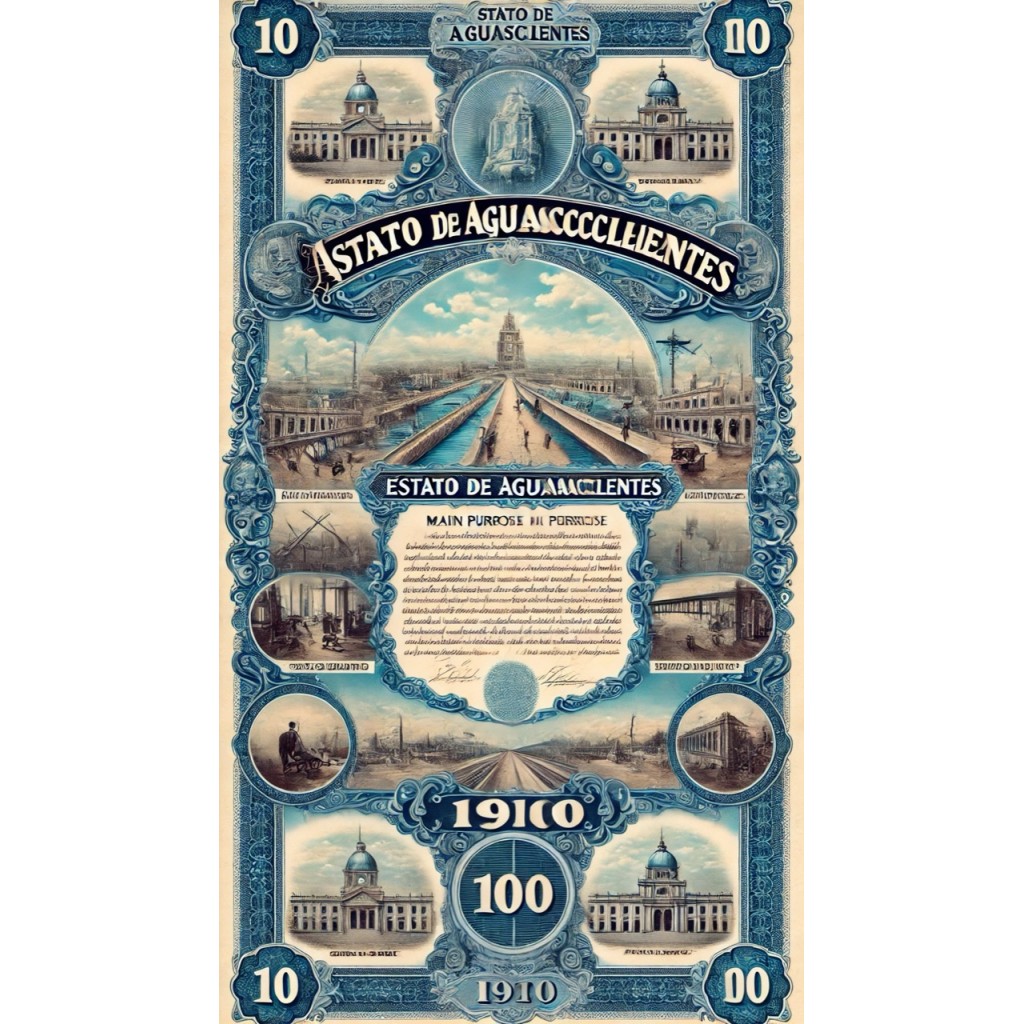
All historical documents for sale are for collection purposes only. The documents have no economic or financial value (no economic or financial value); the images that are not the historical document are representative of the company's object and the historical period of reference. They are not provided but can be freely downloaded from the website and printed.