Shopping Cart
There are no more items in your cart

Document Features
-
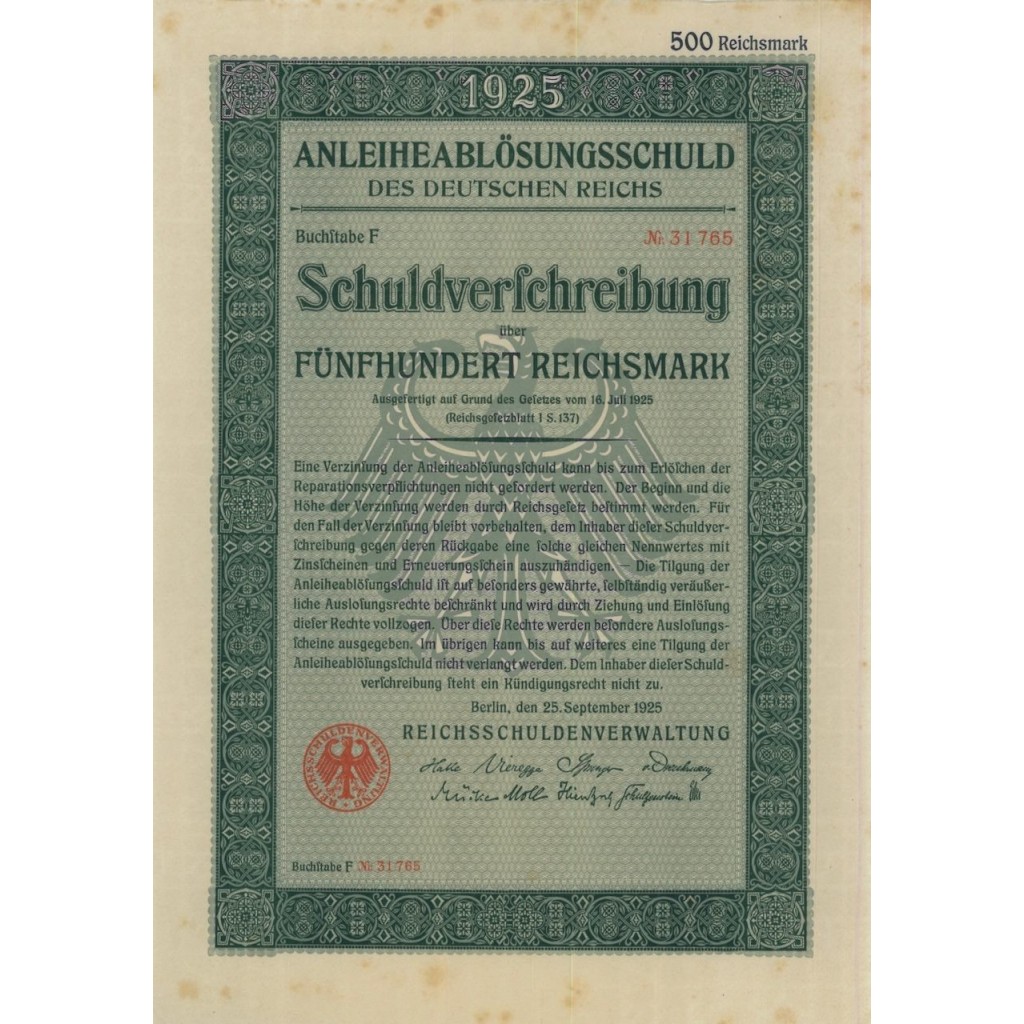
Language: The document is written in German, highlighting its use in national markets.
-
Nominal Value: The bond has a nominal value of 500 Reichsmarks, clearly indicated on the document.
-
Design and Symbolism:
- Green and White Colors: The document features a predominantly green and white design, symbolizing stability and reliability.
- Ornate Patterns: Decorative elements include floral and geometric motifs, reflecting the aesthetic values of the period.
- Reich Seal: The document is marked with the seal of the German Reich, conferring authenticity and official status.
-
Administration:
- The document is signed by members of the Reich Debt Administration, conferring legal validity and official status to the bond.
-
Date and Place of Issue: The bond was issued in Berlin on September 25, 1925.
-
Terms and Conditions: The document includes detailed terms and conditions regarding the payment of interest and the repayment of principal, outlining the rights of the bondholder and the obligations of the German government.
History of German Reich Bonds
In 1925, Germany was facing a period of economic and financial instability following World War I. The Treaty of Versailles had imposed heavy war reparations, and the German government sought ways to manage public debt and stabilize the economy. Reich bonds were issued as part of these efforts, aimed at raising funds for reparations payments and financing government expenditures.
These bonds offered citizens and investors an opportunity to contribute to the country's economic stabilization while providing a return on investment through interest payments. Public debt management was a crucial element of the government's strategy to maintain financial market confidence and promote economic recovery.
Conclusion
This bond is not just a financial document but a historical artifact that sheds light on Germany's efforts to manage public debt and stabilize the economy in the post-war period. Collectors and historians value these documents for their historical significance and their role in Germany's economic history.