Shopping Cart
There are no more items in your cart

Historical Article for Collectors
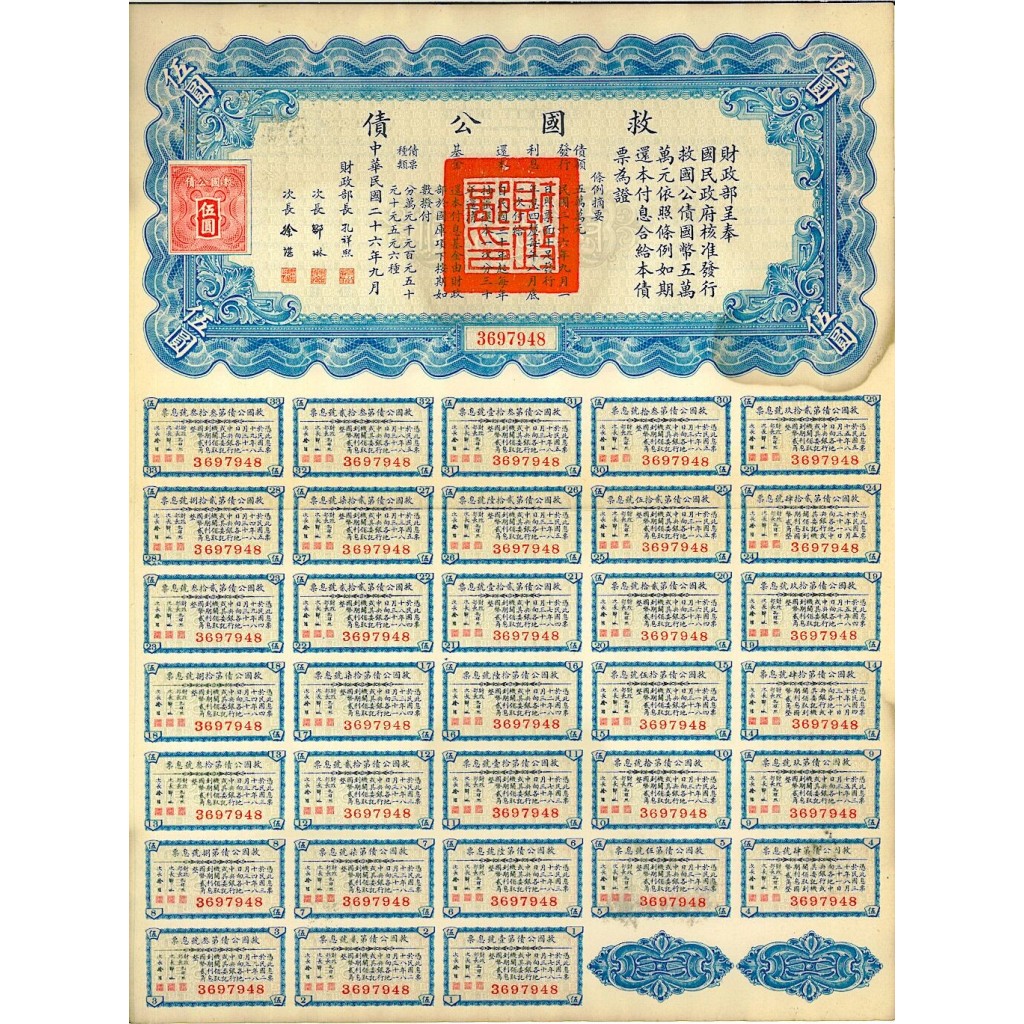
The bond is adorned with intricate blue borders and traditional Chinese motifs, symbolizing both the cultural heritage and the governmental authority of the period. The central area features Chinese calligraphy that outlines the bond’s terms, conditions, and governmental endorsements, including the official red stamp that validates the document's authenticity.
Historical Context and Significance
In 1937, China was amid significant political and military challenges, particularly with the onset of the Second Sino-Japanese War. To bolster national defense and economic stability, the Chinese government issued liberty bonds to raise funds. These bonds were a call to patriotic duty, encouraging citizens to invest in the nation's future. The full set of coupons attached to this bond indicates that it was a long-term investment, with periodic interest payments that would have provided a steady return to the bondholder.
The issuance of such bonds was crucial for the Chinese government to maintain financial solvency and support its military campaigns. The bonds were also a tool for fostering national unity, as purchasing them was seen as a direct contribution to the country’s war effort and overall stability.
Visual Representation
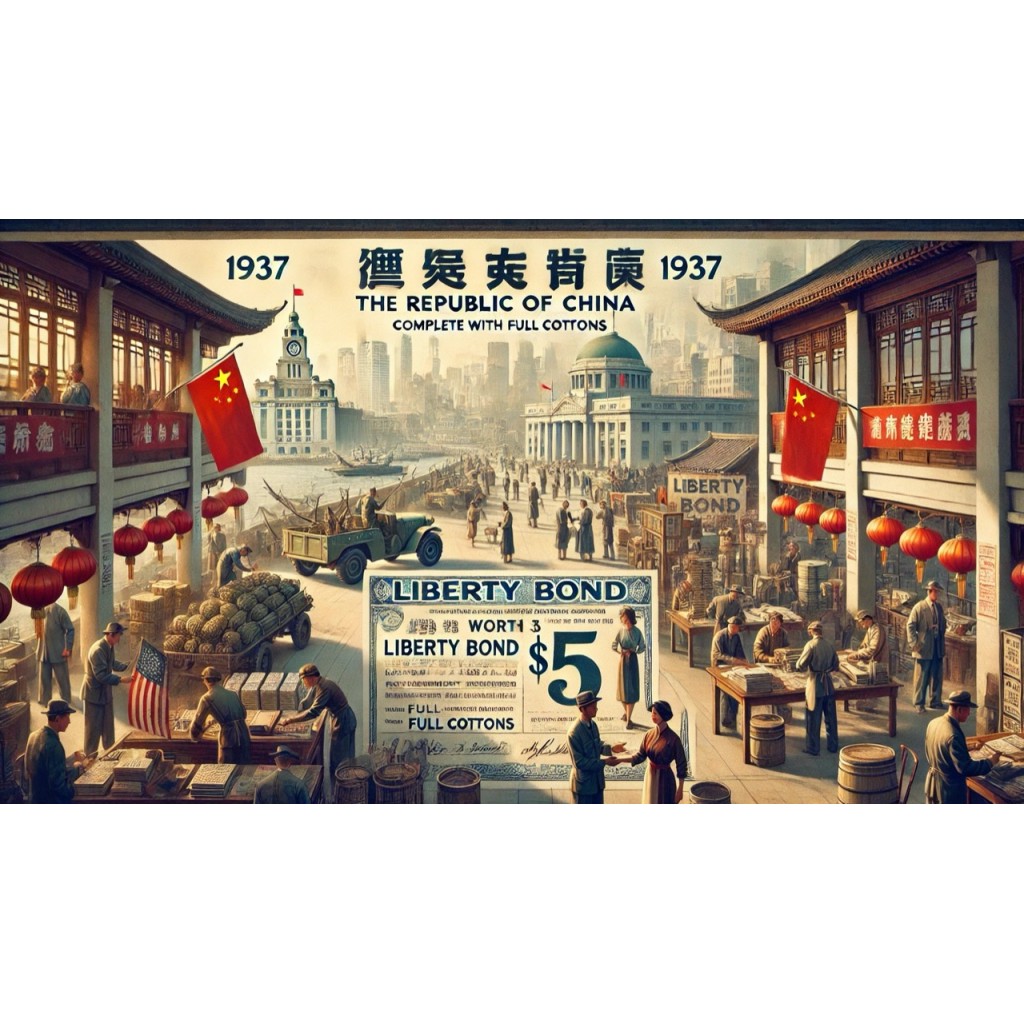
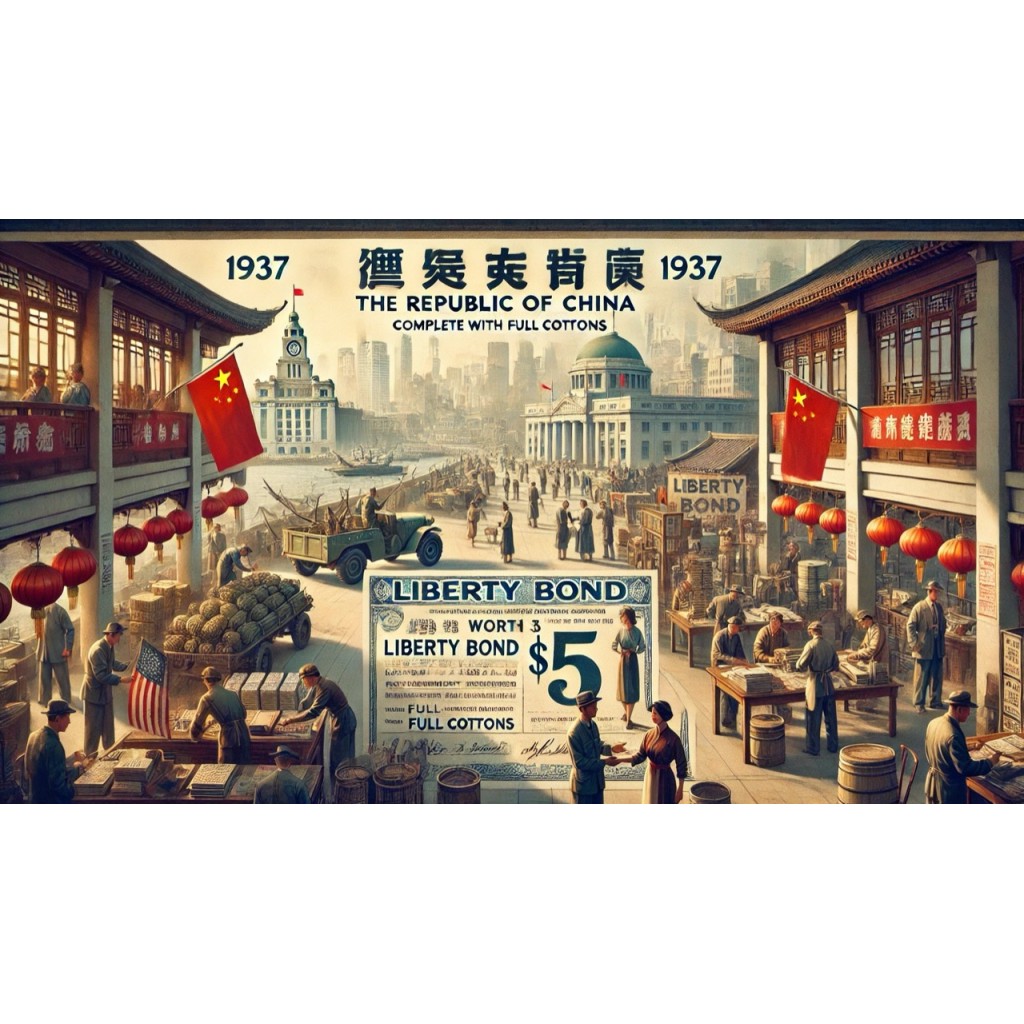
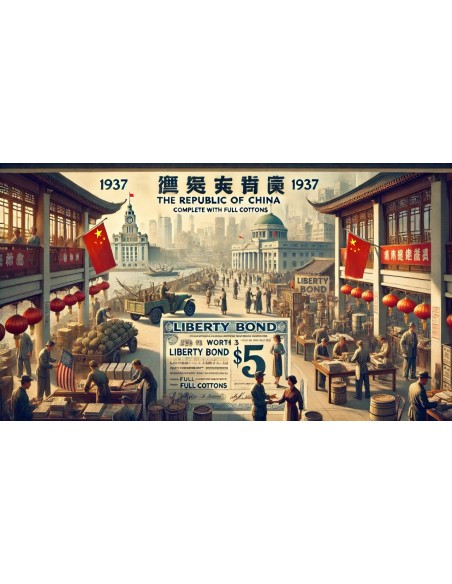
The image below represents the Republic of China in 1937 during the issuance of the Liberty Bond. This visual encapsulates the era's essence, showing citizens participating in the bond purchasing process, government officials overseeing the transactions, and scenes depicting national defense and unity. The backdrop includes traditional Chinese architecture and elements reflective of the time.
The Republic of China or
The flag of the Republic of China until 1928, used by the Beiyang government of warlords
Following a series of events in the period between 1912 and
The People's Republic of China was founded by Mao Zedong on 1 October 1949 and the first activity of the new political system, established with the revolutionary victory, was to bring peripheral territories such as Tibet and Xinjiang (1951) under the sovereignty of China.
Tutti i documenti storici in vendita si intendono da collezione. I documenti non hanno nessun valore economico o finanziario (no economic or financial value).