Shopping Cart
There are no more items in your cart
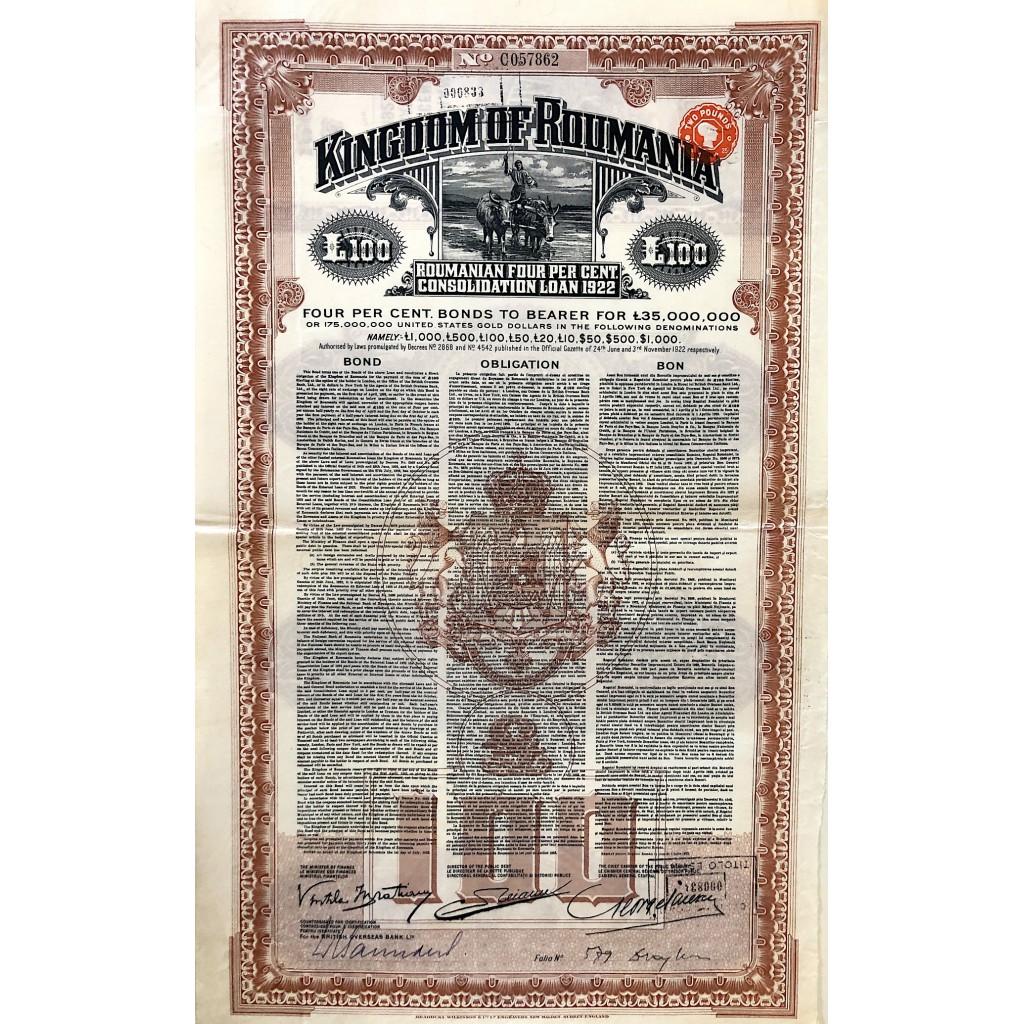

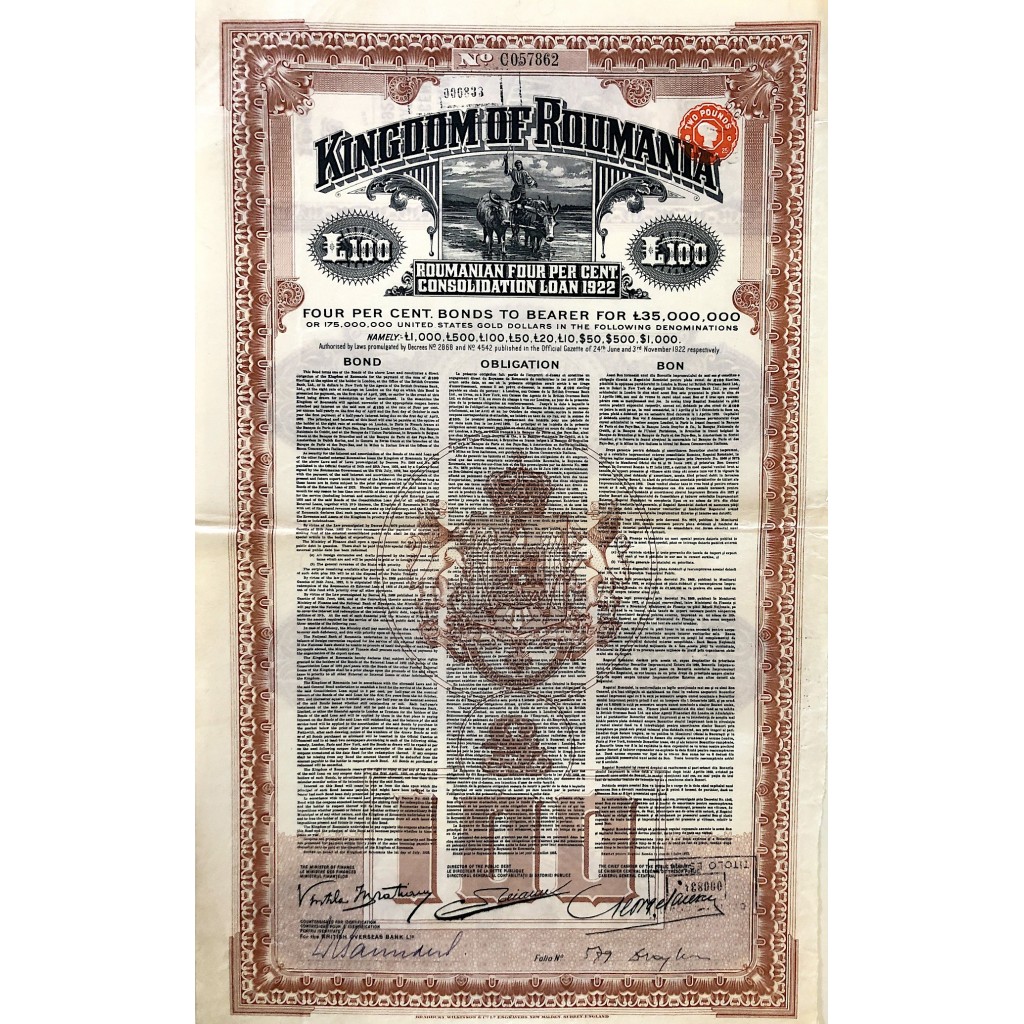
The 1922 consolidation loan issued by the Kingdom of Romania was an effort to consolidate public debt and raise funds for economic and infrastructure development. This international gold-backed loan carried a 4% interest rate and was distributed in various denominations, including 100 dollars, as indicated in this certificate. The loan was issued for a total of $35,000,000, aimed at attracting foreign investment.
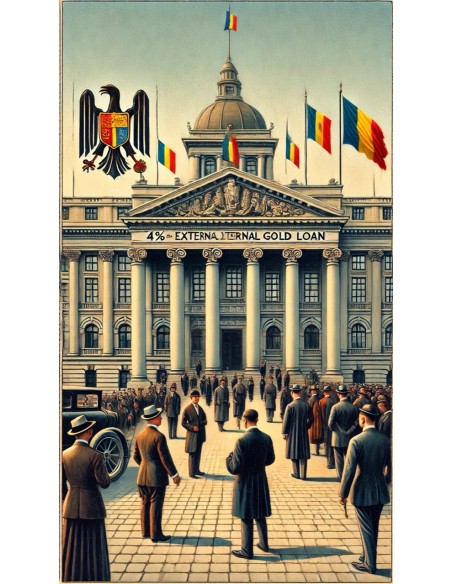
After World War I, Romania faced significant economic challenges. The 1922 loan was a direct response to these difficulties, offering foreign investors a secure return, guaranteed by gold payments.
Historical Data of the Company
| Company Historical Data | Information |
|---|---|
| Year of Establishment | 1922 |
| Headquarters | Bucharest, Kingdom of Romania |
| Year of Stock Exchange Listing | 1922 |
| Year of Delisting from Stock Exchange | Not available |
| Year of Dissolution | Not available |
| Share Capital at Establishment | Not available |
| Share Capital at Dissolution | Not available |
| Annual Revenue (1922) | Not available |
Certificate Characteristics
| Characteristic | Description |
|---|---|
| Number of Certificates | N/A |
| Type of Certificate | External Gold Bond |
| Nominal Value | 100 dollars |
| Serial Number | 057862 |
| Interest Rate | 4% |
| Maturity Date | Not specified |
| Issue Date | 1922 |
| Signed by | Ministry of Finance of the Kingdom of Romania and other officials |
| Condition of Document | Very good preservation |
| Authenticity Status | Authentic |
| Language of Document | English, French, German, Italian |
| Stamps and Seals | Official stamps from the Romanian Ministry of Finance and London authorities |
Historical Context
The 1922 consolidation loan was one of the main efforts by the Kingdom of Romania to raise foreign capital to address the economic problems caused by the war and consolidate its public debt. The gold-backed bonds provided investors with a safe option for earning a guaranteed return during a time of global economic uncertainty.
The bonds were distributed primarily in Europe and the United States and were well received by investors. This loan helped Romania stabilize its economic system and fund critical infrastructure projects for its economic recovery.
Artistic and Typographical Details
This $100 certificate features an ornate brown frame and a central allegorical illustration symbolizing Romania’s economic stability. The document is written in four languages: English, French, Italian, and German, ensuring it could be read by international investors. The design is refined and well-balanced, with elegant serif fonts used for the main text and official seals confirming its authenticity.
Provenance of the Certificate
This bond certificate was part of an international issuance widely distributed among foreign investors. It was later acquired by a private collection and has been maintained in excellent condition.
Evaluation and Rarity
The $100 bonds from the 1922 consolidation loan are considered rare, especially in excellent condition like this example. The market value can range between 200 and 500 euros, depending on the preservation and provenance. These certificates are particularly valued for their historical relevance and elegant typographical design.
The Importance of Scripophily Collecting
Collecting historical certificates like this offers collectors the opportunity to explore the economic and political history of the past. Beyond their financial value, these bonds tell stories of economic growth, international investment, and post-war stabilization. Their artistic design and historical importance make them objects of great value both aesthetically and culturally.
To preserve these certificates, it is advisable to keep them in protective frames or specialized albums. In addition to their collectible value, they can also be used as historical decorations, adding a touch of class and prestige to any space.
All historical documents for sale are considered collectible. They have no economic or financial value (no economic or financial value), and the images that are not of the historical document are representative of the company's object and the historical period. They are not provided but can be freely downloaded from the website and printed.