Shopping Cart
There are no more items in your cart
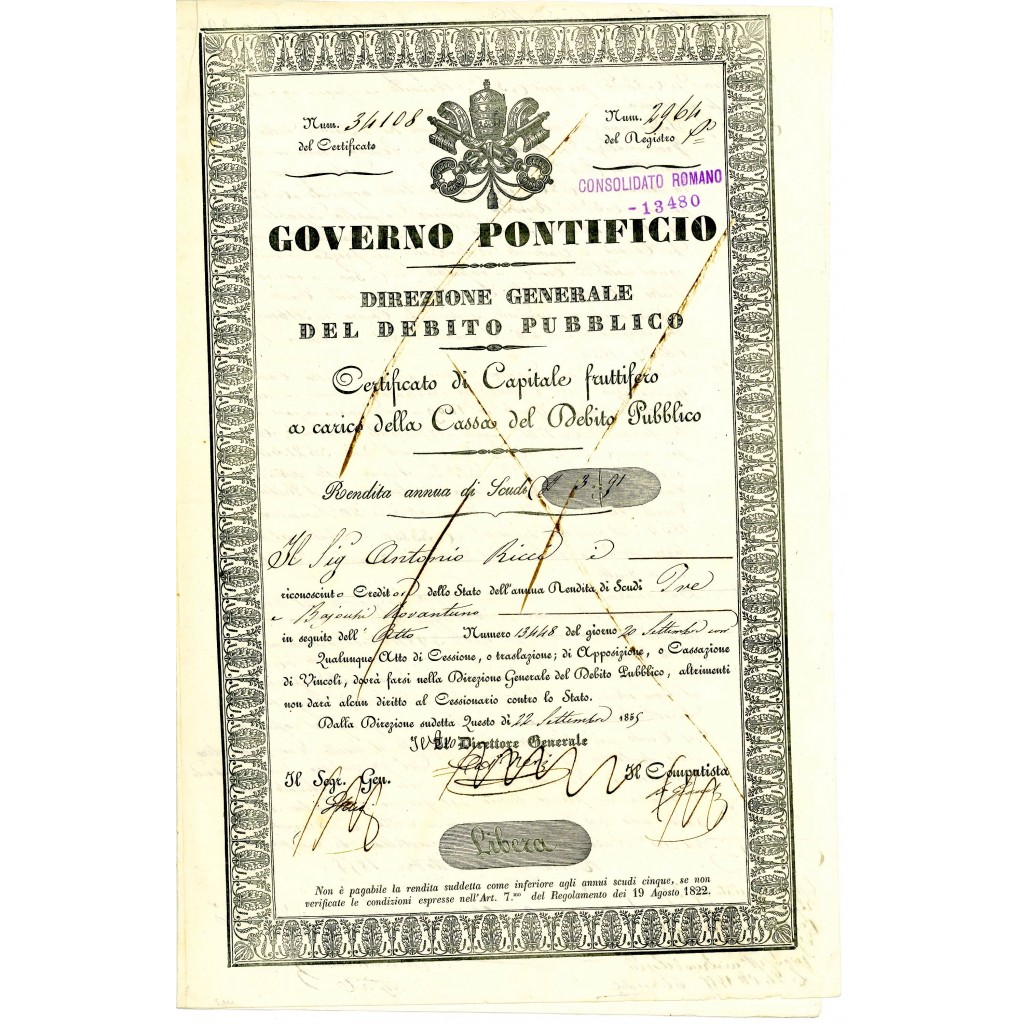
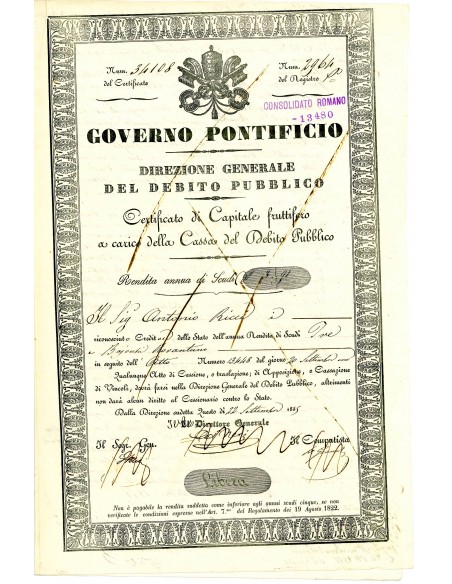

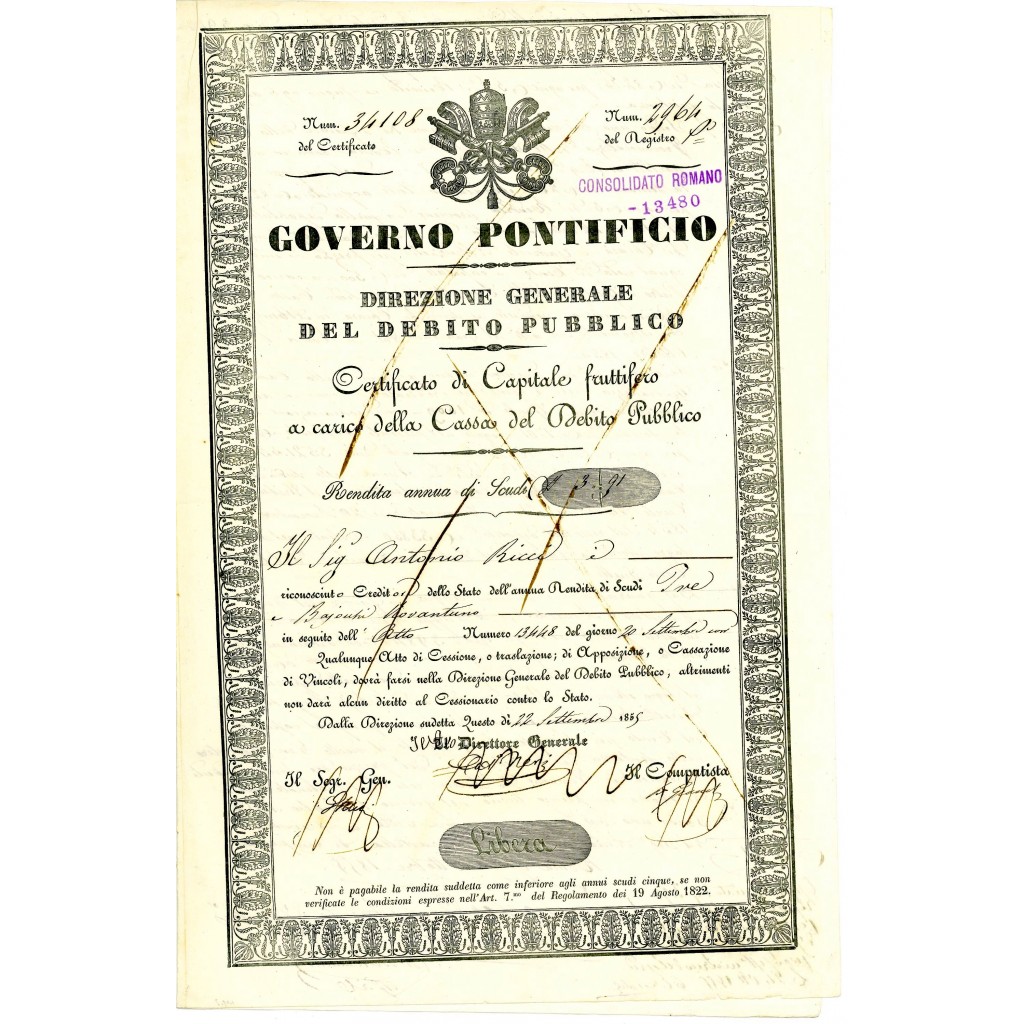
The Papal States (/peɪpəl/) (Italian: Stato Pontificio), officially the State of the Church (Italian: Stato della Chiesa, Italian pronunciation: [ˈstaːto della ˈkjeːza]; Latin: Status Ecclesiasticus;[2] also Dicio Pontificia), were a series of territories in the Italian Peninsula under the direct sovereign rule of the pope, from the 8th century until 1870. They were among the major states of Italy from roughly the 8th century until the Kingdom of Piedmont-Sardinia successfully unified the Italian Peninsula by conquest in a campaign virtually concluded in 1861 and definitively in 1870. At their zenith, the Papal States covered most of the modern Italian regions of Lazio (which includes Rome), Marche, Umbria and Romagna, and portions of Emilia. These holdings were considered to be a manifestation of the temporal power of the pope, as opposed to his ecclesiastical primacy.
By 1861, much of the Papal States' territory had been conquered by the Kingdom of Italy. Only Lazio, including Rome, remained under the pope's temporal control. In 1870, the pope lost Lazio and Rome and had no physical territory at all, except the Basilica of St Peter and the papal residence and related buildings around the Vatican quarter of Rome, which the new Italian state did not occupy militarily. In 1929 the head of the Italian government, at the time the Italian Fascist leader Benito Mussolini, ended the crisis between unified Italy and the Holy See by negotiating the Lateran Treaty, signed by the two parties. This recognized the sovereignty of the Holy See over a newly created international territorial entity, the Vatican City State, limited to a token territory.
Valuation and Rarity
This 1859 certificate is considered rare, especially due to its excellent preservation and historical significance. Titles issued by the Papal Government during this period are highly sought after by scripophilia collectors, as they represent important testimonies to the economic and political history of the Papacy. Compared to other similar titles, this certificate stands out for the quality of its production and the clarity of its information.
For Scripophilia Collectors
Collecting historical titles, known as scripophilia, is an activity that preserves unique pieces of economic and political history. This certificate from the Papal Government represents a significant example of 19th-century financial documentation and can enrich any collection. Collectors should consider using high-quality frames to display these certificates and storing them in temperature-controlled environments to preserve them over time.
These documents are not only valuable for personal collections but also represent a unique and meaningful gift, suitable for special occasions such as collections, author's gifts, historical decoration, or modern art.
All historical documents for sale are intended for collection purposes only. The documents have no economic or financial value (no economic or financial value), and images that are not the historical document are representative of the object of the company and the historical period of reference. They are not provided but can be freely downloaded from the website and printed;