Shopping Cart
There are no more items in your cart
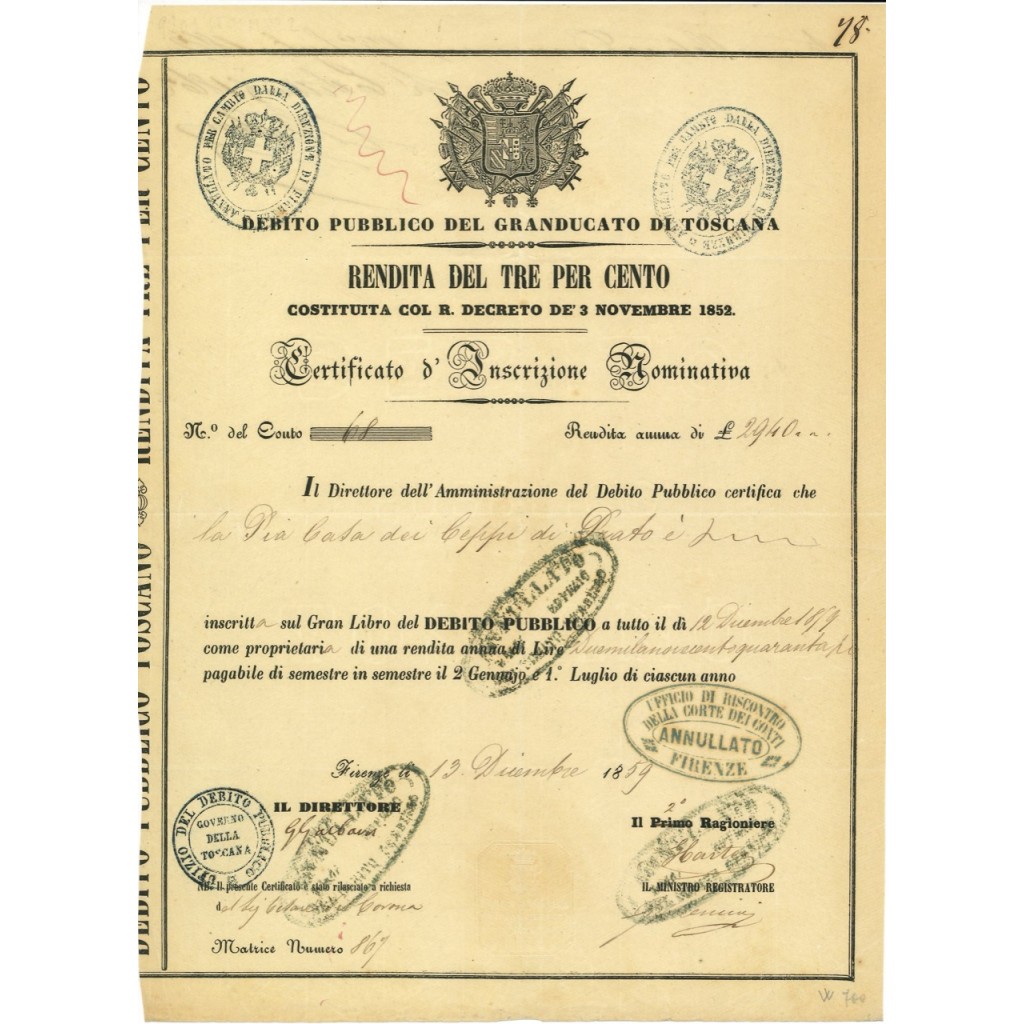
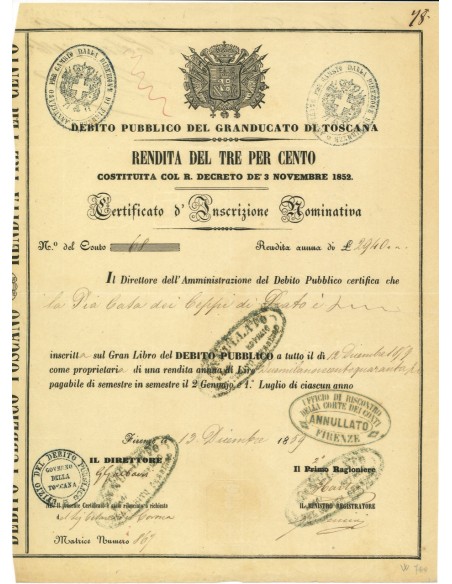

Il documento è un debito pubblico storico, emesso in conformità con il decreto del 3 novembre 1852. Questo certificato rappresenta una rendita del 3% annuo, una forma di obbligazione emessa dallo Stato Toscano per finanziare le proprie necessità fiscali durante il periodo pre-unitario italiano.
Historical Context
The issuance of this title occurred during a period of great change for Italy, particularly for Tuscany. The Grand Duchy of Tuscany, under the rule of the Lorraine dynasty, was undergoing a period of economic modernization and increasing political tension due to the movements for Italian unification. In 1859, just a few years after this certificate was issued, the Grand Duchy of Tuscany would be annexed to the Kingdom of Sardinia, contributing to Italian unification. This document not only reflects the economic management of the Grand Duchy but also represents a fragment of a crucial era in Italian history.
Historical Data of the Issuing Entity
| Year of Establishment | 1852 |
|---|---|
| Headquarters | Florence, Grand Duchy of Tuscany |
| Name upon Delisting | Public Debt of the Grand Duchy of Tuscany |
| Year of Stock Exchange Listing | Not listed |
| Year of Delisting | Not applicable |
| Year of Company Dissolution | 1859 (annexation to the Kingdom of Sardinia) |
| Capital at Establishment | Not specified |
| Capital at Dissolution | Not specified |
Specific Data of the Certificate
| Code Number | Not identifiable |
|---|---|
| Annual Income | £ 2940 |
| Issue Date | November 3, 1852 |
| Registered Owner | La Pia Casa dei Ceppi di Prato |
| Payable Semiannually | January 2, July 1 |
| Place of Issuance | Florence |
| Certificate Cancelled | Yes |
Artistic and Typographic Details
This certificate features a design reflecting the aesthetics of the 19th century, with an elaborate coat of arms of the Grand Duchy of Tuscany printed at the top. Although not explicitly stated, it is likely that the design was created by local artists specializing in graphic art and typography of the time. The printing was carried out in a Florentine typography, as suggested by the stamps present.
Evaluation and Rarity
The rarity of this document is notable, given that it comes from a brief historical period and from a now-extinct state entity. This makes it particularly interesting for collectors of pre-unification Italian documents. Compared to similar titles, this certificate represents a unique piece of Italian economic history.
Suggestions for Scripophilia Collectors
The collection of historic titles, known as scripophilia, not only preserves economic history but can also enrich one’s collection with documents of aesthetic and historical value. This certificate, with its refined graphics and significant historical context, is ideal for display in an elegant frame. For optimal preservation, it is recommended to use UV-protective glass and acid-free paper.
Using the Document as a Gift
Besides personal collecting, this historic document makes a perfect gift for history and art enthusiasts. It can be used as decoration in a study or living room, where the charm of the past meets elegant design, creating an environment rich in history and culture.
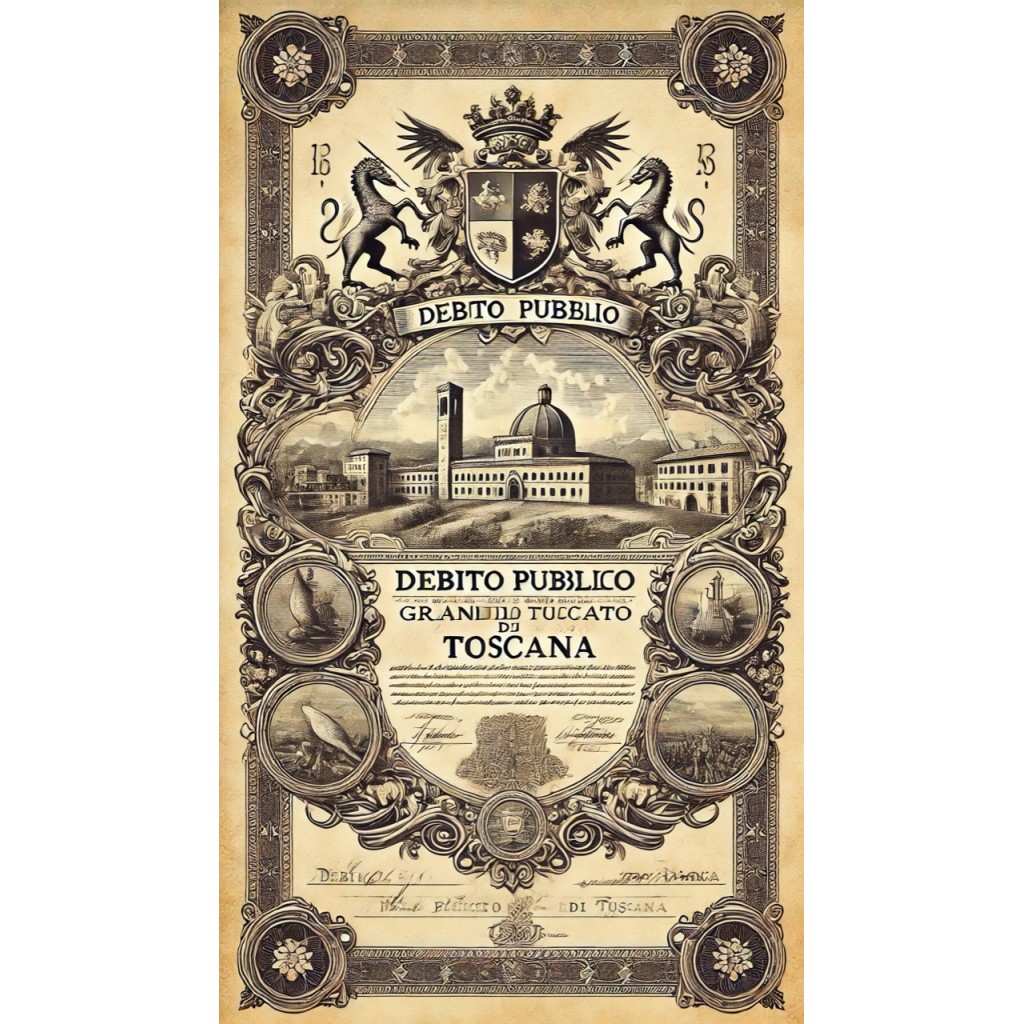
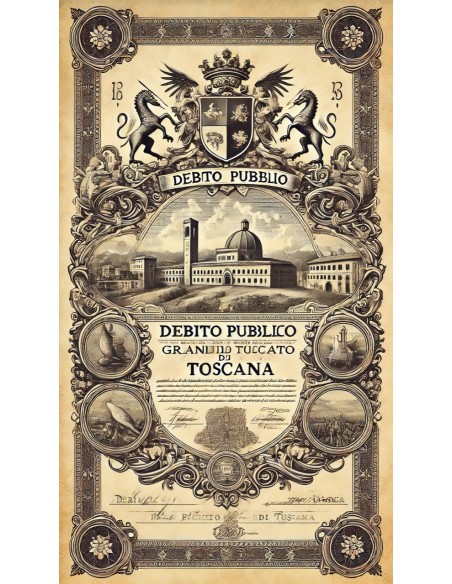
All historical documents for sale are intended for collection purposes. The documents have no economic or financial value (no economic or financial value), images that are not the historical document are representative of the object of the company and the historical period of reference. They are not provided but can be freely downloaded from the website and printed.