Shopping Cart
There are no more items in your cart
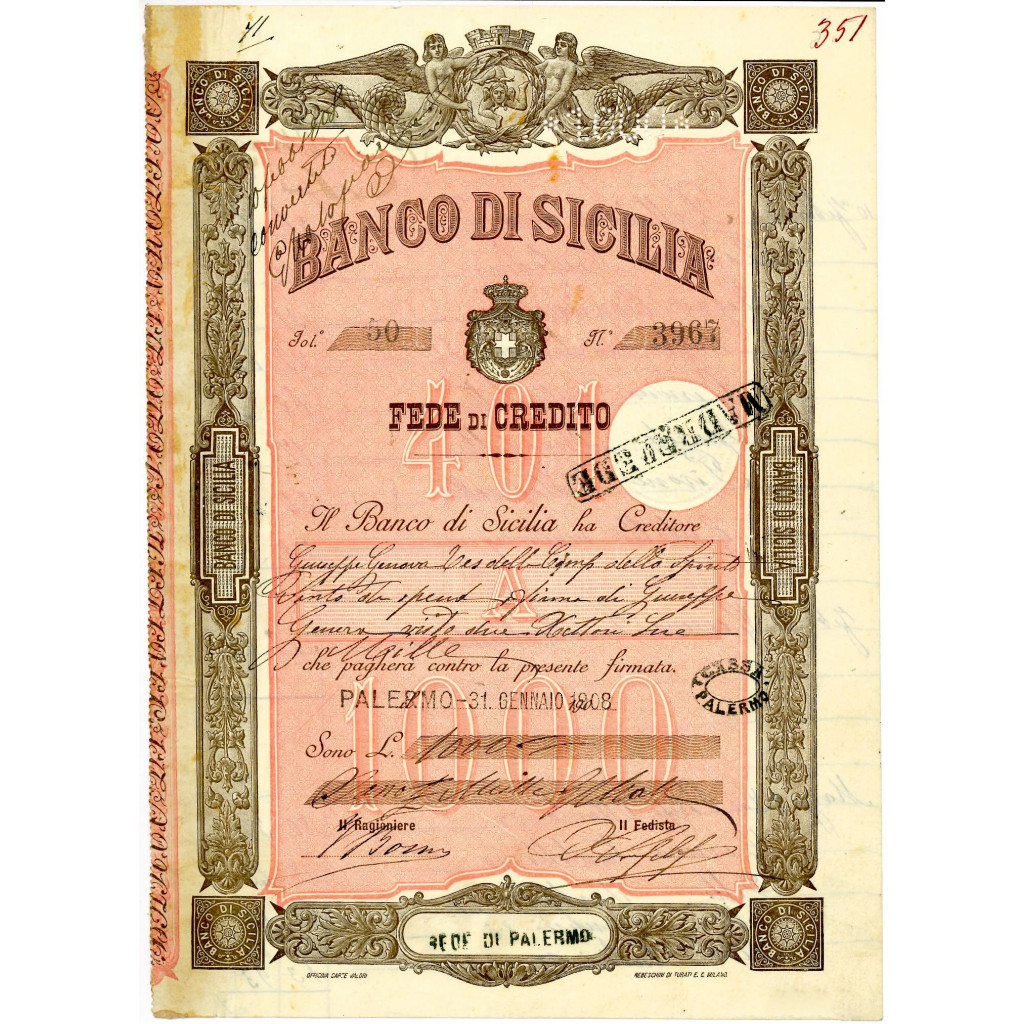
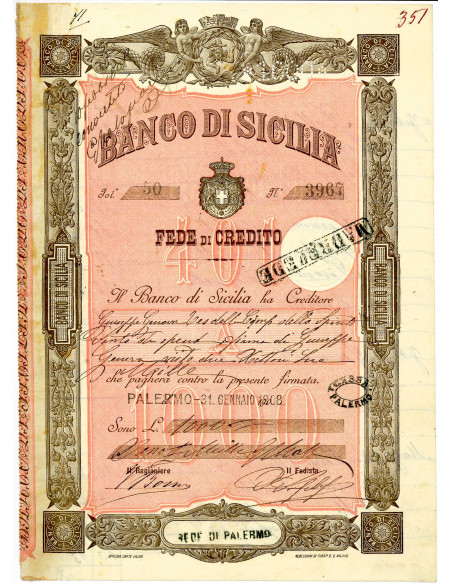

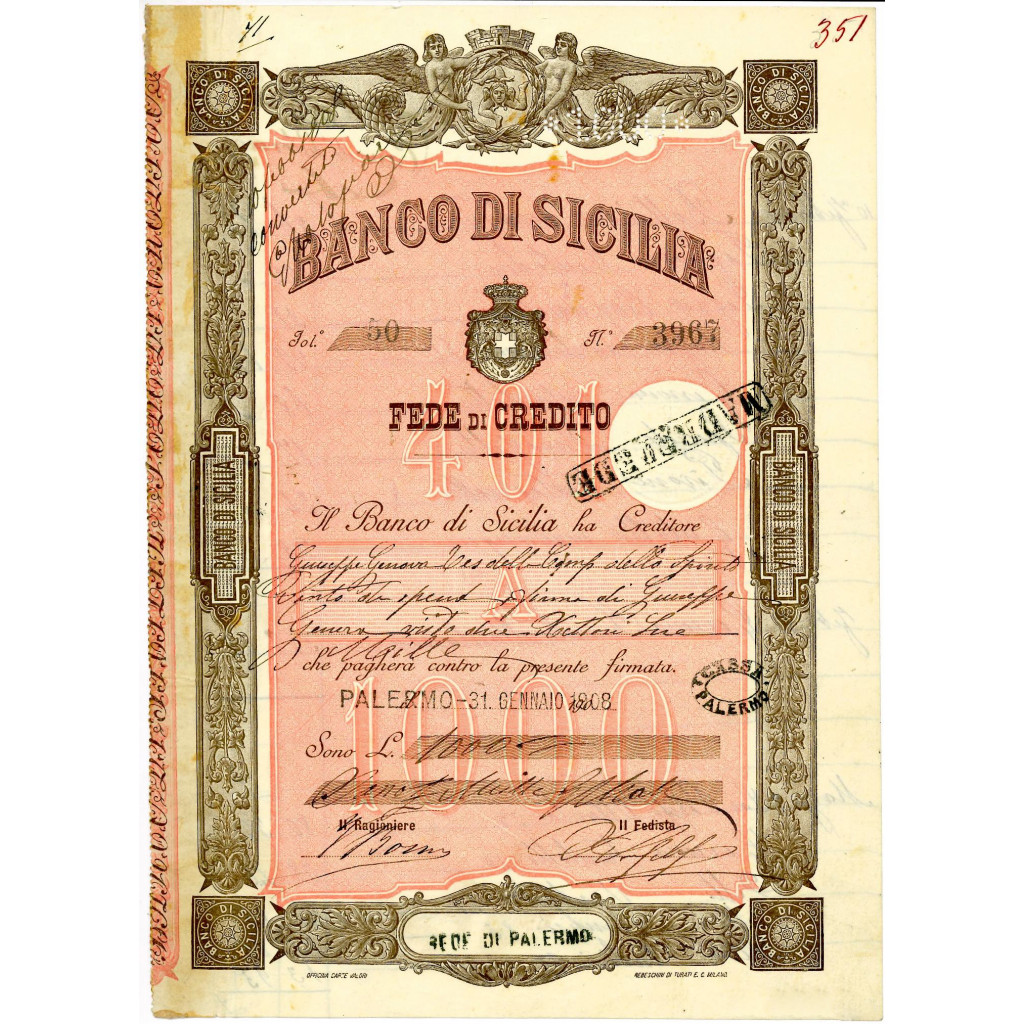
The Banco di Sicilia, founded in 1849, was a cornerstone of the Sicilian and Italian economy throughout the 19th and 20th centuries. The credit bond issued on January 31, 1908, is a historical document of significant importance, reflecting the bank's central role in financing the economic activities of the island. This type of document represents not only a financial transaction but also a window into the economic and social history of the era.
Historical Context
In 1908, Italy was experiencing a period of economic and political transformation. Southern Italy, in particular, was striving to catch up industrially with the North, and Banco di Sicilia was one of the key financial institutions supporting the local economy. This period was also marked by the tragic Messina earthquake of 1908, which devastated a large area of Sicily and Calabria, significantly impacting the economy and society of the time. Banco di Sicilia played an important role in providing financial aid for reconstruction.
Document Details
Document Characteristics:
- Type of Document: Credit Bond
- Issue Date: January 31, 1908
- Nominal Value: 401 lire
- Location: Palermo
- Signed by: The Accountant and The Cashier
- Stamped: "Annullato" with original stamps from the period.
Artistic and Typographic Details:
- Graphic and Design: The document features a rich and complex decorative frame, typical of the Art Nouveau style of the early 20th century. The winged angels adorning the top of the certificate symbolize protection and stability of credit. The graphics might have been created by a specialized illustrator in bank documents, a common practice at the time.
- Typography: Printed by "Officine Carte Valori," a renowned printing house known for producing high-quality official documents.
- Predominant Colors: Pink with brown and black details, with golden accents in the decorations.
Historical Data of the Company
| Category | Details |
|---|---|
| Year of Foundation: | 1849 |
| Headquarters: | Palermo, Italy |
| Name at Delisting: | Banco di Sicilia |
| Year of Stock Exchange Listing: | 1860 |
| Year of Delisting: | 1997 |
| Year of Company Closure: | 2010 |
| Capital at Foundation: | 10 million lire |
| Capital at Closure: | 1 billion lire |
| Revenue (1908): | 2.5 million lire |
Valuation and Rarity
This example of a credit bond is considered a rare piece in the scripophily market, especially for its excellent preservation and the historical relevance of the period in which it was issued. Collectors of 20th-century bank documents will find in this certificate a unique opportunity to enrich their collection with a significant piece of Sicilian economic history.
Why Collect Scripophily?
Scripophily is a passion that allows you to own a piece of economic and social history. Documents like this credit bond not only have aesthetic and historical value but also represent a direct link to the economic past of a region. Collecting these certificates is a way to preserve historical memory and invest in a unique cultural heritage.
Suggestions for Preservation:
- Store the document in a protective frame with UV glass to prevent fading.
- Avoid exposure to humidity and direct sunlight.
- Consider purchasing a certificate of authenticity to add value to the document.
These documents are also a great gift idea for collectors, historians, or economists, and can be used as decorative elements in offices, professional studios, or homes, adding a touch of history and class.
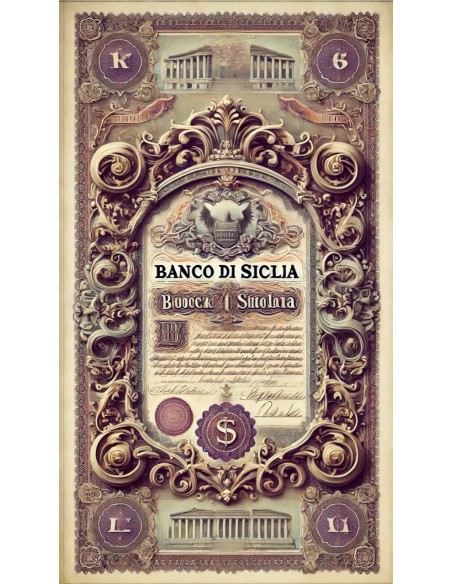
All historical documents for sale are intended for collection. The documents have no economic or financial value (no economic or financial value), and the images that are not the historical document are representative of the company's object and the reference historical period; they are not provided, but it is possible to download them freely from the website and print them;