Shopping Cart
There are no more items in your cart
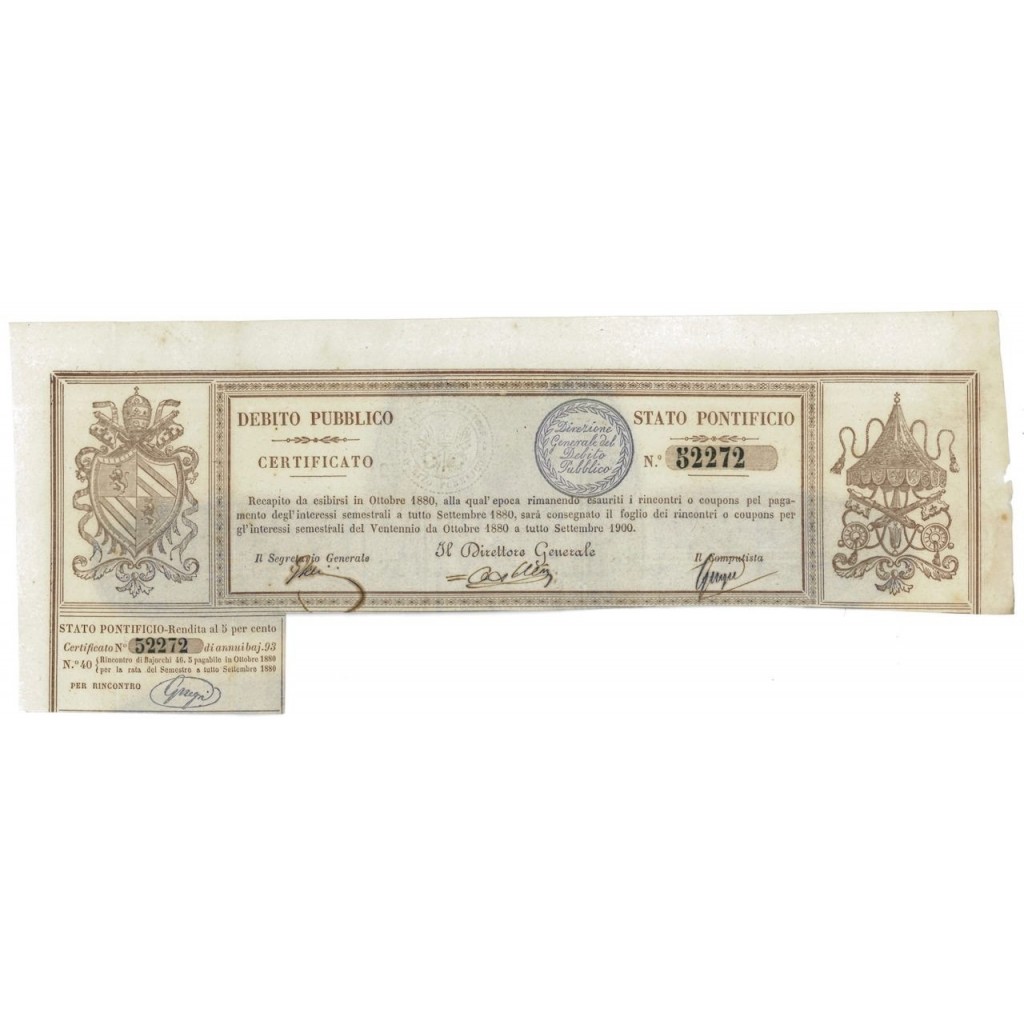
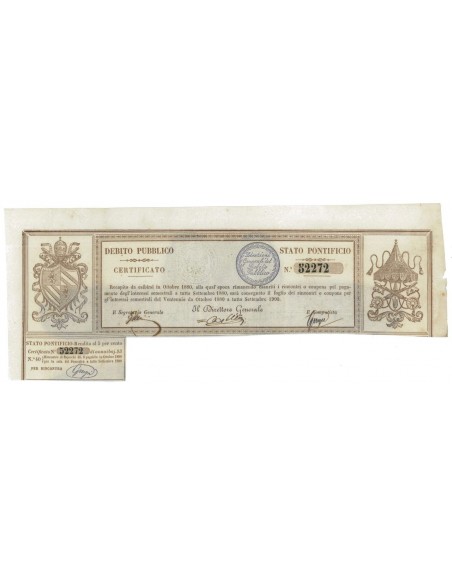

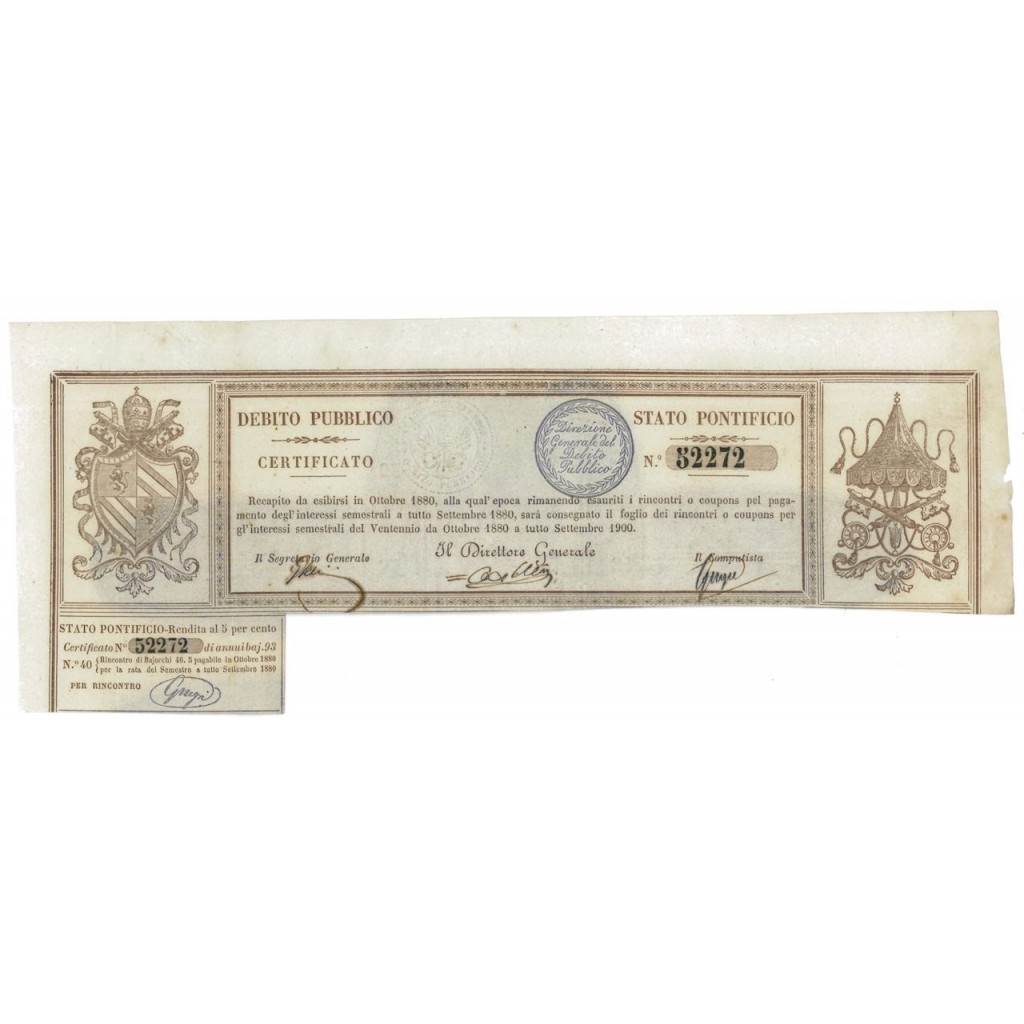
This document represents a public debt certificate issued by the Papal State in 1880, a decade after the official end of papal temporal power. This income certificate, with an annual interest of 5%, is part of a series of bonds issued to ensure the financial management of ecclesiastical assets and the remaining economic operations of the Papal State.
Historical Context
In 1870, with the Capture of Rome, the Papal State ceased to exist as an autonomous political entity, being annexed by the Kingdom of Italy. However, some financial operations continued under the management of the Vatican, as in the case of this 1880 certificate. During this period, the Vatican had to adapt to a new political reality, managing financial resources in a context of growing tension between the newly formed Italian State and the Catholic Church.
Company Historical Data
| Company Name | Papal State - Public Debt |
|---|---|
| Year of Establishment | 752 AD (beginning of the Papal State) |
| Registered Office | Rome, Italy |
| Capital at Establishment | Not available |
| Year of Title Issuance | 1880 |
| Year of State Cessation | 1870 (with the Capture of Rome) |
| Capital at Cessation | Not available |
Document Characteristics
| Serial Number | 32272 (example only) |
|---|---|
| Nominal Capital of the Title | 93 bajocchi annually |
| Annual Interest | 5% |
| Issue Date | October 1880 |
| Document Language | Italian |
Typographical and Artistic Elements
The certificate features a sober and institutional typographic design, with the papal coat of arms prominently displayed on the left side, accompanied by decorative motifs that reflect the austere style typical of the Catholic Church. There is no specific information about the artist who created the document's graphics, but it was likely produced by official Vatican printing houses.
Valuation and Rarity
This 1880 public debt certificate is a document of particular historical and collectible interest, representing one of the last financial acts of the temporal power of the Catholic Church. The rarity of this document is heightened by the fact that it was issued during a period of significant political and social change, making it a particularly sought-after item by scripophily collectors.
Importance of Scripophily Collecting
Collecting historical documents like this means preserving a piece of history and gaining a better understanding of the economic and political context of a bygone era. Documents like this can be displayed as works of art, used as exclusive gifts, or as decorative elements that enrich any environment. Their preservation is essential to maintaining their beauty and historical value.
All historical documents for sale are intended for collection purposes. The documents have no economic or financial value (no economic or financial value), the images that are not the historical document are representative of the company's object and the historical period of reference. They are not provided but can be downloaded freely from the website and printed.