Shopping Cart
There are no more items in your cart
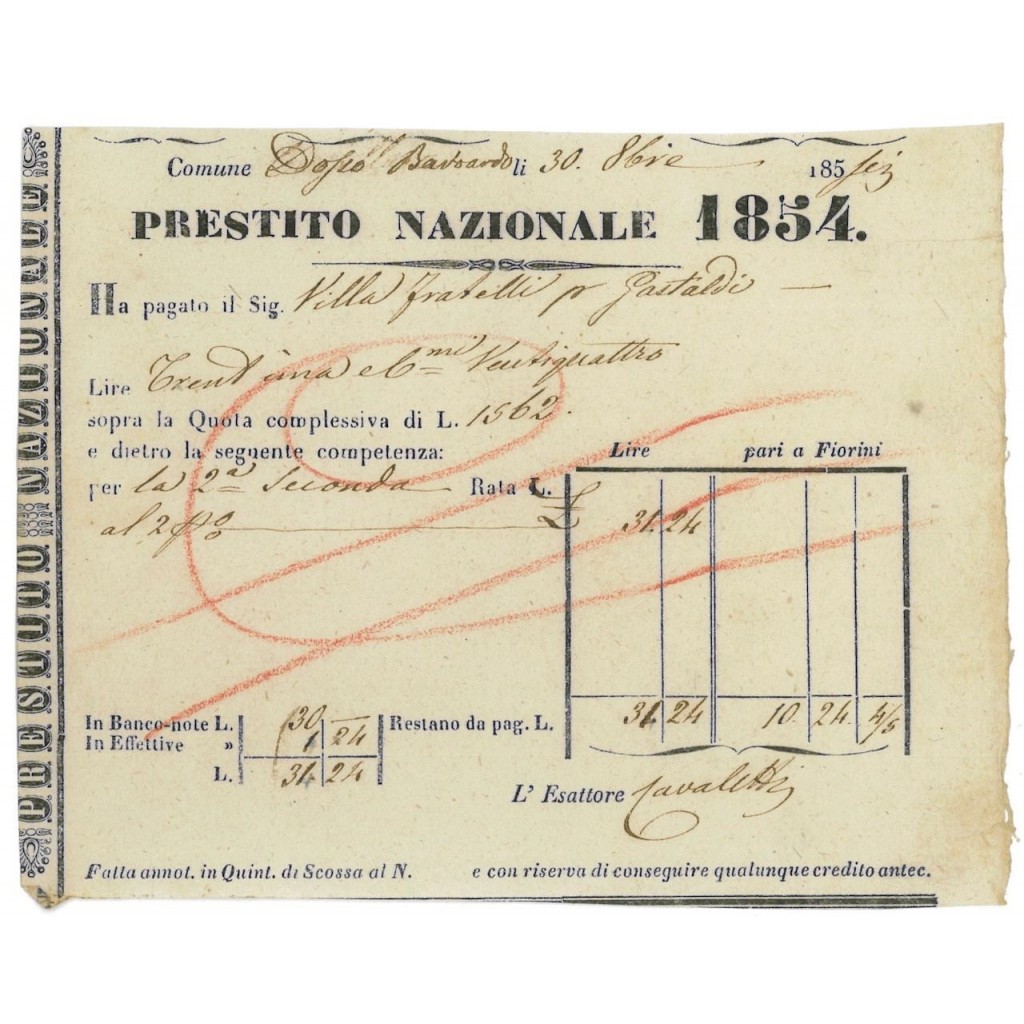
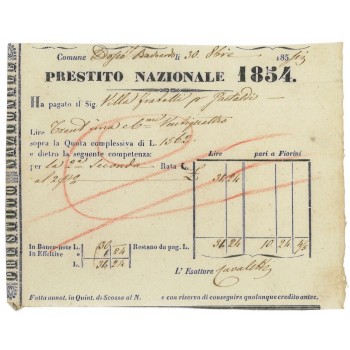

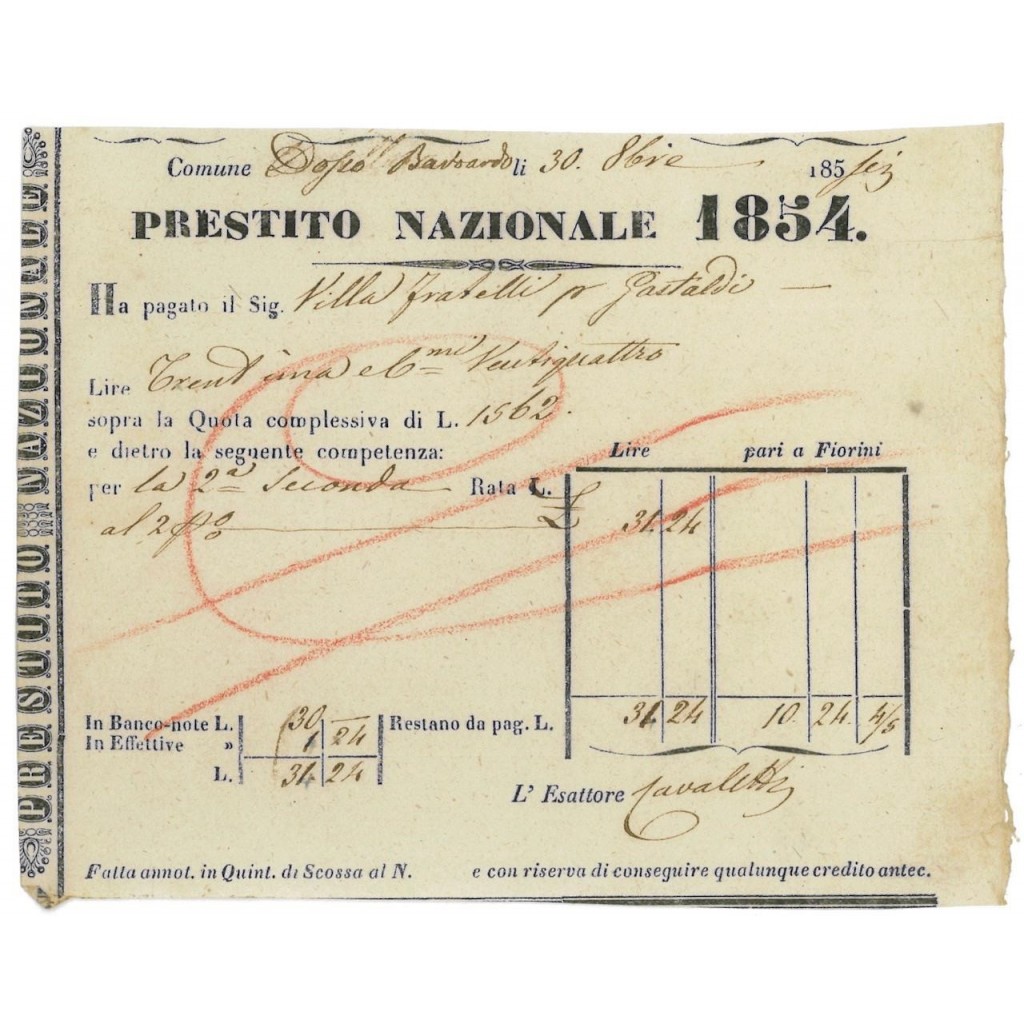
The document in question is a payment receipt issued by the Municipality of Borgofranco on November 30, 1853, related to the National Loan 1854. This type of document is a typical example of the financial operations managed at the municipal level in pre-unification Italy, where municipalities actively participated in national loans to support the state's coffers.
Historical Context
The period when this document was issued was marked by significant political and economic transformations in Italy. The country was still divided into various sovereign states but was approaching the process of unification. The National Loan 1854 was one of the tools used to raise the necessary funds to support public finances and finance infrastructure and defense works. National loans were often subscribed by citizens and local institutions, such as municipalities, who saw in these financial instruments not only a patriotic duty but also an investment opportunity.
Historical Data of the Society
| Year of Issue | 1854 |
|---|---|
| Headquarters | Borgofranco (Municipality) |
| Capital at Establishment | Not specified |
| Capital at Dissolution | Not applicable |
Specific Data of the Document
| Type of Document | Payment receipt |
|---|---|
| Date | November 30, 1853 |
| Amount Paid | Lire 3.124 |
| Beneficiary | Villa Fratelli fu Cataldo |
| Signature | Cavallotti (Tax Collector) |
Artistic and Typographic Details
The document features simple graphics typical of receipts of the time, with clear and legible fonts. The left border is decorated with a series of stylized floral motifs, adding a touch of elegance to the document. The use of calligraphy for names and signatures reflects the care and attention given to official documents, emphasizing the importance of accuracy and formality.
Provenance and Authenticity
This document comes from a private collection and has been preserved in excellent condition. For those interested, an official certificate of authenticity with the relevant historical register can be requested for an additional fee.
Evaluation and Rarity
This type of payment receipt is a rare document, especially in such good condition. Its rarity is enhanced by the specificity of the issuing municipality and the historical context in which it was issued. Compared to other similar documents, this example stands out for the clarity of information and the elegance of its presentation.
Suggestions for Scripophilia Collectors
Collecting historical documents like this receipt offers the opportunity to explore a piece of the economic and social history of pre-unification Italy. To preserve the document, it is recommended to store it in a transparent protective sleeve and avoid exposure to direct light and humidity.
Using the Document as a Gift
In addition to being a valuable collectible, this historical document can make a unique gift for history enthusiasts or collectors. It is ideal for decorating spaces that require a touch of history and authenticity, such as professional offices or libraries.
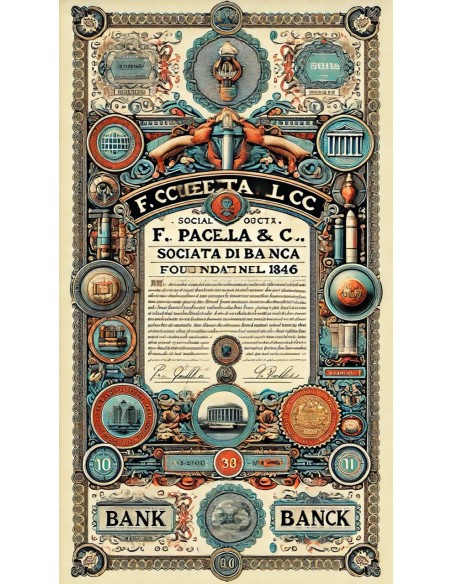
All historical documents for sale are intended for collection purposes. The documents have no economic or financial value (no economic or financial value), images that are not the historical document are representative of the object of the company and the historical period of reference. They are not provided but can be freely downloaded from the website and printed.