Shopping Cart
There are no more items in your cart
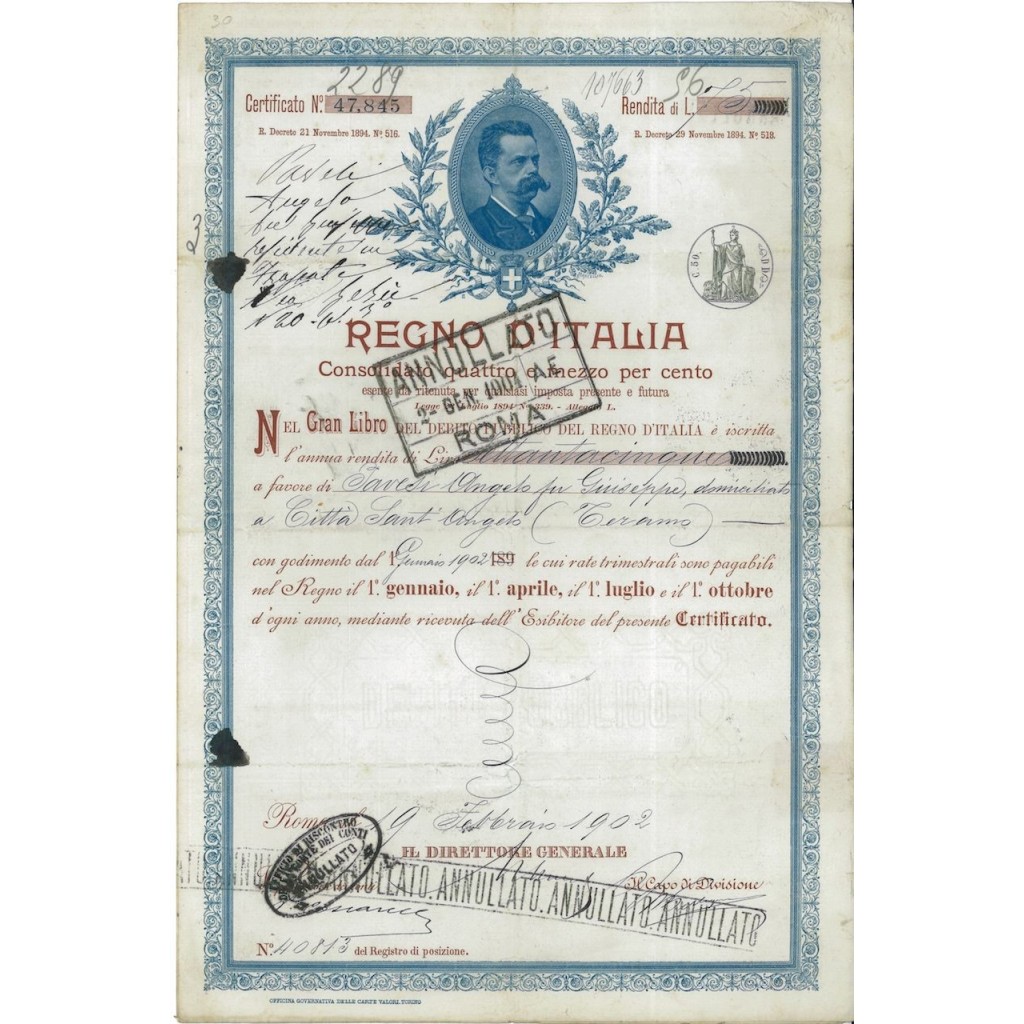
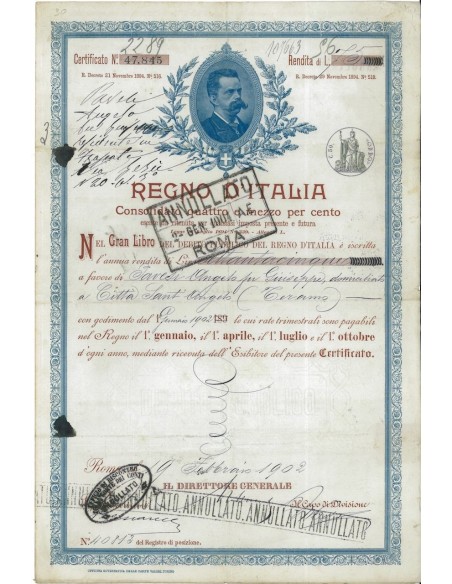
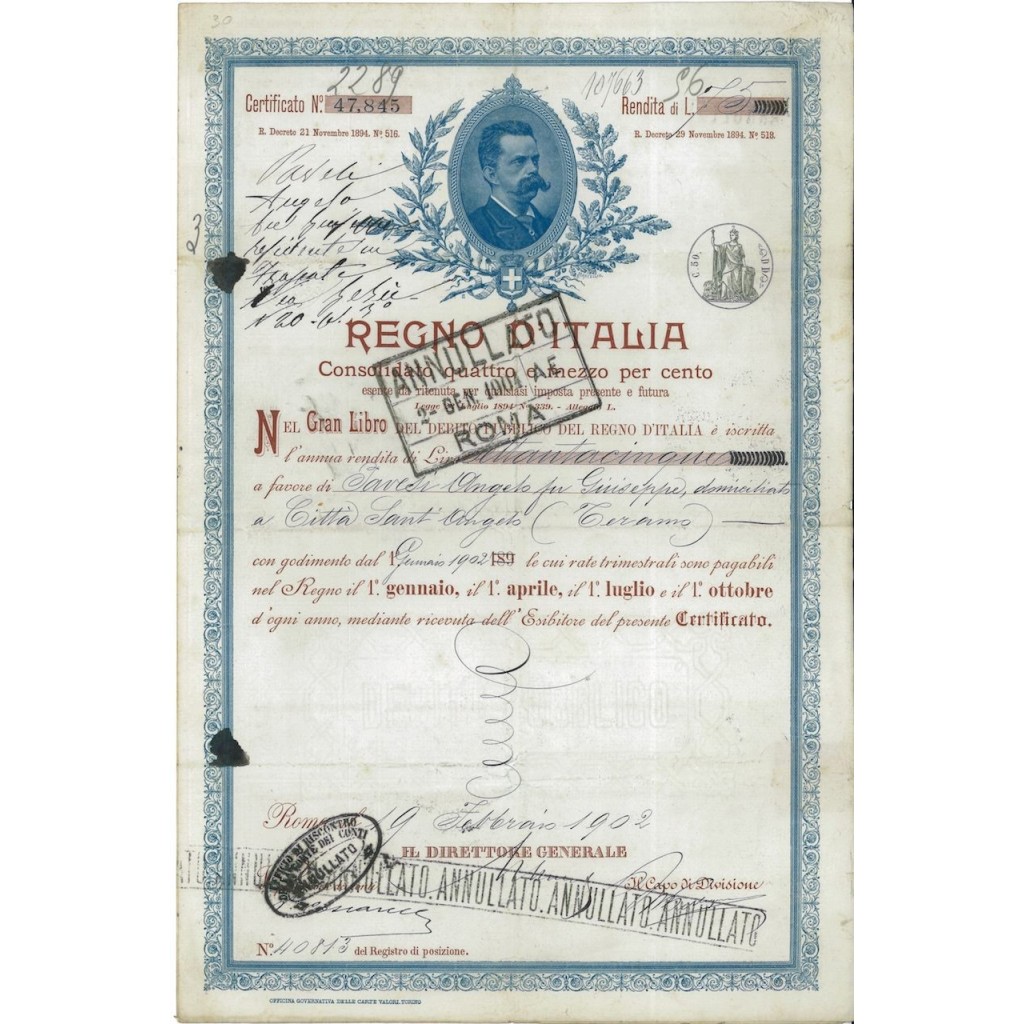
Introduction The document we are examining is a consolidated 4.5% bond certificate issued by the Kingdom of Italy in 1900. This financial instrument was issued during the reign of King Umberto I, and it is part of Italy's consolidated public debt. This certificate serves as an important testament to Italy's economic policies at the dawn of the 20th century, a period marked by significant modernization and transformation.
Historical Context At the turn of the 19th and 20th centuries, Italy was striving to establish itself as a European power by investing in infrastructure, industry, and urban modernization. Following the proclamation of the Kingdom of Italy in 1861 and the capture of Rome in 1870, the Italian government faced significant financial challenges. Economic policies at the time focused on managing public debt and attracting investments both domestically and internationally.
The consolidated 4.5% bond was introduced as part of a plan to raise the capital needed to finance strategic projects, such as the construction of railways, ports, and other infrastructure. The issuance of these bonds guaranteed investors a fixed interest rate, making them a secure and attractive investment option.
Document Analysis The certificate we have before us is dated October 12, 1900, and certifies an annual income of 200 lire, registered in the Grand Book of Public Debt of the Kingdom of Italy.
The upper part of the document features a portrait of King Umberto I, framed by an elaborate ornamental design that includes patriotic symbols such as the emblem of the Kingdom of Italy and floral motifs. The certificate is crafted with elegant typography, reflecting the attention to detail typical of official documents of that era.
Certificate Features The certificate specifies that the bond generates a fixed interest rate of 4.5%, with quarterly payments scheduled for January 1, April 1, July 1, and October 1 of each year. This bond issuance was authorized by the Royal Decree of November 21, 1894, No. 515, which regulated the consolidation of public debt.
The lower section of the document includes the handwritten signature of the Director General and the Head of Division, ensuring its authenticity. Additionally, the seal of the Court of Auditors is present, confirming its official registration.
The Role of Charitable Institutions It is noteworthy that the beneficiary of this bond is a Congregation of Charity. This reflects a common practice of the time, where charitable and religious institutions invested in state bonds to secure stable income streams to support their social welfare and assistance programs.
Significance for Collectors Certificates like this are highly valued by scripophily collectors, both for their historical significance and their aesthetic appeal. The presence of King Umberto I's portrait, who was assassinated in 1900, adds an additional layer of historical interest, as it represents one of the last financial documents issued during his reign. The attention to detail, original signatures, and official stamps make this certificate a sought-after piece for collectors of historical bonds.
Conclusion The 4.5% consolidated bond certificate of the Kingdom of Italy from 1900 is not just a financial document but also a tangible testament to Italy's economic policies during a period of transition. Collecting and preserving such documents means safeguarding a part of the nation's history, providing insight into the economic and social dynamics that shaped modern Italy.