Shopping Cart
There are no more items in your cart
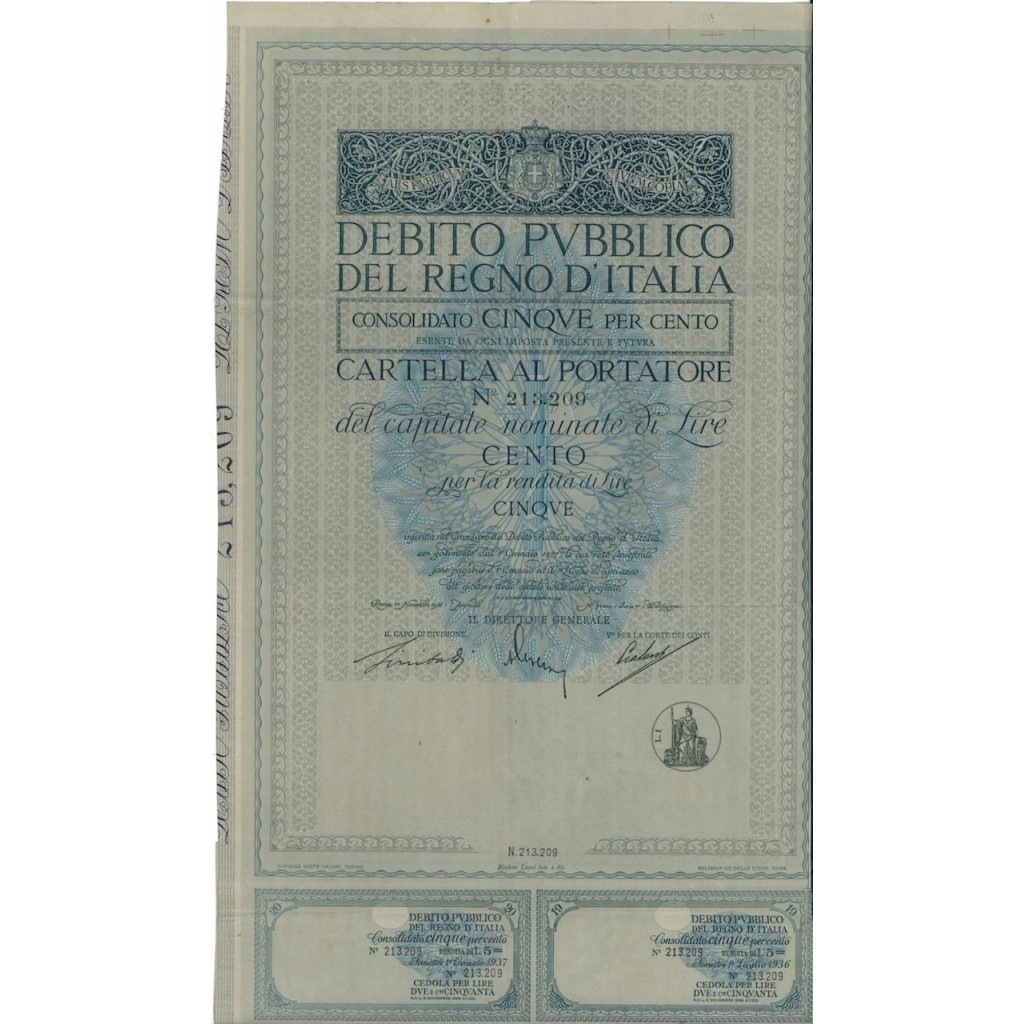
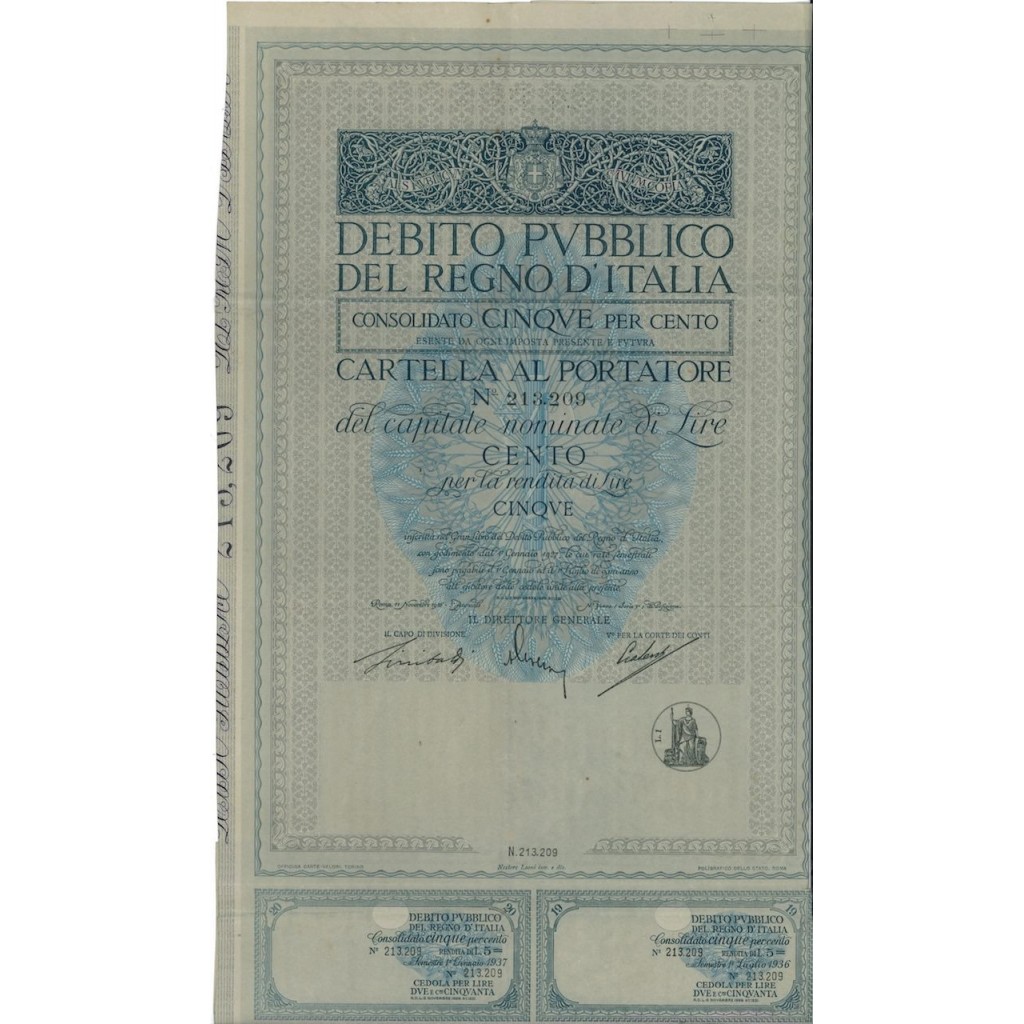
Title: "Bearer Bond of the Consolidated 5% Public Debt of the Kingdom of Italy: A Document from 1926"
Introduction The document in question is a Bearer Bond related to the 5% Consolidated Public Debt, issued by the Kingdom of Italy in November 1926. This certificate was part of a series of state bonds used to consolidate public debt and finance state expenditures during the interwar period. The issuance of these bonds was a key economic strategy for the Italian government to stabilize public finances and promote economic growth during a period of significant change.
Historical Context The year 1926 was significant for Italy, marked by economic consolidation policies implemented by the fascist regime under Benito Mussolini. Following the post-war economic crisis and currency fluctuations, the government sought to stabilize the economy through the issuance of consolidated loans offering competitive and guaranteed interest rates.
The issuance of these 5% Bearer Bonds was part of a broader strategy to attract citizens' savings by offering a secure and stable return exempt from taxes. These bonds were promoted as a patriotic investment, contributing to the country's economic stability and strengthening.
Document Analysis The certificate guarantees an annual yield of 5 lire, with semi-annual payments scheduled for January 1 and July 1 of each year. The document features elaborate decorations with neoclassical motifs, including friezes and ornaments that give the bond a solemn and prestigious appearance.
The document also includes the handwritten signatures of the Director General and the Head of Division, along with the stamp of the Court of Auditors, which confirms its authenticity. At the bottom of the certificate, there are two coupons for interest payments for the years 1936 and 1937, which could be detached and presented for collection.
Certificate Features The 5% Consolidated Public Debt provided a fixed interest rate exempt from any present and future taxes, as established by the current legislation. Being a Bearer Bond, the certificate was not registered to a specific name, allowing the physical holder to collect the interest without the need for registration. This flexibility, combined with the anonymity it offered, made it a highly appreciated investment option for Italian savers.
The detachable coupons allowed holders to collect interest at Treasury offices across the Kingdom of Italy, facilitating the semi-annual interest payments process.
The Role of Bearer Bonds During the interwar period, Bearer Bonds were an important source of funding for the Italian government. These instruments were ideal for mobilizing domestic savings, encouraging citizens to invest in public debt, and contributing to the economic stabilization of the country.
Significance for Collectors Certificates like this one are particularly appreciated in the world of scripophily, not only for their historical value but also for their elegant and detailed design. The presence of original signatures, official stamps, and intact coupons makes these documents valuable for collectors. Additionally, the historical context of 1926, with Italy under the fascist regime, adds significant historical relevance to these certificates.
Conclusion The 1926 Bearer Bond is not just a financial instrument but a witness to the economic stabilization period that Italy was undergoing in the 1920s. Collecting and preserving such documents means safeguarding a piece of Italy's economic and political history, offering insight into the financial strategies adopted to ensure economic growth during a time of significant change.