Shopping Cart
There are no more items in your cart
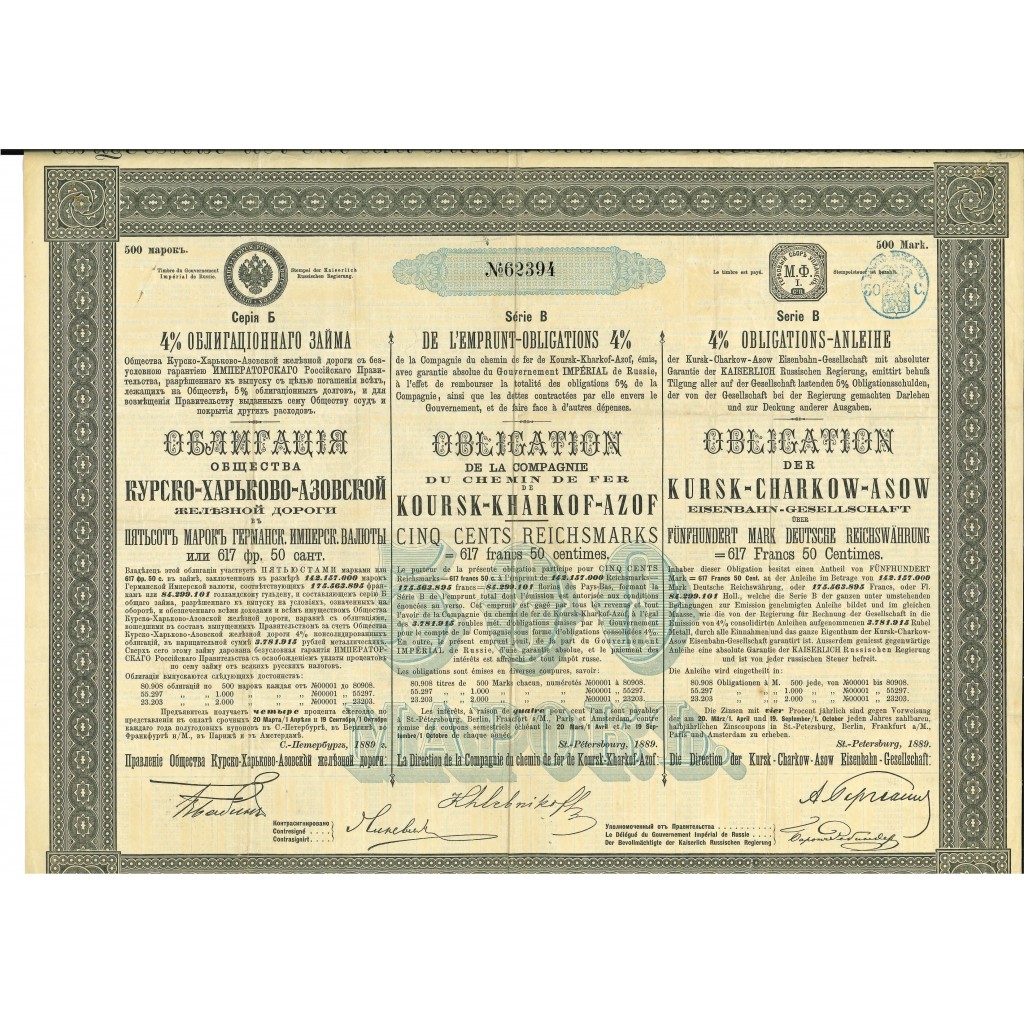
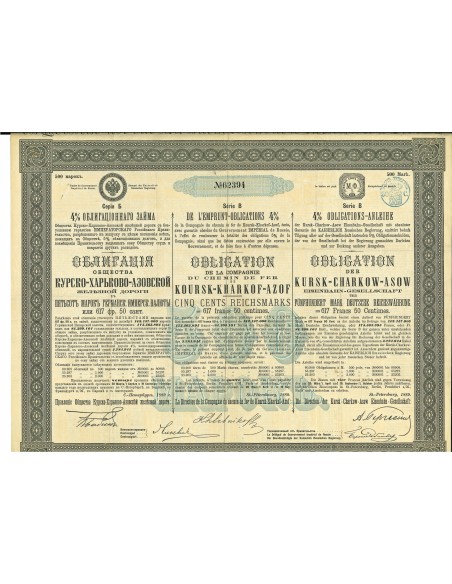
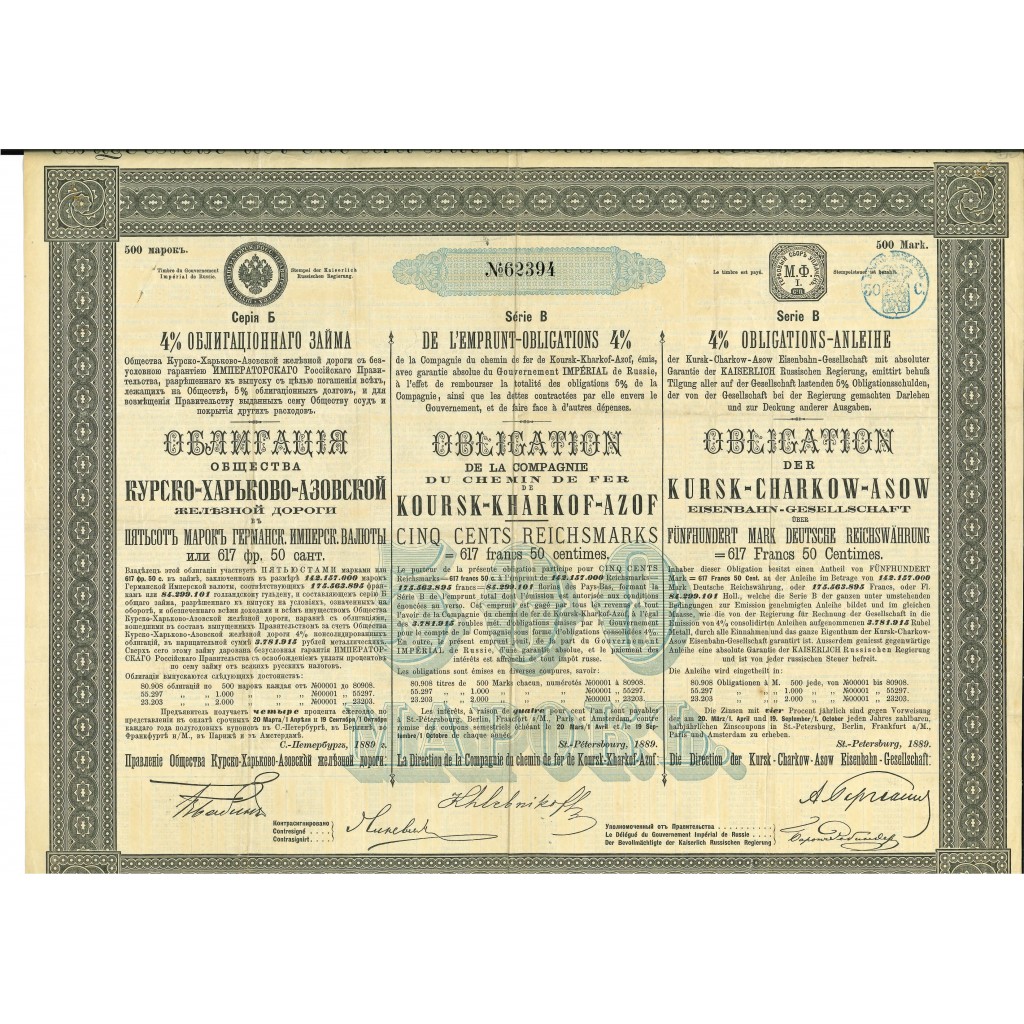
The Company of the Chemin de Fer de Koursk-Kharkof-Azof was one of the major railway companies of the Russian Empire, established in 1889 to facilitate the transportation of goods and passengers between the cities of Kursk, Kharkov, and Azov. This railway line played a crucial role in the economic and industrial development of the region, improving connections between key industrial and commercial centers.
Historical Data of the Company
| Data | Value |
|---|---|
| Year of Establishment | 1889 |
| Headquarters | Saint Petersburg, Russian Empire |
| Share Capital at Establishment | Not available |
| Share Capital at Cessation | Not available |
| Year of Stock Exchange Listing | Not available |
| Year of Delisting | Not available |
| Year of Cessation | Not available |
| Annual Revenue | Not available |
Document Characteristics
| Characteristic | Description |
|---|---|
| Document Type | Bond Series B |
| Nominal Value | 500 German Marks (617 Francs) |
| Interest Rate | 4% |
| Issue Date | 1889 |
| Serial Number | 62394 |
| Signature | Not legible |
Importance of Scripophily
Scripophily, or the collection of historical stock and bond certificates, is a passion that allows one to own a tangible piece of economic and financial history. Each document tells a unique story, reflecting the era in which it was issued, the people involved, and the economic context of that time.
The bonds of the Chemin de Fer de Koursk-Kharkof-Azof Company represent not only a past financial investment but also a work of art with ornate details and authentic signatures. Collecting these documents is a way to preserve and appreciate historical and cultural heritage, as well as an opportunity to deepen one's knowledge of commercial practices and corporate structures of the past.
Appeal to Collectors
Collecting historical documents such as the bonds of the Chemin de Fer de Koursk-Kharkof-Azof can be a fascinating and rewarding experience. Each document offers a tangible connection to the past, allowing one to explore financial and industrial history. These certificates are not only valuable aesthetic objects but also tell stories of progress and innovation.
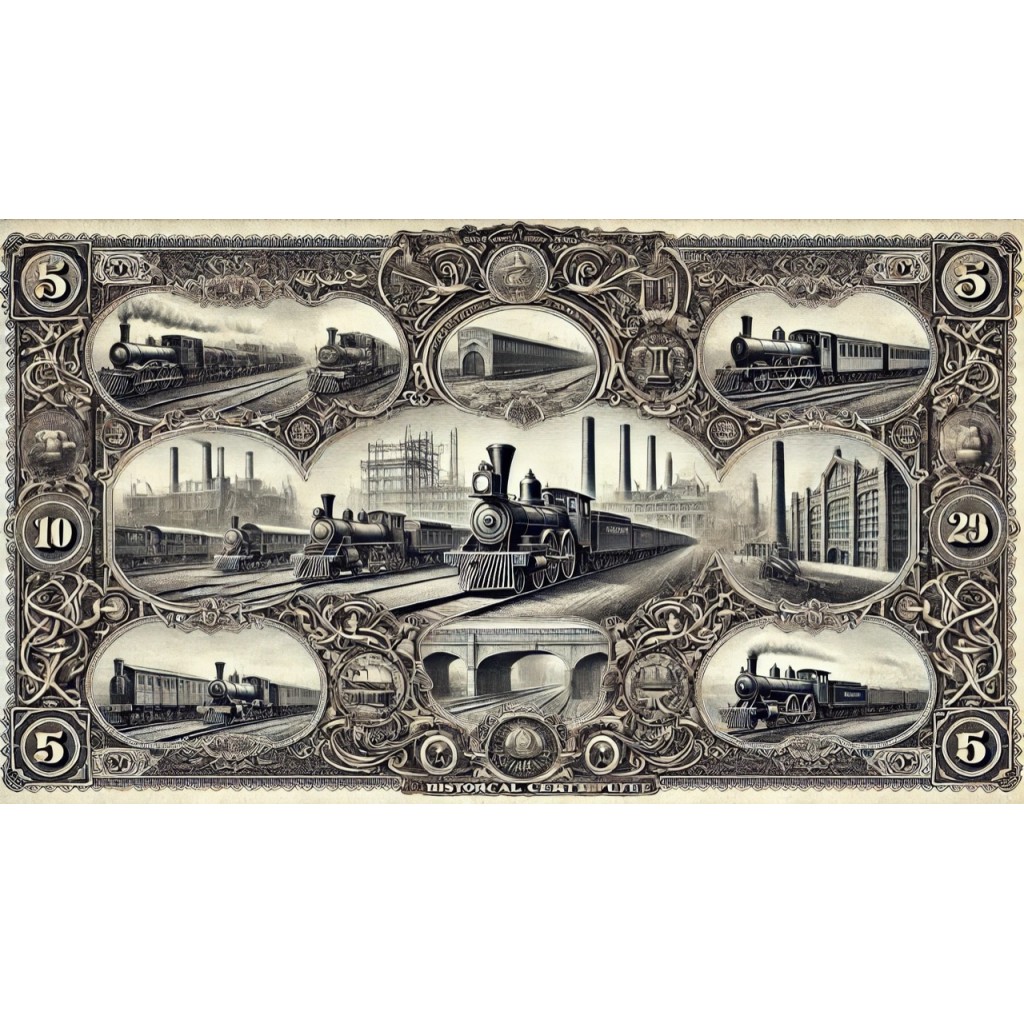
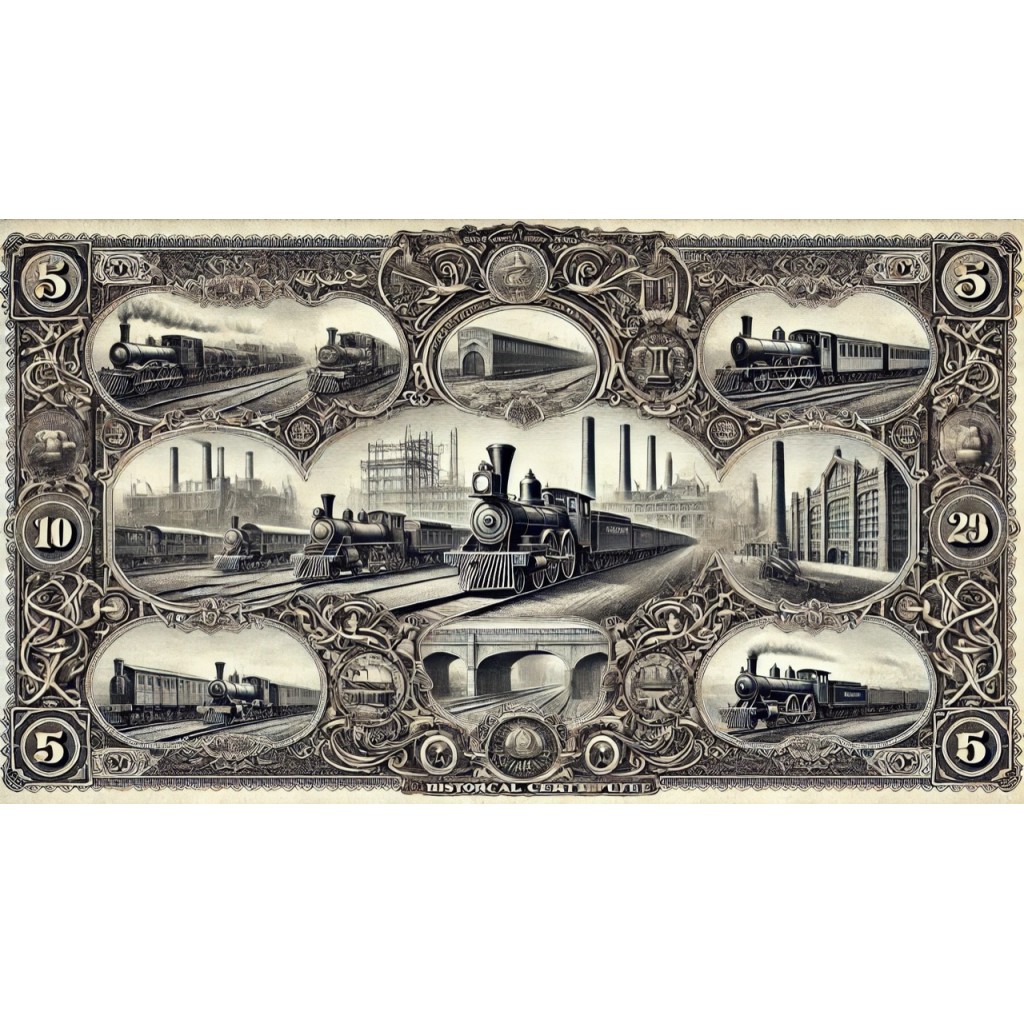
All historical documents for sale are intended as collectibles. The documents have no economic or financial value (no economic or financial value), the second image is only representative of the company's object of reference.