Shopping Cart
There are no more items in your cart
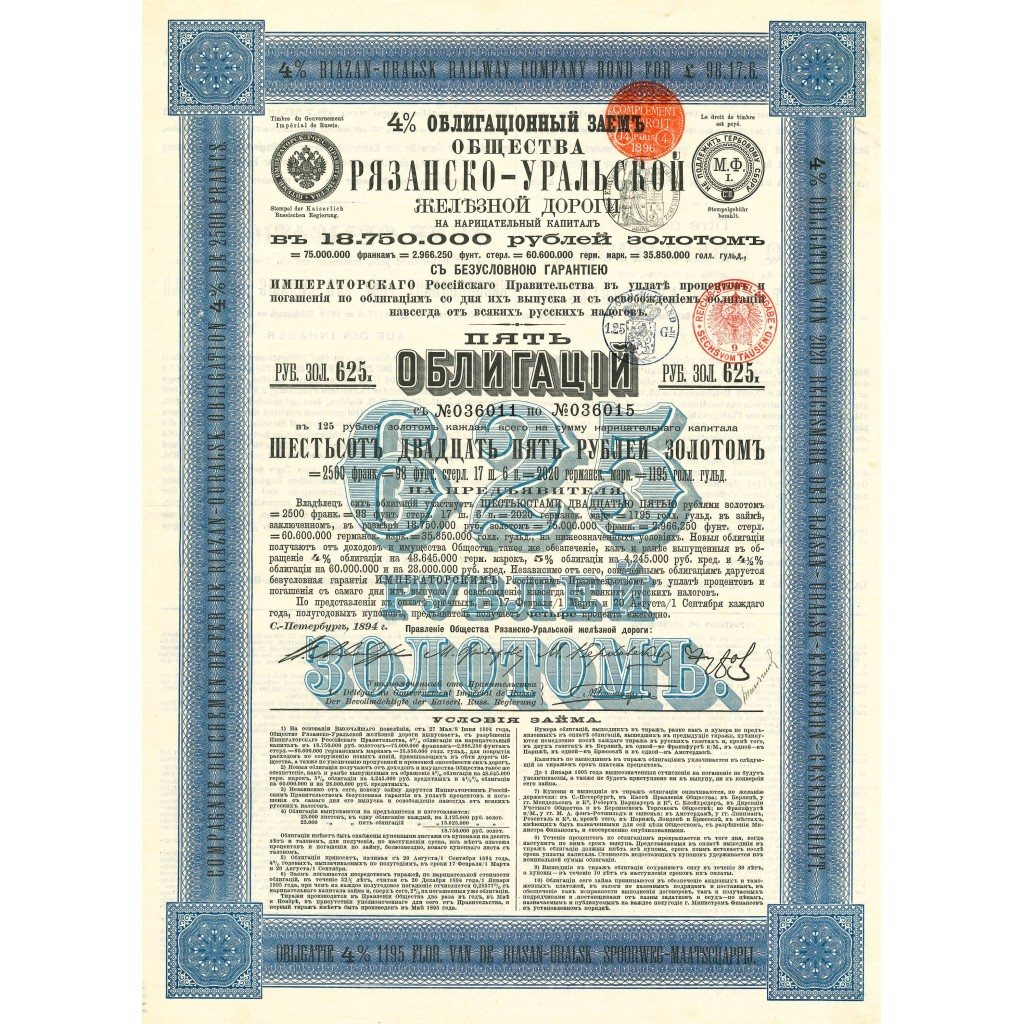


The "Riazan-Uralsk Railway Company" (Общество Рязанско-Уральской Железной Дороги) was one of the major railway companies operating in Imperial Russia during the late 19th and early 20th centuries. Founded in 1894, the company played a crucial role in developing railway infrastructure in the region, facilitating the transport of goods and people, and significantly contributing to the economy of the time. The bond issued in 1894 is a notable example of the financial history of that era, reflecting the company's importance in the Russian industrial landscape.
Historical Profile of the Company
| Historical Data | Details |
|---|---|
| Year of Establishment | 1894 |
| Headquarters | Saint Petersburg, Russia |
| Name at Establishment | Riazan-Uralsk Railway Company |
| Year of Stock Exchange Admission | 1894 |
| Year of Delisting | N/A |
| Year of Dissolution | 1917 |
| Capital at Establishment | 18,750,000 Rubles |
| Capital at Dissolution | N/A |
Financial and Historical Data
| Year | Revenue (Rubles) |
|---|---|
| 1894 | 18,750,000 |
| 1895 | 19,500,000 |
| 1896 | 20,250,000 |
Document Characteristics
| Document Details |
|---|
| Issuance of 4% bonds in 1894 |
| Face value: 625 Gold Rubles |
| Guaranteed capital: 75,000,000 Gold Rubles |
| Interest rate: 4% per annum |
| Place of issuance: Saint Petersburg, 1894 |
| Signed by the company's directors |
Importance of Scripophily Collecting
Collecting historical securities such as stocks and bonds is not only a fascinating hobby but also a journey through economic and industrial history. Each document tells a unique story, reflecting the challenges and triumphs of the companies that helped build the modern world. For collectors, owning a piece of this history represents not only aesthetic value but also educational and cultural value. The "Riazan-Uralsk Railway Company" is a perfect example of how historical documents can offer a window into a past rich with innovation and progress.
All historical documents for sale are considered collectibles. The documents have no economic or financial value (no economic or financial value), the second image is only representative of the company's object of reference.