Shopping Cart
There are no more items in your cart
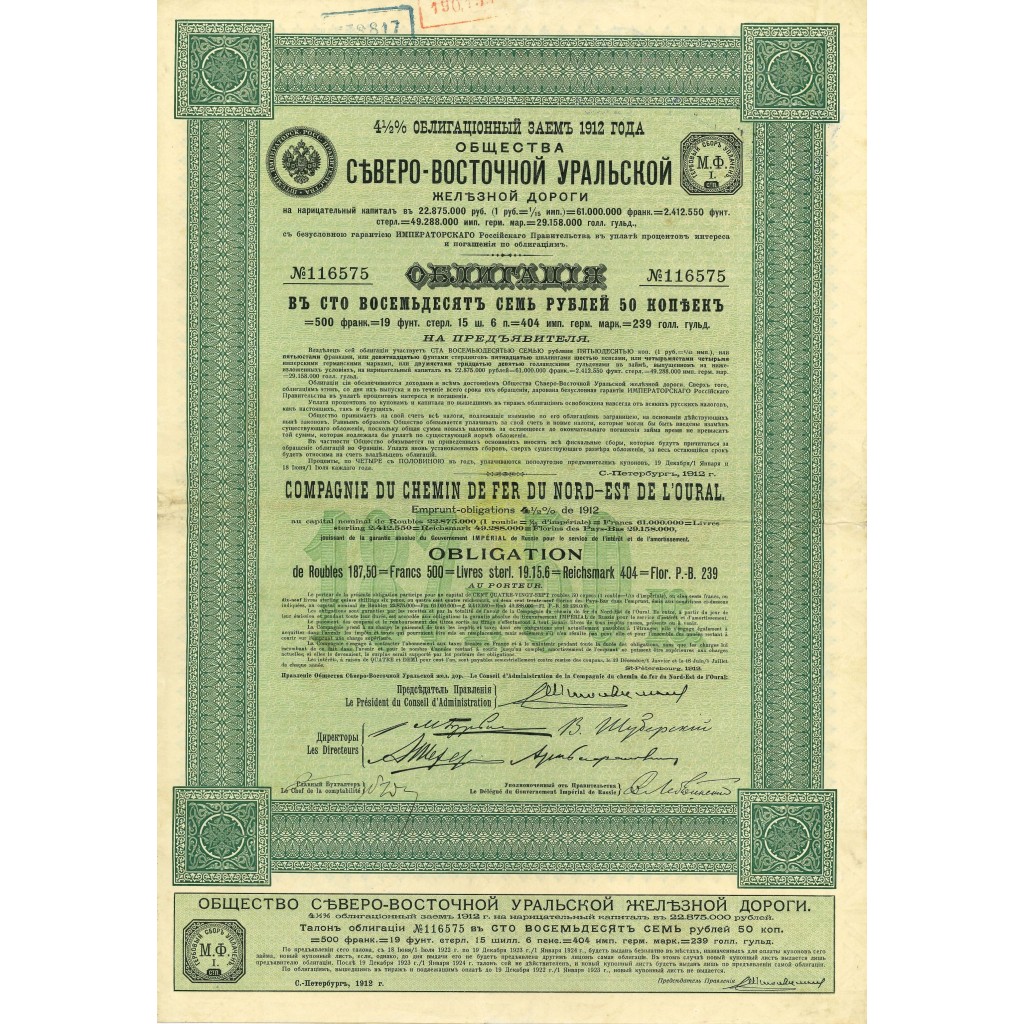
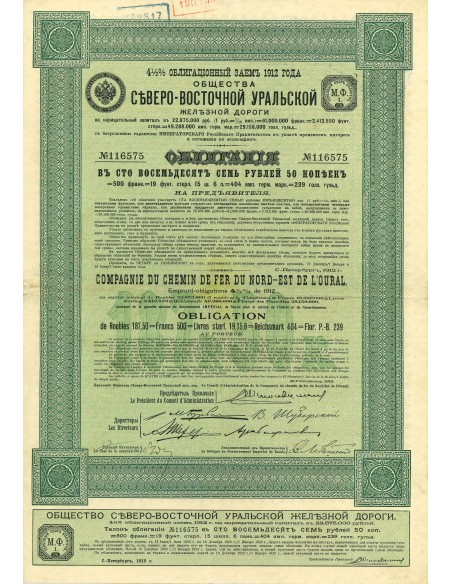
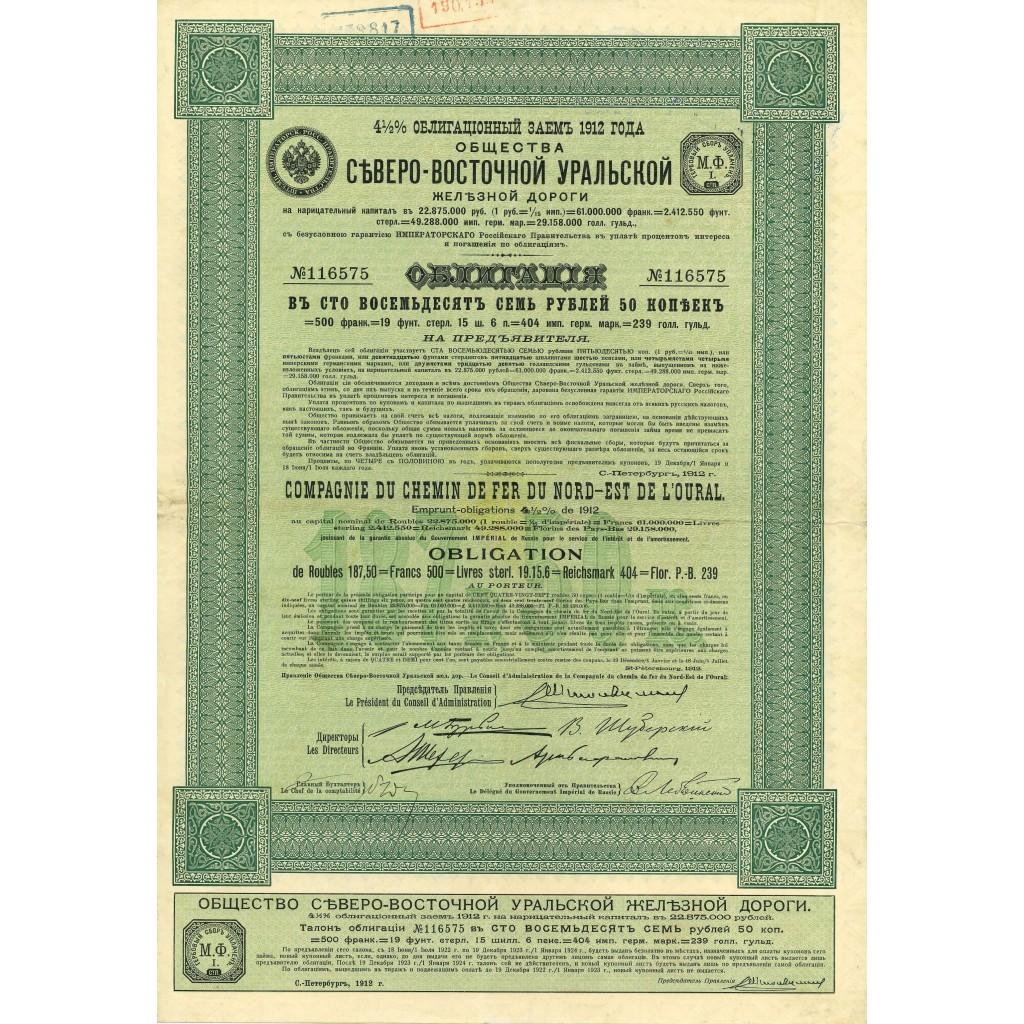
The Compagnie du Chemin de Fer du Nord-Est de l'Oural is one of the most emblematic railway companies of the Russian Empire, forming a fundamental part of the development of railway infrastructure in the Ural region. This company was established with the aim of building and managing a railway network that connects the rich mining and industrial areas of the northern Urals with the rest of the country, thus promoting trade and economic development throughout the region.
Historical Data of the Company
| Year | Social Capital | Revenue | Year of Establishment | Headquarters | Delisting Name | Year of Stock Exchange Listing | Year of Delisting | Year of Dissolution | Capital at Dissolution |
|---|---|---|---|---|---|---|---|---|---|
| 1912 | 22,875,000 rubles | N/A | 1912 | Saint Petersburg | N/A | N/A | N/A | N/A | N/A |
Document Characteristics
| Document Characteristics | Description |
|---|---|
| Document Type | Bond |
| Issue | 1912 |
| Face Value | 187.50 rubles |
| Annual Interest | 4.5% |
| Serial Number | 116575 |
| Issue Date | 1912 |
| Other Details | - The company was guaranteed by the imperial Russian government. |
| Signatures | President of the Board of Directors, Directors, Auditor |
| Printing Office of the Imprimerie de l'État, Saint Petersburg | |
| Notes | - The bonds were payable in various currencies, including rubles, francs, pounds sterling, German marks, and Dutch guilders. |
Importance of Scripophily
Collecting historical documents, known as scripophily, represents a window into the economic and financial past. Each document tells a story, not only of the company that issued it but also of the economic and social context of the time. Collecting historical shares and bonds means preserving a piece of history, a cultural heritage that reflects the evolution of financial markets and industrial infrastructure.
The document of the Compagnie du Chemin de Fer du Nord-Est de l'Oural is a perfect example of how scripophily can offer a unique perspective on the economic growth of the Russian Empire. The importance of this document lies in its rarity, its state of preservation, and its artistic beauty, elements that make it a sought-after piece by collectors.
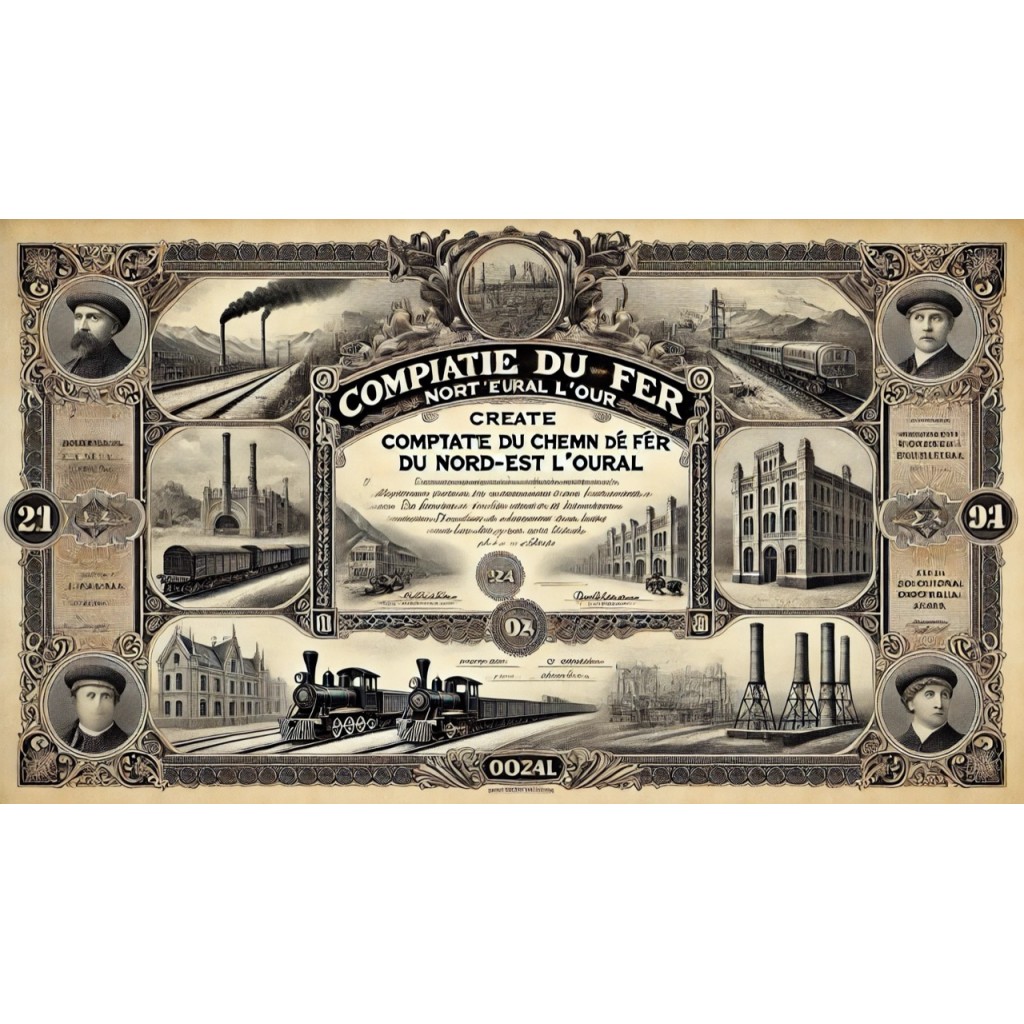
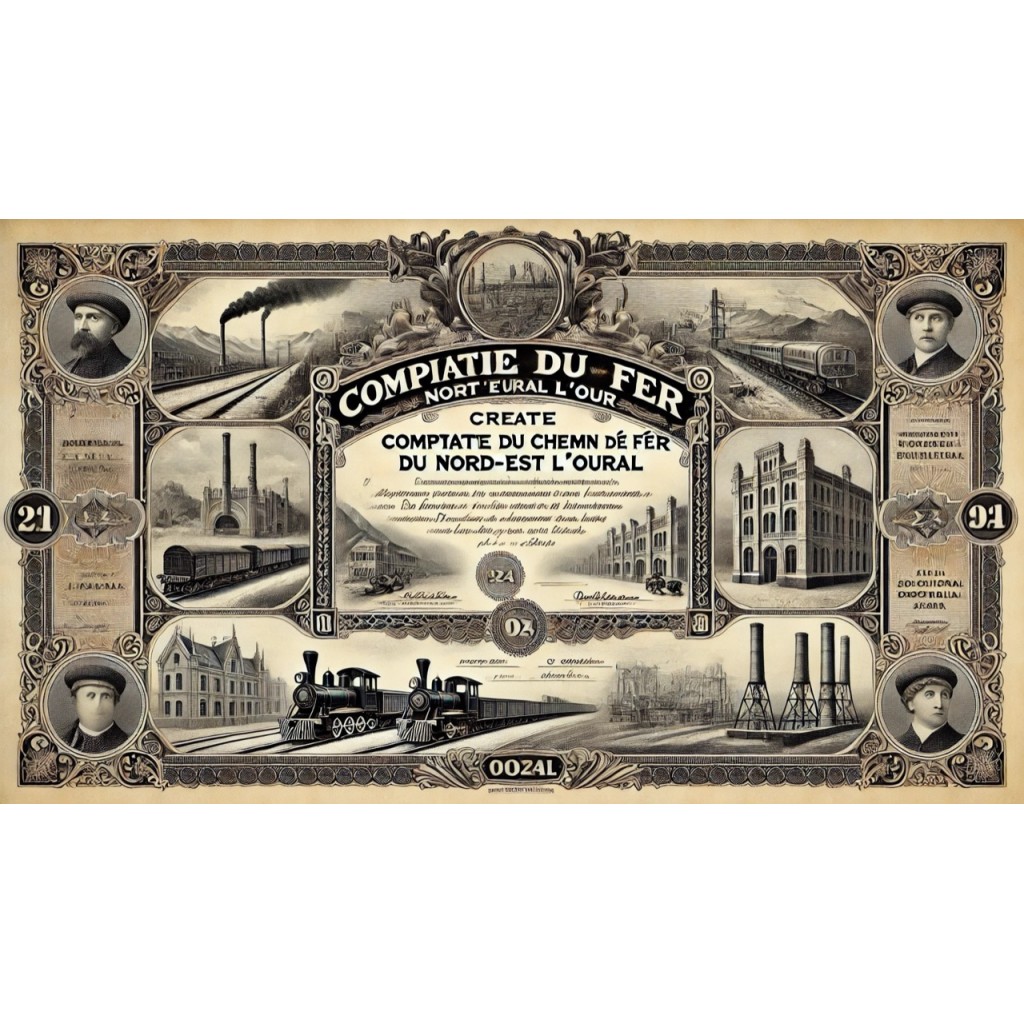
All historical documents for sale are considered collectibles. The documents have no economic or financial value (no economic or financial value), the second image is only representative of the company's object.