Shopping Cart
There are no more items in your cart
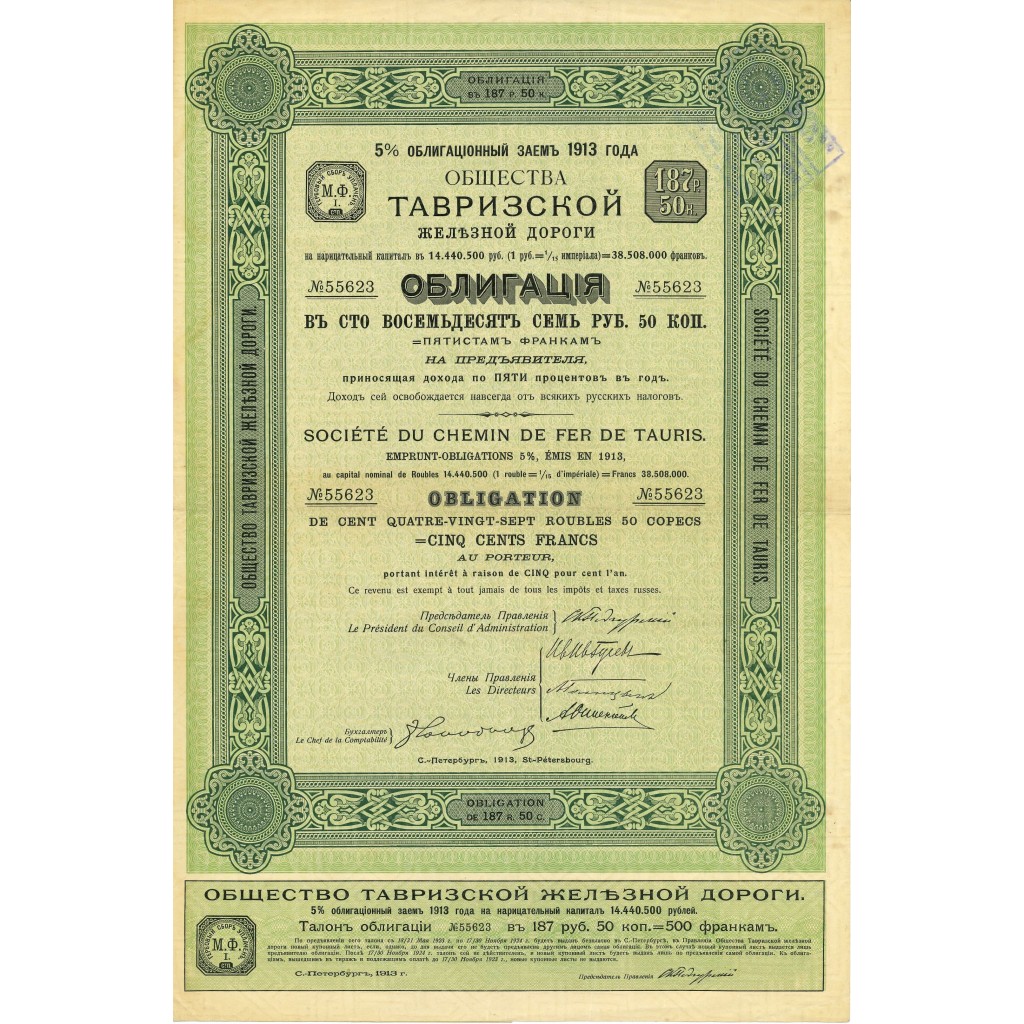
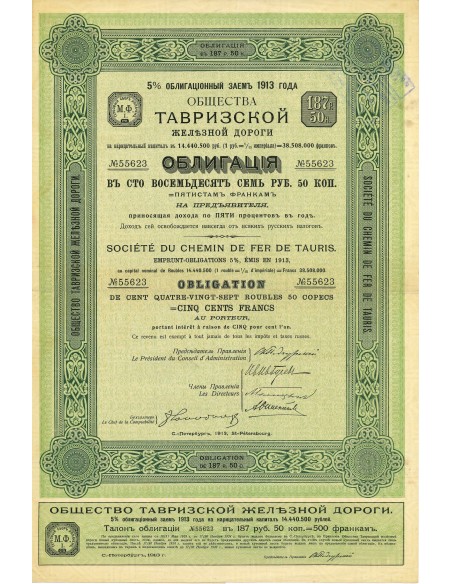
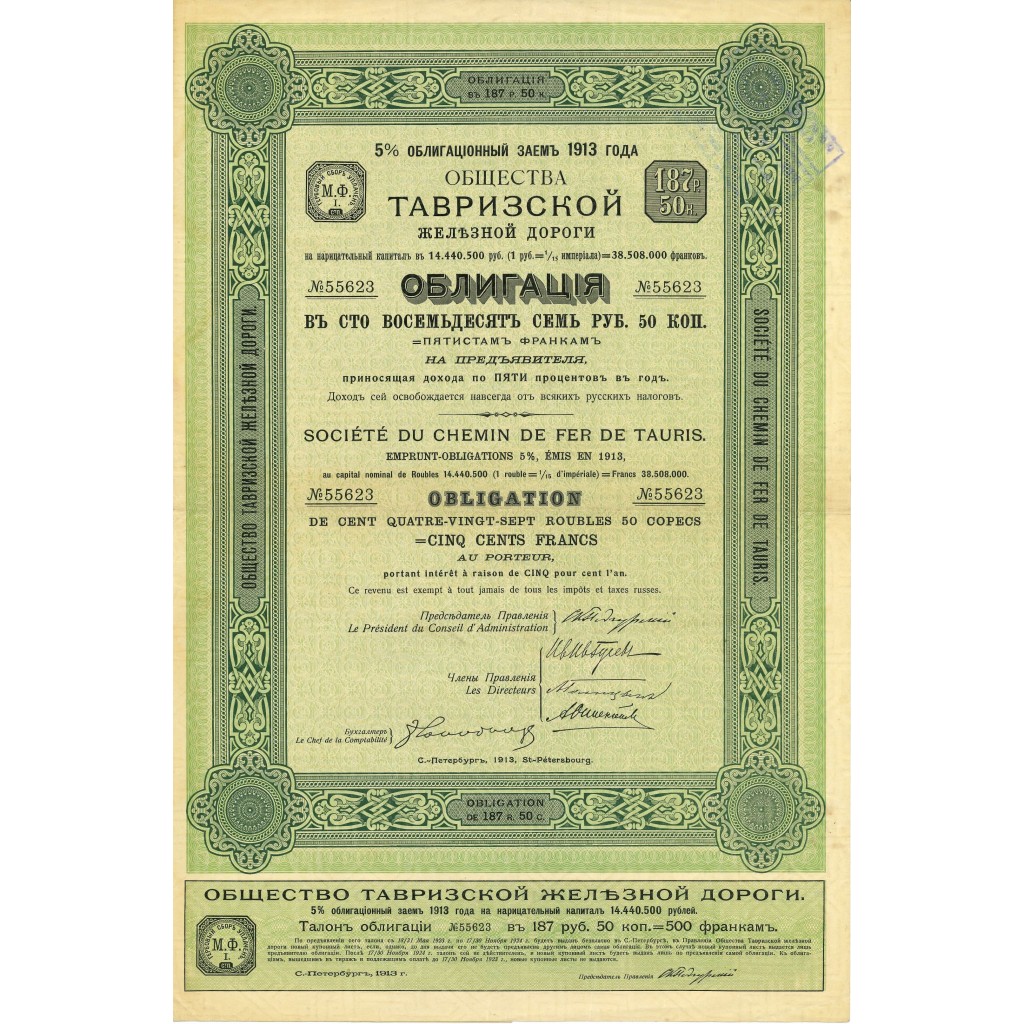
The Société du Chemin de Fer de Tauris is one of the most significant testimonies of the development of railway infrastructure in Russia at the beginning of the 20th century. Founded with the goal of improving railway connections in the Tauride region, this company had a significant impact on the mobility and economy of the time.
History and Context
The Société du Chemin de Fer de Tauris was established in 1913, a period of economic and infrastructural expansion for the Russian Empire. The Tauride region, located in modern-day southern Ukraine, needed better railway connections to support agricultural and industrial development. The company was founded with a capital of 14,440,500 rubles, as indicated in the bond document.
Document Features
The document is a bond issued in 1913, with a nominal value of 187.50 rubles or 500 francs. The bond promises an annual interest of 5%, tax-exempt in Russia, demonstrating the attractiveness these securities had for investors. The design of the certificate is rich in ornamental details, typical of financial documents of the time, and contains inscriptions in Russian and French, reflecting the internationality of investors.
Historical Data of the Company
| Data | Value |
|---|---|
| Year of Foundation | 1913 |
| Headquarters | St. Petersburg, Russia |
| Initial Capital | 14,440,500 rubles |
| Year of Document Issuance | 1913 |
| Name at Delisting | Not available |
| Year of Stock Exchange Admission | Not available |
| Year of Delisting | Not available |
| Year of Company Cessation | Not available |
| Capital at Cessation | Not available |
| Annual Revenue | Not available |
Importance for Scripophily Collectors
Collecting historical documents such as the bonds issued by the Société du Chemin de Fer de Tauris represents a unique opportunity to connect with the economic and industrial history of a past era. These certificates are not just pieces of paper; they represent investments, dreams, and trust in the Russian railway industry. Each document tells a unique story, reflecting the economic and social context of the time. Having a certificate like this in one's collection is a way to preserve and celebrate the rich historical heritage.
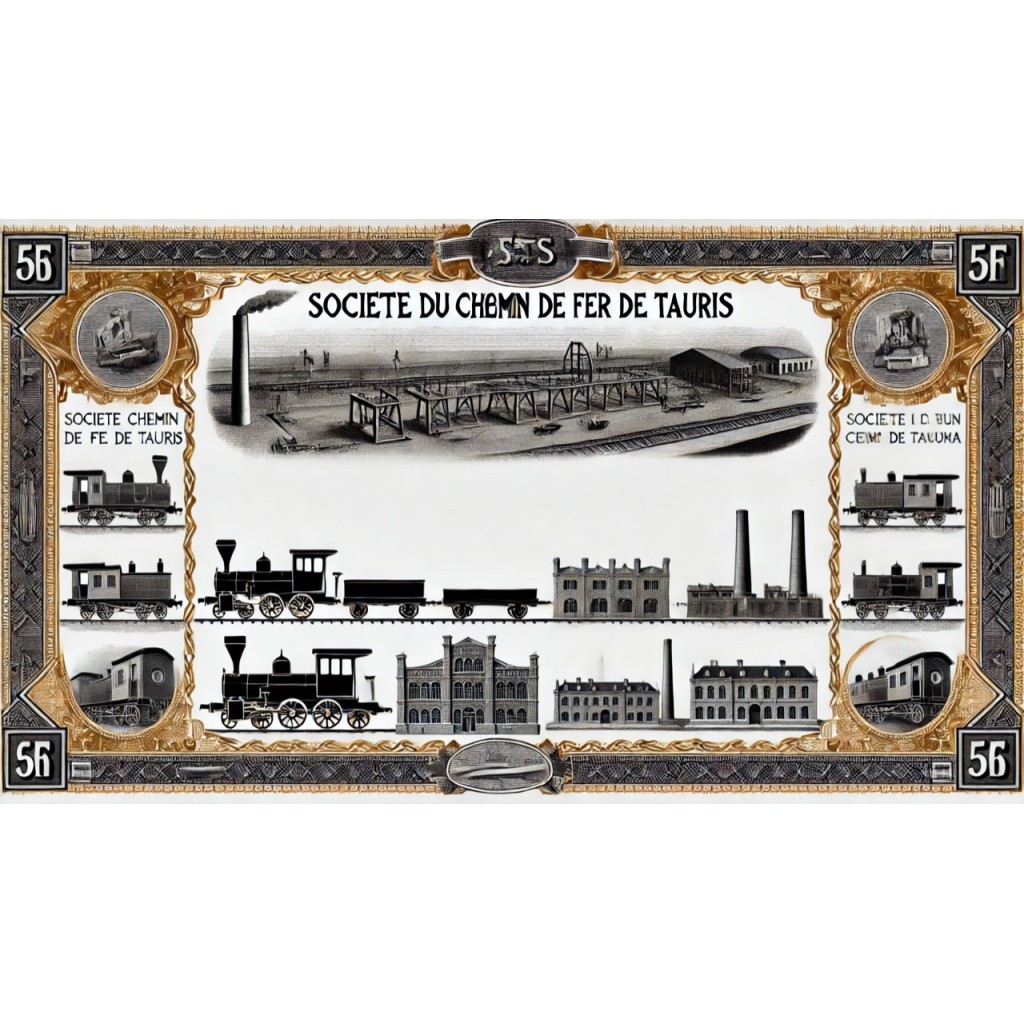
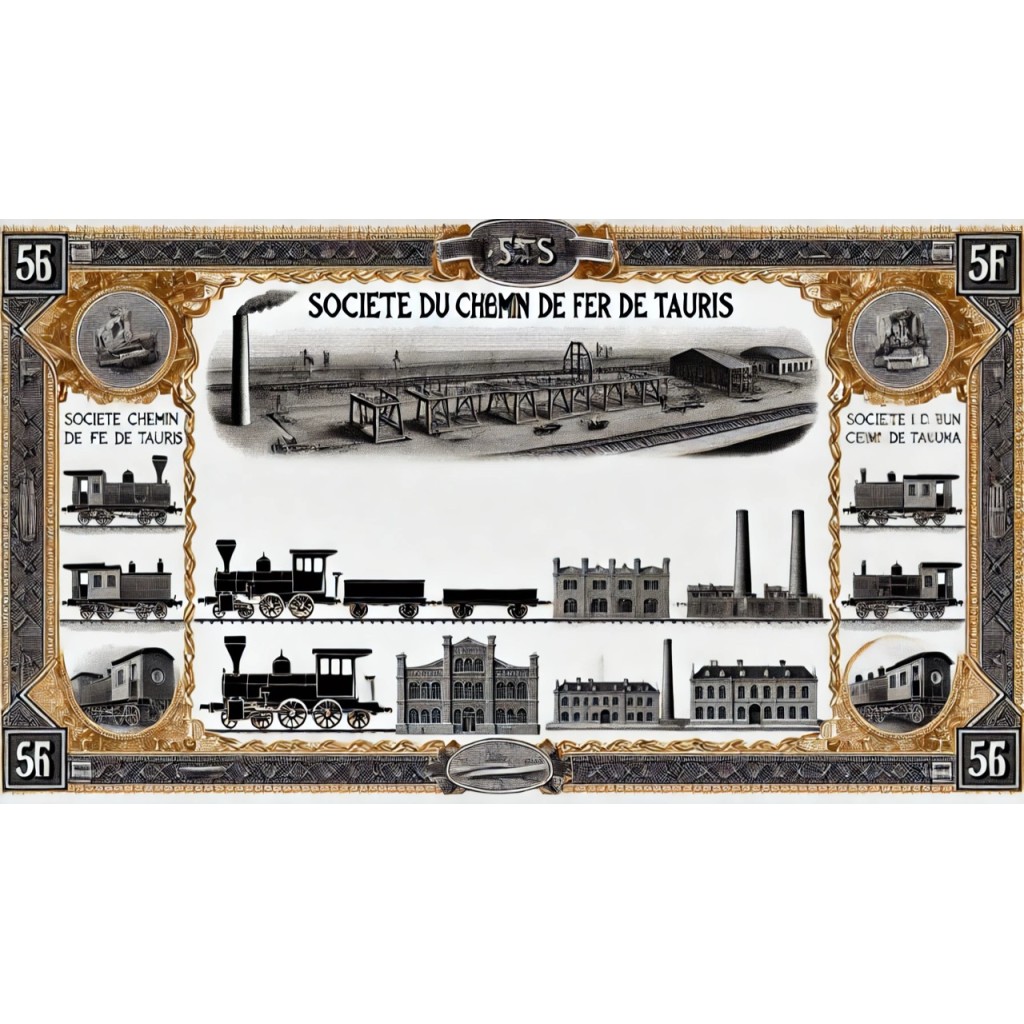
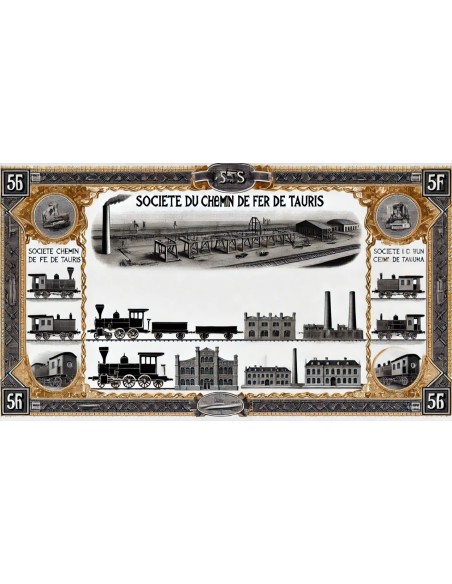
All historical documents for sale are considered collectible. The documents have no economic or financial value (no economic or financial value), the second image is only representative of the company's object of reference.