Shopping Cart
There are no more items in your cart
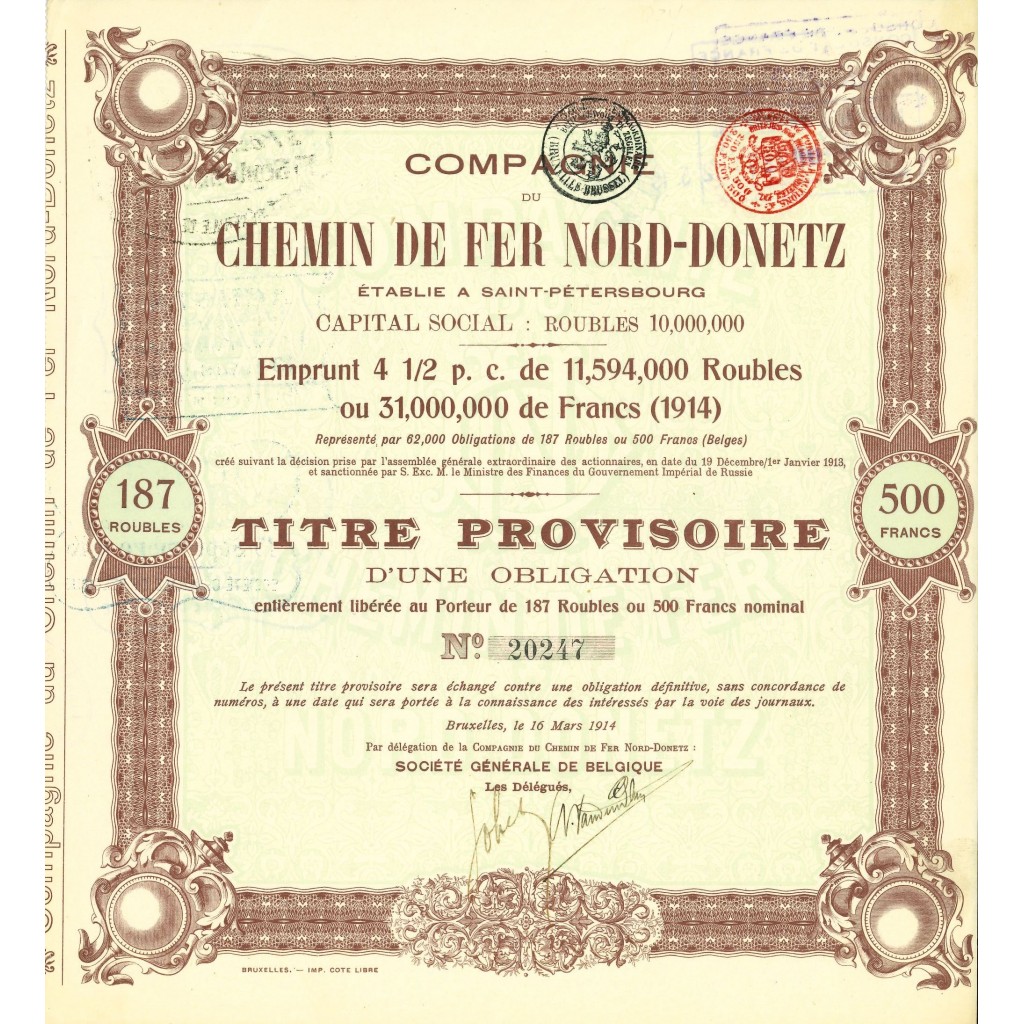
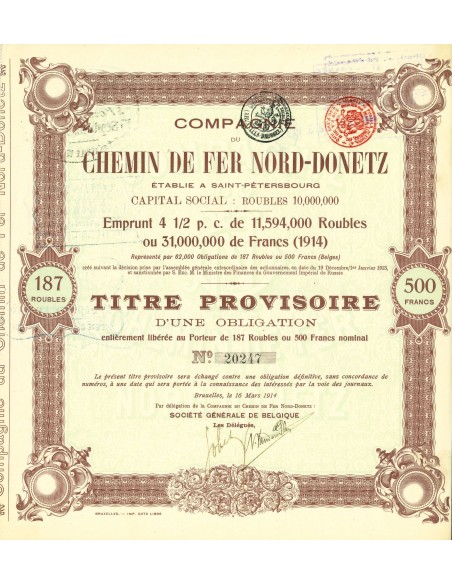
The "Company of Chemin de Fer Nord-Donetz" was a historical Russian company, established in Saint Petersburg in the early 20th century. Its primary objective was to build and manage a strategic railway network in the Donbass region, a key industrial area located in southern Russia. The Nord-Donetz railway was particularly significant for transporting raw materials such as coal and iron, essential for the Russian heavy industry of the time.
The company issued bonds during a period of significant infrastructural expansion, when the Tsarist government encouraged foreign investments to develop the railways. These bonds were denominated in both Russian rubles and French francs, reflecting the strong international interest and confidence in Imperial Russia's industrial projects.
Historical Company Data
| Company Data | Information |
|---|---|
| Year of Establishment | 1913 |
| Headquarters | Saint Petersburg, Russia |
| Initial Capital | 10,000,000 Rubles |
| Year of Stock Exchange Listing | 1914 |
| Year of Delisting | N/A |
| Year of Company Dissolution | Probably after the Russian Revolution |
| Capital at Dissolution or Last Available Data | N/A |
| Annual Revenue | Data not available |
Document Characteristics
| Characteristics | Details |
|---|---|
| Bond Name | Titre Provisoire d'une Obligation |
| Serial Number | 20247 |
| Date of Issue | March 16, 1914 |
| Nominal Value | 187 Rubles or 500 Francs |
| Interest Rate | 4 1/2 % |
| Maturity | Not specified |
| Place of Issue | Brussels |
| Signing Parties | Société Générale de Belgique |
Collecting historical shares and bonds, known as scripophily, offers a fascinating window into the economic and financial history of past eras. Each document tells a unique story and provides insight into companies and projects that contributed to industrial and infrastructural development. Owning a piece like this, issued by the Company of Chemin de Fer Nord-Donetz, is not only an opportunity to hold a fragment of history but also a way to explore the economic past in a tangible way.
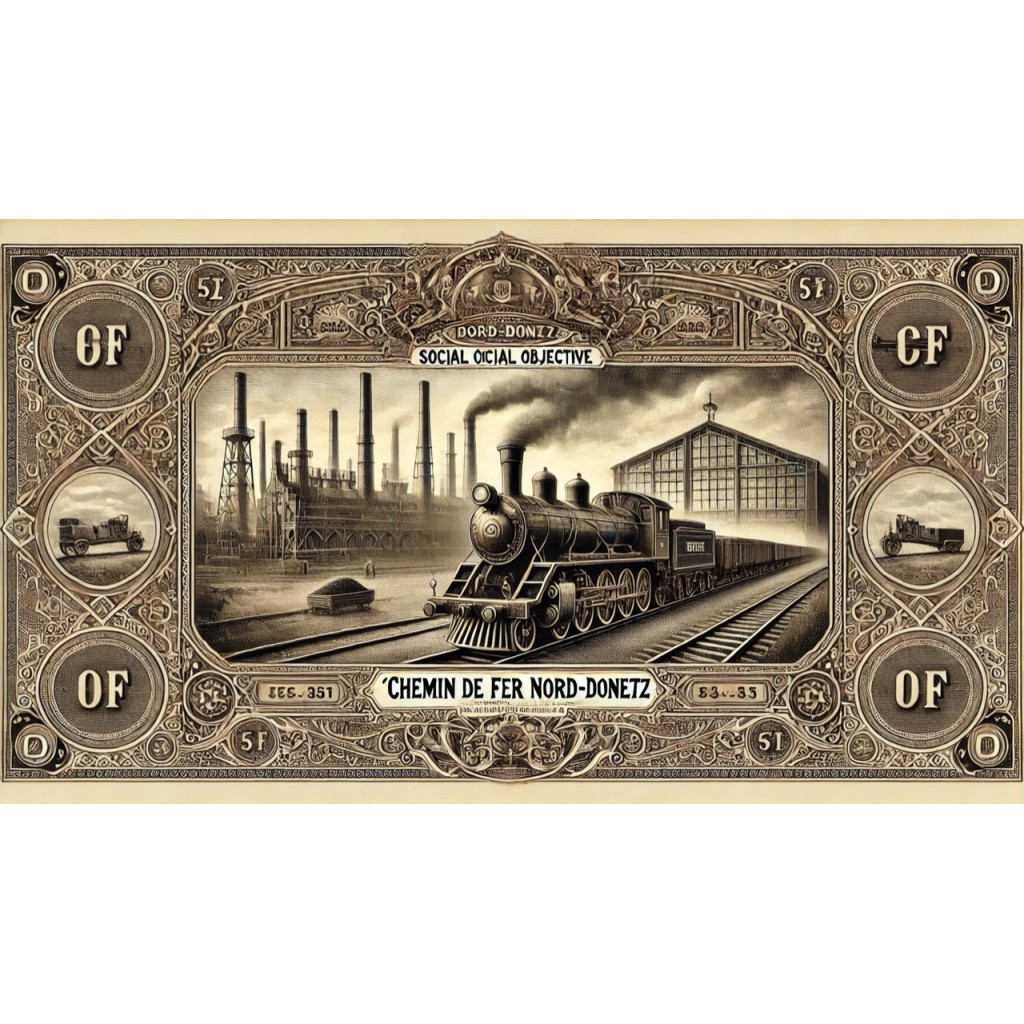
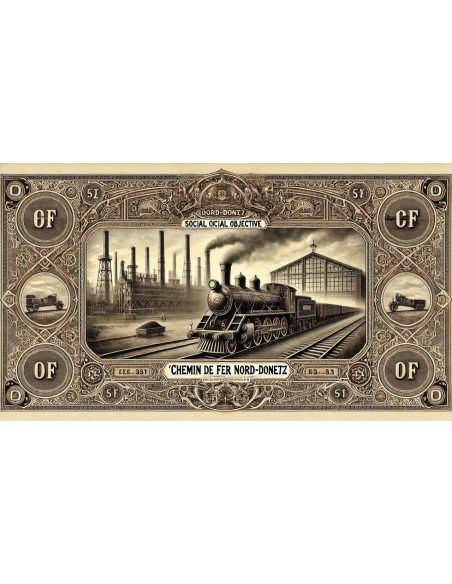
All historical documents for sale are intended for collection purposes. The documents have no economic or financial value (no economic or financial value), and the second image is only representative of the object of the reference company.