
Shopping Cart
There are no more items in your cart

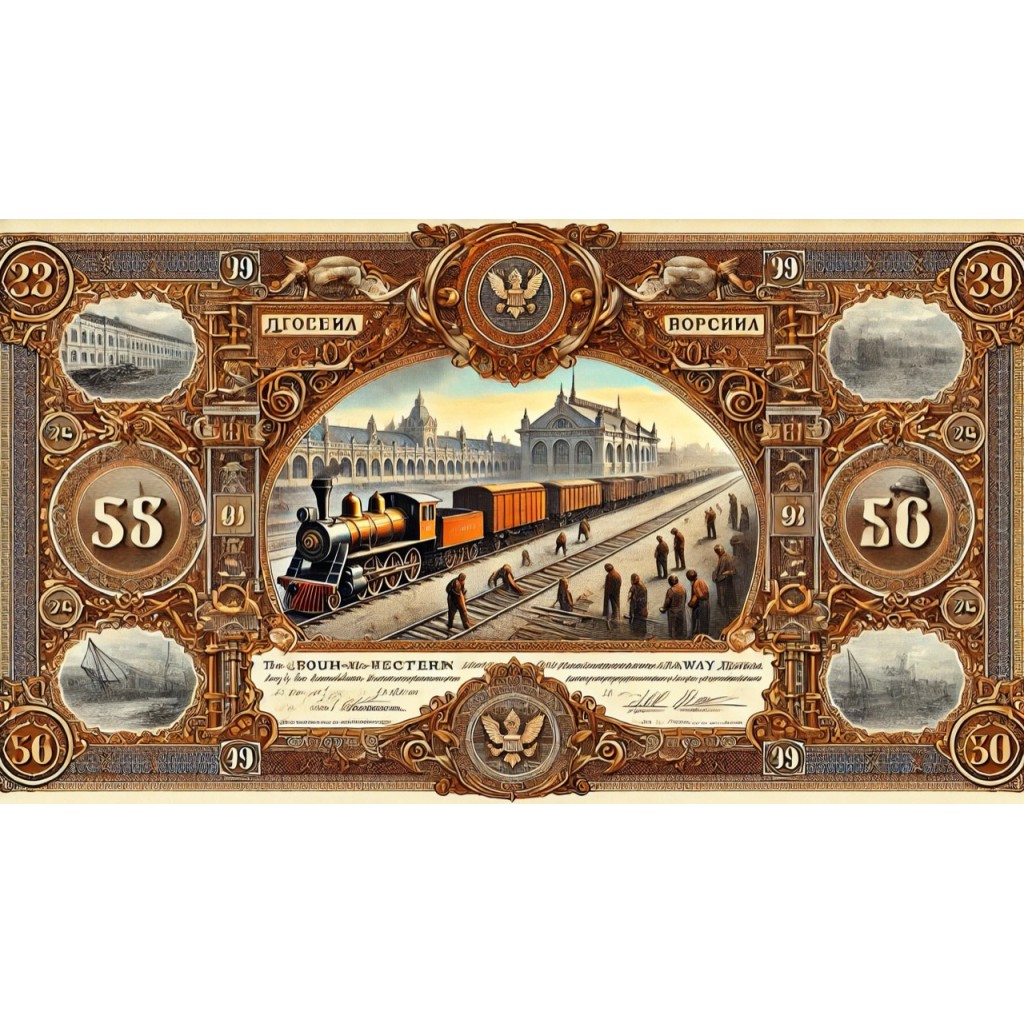
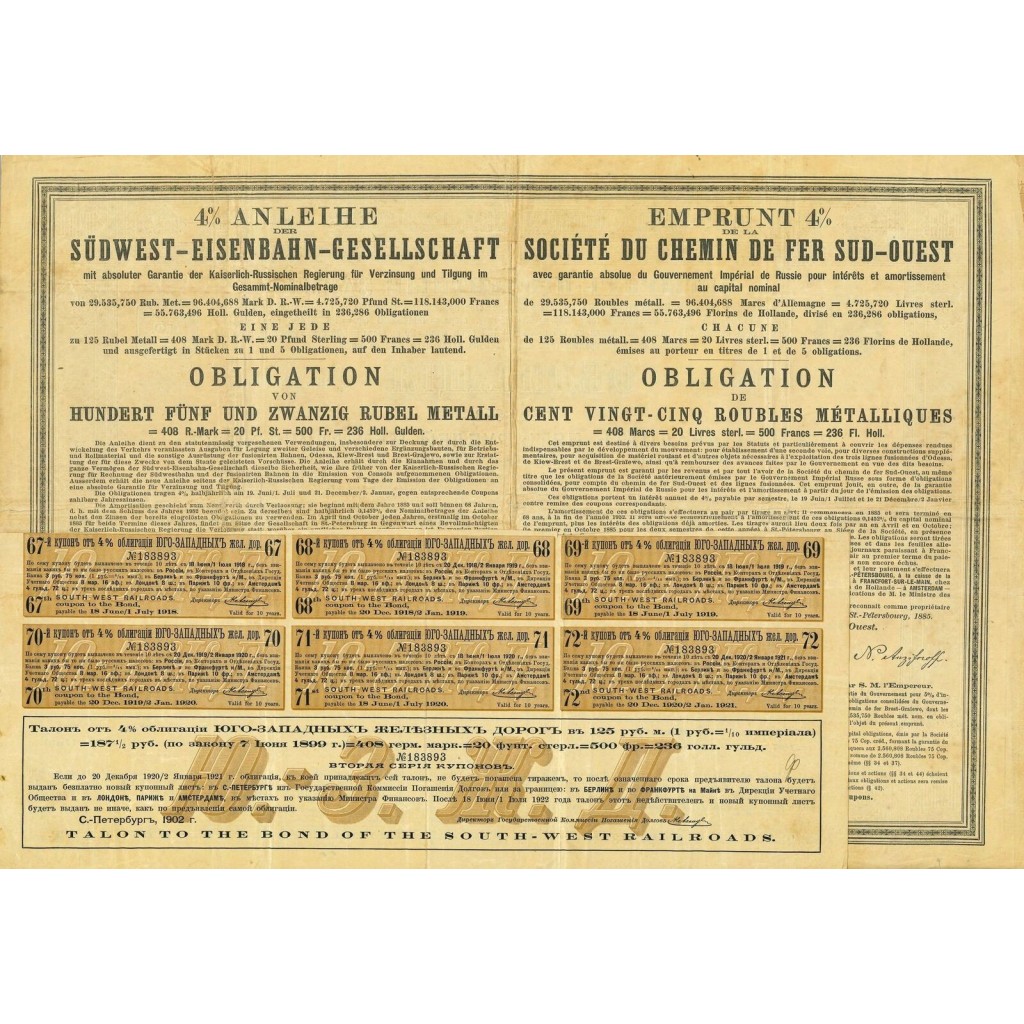
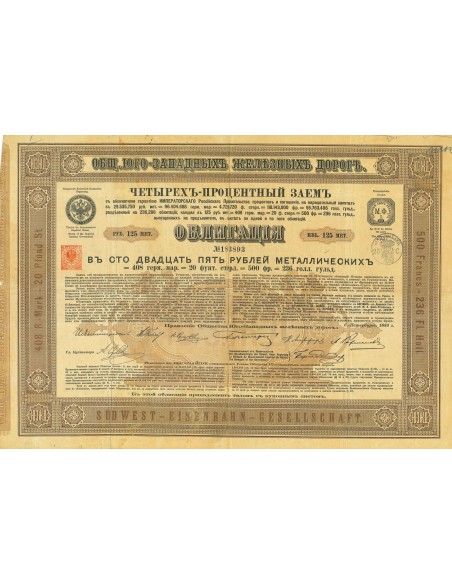
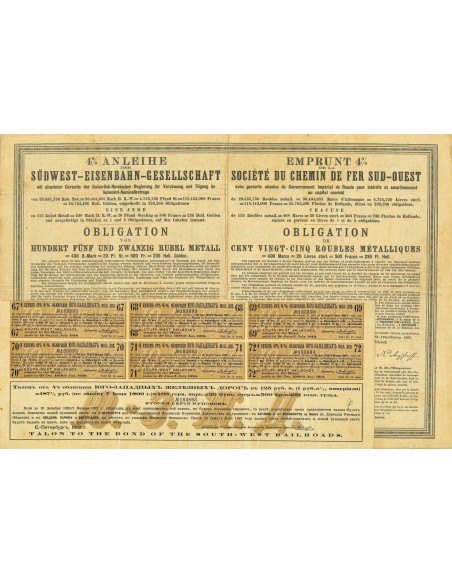
The bond we observe is issued by the South-Western Railways Company of Russia, a historically significant entity in the field of railway transportation within the Russian Empire. The company was founded in 1885 with the aim of developing and managing one of the most important railway lines in the southwest of the Russian Empire, connecting several strategic cities and facilitating the transport of goods and people across vast areas of the empire.
Issuing bonds was a common practice to finance large infrastructure projects such as the construction and expansion of railway networks. This specific bond, issued in 1885, offers a 4% interest rate and is guaranteed by the Russian Imperial Government, which increased its attractiveness to investors at the time. The currency indicated is the metallic ruble, one of the main economic units of the period.
Historical Data of the Company
| Item | Description |
|---|---|
| Year of Establishment | 1885 |
| Headquarters | St. Petersburg, Russian Empire |
| Year of Stock Market Listing | Not available |
| Year of Delisting from Stock Market | Not available |
| Year of Company Dissolution | Presumably after the Russian Revolution of 1917 |
| Initial Share Capital | 7,500,000 rubles |
| Share Capital at Dissolution | Not available |
Document Characteristics
| Characteristic | Detail |
|---|---|
| Document Type | Bond |
| Year of Issue | 1885 |
| Nominal Value | 125 Rubles |
| Interest Rate | 4% |
| Currency | Metallic Ruble |
| Guaranteed by Russian Imperial Gov. | Yes |
| Chairman's Signature | Present (not legible in the scan) |
| Decorations and Frame | Elaborate, typical of period bonds with imperial embellishments |
Text for Scripophily Collectors
This document represents a valuable piece of history, not only for its value as a financial instrument but also for its cultural and historical significance. Collecting bonds like this means owning a fragment of a bygone era, where railway transportation was the lifeblood of an empire’s economy. Every detail, from the ornate border to the signatures of the executives, tells a story of ambition, industrial growth, and the power of capital in expanding a nation's infrastructure.
All historical documents for sale are considered collectibles. The documents have no economic or financial value (no economic or financial value); the second image is only representative of the object of the reference company.


