Shopping Cart
There are no more items in your cart
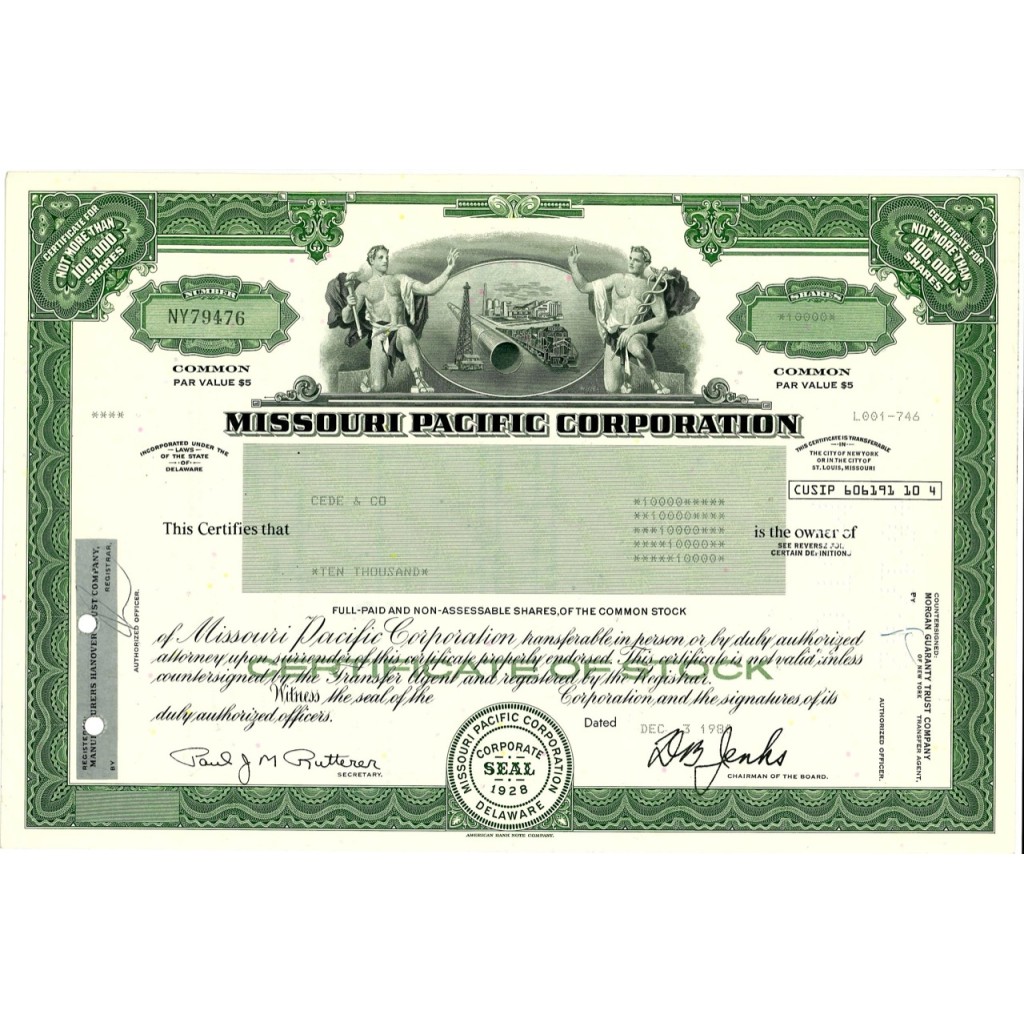
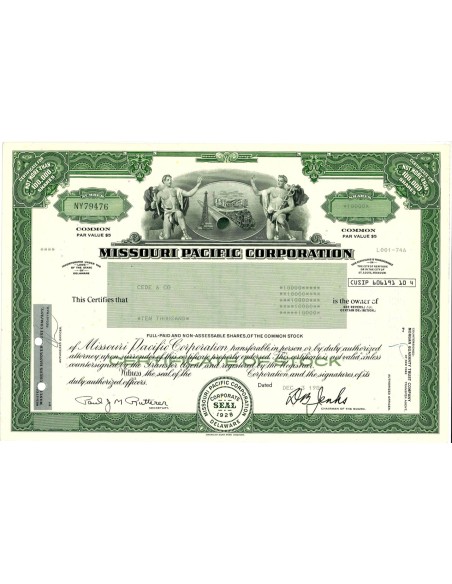
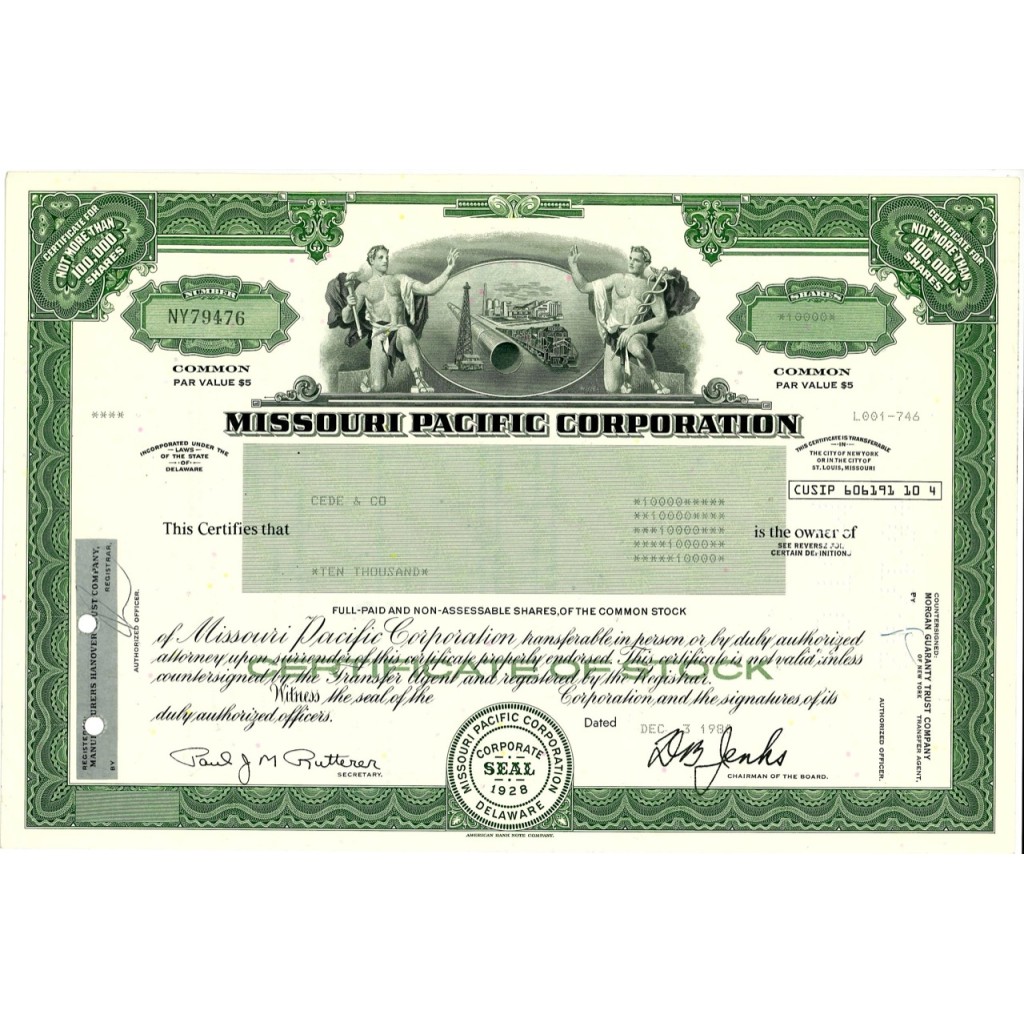
The Missouri Pacific Corporation, often known as MoPac, was one of the most important railroad companies in the United States, with a history dating back to 1851. Founded as the Pacific Railroad, it was one of the first railroads built west of the Mississippi River, playing a crucial role in the westward expansion of the United States.
Historical Data of the Company
| Year | Revenue (USD) | Share Capital (USD) | Year of Establishment | Headquarters | Name upon Delisting | Year of Stock Exchange Admission | Year of Delisting | Year of Company Dissolution |
|---|---|---|---|---|---|---|---|---|
| 1851 | Data not available | $5,000,000 | 1851 | St. Louis, Missouri | Missouri Pacific Corporation | 1915 | 1982 | 1982 (merged with Union Pacific Railroad) |
Document Features
| Document Type | Issue Date | Number of Shares | Value of Each Share |
|---|---|---|---|
| Stock Certificate | December 3, 1980 | 10,000 | $5 each |
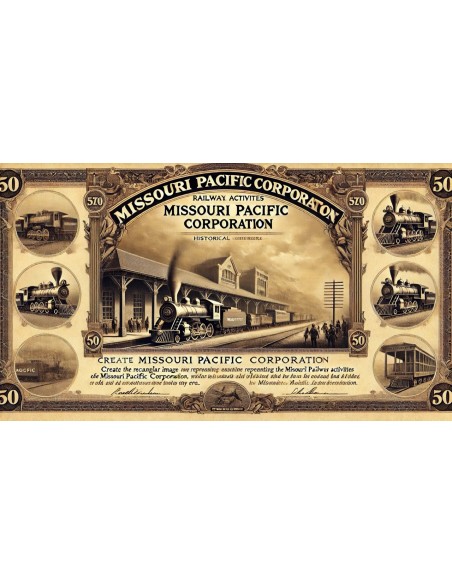
The illustrated stock certificate of the Missouri Pacific Corporation dates back to 1980, with a nominal value of $5 per share. This document represents not only a title of ownership but also a piece of American railroad history. The depictions on the certificate, which include images of trains and railway infrastructure, symbolize the company's importance in the railway transportation sector.
Text for Scripophily Collectors
Scripophily, or the collection of historical stock and bond certificates, is a fascinating practice that allows one to own a tangible fragment of economic and industrial history. Each certificate tells a unique story of development, innovation, and economic change. The Missouri Pacific Corporation certificate is a perfect example of this, representing an era when railroads were the heartbeat of the United States' expansion and economic development.
Owning a historical certificate like this is like having an open window to the past, a way to connect with the industrial roots that have shaped the modern world. The artistic beauty and historical value of these documents make them not only collectibles but also precious pieces for research and conversation. Each piece added to one's collection enriches the understanding of economic and industrial history.
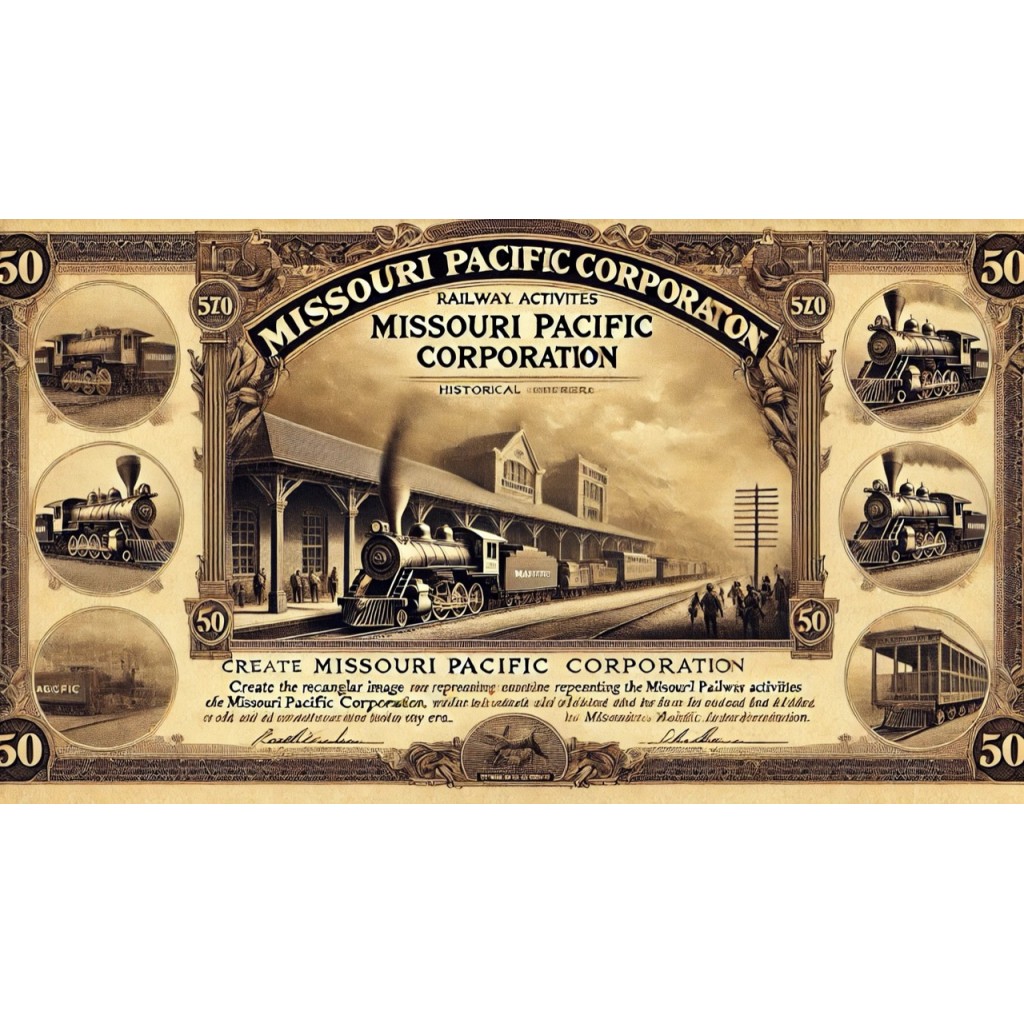
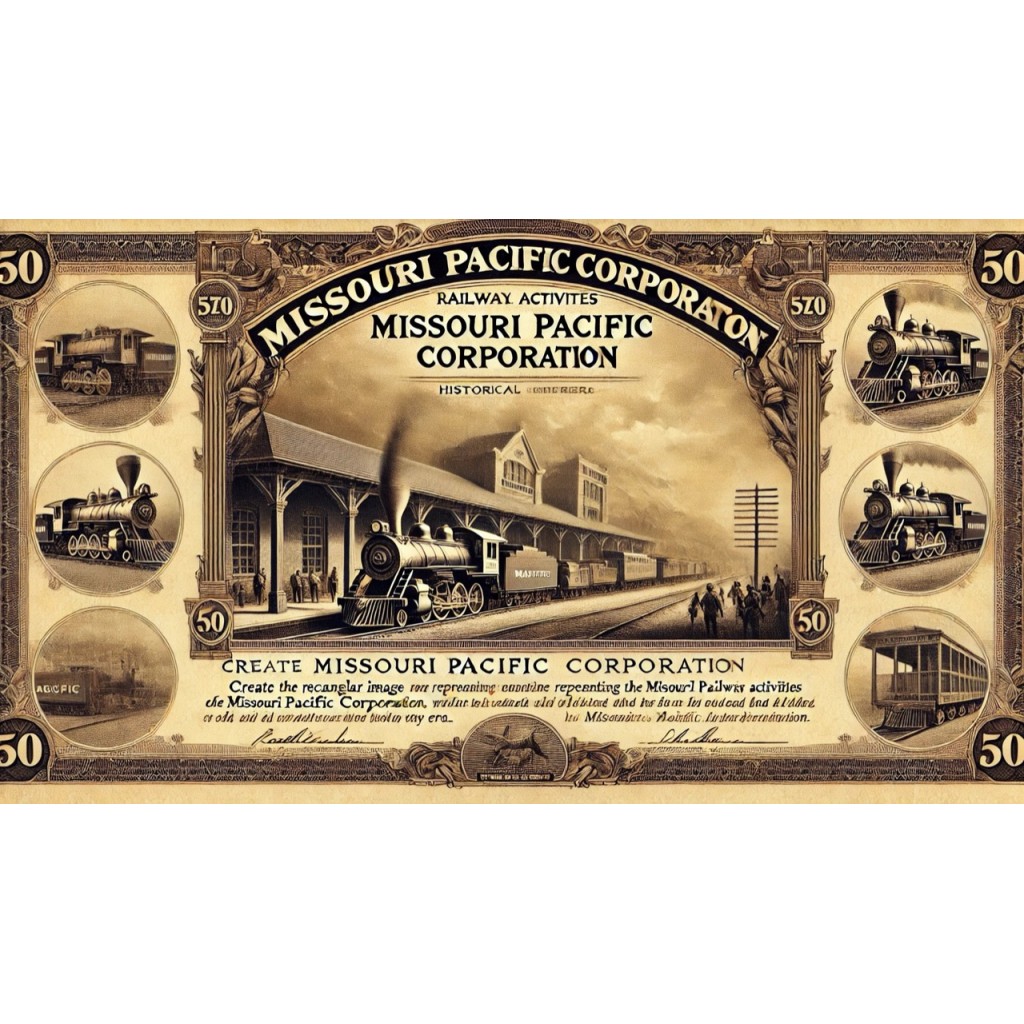
All historical documents for sale are intended as collectibles. The documents have no economic or financial value (no economic or financial value), the second image is only representative of the company's object.