Shopping Cart
There are no more items in your cart
Document Description:
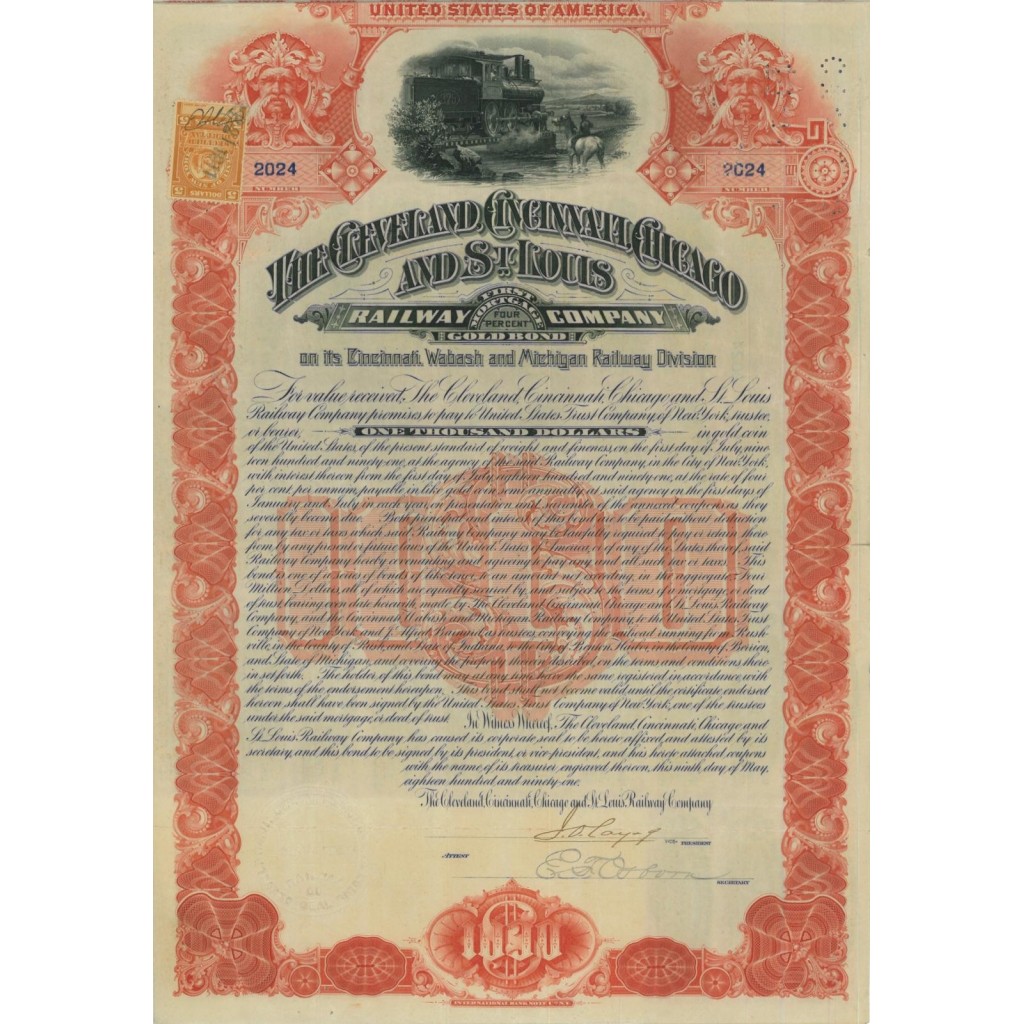
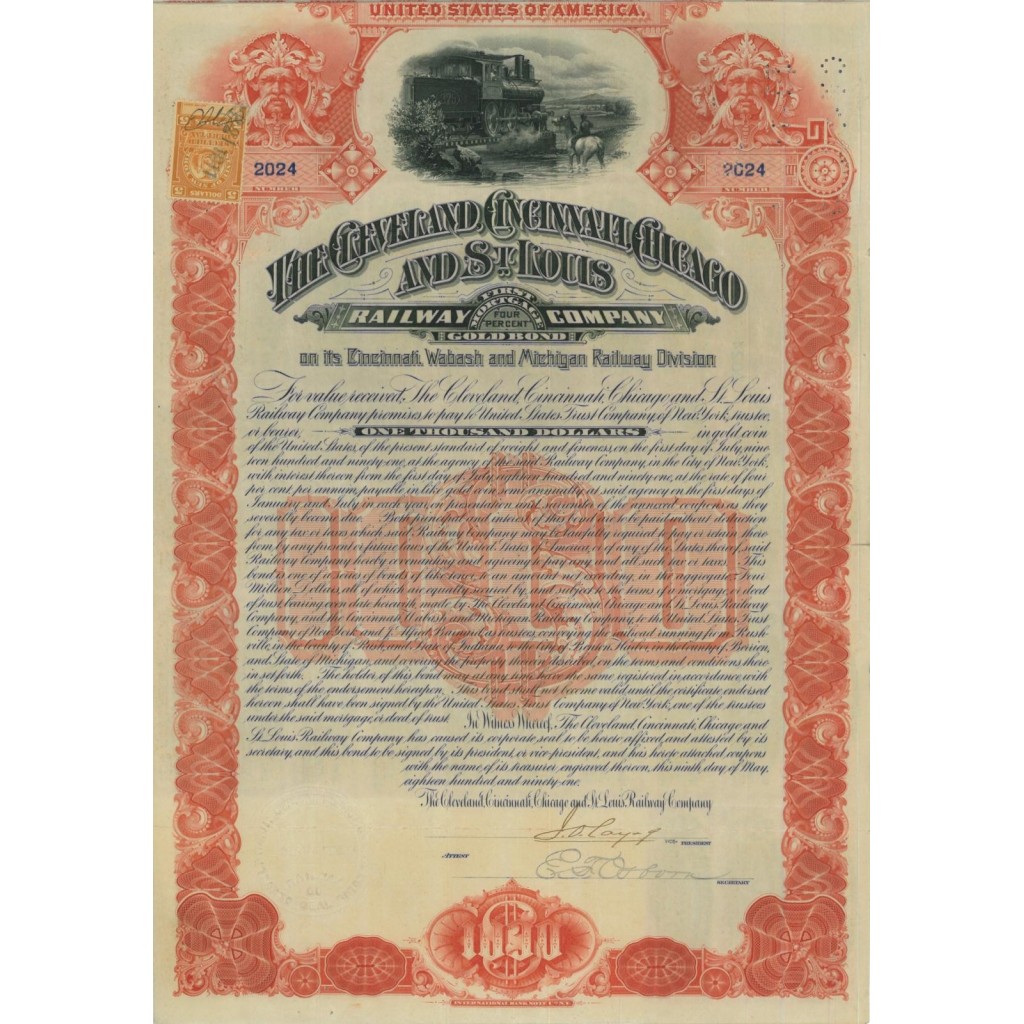
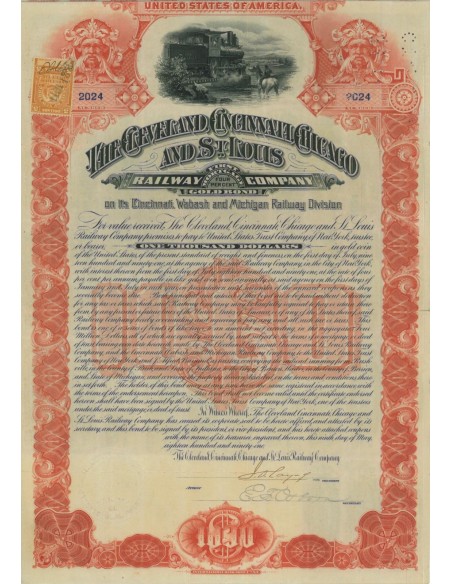
- Type of Document: Gold Bond
- Value: $1,000
- Interest Rate: 4%
- Date of Issue: May 1, 1891
- Maturity Date: Specified in the document
- Issued by: The Cleveland, Cincinnati, Chicago, and St. Louis Railway Company
- Trustee: Central Trust Company of New York
- Printed by: American Bank Note Company, New York
Visual Elements:
- Color Scheme: The bond features an elaborate red border with intricate patterns, symbolizing the security and significance of the investment.
- Images: At the top, there is an illustration of a steam locomotive, representing the core business of the company – rail transportation. The left and right borders have ornate designs, adding a touch of elegance to the document.
- Emblems and Seals: The document contains official seals, enhancing its authenticity and official capacity.
Historical Significance:
The bond issued by the Cleveland, Cincinnati, Chicago, and St. Louis Railway Company represents a period of rapid industrialization and expansion in the United States. Railroads were the backbone of the nation's economy, facilitating the movement of goods and people across vast distances. The Big Four Railroad was integral in connecting key Midwestern cities, thus playing a pivotal role in the economic development of the region.
The bond is not just a financial instrument but a piece of history, reflecting the trust and optimism investors had in the burgeoning railroad industry. The 4% interest rate was attractive at the time, offering a reliable return on investment.
Historical Research:
The Cleveland, Cincinnati, Chicago, and St. Louis Railway Company was formed through the consolidation of several smaller railroads. Its creation marked a significant milestone in the standardization and efficiency of rail transport in the Midwest. The company's network extended through Ohio, Indiana, Illinois, and Missouri, making it a vital link in the national rail system.
The bond issued in 1891 came at a time when the railroad industry was experiencing both rapid growth and fierce competition. Companies were seeking to expand their networks and improve their infrastructure, often requiring substantial capital investments. Bonds like this one were a common method for raising the necessary funds.