Shopping Cart
There are no more items in your cart
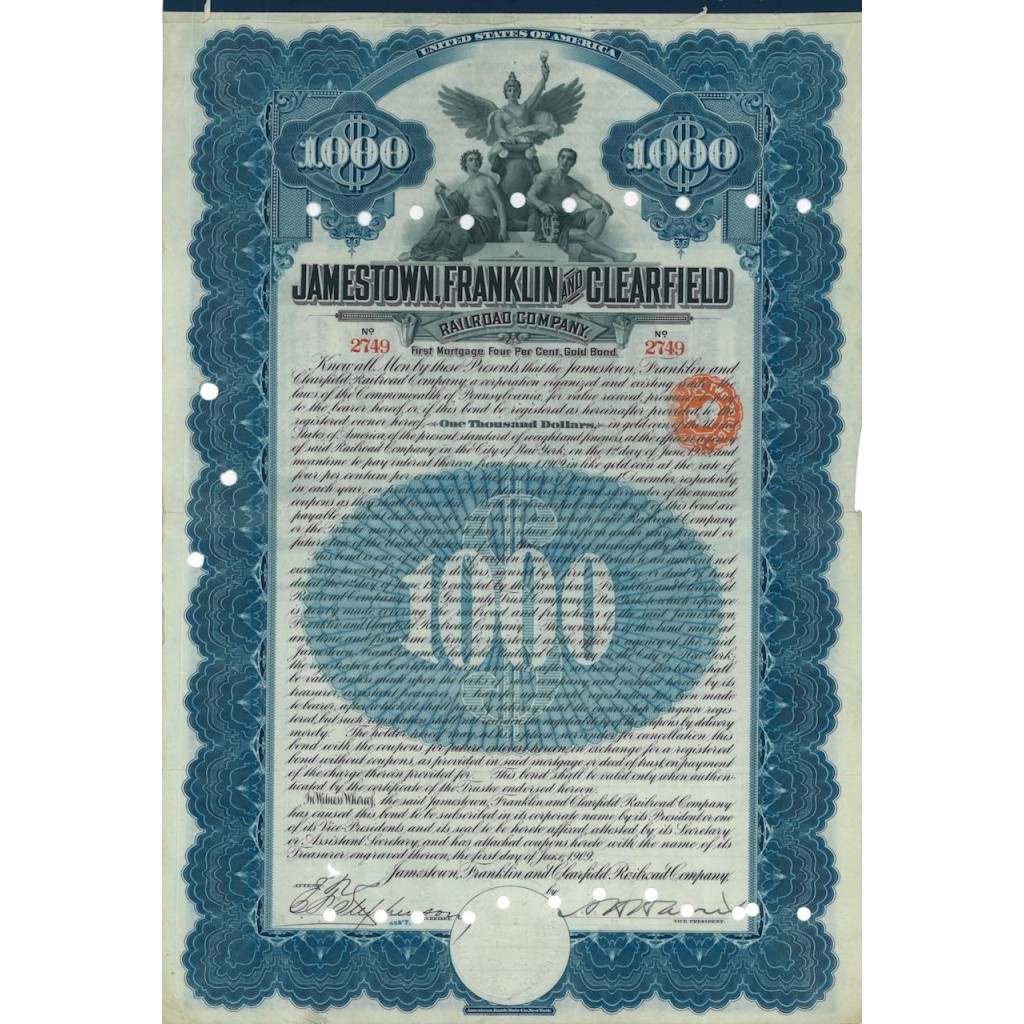
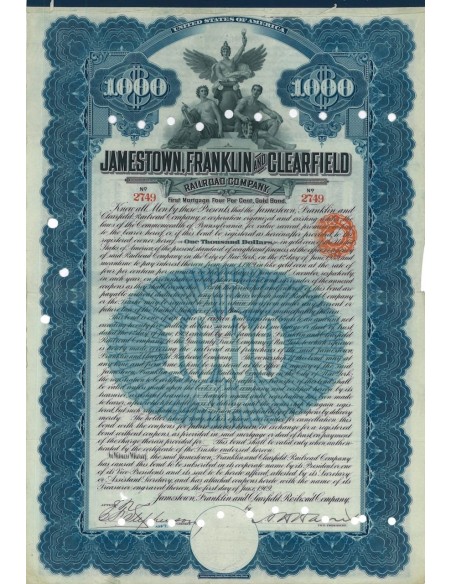
The issuance of 4% gold mortgage bonds in 1902 reflected the company's need to raise capital to expand and improve its railroad infrastructure. These bonds were secured by the company's properties, making them a relatively safe investment for the time. Each bond had a face value of $1,000 and offered an annual yield of 4%.
Company Name: Jamestown, Franklin and Clearfield Railroad Company
Document Type: First Mortgage Four Percent Gold Bond
Yield: Four percent
Face Value: One thousand dollars
Issue Date: January 1, 1902
Place of Issue: Jamestown, Franklin, and Clearfield
Signed by: Vice President and Secretary
Certificate Number: 2749
The Railroad Context of the Early 20th Century
At the beginning of the 20th century, railroads were the primary means of land transportation in the United States. Companies like the Jamestown, Franklin and Clearfield Railroad Company were vital to the economy, facilitating the transportation of raw materials, finished products, and people. During this period, railroads were in a phase of significant expansion, with the construction of new lines and the upgrading of existing infrastructure.
Document Features
The document features elaborate details and decorative ornaments typical of bonds of the era. It includes allegorical images symbolizing prosperity and progress. The certificate is signed by the company's vice president and secretary, giving it authenticity and historical value.