Shopping Cart
There are no more items in your cart
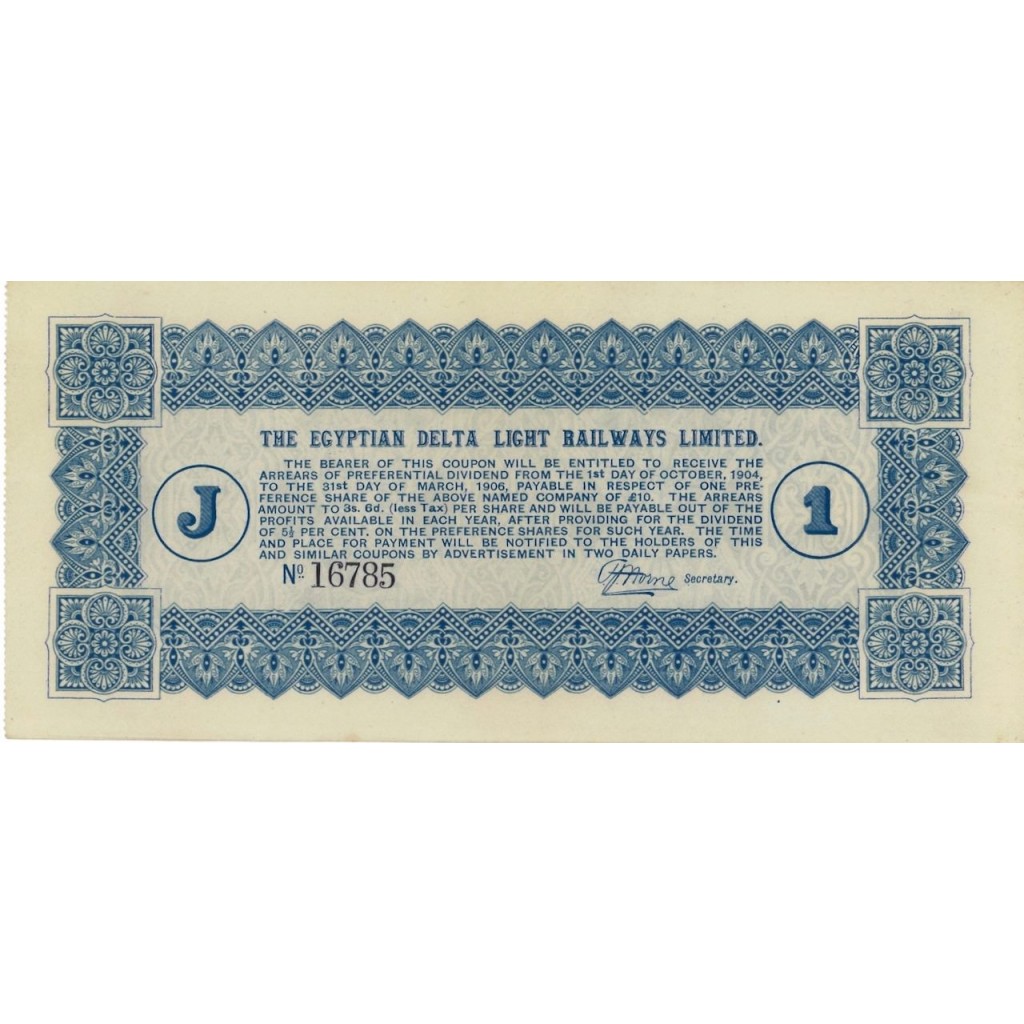
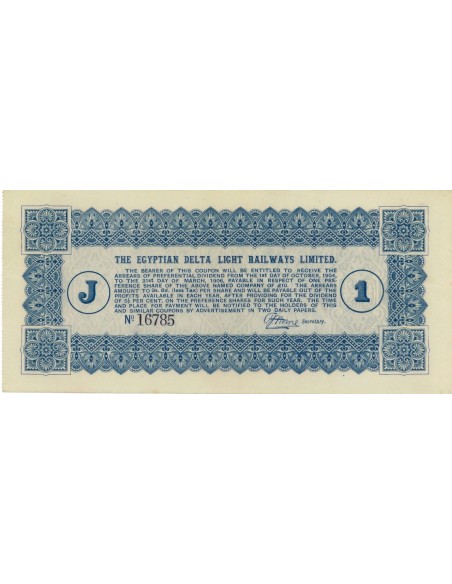
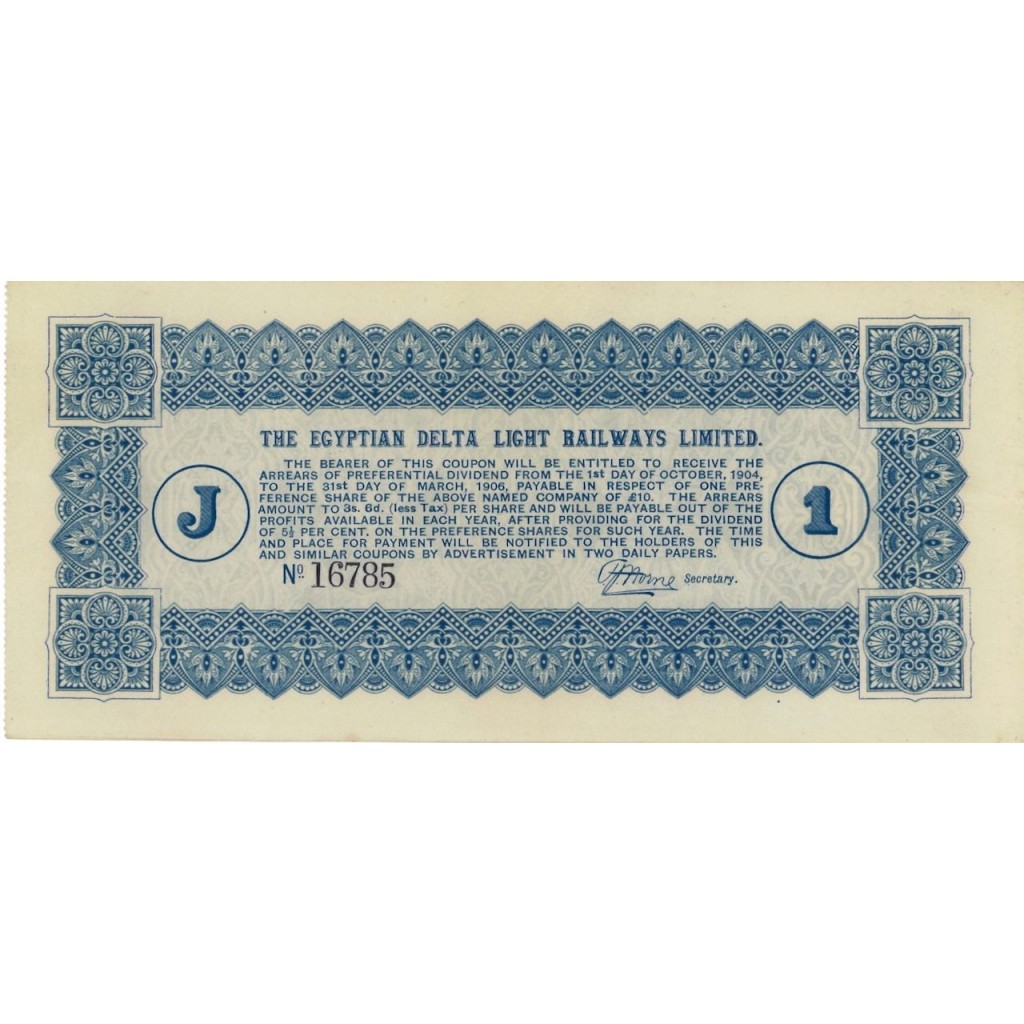
Company History "The Egyptian Delta Light Railways Limited" was established in the early 20th century, during a period of significant infrastructure development in Egypt. Founded with the goal of developing and managing a light railway network in the Nile Delta, the company was tasked with facilitating transportation in the region, thereby contributing to the country's economic growth. The Nile Delta, with its fertile lands and numerous agricultural activities, was a strategic area for Egypt's economic development, and the creation of a light railway network was essential for connecting small agricultural centers to major urban markets.
The document in question, a preferential dividend coupon issued by "The Egyptian Delta Light Railways Limited" in 1904, represents an important example of scripophily, the collection of old financial certificates such as shares, bonds, and other securities. This coupon entitled the bearer to receive the arrears of the preferential dividend for the fiscal year ending March 31, 1906, highlighting the economic importance of these companies at the time.
Historical Data of the Company
| Company Data | Information |
|---|---|
| Year of Establishment | Early 1900s |
| Head Office | Cairo, Egypt |
| Capital at Establishment | £100,000 |
| Year of Stock Market Listing | 1902 |
| Year of Delisting from the Stock Market | Not Available |
| Year of Company Dissolution | Not Available |
| Capital at Dissolution | Not Available |
Historical Context The title was issued during a time characterized by strong interest in railway infrastructure development in Egypt. In the early 20th century, Egypt was under British influence, and there was a significant push to modernize the country through investments in key infrastructure, such as railways and canals. The light railway network in the Nile Delta, managed by "The Egyptian Delta Light Railways Limited," was part of this broader development effort.
Artistic and Typographic Details The coupon is adorned with elaborate geometric and floral designs typical of the period, reflecting the Art Nouveau aesthetic that was popular in the early 20th century. The document's design, likely created by specialized artists and typographers, shows particular attention to ornamental details, which was common in financial certificates of the era. The document was printed by the renowned printing house "Waterlow & Sons, Limited," a prestigious name in the printing of securities and official documents.
Provenance and Valuation This title has likely passed through several hands before reaching the present day, carrying with it a history of financial transactions and investments. The certificate was issued to grant the bearer the right to arrears of the preferential dividend, a detail that makes it particularly interesting for scripophily collectors.
Rarity and Valuation The title is considered rare, especially as few examples have survived in good condition to this day. The rarity of the document, combined with its historical connection to Egypt's railway development, makes it a sought-after piece by collectors. Its valuation may vary depending on the condition of the document and the current market.
Collector Tips Scripophily collecting offers a unique window into the economic and financial past of the world. Certificates like this are not only valuable aesthetic objects but also pieces of history that tell the story of the evolution of economies and societies. To best preserve these documents, it is recommended to keep them in environments free of humidity and direct light exposure, perhaps framed with conservation materials to maintain their integrity.
These documents, in addition to personal collecting, are excellent for use as an author gift, decoration, historical and modern art, adding a touch of history and prestige to any environment.
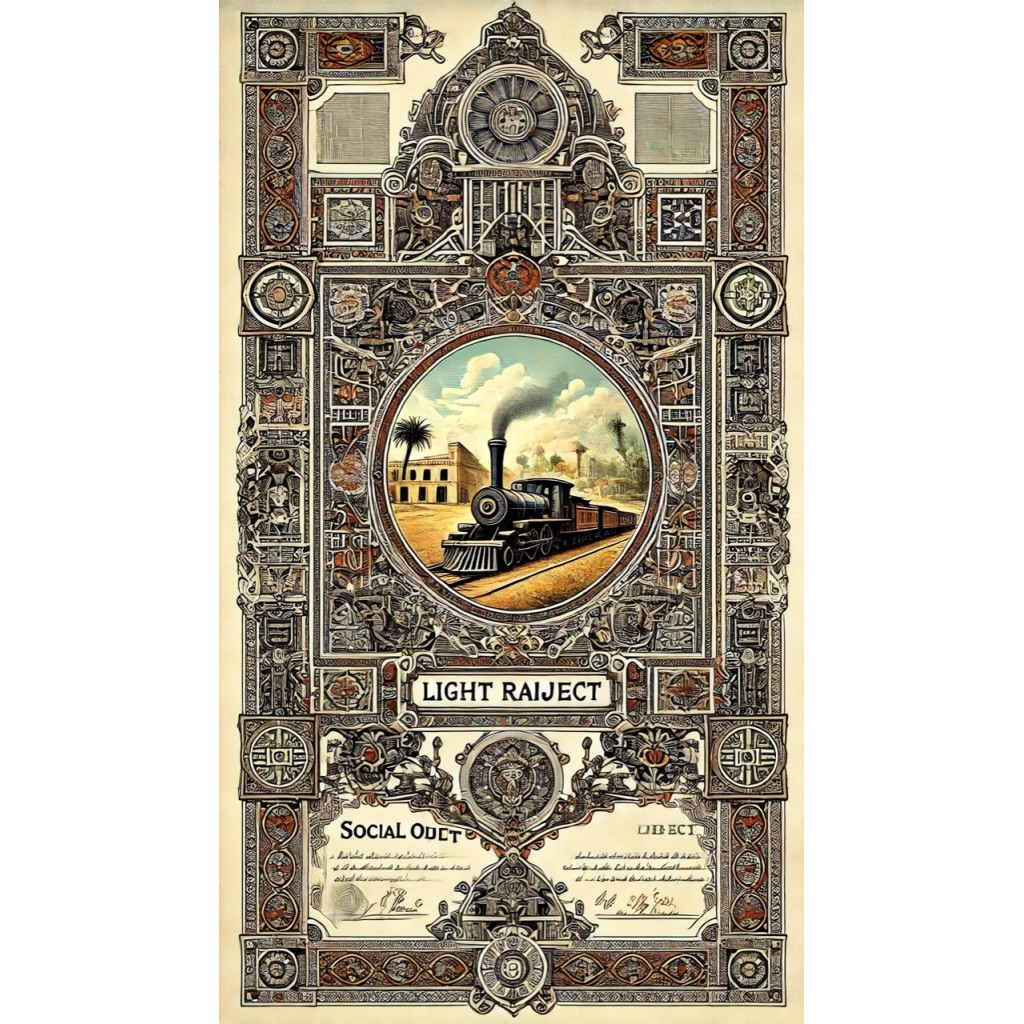
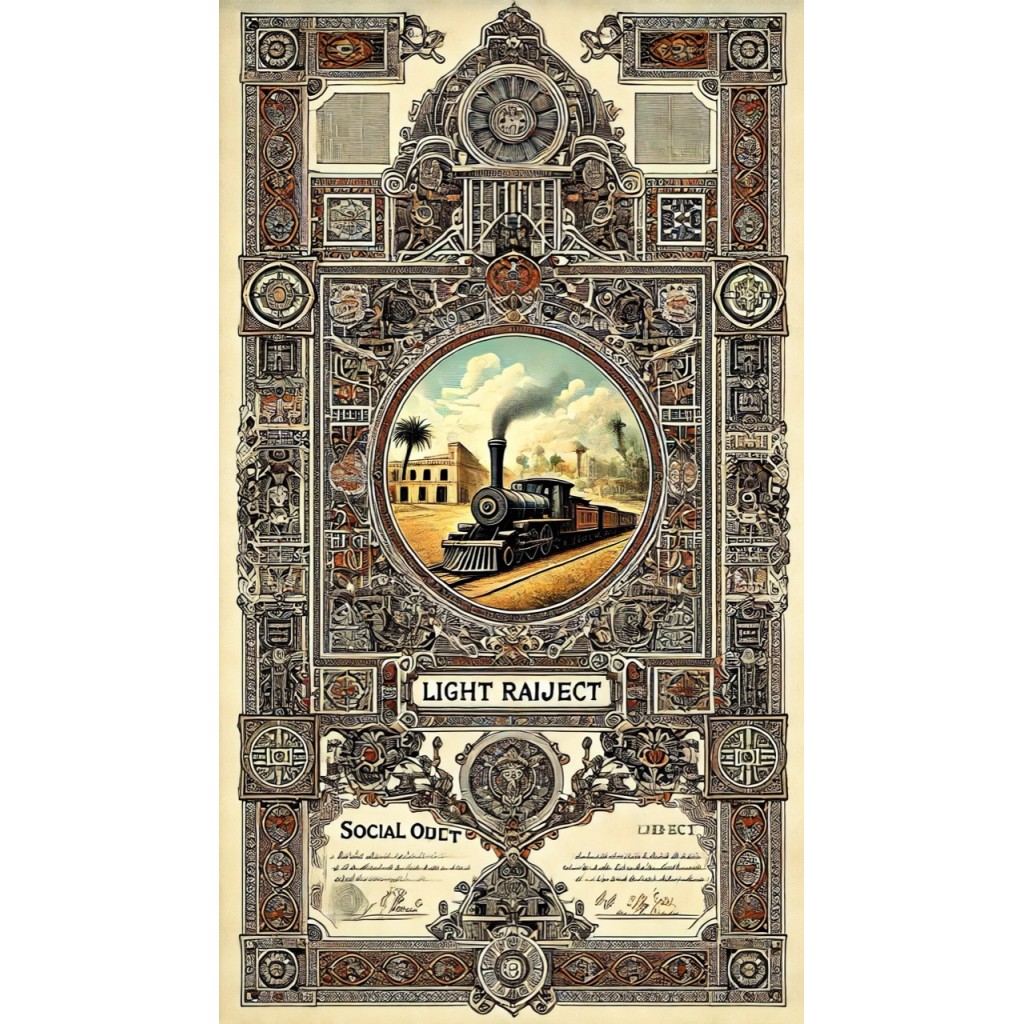
Note: All historical documents for sale are considered collectibles. The documents have no economic or financial value (no economic or financial value), and the images that are not the historical document are representative of the company's object and the historical period of reference. They are not provided but can be freely downloaded from the website and printed.